
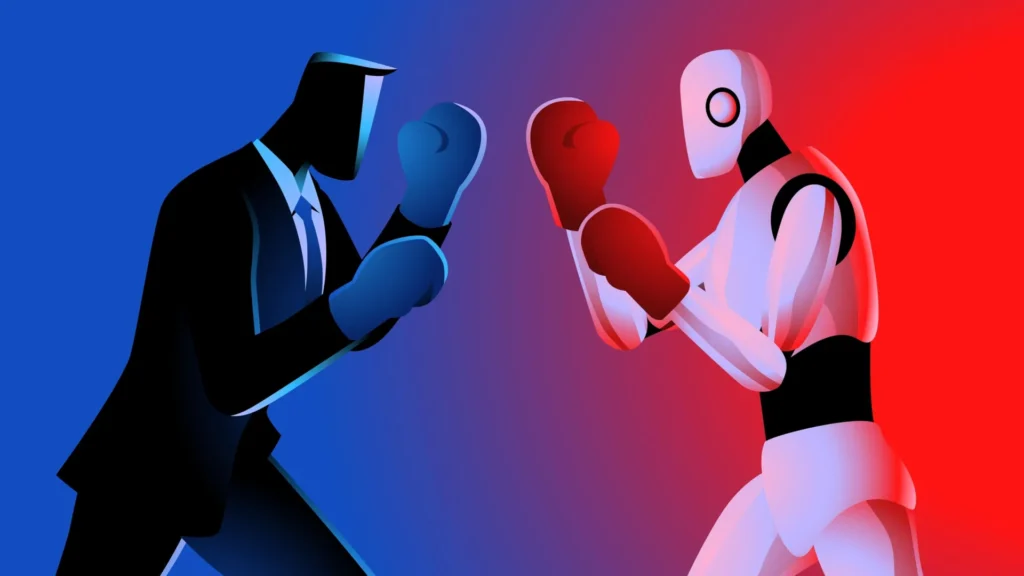
A new landmark study, led by Professor Karim Jerbi from the Department of Psychology at the Université de Montréal and featuring the insights of renowned AI pioneer Yoshua Bengio, has unveiled a significant shift in the landscape of artificial intelligence capabilities, demonstrating that generative AI systems can now rival the creativity of the average human on specific measures. Published in Scientific Reports (Nature Portfolio), this research represents the largest direct comparison ever conducted between human creativity and that of large language models (LLMs), involving more than 100,000 human participants and several leading AI systems, including ChatGPT, Claude, and Gemini. While the findings point to a clear turning point where AI can outperform the average individual in certain creative tasks, the most creative humans continue to exhibit a distinct and consistent advantage over even the most advanced AI models. This comprehensive investigation not only redefines our understanding of AI’s creative potential but also offers a nuanced perspective on its role as an amplifying tool rather than a replacement for human ingenuity.
The Evolving Debate on AI and Creativity: A Historical Context
For decades, the concept of creativity has been widely considered an exclusively human trait, often seen as the last bastion against the encroaching capabilities of artificial intelligence. Early AI systems, predominantly rule-based or designed for specific logical tasks, showed little to no capacity for genuine innovation or divergent thinking. The advent of machine learning and, more recently, deep learning and generative adversarial networks (GANs) began to challenge this long-held belief, particularly with systems capable of generating art, music, and text. However, skeptics often argued that these outputs were merely sophisticated mimicry or recombination of existing data, lacking true originality or intentionality. The rise of large language models like GPT-3 and its successors brought forth a new wave of debate, as these systems demonstrated an uncanny ability to produce coherent, contextually relevant, and often surprising text, raising fundamental questions about the nature of creativity itself. Could an algorithm truly "create" in the same sense as a human artist or writer? This study by Professor Jerbi and his collaborators directly addresses this profound question, providing empirical evidence on an unprecedented scale to inform the ongoing discourse. Its sheer scope, involving tens of thousands of human data points, sets it apart from previous, smaller-scale comparative analyses, marking it as a definitive moment in understanding AI’s creative frontier.
Methodology: A Rigorous Framework for Comparative Analysis
To ensure a fair and robust comparison between human and AI creativity, the research team developed a rigorous framework that applied the same evaluation tools across both domains. The primary instrument employed was the Divergent Association Task (DAT), a well-established psychological test designed to measure divergent creativity—the ability to generate a wide range of diverse and original ideas from a single prompt. Created by study co-author Jay Olson from the University of Toronto, the DAT is simple yet profoundly insightful: participants, whether human or AI, are asked to list ten words that are as semantically unrelated as possible. The less related the words, the higher the score, indicating greater divergent thinking. For example, a highly creative response might include words such as "galaxy, fork, freedom, algae, harmonica, quantum, nostalgia, velvet, hurricane, photosynthesis." This task, while language-based, is not merely a test of vocabulary; it engages broader cognitive processes critical for creative thinking across various fields. Its practical advantages, including its quick completion time (two to four minutes) and online accessibility, allowed the researchers to gather a massive dataset from the general public.
Beyond the DAT, the study extended its scope to more complex creative challenges to assess whether AI’s success on word association could translate to richer, more realistic creative activities. The team evaluated AI systems and human participants on tasks requiring creative writing, such as composing haiku (a three-line poetic form), crafting concise movie plot summaries, and generating short stories. This multi-faceted approach provided a comprehensive view of creative capabilities, from basic associative thinking to more structured narrative generation. By using both a standardized psychological test and open-ended creative tasks, the researchers ensured that their findings were not confined to a narrow definition of creativity but reflected a broader spectrum of creative expression.
Key Findings: AI’s Ascent to Average Human Levels
The results of this extensive comparative study reveal a critical juncture in AI development. Researchers evaluated several leading large language models, including OpenAI’s ChatGPT (specifically GPT-4), Anthropic’s Claude, and Google’s Gemini, against the performance of over 100,000 human participants. The findings unambiguously highlight a clear turning point: certain AI systems have now achieved, and in some instances exceeded, average human scores on tasks specifically designed to measure divergent linguistic creativity. This outcome, as Professor Karim Jerbi notes, "may be surprising — even unsettling." The ability of an algorithm to generate ideas with a level of originality and diversity comparable to or even surpassing the average person marks a significant milestone in AI research. This is not merely about mimicking human language but about demonstrating a capacity for associative leaps and conceptual distance that was once thought to be a hallmark of human cognition.
Further detailed analysis, conducted by co-first authors postdoctoral researcher Antoine Bellemare-Pépin from Université de Montréal and PhD candidate François Lespinasse from Concordia University, illuminated a crucial nuance: while some AI models now demonstrably outperform the average individual, peak creativity remains firmly within the human domain. When the researchers isolated the most creative half of the human participants, their average scores consistently surpassed those of every AI model tested. This gap widened even further when focusing on the top 10 percent of the most creative individuals, indicating a qualitative difference in the upper echelons of human creative output. The consistent pattern observed across both the simpler Divergent Association Task and the more complex creative writing challenges – where AI sometimes matched or exceeded average human performance but never surpassed top human creators – underscores this duality. It suggests that while AI can now generate a broad spectrum of creative ideas, the unique spark, depth, or innovative paradigm shifts characteristic of truly exceptional human creativity are still beyond its grasp. This finding offers a balanced perspective, acknowledging AI’s rapid advancements while reaffirming the enduring, distinct value of peak human ingenuity.
The Modifiable Nature of AI Creativity: Temperature and Prompt Engineering
A fascinating aspect explored by the study is the modifiable nature of AI creativity. Unlike fixed human creative potential, the output of generative AI systems can be significantly influenced by technical settings and the way instructions are crafted. The research specifically highlights the impact of a parameter known as "temperature." In the context of large language models, temperature controls the randomness and variability of the generated output. At lower temperature settings, AI tends to produce more predictable, safer, and conventional responses, adhering closely to the most probable word sequences based on its training data. This leads to outputs that are often coherent and grammatically correct but may lack originality or adventurousness.
Conversely, at higher temperature settings, the AI’s responses become more varied, less predictable, and more exploratory. This allows the system to deviate from familiar patterns and generate ideas that might be considered more novel or surprising. The study demonstrates that by adjusting this parameter, researchers can effectively dial up or dial down the "creativity" of an AI model, shifting its output from conservative to imaginative.
Beyond technical parameters, the research also emphasizes the profound influence of prompt engineering – how instructions are written and presented to the AI. For instance, prompts that encourage models to delve into the origins and structural relationships of words, using etymology as a conceptual lens, consistently led to more unexpected associations and higher creativity scores. This finding is critical because it underscores the collaborative nature of AI creativity. It is not an autonomous process; rather, its creative potential is heavily dependent on human guidance, intention, and the thoughtful design of prompts. This interaction between human prompt designer and AI system becomes a central part of the creative process, suggesting that unlocking AI’s full creative potential requires skilled human direction and a deep understanding of how to communicate effectively with these advanced models.
Broader Impact and Implications: Rethinking the Future of Creativity
The findings of this seminal study carry profound implications across various sectors, from the creative industries to education and scientific research. Foremost among these is a call to move beyond a simplistic "AI vs. Human" competitive mindset, as advocated by Professor Jerbi. "Even though AI can now reach human-level creativity on certain tests, we need to move beyond this misleading sense of competition," he states. Instead, the study positions generative AI not as a replacement for creators but as an "extremely powerful tool in the service of human creativity." This paradigm shift suggests a future where AI serves as a sophisticated creative assistant, capable of augmenting human imagination, expanding ideation, and opening new avenues for exploration.
In the creative industries – art, writing, music, design, architecture – this could mean a fundamental transformation of workflows. Writers might use AI to brainstorm plot twists, generate character dialogue, or explore alternative narratives. Artists could leverage AI to create initial concepts, experiment with styles, or produce variations of their work. Designers might employ AI to rapidly generate prototypes or explore unconventional forms. This collaborative model, often referred to as "co-creation," could empower creators to overcome creative blocks, accelerate the iterative process, and push the boundaries of their respective fields further than ever before. The study implies that professionals who adapt to integrating AI into their creative process will likely gain a significant advantage, profoundly transforming how they "imagine, explore, and create."
From an educational standpoint, the findings necessitate a re-evaluation of curricula, particularly in creative disciplines. The emphasis may shift from solely developing traditional creative skills to also fostering "AI literacy" – teaching students how to effectively prompt, guide, and collaborate with AI systems. Understanding the parameters that influence AI output, such as temperature, and mastering the art of prompt engineering will become invaluable skills for the next generation of creators.
Moreover, the participation of AI pioneer Yoshua Bengio, founder of Mila and LoiZéro, and a leading figure in deep learning, lends significant weight to the study’s conclusions. His involvement underscores the importance of this research not just as a psychological inquiry but as a critical piece in understanding the foundational capabilities and future trajectory of AI itself. Bengio’s perspective likely reinforces the idea that AI, while transformative, is a tool whose ultimate impact is shaped by human intent and direction.
The study also contributes to a deeper philosophical understanding of creativity. By comparing human and machine capabilities using the same metrics, it compels us to "rethink what we mean by creativity," as Professor Jerbi concludes. Is creativity solely about generating novel ideas, or does it also encompass intention, emotional depth, cultural context, and the unique lived experiences that inform human expression? The study suggests that while AI excels at the former, the latter remains a uniquely human domain, reinforcing the idea that true innovation often stems from a complex interplay of cognitive, emotional, and experiential factors that AI, in its current form, cannot replicate. This ongoing exploration promises to enrich both AI research and our understanding of human cognition itself.
Publication Details and Key Contributors
The groundbreaking paper, titled "Divergent creativity in humans and large language models," was officially published in the prestigious journal Scientific Reports on January 21, 2026. This comprehensive research was the result of a collaborative effort involving leading scientists and institutions from across the academic and AI research landscape. Key contributing entities included the Université de Montréal, Concordia University, the University of Toronto Mississauga, Mila (the Quebec AI Institute), and Google DeepMind, bringing together a diverse array of expertise in psychology, artificial intelligence, and cognitive science.
The study was notably led by Professor Karim Jerbi, who also holds an associate professorship at Mila. His vision and leadership were central to orchestrating this large-scale comparative analysis. Serving as co-first authors, who made equally significant contributions to the research, were Antoine Bellemare-Pépin from the Université de Montréal and François Lespinasse from Concordia University. Their meticulous analysis of the vast datasets was crucial in distilling the study’s key findings. The research team also benefited from the invaluable participation of Yoshua Bengio, widely recognized as a founder of Mila and LoiZéro, and a pivotal pioneer of deep learning – the very technology underpinning modern AI systems like ChatGPT. His involvement provided critical theoretical and practical guidance, validating the methodological rigor and the significance of the findings within the broader AI community. Jay Olson from the University of Toronto, the creator of the innovative Divergent Association Task (DAT), was also a key co-author, ensuring the accurate application and interpretation of this core creativity measurement tool. Together, this interdisciplinary team has delivered a landmark study that will undoubtedly shape future discussions and research at the intersection of human creativity and artificial intelligence.