



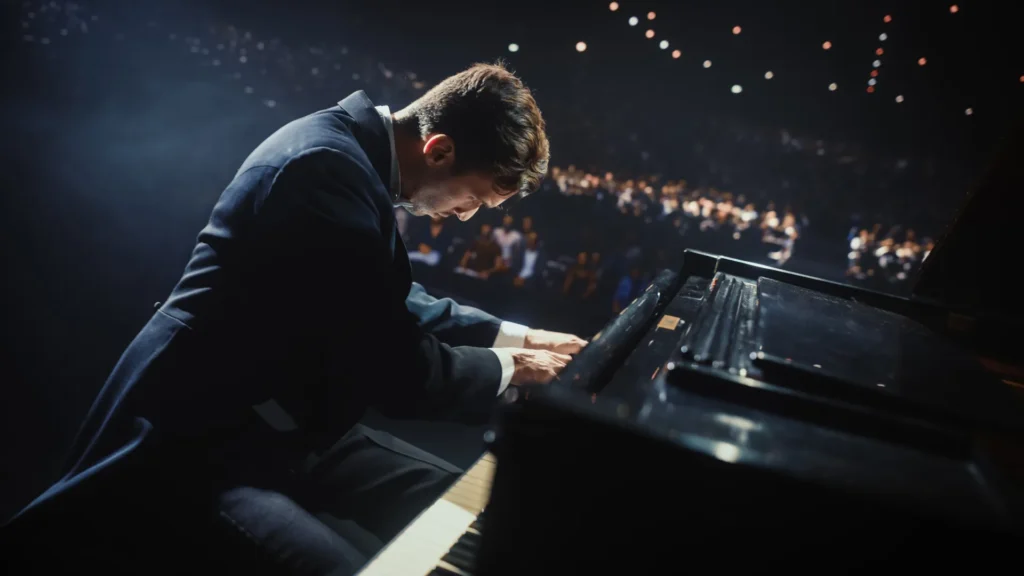
For generations, the expressive power of a pianist’s touch has been a cornerstone of musical pedagogy and performance artistry, with practitioners insisting that their physical interaction with the instrument could profoundly alter the character of its sound. Countering this deeply held artistic intuition, a vocal cohort of skeptics, often rooted in early scientific materialism, argued that once a piano hammer strikes a string, the resulting tone is almost entirely predetermined by the instrument’s inherent mechanics, suggesting any perceived timbral variation was merely a trick of volume, timing, or listener psychology. Now, a groundbreaking scientific study, leveraging cutting-edge sensing technology, has provided the clearest and most compelling evidence yet that pianists truly possess the ability to sculpt a piano’s timbre through the nuanced intricacies of their touch alone, decisively validating the artistic community’s long-standing belief.
The landmark research, spearheaded by Dr. Shinichi Furuya of the NeuroPiano Institute and Sony Computer Science Laboratories, Inc., utilized an innovative ultra high-speed sensing system to meticulously unravel the hidden, micro-movements underpinning expressive piano playing. Their pivotal findings, recently published in the esteemed Proceedings of the National Academy of Sciences (PNAS), offer profound insights, indicating that the subtle, almost imperceptible motions of a pianist’s fingers and hands exert a direct and measurable influence on how listeners perceive qualities such as brightness, heaviness, and clarity in individual musical notes. This discovery not only resolves a century-long scientific and artistic disagreement but also establishes a new paradigm for understanding the complex interplay between human motor control, acoustic physics, and aesthetic perception.
A Century of Discord: The Timbre Debate’s Historical Roots
The contentious question of whether pianists could genuinely alter a piano’s timbre through their touch has been a subject of fervent debate since the dawn of the 20th century. While musicians, critics, and audiences alike commonly employ a rich lexicon to describe tonal qualities – referring to sounds as warm, dark, bright, heavy, or shimmering – many scientists and acousticians historically dismissed these distinctions as largely subjective, psychological constructs. They often attributed perceived differences primarily to variations in volume (loudness), timing (rhythm and articulation), or even the specific design and condition of the instrument itself, rather than any intrinsic timbral modification caused by the performer’s physical input.
This scientific skepticism was partly fueled by the understanding of how a piano produces sound: a hammer, set in motion by a key, strikes a string, causing it to vibrate. The initial impact determines the string’s amplitude (loudness) and its harmonic content (timbre), which is then largely governed by the string’s physical properties and the instrument’s resonance. From this perspective, the pianist’s role was primarily to initiate the strike and control its force and timing, with little room for further timbral shaping. Prominent acousticians and early piano pedagogues, such as Otto Ortmann in his seminal 1929 work "The Physiological Mechanics of Piano Technique," explored the physical limits of piano performance, often concluding that the actual "touch" primarily affected dynamics and articulation, not the fundamental quality of the sound itself. Yet, the persistent conviction among master pianists, passed down through generations of teaching, suggested a deeper, more subtle interaction. This divergence between scientific explanation and artistic experience created a persistent, unresolved tension in the world of music performance and acoustics.
Unveiling the Micro-Mechanics: The HackKey Experiment
The new research fundamentally challenges this long-held scientific assumption by employing a meticulously designed experimental framework and unprecedented technological precision. To bypass the limitations of previous studies that struggled to isolate the exact physical inputs of a pianist’s touch, Dr. Furuya’s team developed a custom-built, noncontact sensing system dubbed "HackKey." This innovative technology was capable of recording the movements of all 88 piano keys at an astonishing speed of 1,000 frames per second and with microscopic spatial precision, far exceeding the capabilities of prior instrumentation.
The study engaged twenty internationally acclaimed pianists, renowned for their expressive control and nuanced artistry. These expert performers were tasked with playing individual notes and short musical phrases while intentionally striving to produce contrasting tonal qualities. Specifically, they were asked to render sounds perceived as "bright" versus "dark" and "light" versus "heavy," without significantly altering volume or tempo – a crucial control to isolate the effect of touch.
Following the performance phase, the recorded sounds were subjected to rigorous listening tests. Participants, including both individuals with extensive musical training and those with no formal background, consistently and accurately recognized the intended timbres. Remarkably, even listeners without musical expertise could discern the subtle differences in tonal character, lending strong credence to the objective reality of these timbral variations. Professional pianists participating in the listening tests demonstrated an even greater sensitivity and accuracy in identifying the intended expressive qualities, underscoring their cultivated ability to perceive and interpret these fine distinctions.
The Hidden Language of Expression: Precise Movements and Causal Links
The detailed analysis of the vast data collected by HackKey revealed the underlying mechanisms behind these perceived timbral shifts. Researchers discovered that only a select handful of extremely precise movement features were strongly correlated with changes in perceived timbre. These critical features included minute variations in acceleration patterns of the keys, subtle alterations in the timing of key depressions relative to each other (even in ostensibly synchronized actions), and nuanced synchronization patterns between the two hands.
One of the most significant and conclusive findings was the demonstration of a direct causal link: the research showed that altering a single, isolated movement feature could reliably and consistently change how listeners described the sound. This finding was pivotal because it provided unequivocal scientific evidence that touch itself plays a causal role in shaping timbre, rather than merely accompanying other musical effects like loudness, tempo, or articulation, which had been the prevailing scientific explanation for decades. The study effectively decoupled timbral variations from these other musical parameters, proving the independent influence of physical touch.
The study characterized these subtle gestures not as arbitrary actions but as integral components of a highly refined motor skill, meticulously developed and honed through years of advanced piano training. According to the researchers, this implies that the artistry behind a piano’s tone is not merely a metaphorical concept or a subjective listener experience. Instead, it is firmly grounded in measurable, repeatable physical actions performed by the pianist. As Dr. Furuya articulated, this pioneering work successfully "helps bring a long-standing artistic intuition into the realm of science." The findings not only empirically support what many pianists have instinctively believed for generations but also offer a clearer, data-driven understanding of precisely how skilled human movement translates into profound emotional and aesthetic experiences in music.
Expanding Horizons: Implications Beyond the Concert Hall
The ramifications of this groundbreaking research extend far beyond the confines of concert halls and music conservatories, promising transformative impacts across a diverse array of scientific and technological disciplines.
Revolutionizing Music Education: The most immediate and profound impact is anticipated within music education. The research team believes these discoveries could fundamentally reshape how expressive techniques are taught and learned, making them far more accessible and tangible. Instead of relying on abstract or vague instructions such as "play warmer," "use a lighter touch," or "make the phrase sing," future training systems, potentially enhanced by artificial intelligence and advanced sensor technology, may be able to provide students with precise, real-time visual and kinesthetic feedback. Imagine a system that could show a student the exact physical movements – the minute acceleration curves, the precise synchronization offsets – associated with specific tonal qualities. This would enable students to internalize and reproduce these nuanced movements with unprecedented accuracy, accelerating their mastery of expressive control and potentially reducing the years of trial-and-error often required to develop a truly individual and refined touch. Such tools could democratize access to advanced expressive techniques, benefiting aspiring pianists worldwide.
Advancements in Rehabilitation Science and Neuroscience: The study’s insights into advanced motor control and its influence on perception hold immense promise for rehabilitation science. By elucidating how subtle physical movements can shape sensory experience, the research offers new clues about the brain’s intricate mechanisms for integrating movement and sensory feedback. This could lead to innovative rehabilitation strategies for individuals recovering from neurological injuries or conditions that impair fine motor skills. Therapies might incorporate musical movement exercises, leveraging the inherent motivation and structure of musical performance to improve dexterity, coordination, and sensorimotor integration, potentially leading to more engaging and effective recovery programs. From a neuroscience perspective, the study opens new avenues for investigating the neural correlates of highly skilled motor control and aesthetic perception, probing how the brain learns, executes, and interprets these subtle physical actions.
Impact on Robotics and Human-Computer Interaction: The detailed understanding of human expressive movement gleaned from this study has significant implications for the fields of robotics and human-computer interaction. Engineers striving to create more dexterous and human-like robots, particularly those designed for delicate tasks or expressive interactions, can draw upon these findings to develop more sophisticated motor control algorithms. Furthermore, the principles of how subtle physical input translates into complex perceived outputs could inform the design of more intuitive and expressive human-computer interfaces. Imagine digital instruments or virtual reality environments that respond to human gestures with the same nuanced sensitivity as a grand piano.
Innovations in Artificial Intelligence and Music Technology: Researchers in related fields are already actively exploring technologies inspired by expressive musical performance. Recent advancements in artificial intelligence and music technology have focused on sophisticated modeling of timbre, generating highly realistic piano motion, and building systems capable of reproducing subtle expressive nuances in digital performances. The data and methodologies from Dr. Furuya’s study provide a robust empirical foundation for these efforts. This could ultimately lead to the creation of more expressive digital instruments, virtual performers capable of emulating human artistry with astonishing fidelity, and smarter training tools that adapt to individual learning styles and needs.
The Science of Creativity and "Dynaformics"
Beyond its practical applications, this study makes a profound contribution to a burgeoning scientific effort to understand the very essence of creativity. For decades, much of the research on perception in music tended to focus on easily quantifiable elements such as pitch, loudness, and rhythm. Timbre, by contrast, has remained far more elusive and challenging to study scientifically, precisely because it involves higher-level sensory interpretation, complex harmonic content, and deeply interwoven emotional responses.
By meticulously identifying specific, measurable physical actions directly linked to timbre perception, the researchers have effectively opened a critical doorway into studying how artistic expression, particularly in its most subtle and profound forms, emerges from the dynamic interaction between the human body, the brain, and the acoustic output of an instrument. This work aligns with and significantly bolsters a broader, interdisciplinary movement sometimes referred to as "dynaformics" – the science of music performance. Supporters of dynaformics believe that a deeper, scientific understanding of performance mechanics can not only enhance musical artistry but also help musicians train more efficiently, mitigate the risk of performance-related injuries, and overcome physical limitations that frequently accompany years of intense, repetitive practice.
The widespread excitement surrounding these findings transcends the mere satisfaction of solving an old musical mystery. It underscores a more profound revelation: that some of the most potent emotional power and aesthetic beauty in music may stem from movements so minute they are nearly invisible to the naked eye, yet so precise and impactful that human listeners, regardless of their musical background, can instinctively feel and interpret the profound differences they create. This study stands as a testament to the intricate, often hidden, connections between human physicality, scientific rigor, and the enduring magic of musical art.