



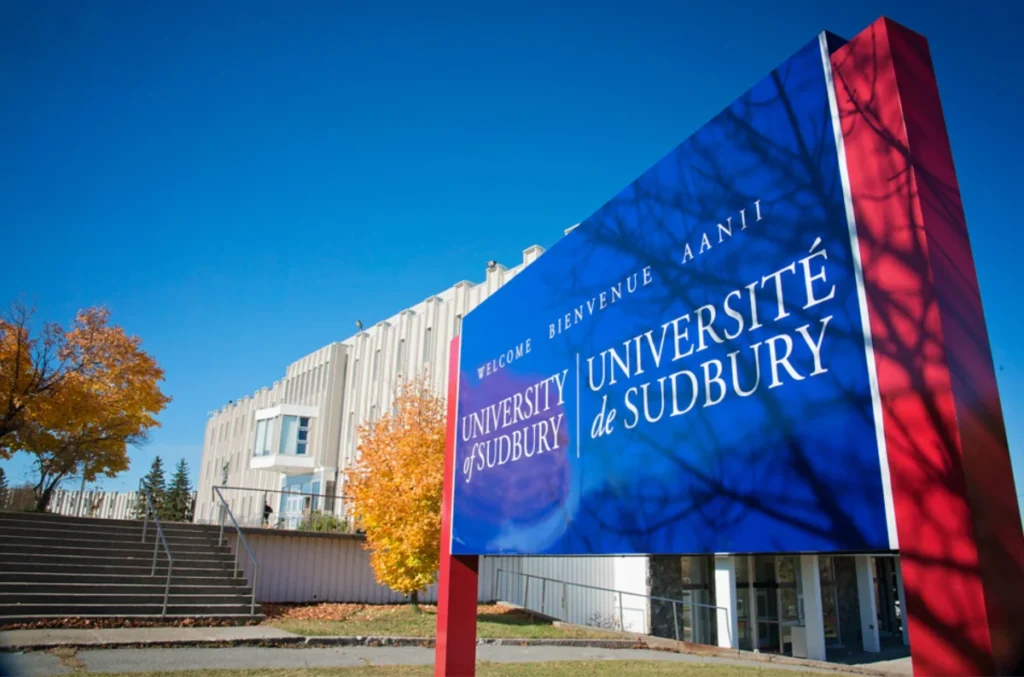
The recent Ontario budget has allocated a significant $21.6 million over three years to the Université de Sudbury, a move hailed by President and Vice-Chancellor Serge Miville as "exactly what we were hoping for." This substantial investment marks a pivotal moment for the institution, providing much-needed financial stability and clear recognition after a challenging period following its separation from Laurentian University.
"This is the first time we’ve seen the numbers this clearly spelled out in black and white in the province’s budget documents," Miville stated in an interview with University Affairs. "It’s a major recognition that gives us the confidence and clarity we need." The funding is specifically earmarked to bolster the university’s operational capacity, covering essential expenses such as staff salaries, facility rentals, and the delivery of its academic programs.
A Path to Stability After a Turbulent Separation
The financial lifeline from the provincial government arrives nearly five years after the Université de Sudbury, along with Huntington University and Thorneloe University, were severed from Laurentian University. This separation occurred amidst Laurentian’s severe financial crisis, which led to its declaration of bankruptcy and a painful restructuring process in April 2021. The unilateral decision by Laurentian to dissolve its federation with the three smaller institutions, a relationship that had existed since the 1960s, cast a significant shadow over their futures.
Dr. Miville, an expert in the history of French Ontario, found himself directly impacted by Laurentian’s restructuring. His position at the larger university was eliminated as part of the bankruptcy proceedings. However, in June 2021, he was appointed president of the Université de Sudbury and has since spearheaded its transformation into an independent francophone university. This transition has become increasingly vital for Northern Ontario, particularly as Laurentian significantly reduced its French-language offerings during its own restructuring, creating a greater demand for dedicated francophone post-secondary education.
Strategic Allocation of Funds and Academic Focus
The $21.6 million in funding is intended to provide a solid foundation for the Université de Sudbury’s continued development. "It will go towards covering the salaries of academic and administrative staff, renting classroom and lab space, and delivering our academic portfolio," Dr. Miville explained. The university is currently prioritizing its academic offerings in key areas: healthcare, social sciences, the arts, and commerce. This strategic focus aims to ensure the relevance and impact of its programs within the region and beyond.
A Groundbreaking Partnership with Indigenous Communities
Beyond its operational stability, the Université de Sudbury has also distinguished itself through a pioneering agreement with its Indigenous partners. Dr. Miville expressed immense pride in this collaboration, describing it as a remarkable model of "knowledge sovereignty."
"We’ve given all of our online courses to Kenjgewin Teg, a well-respected Indigenous post-secondary institution on Manitoulin Island," he elaborated. "They manage, oversee, and disseminate this content using their own infrastructure, while remaining part of Université de Sudbury." This unique arrangement allows Indigenous communities to have greater control over their educational content and delivery, fostering a more culturally relevant and empowering learning experience. Kenjgewin Teg, an institution dedicated to Indigenous education and cultural preservation, now plays a crucial role in expanding access to these academic resources.
Project-Based Funding and a Flexible Model
Dr. Miville further clarified that the provincial funding is structured as project-based rather than ongoing operational grants. This approach, he explained, is facilitated through partnerships, notably with the Université de l’Ontario français. This mechanism is akin to models observed in Western Canada, where funds are "directed toward clearly defined objectives." Such a system provides the Université de Sudbury with the necessary flexibility to navigate its current stage of development and restructuring.
"Looking at this investment today, it’s the culmination of a long struggle to ensure the continued existence of our institution," Dr. Miville emphasized, reflecting on the years of advocacy and strategic planning that have led to this significant provincial endorsement.
Broader Context: The Landscape of Francophone Education in Ontario
The increased investment in the Université de Sudbury underscores a broader provincial commitment to supporting and strengthening francophone post-secondary education in Ontario. The francophone population in Ontario, the largest outside of Quebec, has historically faced challenges in accessing higher education in French, particularly in Northern Ontario. Laurentian University’s restructuring, which included the elimination of numerous French-language programs, exacerbated these challenges, creating a critical void.
The Université de Sudbury’s emergence as an independent francophone institution directly addresses this unmet need. Its mission to provide high-quality French-language education is vital for fostering a vibrant francophone community and ensuring that its members have access to academic opportunities that align with their linguistic and cultural identities.
Timeline of Key Events
- 1960s: Laurentian University establishes a federation with Université de Sudbury, Huntington University, and Thorneloe University, creating a shared academic environment.
- April 2021: Laurentian University declares bankruptcy and initiates a significant restructuring process. As part of this process, Laurentian unilaterally dissolves its federation with the three affiliated institutions.
- April 2021: Dr. Serge Miville, an expert in the history of French Ontario, loses his position at Laurentian University due to the restructuring.
- June 2021: Dr. Serge Miville is appointed President and Vice-Chancellor of the Université de Sudbury, tasked with leading its transformation into an independent institution.
- Ongoing: Université de Sudbury works to establish its autonomy, rebuild its academic portfolio, and forge new partnerships, particularly with Indigenous communities.
- Recent Ontario Budget: The provincial government announces a $21.6 million investment over three years for the Université de Sudbury, providing crucial financial stability and recognition.
Supporting Data and Analysis
The $21.6 million allocation over three years translates to an average of $7.2 million per year. This level of funding is critical for an institution that has recently transitioned from being a federated college to an independent university. The costs associated with establishing and maintaining an independent academic institution are substantial, including faculty and staff salaries, administrative overhead, building leases for classroom and laboratory space, curriculum development, and student support services.
The project-based nature of the funding, channeled through partners like the Université de l’Ontario français, suggests a strategic approach by the province to ensure accountability and measurable outcomes. This model allows for the allocation of funds towards specific initiatives, such as program development, infrastructure upgrades, or research projects, which can be more easily tracked and evaluated.
The emphasis on healthcare, social sciences, arts, and commerce aligns with provincial priorities for workforce development and addressing societal needs. By focusing on these areas, the Université de Sudbury can contribute to the regional economy and the well-being of its communities.
Implications for Francophone Post-Secondary Education
The financial support for the Université de Sudbury has significant implications for the future of francophone post-secondary education in Ontario. It signals a renewed commitment from the provincial government to uphold the linguistic rights of francophones and ensure equitable access to higher education in French.
This investment can serve as a catalyst for further growth and innovation within the francophone post-secondary sector. It may encourage other institutions to explore similar collaborative models and strengthen the overall ecosystem of French-language learning in the province. The success of the Université de Sudbury could also inspire other minority language communities to advocate for similar support for their educational institutions.
The groundbreaking partnership with Kenjgewin Teg also highlights a forward-thinking approach to Indigenous education. By empowering Indigenous institutions to manage and disseminate educational content, the Université de Sudbury is actively contributing to the principles of reconciliation and self-determination in education. This model of knowledge sovereignty is a significant development that could be replicated in other post-secondary contexts across Canada.
Looking Ahead
With this crucial funding secured, the Université de Sudbury is well-positioned to solidify its place as a vital center for francophone education and research in Northern Ontario. The institution’s journey from the complexities of Laurentian’s restructuring to independent operation, marked by strategic partnerships and a commitment to its unique mission, is a testament to its resilience and vision. The $21.6 million investment is not merely financial aid; it is an affirmation of the value and necessity of a robust francophone university serving the diverse needs of Ontario.
The article "Université de Sudbury : renaissance ou relance à risque?" (Université de Sudbury: Renaissance or Revival at Risk?), published by University Affairs in French, provides further context on the institution’s challenges and aspirations prior to this budget announcement, underscoring the long road of advocacy and strategic planning that has led to this positive development. The future of the Université de Sudbury appears brighter, underpinned by provincial support and a clear vision for its academic and community impact.