

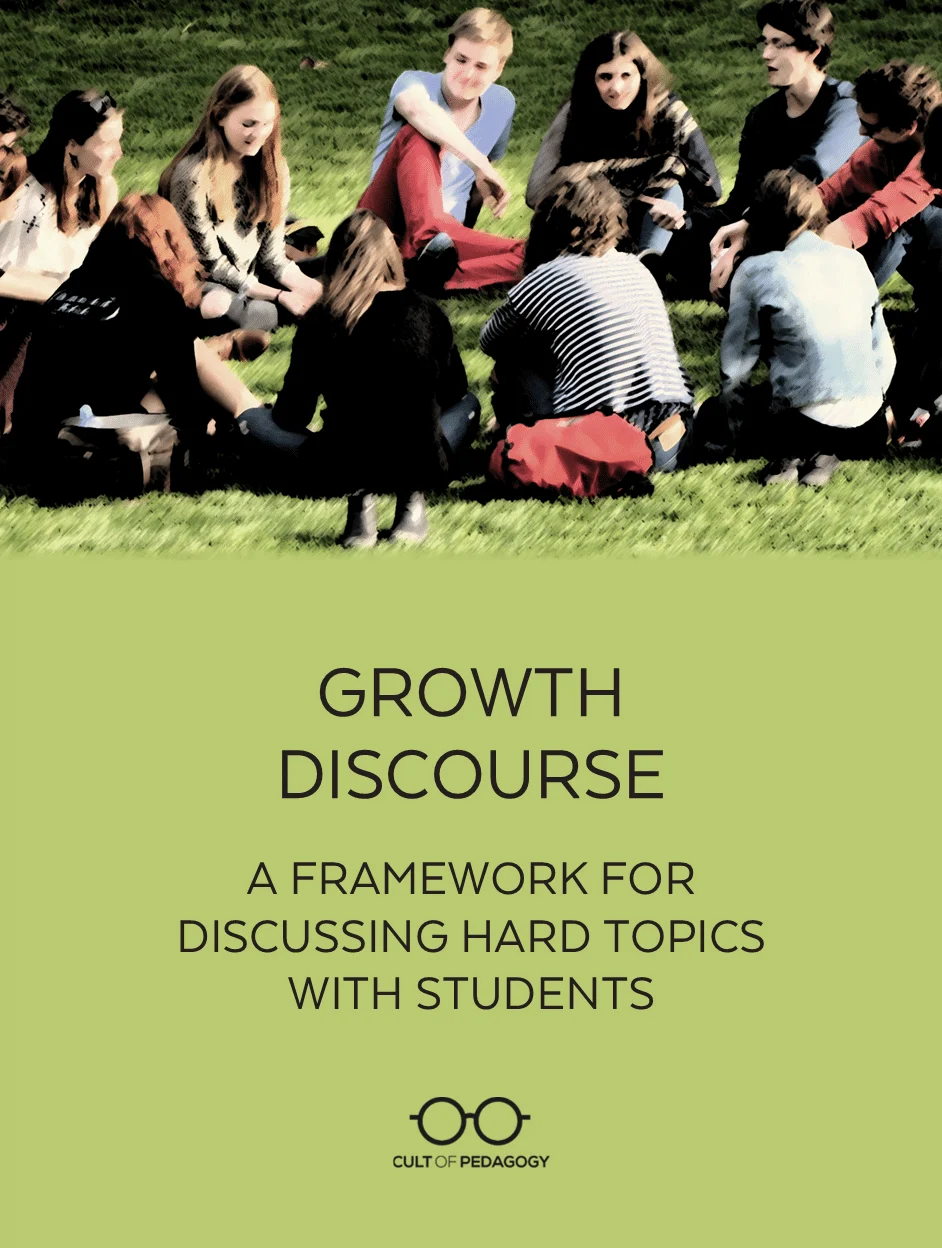
In an era increasingly defined by sharp divisions and the breakdown of constructive dialogue, the School for Ethics and Global Leadership (SEGL) has pioneered a transformative approach known as "growth discourse." This framework, designed for high school juniors, aims to equip students with the essential skills to navigate complex and often contentious topics, fostering meaningful conversations that lead to personal and collective development rather than conflict. The initiative comes at a critical time when differences of opinion, extending beyond trivial matters like pizza toppings, frequently devolve into emotional outbursts, severed relationships, and a profound sense of societal fragmentation.
The challenge of fostering productive conversations has long occupied educators and policymakers. Recent studies, such as those from the Pew Research Center, consistently highlight rising political polarization and declining trust in institutions, underscoring the urgency for effective communication strategies. Surveys of teachers across the United States reveal growing concerns about students’ abilities to engage respectfully with diverse viewpoints, often mirroring the wider societal trends they observe. It is within this complex backdrop that SEGL’s growth discourse emerges as a beacon, offering tangible solutions for nurturing intellectual courage and empathetic understanding among the next generation of leaders.
The Genesis of Growth Discourse at SEGL
The School for Ethics and Global Leadership (SEGL), a selective semester-long residential program, was founded in 2009 by Noah Bopp with a clear mission: to convene and mentor students from across the U.S. who possess varied values, viewpoints, experiences, and identities. The curriculum, emphasizing ethical thinking, leadership development, and international affairs, is meticulously crafted to empower students to drive positive change in the world. A cornerstone of this programming is growth discourse, an innovative methodology designed to move beyond mere "civil discourse" to actively facilitate intellectual and emotional growth through challenging conversations.
Noah Bopp, SEGL’s Head of School, articulated the foundational philosophy behind growth discourse in a recent interview. He emphasized that the framework is deliberately structured to challenge students, not to make discussions inherently easy or to enforce a superficial politeness. "The motivation for doing it is in the title," Bopp explained. "A lot of people are talking about civil discourse these days. But some people are asking, Why do I need to be civil in a time like this? We believe discourse that helps you grow is essential to our meaningful lives and is also central to a functioning civic ensemble." This reorientation from "civil" to "growth" shifts the mindset for both students and educators. For students, it reframes engagement as an opportunity for personal evolution, regardless of immediate comfort. For teachers, it elevates the objective beyond conflict prevention to actively seeking avenues for student development.
Navigating the Nuance: Beyond "Bothsidesism"
A critical aspect of SEGL’s approach is its commitment to encouraging genuine differences of opinion without falling into the trap of "bothsidesism" or false equivalence. This journalistic pitfall, which presents opposing viewpoints as equally valid even when one lacks factual basis, can undermine critical thinking and perpetuate misinformation. SEGL firmly asserts its nonpartisan stance but distinguishes this from neutrality on matters of established fact or ethical consensus.
"SEGL is nonpartisan. SEGL is not neutral," Bopp stated unequivocally. "We don’t say, ‘The Holocaust, good or bad, you decide,’ right? We don’t say in our science classrooms, ‘Climate change, is that real or not real?’" Instead, the school focuses on equipping students with robust critical thinking skills to evaluate arguments when reasonable, educated individuals genuinely disagree. This involves introducing students to the strongest possible arguments from various perspectives and challenging them to form their own informed conclusions.
The pedagogical rationale is profound: teaching how to think, rather than what to think, safeguards students against manipulation. Bopp underscored this, warning that shortcutting the critical thinking process makes students "susceptible to the next demagogue who comes along. And there are a lot of demagogues in this world right now." This commitment reflects a broader educational imperative to cultivate intellectual autonomy and resilience in an information-saturated age.
The Foundational Principles of Growth Discourse
SEGL’s growth discourse framework is built upon several interconnected principles, each designed to foster an environment conducive to deep learning and ethical engagement:
-
Begin with Belonging:
Before any truly challenging or vulnerable conversations can occur, participants must feel a profound sense of belonging and psychological safety. SEGL achieves this through explicit statements within its discourse guidelines, alongside intentional community-building activities that encourage students to share their identities and histories. Crucially, the program actively cultivates a diverse student body and faculty, ensuring a wide spectrum of backgrounds and viewpoints are represented. Bopp highlighted the practical necessity of this diversity: "If we have a really homogenous group of students, it’s very hard for us to address a difficult topic like Trump’s immigration policy, right? Because we’re going to get similar views and some students are going to feel excluded. But if I can set up an environment where I have students who represent many different backgrounds and many different points of view, and I show those students that they all belong here, then I can create an environment where those students are not on edge when we’re having these conversations." This principle acknowledges that perceived exclusion can shut down dialogue, while inclusion opens pathways to authentic exchange. -
Value Intent and Impact:
Discussions on sensitive issues inevitably carry the risk of unintentional harm. The interplay between a speaker’s intent and the actual impact of their words often becomes a flashpoint in such conversations. Growth discourse posits that both aspects are vital. Bopp articulated this delicate balance: "If I use, Oh, I’m so sorry, that wasn’t my intent, as if it’s a get out of jail free card, I probably need to do some reflection on the impact I’m having on others. On the other end of the scale, for me to assign a motive to another human being solely based on what that person made me feel, I am at least being unreflective and incurious." This principle encourages self-reflection on one’s own communication patterns and fosters empathy by urging individuals to consider the perspective of the person who felt impacted, while also advocating for charitable interpretation of others’ motives when appropriate.
-
Avoid Echo Chambers:
Human psychology often leads individuals to seek out those who share similar beliefs, creating intellectual "echo chambers" where existing views are reinforced and unchallenged. While finding solidarity in like-minded groups can be comforting, exclusive reliance on such spaces severely limits intellectual and personal growth. SEGL recognizes this natural tendency but encourages students to view these shared spaces not as endpoints, but as launching pads for re-engagement with broader, more diverse perspectives. The goal is to develop strategies for re-entering and contributing to wider dialogues, bringing insights from smaller groups into a larger, more complex exchange. This is particularly salient in the digital age, where algorithmic feeds often reinforce existing biases, making intentional avoidance of echo chambers a critical skill for informed citizenship. -
Follow the STAR Model:
Central to SEGL’s critical thinking pedagogy is the STAR model, an adaptation of Harvard Project Zero’s Thinking Routines. This structured approach guides students through a process of deep understanding before judgment, a vital skill in navigating complex ethical dilemmas. A sample lesson plan demonstrates its practical application in the classroom.-
SEE: This initial phase emphasizes comprehensive observation and understanding. Bopp describes it as "the most important part… to make sure you are seeing something as fully as you can before you decide what to think about it, before you make a judgment." Key questions in this stage include: "What can I understand before I judge? What do the experts say? What voices are missing from this conversation? How can we find those voices before we decide what we think?" This phase underscores the importance of information gathering, perspective-taking, and identifying potential biases or gaps in understanding.
-
THINK: Once a thorough "SEE" has been completed, students move to the "THINK" stage, where they formulate their own informed judgments. This involves grappling with the complexities, weighing different arguments, and ultimately deciding on a personal stance: "Ultimately, and particularly as a leader, you do have to decide, what do I think about this situation? Is it good? Is it bad? Is it right? Is it wrong?" This stage transitions from analysis to synthesis and decision-making.
-
ACT: A significant addition by SEGL to the Project Zero framework, the "ACT" phase compels students, as aspiring leaders, to translate their thoughts into concrete action. "Once you decide what you think – and this is a major addition we made to the Project Zero curriculum – as leaders, we have to decide what to do, how to act," Bopp explained. This could involve voting, advocating, making a personal choice, or confronting an injustice. It bridges the gap between intellectual understanding and real-world application, emphasizing the ethical responsibility inherent in leadership.
-
REFLECT: The final stage, "REFLECT," encourages students to critically evaluate the outcomes of their actions. "We want to reflect on what we just did. Did we like it? Did we not like it? What was the response that we got? What might we do next time?" This iterative process is crucial for continuous learning, as the insights gained from reflection feed back into the "SEE" phase when facing similar situations in the future, creating a continuous loop of growth and refinement.
-
Practical Advice for Educators

For teachers eager to implement growth discourse in their own classrooms, Bopp offers practical, actionable advice. While the original article omits the specific recommendations, drawing from the principles outlined, one can infer that these would include:
- Start Small and Build Trust: Begin with less contentious topics to establish the framework and build psychological safety within the classroom. Gradually introduce more challenging subjects as students gain confidence and familiarity with the process.
- Model the Behavior: Educators must embody the principles of growth discourse themselves, demonstrating active listening, intellectual humility, and a willingness to engage with differing viewpoints. The teacher’s role is not just facilitator but also a lead learner and participant.
- Provide Explicit Guidelines and Practice: Don’t assume students instinctively know how to engage in growth discourse. Explicitly teach the principles, provide opportunities for practice through structured activities, and offer constructive feedback. Use the STAR model as a consistent tool for analysis.
- Emphasize Process Over Outcome: While reaching conclusions is part of the "THINK" stage, the primary goal of growth discourse is the process of respectful, reflective engagement. Celebrate the effort to understand and articulate, even if consensus isn’t reached.
Cultivating the Potential for Good: A Vision for the Future
When questioned about his optimism regarding humanity’s capacity to overcome current divisions, Noah Bopp’s response was an immediate and emphatic "yes." He invoked Plato’s Republic, quoting, "Education is not about putting sight into blind eyes." This philosophical underpinning is central to SEGL’s ethos.
"The effective educator assumes that the power to learn is already present in the soul of the learner," Bopp elaborated. "And that means the goal of the educator is to give the learner places to look and questions to ask." He expressed profound faith that by exposing students to the world’s challenges ("places to look") and equipping them with universal ethical questions ("questions to ask"), the inherent goodness and capacity for growth within each individual will be revealed. "I have a fundamental belief in the goodness of every human being. Maybe that’s naive. But it sure helps me as a teacher and it sure helps me these days."
This optimistic outlook, grounded in a belief in human potential and the transformative power of education, underscores the long-term implications of frameworks like growth discourse. By fostering critical thinking, empathy, and the courage to engage with complexity, SEGL is not merely teaching discussion techniques; it is cultivating the civic leaders and ethically informed citizens essential for navigating the challenges of the 21st century. The replication of such models across educational institutions could play a crucial role in reweaving the fabric of civil society and fostering a more understanding and productive global community.
For educators and institutions seeking to implement or adapt this powerful framework, the SEGL faculty stands ready to offer support. Inquiries can be directed through their website or by contacting Noah Bopp directly at [email protected]. As the need for constructive dialogue intensifies, initiatives like growth discourse offer a hopeful and pragmatic path forward.