


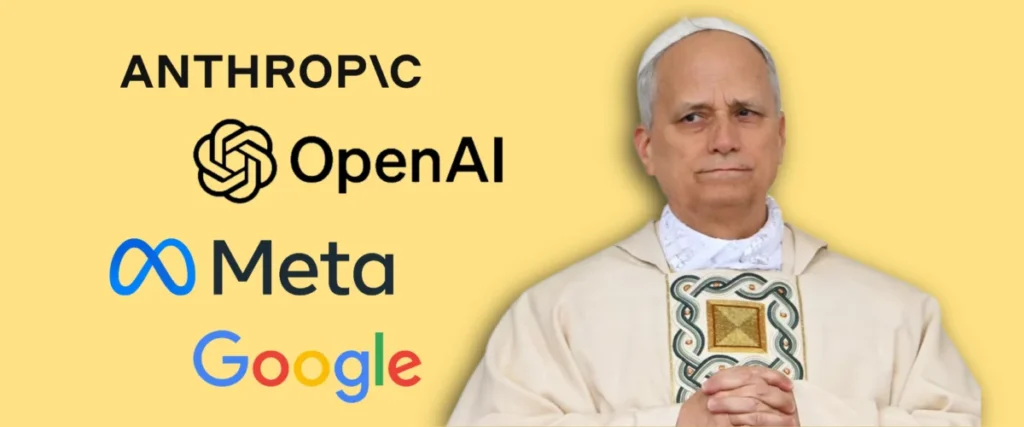
Last fall, a pivotal closed-door meeting convened at the Vatican, bringing together an eclectic assembly of religious thinkers, distinguished academics, and leading figures from the technology industry to deliberate on the profound ethical implications of artificial intelligence. This unprecedented gathering underscored the Holy See’s proactive engagement with one of the most transformative technologies of our era, signaling a concerted effort to anchor AI’s development in universal human values. Among the participants was Meghan Sullivan, a respected philosopher from the University of Notre Dame, whose observations offered a rare glimpse into the complex interplay of technology, spirituality, and human purpose at the highest levels.
The Vatican’s Enduring Role in Ethical Discourse
The Vatican has historically positioned itself as a crucial voice in global ethical debates, often convening experts to address challenges posed by scientific and technological advancements. From bioethics and nuclear disarmament to environmental stewardship, the Holy See has consistently sought to provide a moral framework rooted in human dignity and the common good. Its engagement with AI is a natural extension of this tradition, recognizing that artificial intelligence, with its potential to reshape society, economy, and even human identity, demands careful ethical consideration beyond mere technical specifications. The meeting, while private, aimed to foster a dialogue that transcends disciplinary boundaries, bringing spiritual wisdom to bear on technological innovation. Such dialogues are not merely academic exercises but represent a strategic effort by the Vatican to influence the trajectory of technologies that will profoundly impact billions of lives.
A Moment of Reflection: Tech Leaders and the Search for Values
Sullivan recounted a particularly striking moment from the Vatican meeting in a recent newsletter. Attending an optional Catholic Mass held in an ancient church, she was surprised to find one of the prominent tech leaders, typically associated with a more casual Silicon Valley aesthetic, sitting quietly in the pews. Dressed in a brown suit and tie, a departure from his usual attire, he absorbed the sanctuary’s ambiance as morning light streamed in. This unexpected sight prompted a conversation after the service. The tech leader, who identified as non-Catholic, offered a profound explanation for his presence: "We’re building something that is going to change life as we know it. I want to make sure I keep in touch with what humans have always cared about. This is a place that takes care of those values."
This candid admission illuminates a critical tension within the AI industry. While often portrayed as relentlessly forward-looking and disruptive, there appears to be a growing recognition among some of its architects of the immense responsibility they bear. The tech leader’s search for "what humans have always cared about" in a sacred space suggests a yearning for foundational ethical principles that can guide the development of technologies with unprecedented power. It hints at a realization that technical prowess alone is insufficient, and that the creation of artificial intelligence necessitates a deep engagement with philosophy, ethics, and indeed, spiritual traditions that have long grappled with questions of meaning, purpose, and human flourishing. This introspection, even if nascent, indicates a potential shift from a purely utilitarian or profit-driven approach to one that acknowledges the broader human and societal impact of their creations.
The "Religious Fervor" and the "Tower of Babel" Analogy
The original analysis of this interaction posited a "chilling" implication, suggesting that the AI industry is "suffused with a religious fervor." This perspective, echoed by commentators like Elizabeth Lopatto, argues that many AI companies have veered from developing practical, useful products toward a more grandiose ambition of "inventing the future." In this framing, the industry assumes a dual role of "priest and prophet," not merely predicting but actively shaping a future often described with messianic undertones. This narrative frequently involves warnings of existential risks (x-risk) and the promise of a radical societal transformation, sometimes invoking a sense of impending, almost divine, technological wrath if humanity fails to adapt.
This "religious fervor" manifests in various ways: the fervent belief in the inevitability of Artificial General Intelligence (AGI) and superintelligence, the often-utopian visions of post-scarcity societies enabled by AI, and the dire warnings of job displacement and societal upheaval that necessitate solutions like Universal Basic Income (UBI). Critics argue that this rhetoric, while perhaps stemming from genuine conviction, can obscure immediate ethical concerns, distract from the need for robust regulation, and foster a sense of technological determinism that disempowers human agency. The metaphor of a "digital deity" being summoned, with developers attempting to "appease" it, underscores a concern that the technology is being treated with a reverence that might bypass critical human oversight and democratic accountability.
Pope Leo XIV’s "Magnifica Humanitas": A Moral Counterpoint
Against this backdrop of intense technological development and often-apocalyptic rhetoric, the Vatican has offered a decisive moral counterpoint. Just last week, Pope Leo XIV released a monumental 42,000-word encyclical titled "Magnifica Humanitas" (Magnificent Humanity), specifically addressing the multifaceted challenges posed by artificial intelligence. An encyclical represents one of the highest forms of papal teaching, typically addressed to the bishops, clergy, and faithful worldwide, but often extending its moral guidance to "all people of good will." Its extensive length and comprehensive scope highlight the gravity with which the Holy See views the implications of AI for human dignity and the future of society.
Early summaries of "Magnifica Humanitas," as reported by major news outlets like The New York Times, indicate that Pope Leo XIV is far from ready to "meekly acquiesce" to the AI future as presented by some of its most ardent proponents. Instead, the encyclical issues a powerful call for a more human-centric approach, emphasizing ethical principles over technological inevitability. A key exhortation from the document serves as its moral core: "With the heart of a shepherd and a father, I ask everyone to abandon the construction of yet another Tower of Babel and to join forces in building up the common good, so that humanity will never lose its beauty, and the world once again will come to recognize the human heart as the place where God desires to dwell."
This reference to the Tower of Babel is profoundly significant. In biblical tradition, the Tower of Babel symbolizes human hubris and ambition pursued without divine guidance, leading to confusion, division, and ultimate failure. Pope Leo XIV’s use of this metaphor directly challenges the notion that technological advancement, pursued without a robust ethical compass and a focus on the common good, can lead to genuine human flourishing. It implies that unchecked technological ambition, driven by a desire for power or radical transformation rather than service to humanity, risks creating a fragmented and dehumanized world. The encyclical implicitly argues that technology should be a tool to enhance human life and build up society, not to create a new reality that displaces fundamental human values and relationships. It is a powerful affirmation that humanity, not technology, must remain at the center of progress.
A Chronology of Shifting Narratives in AI Development
The past few years have witnessed a fascinating evolution in the public discourse surrounding AI, marked by distinct phases:
Phase 1: The Era of Existential Warnings and Utopian Promises (Approx. 2021-Early 2024)
This period was characterized by a pervasive sense of awe and apprehension regarding AI’s rapid advancements. Key figures in the industry, such as Sam Altman of OpenAI and Dario Amodei of Anthropic, frequently voiced concerns about existential risks (x-risks) posed by advanced AI, envisioning scenarios ranging from superintelligent machines surpassing human control to widespread job automation.
- Job Displacement and UBI: Predictions were rampant that AI would automate vast swathes of human labor, leading to unprecedented unemployment. Consequently, discussions around Universal Basic Income (UBI) gained significant traction, presented as an inevitable societal safety net. Sam Altman, for instance, openly discussed the need for "guaranteed income" as AI models automated all work, suggesting it was a necessary societal adaptation.
- "Machines of Loving Grace": The concept of AI evolving into benevolent, superintelligent entities, sometimes referred to as "machines of loving grace," gained currency. This vision often blended technological determinism with a somewhat utopian hope for AI to solve humanity’s grand challenges, provided it was aligned with human values.
- Public Anxiety: This narrative, heavily amplified by media, contributed to a measurable increase in public anxiety about job security, the future of work, and the potential for AI to destabilize society. Polling data from this period often showed a significant percentage of the population expressing concern about AI’s impact on their livelihoods. For example, a 2023 Pew Research Center study found that over 60% of Americans were more concerned than excited about the increasing use of AI.
Phase 2: The Recent Course Correction and Re-grounding (Early 2024-Present)
In recent weeks, a noticeable shift in tone has emerged from leading technology executives, moving away from the more speculative and alarmist rhetoric towards a more pragmatic and grounded perspective.
- Jensen Huang’s "BS" Call: Nvidia CEO Jensen Huang, a pivotal figure in the AI hardware ecosystem, publicly "called BS" on executives who claimed to be laying off employees due to AI. He dismissed such excuses as "lazy" and merely a way for them "to sound smart," implying that many job cuts were likely driven by other factors like economic pressures or poor management decisions, rather than genuine AI-driven automation.
- Sam Altman’s Admission: Perhaps even more significantly, Sam Altman, a prominent voice in the earlier "x-risk" discourse, publicly admitted he had been "pretty wrong" about his previous predictions concerning AI’s immediate impact on job automation. This retraction signals a recalibration of expectations within the industry itself, acknowledging that the path to widespread automation is more complex and protracted than initially anticipated.
- Underlying Drivers: This shift is likely multi-faceted. It could be a response to growing public skepticism, increased regulatory scrutiny (e.g., the European Union’s AI Act, various national AI initiatives), or a pragmatic realization that the technology, while powerful, is not yet at a stage to entirely displace human labor on a massive scale. It also represents a strategic effort to manage public perception and mitigate the "anxiety and fear" that the earlier rhetoric inadvertently spread. The industry may be recognizing that a narrative focused on imminent job loss and existential threats is not conducive to fostering public trust or securing broader societal adoption.
Broader Implications and the Path Forward
The Vatican’s intervention through "Magnifica Humanitas" and the evolving discourse among tech leaders highlight several critical implications for the future of AI:
- The Primacy of Human Values: The encyclical firmly reasserts the Catholic Church’s long-standing emphasis on human dignity, the common good, and the ethical use of technology. It serves as a powerful reminder that technological progress must always be subservient to human flourishing, not the other way around. This perspective encourages a holistic view of AI development that considers its impact on individuals, communities, and the global society.
- Accountability and Responsibility: The call for AI leaders to focus on "useful products" and the "common good" implies a demand for greater accountability. It suggests that technological innovation cannot be divorced from its societal consequences, and that developers bear a significant ethical responsibility for the tools they create. This shift aligns with growing calls from policymakers and ethicists for more transparent, responsible, and human-centered AI design.
- Rebuilding Public Trust: The "p(doom) genie" metaphor aptly captures the challenge ahead. The earlier period of heightened fear-mongering about AI’s potential dangers has created a reservoir of public anxiety that will be difficult to dispel. The recent recalibrations by tech executives, while welcome, must be sustained and translated into tangible actions to rebuild public trust. This involves clear communication, realistic expectations, and a demonstrated commitment to ethical development.
- The Need for Multidisciplinary Dialogue: The Vatican meeting itself, bringing together diverse perspectives, exemplifies the urgent need for multidisciplinary dialogue. The complexities of AI cannot be addressed solely by engineers or ethicists but require collaboration across fields including philosophy, theology, social sciences, law, and policy. Such dialogues are essential for crafting comprehensive ethical frameworks and regulatory approaches that are both technologically informed and deeply human-centered.
- Shifting from Prediction to Purpose: The transition from predicting an "inevitable" future to focusing on building "useful tools" marks a positive evolution. It encourages a proactive stance where humanity shapes AI, rather than being passively shaped by it. The Pope’s message is a clear call for purposeful innovation—technology that serves humanity’s genuine needs and enhances our shared world, rather than fueling unchecked ambition or creating new forms of division.
In conclusion, the confluence of the Vatican’s robust ethical pronouncements and the evolving narrative within the AI industry signals a pivotal moment. The era of unchecked "religious fervor" and grand, often fear-inducing, predictions about AI’s destiny may be giving way to a more grounded and responsible approach. While some of these shifts might be attributed to PR damage control, their existence is a positive development. The imperative remains for technology executives to leave the realm of prophecy to spiritual leaders and instead channel their formidable intellect and resources into building technologies that genuinely serve humanity, enhance the common good, and respect the enduring values that define our shared human experience.