



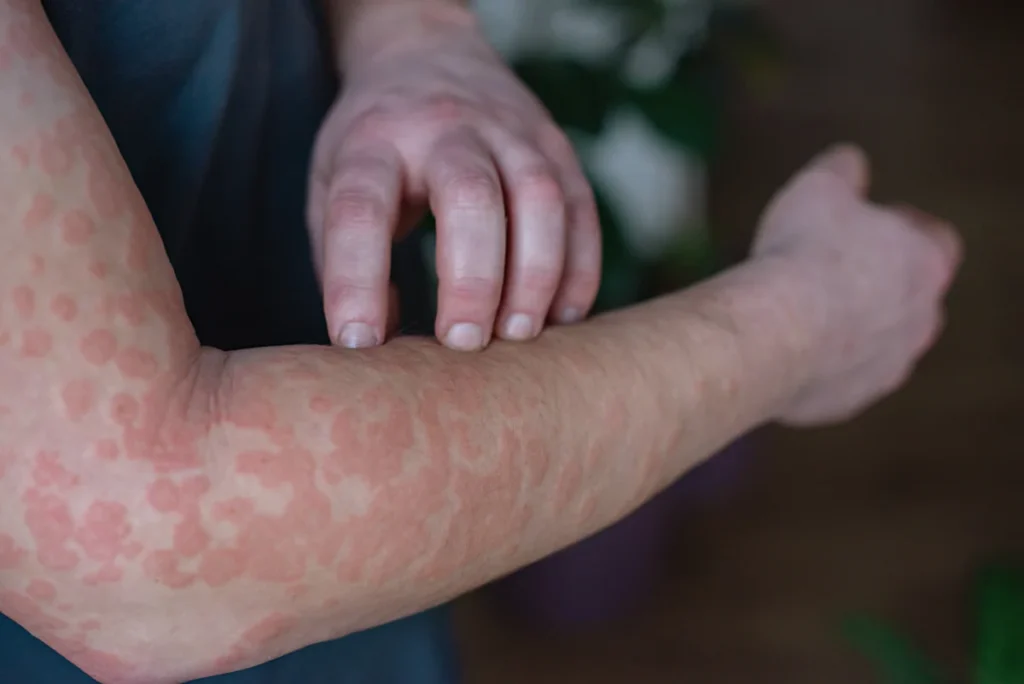
The human immune system is a sophisticated biological fortress designed to identify and neutralize pathogenic threats such as bacteria, viruses, and parasites. Under normal circumstances, this system operates with remarkable precision, distinguishing between the body’s own cells and foreign invaders. However, in rare instances, the immune system undergoes a profound malfunction, misidentifying harmless environmental elements as lethal threats. While many people suffer from common allergies to pollen, dander, or specific foods, a minuscule fraction of the global population faces a far more paradoxical challenge: a hypersensitivity to water. Known medically as aquagenic urticaria, this rare condition transforms the most fundamental substance for life into a source of physical distress, causing the skin to erupt in painful, itchy hives upon contact with moisture in any form.
Aquagenic urticaria is characterized by the rapid onset of wheals or hives following skin contact with water, regardless of its temperature, salinity, or chemical composition. Unlike more common forms of urticaria that might be triggered by heat (cholinergic urticaria) or cold (cold urticaria), aquagenic urticaria is specifically reactive to the presence of water molecules on the epidermis. Because water is an inescapable component of the human environment and necessary for basic hygiene, the diagnosis of this condition often marks the beginning of a lifelong struggle to navigate a world that is nearly 71 percent covered by the very substance that triggers an immune revolt.
The Biological Mechanism of Water-Induced Hives
Despite decades of dermatological study, the exact pathophysiology of aquagenic urticaria remains a subject of intense scientific investigation. Most researchers agree that the condition is not a "true" allergy in the traditional sense, as the body is not reacting to the water molecule (H2O) itself. Instead, two primary theories dominate the medical literature regarding how water triggers an inflammatory response.
The first theory suggests that water acts as a solvent, dissolving a yet-unidentified substance—or pro-antigen—already present on the surface of the skin. Once dissolved, this substance is able to penetrate the deeper layers of the dermis, where it encounters mast cells. Mast cells are specialized white blood cells that serve as the "alarm system" of the immune system. When they detect a perceived threat, they undergo a process called degranulation, releasing a cocktail of inflammatory chemicals, most notably histamine. Histamine causes the blood vessels to leak fluid into the surrounding tissue, resulting in the characteristic swelling, redness, and itching of hives.
The second theory proposes that a sudden change in osmotic pressure occurs when water makes contact with the skin. This pressure shift may physically disturb the mast cells or the surrounding nerves, leading to an immediate release of inflammatory mediators. Regardless of the specific trigger, the result is the same: within one to fifteen minutes of exposure to rain, snow, sweat, tears, or tap water, the patient develops small, 1-to-3-millimeter wheals surrounded by areas of redness (erythema). These lesions are typically intensely pruritic (itchy) and can sometimes cause a burning sensation.
Historical Context and Clinical Chronology
The medical community first formally recognized aquagenic urticaria in 1964, when dermatologists Walter B. Shelley and Florence V. Rawnsley published a landmark report describing the condition. Since that initial discovery, the medical literature has recorded fewer than 150 cases worldwide. However, experts like Dr. Amir Bajoghli, an adjunct professor at Georgetown University School of Medicine and a practicing dermatologist, suggest that the actual prevalence may be higher. The rarity of the condition often leads to misdiagnosis, as many general practitioners may attribute the hives to the temperature of the water or the chemicals found in swimming pools rather than the water itself.
Clinical data indicates that aquagenic urticaria most frequently manifests during puberty or early adulthood, although cases have been documented in young children. There appears to be a higher incidence among females than males, though the reason for this gender disparity is currently unknown. Because the condition is chronic, it does not typically resolve on its own, meaning patients must develop long-term management strategies to cope with the daily necessity of water exposure.
Diagnostic Procedures and the Water Provocation Test
Diagnosing aquagenic urticaria requires a meticulous process of elimination to ensure that the patient is not reacting to other physical stimuli. When a patient presents with a history of breaking out after bathing or being caught in the rain, dermatologists perform a "Water Provocation Test."

During this test, a room-temperature water compress (approximately 35 degrees Celsius or 95 degrees Fahrenheit) is applied to the patient’s torso for 20 to 30 minutes. It is crucial that the water is kept at skin temperature to rule out cold urticaria or heat-induced hives. If the patient is suffering from aquagenic urticaria, characteristic wheals will typically appear at the site of contact within minutes. If the initial test is negative, clinicians may extend the observation period, as some delayed reactions can take up to half an hour to manifest.
In addition to the water test, doctors often conduct "ice cube tests" or "hot bath tests" to differentiate aquagenic urticaria from other forms of physical urticaria. Only when these other triggers are ruled out is a formal diagnosis of water allergy confirmed.
The Daily Struggle: Hygiene, Weather, and Sweat
For those living with aquagenic urticaria, daily life requires constant vigilance and strategic planning. Simple activities that most people take for granted—such as taking a long shower, walking through a light drizzle, or exercising—become sources of significant physical pain and psychological stress.
Dr. Bajoghli notes that for his patients, hygiene routines must be radically altered. "My patient has to take much faster showers," he explains, noting that limiting exposure to approximately two minutes can keep the symptoms at a manageable level. "If he takes a longer shower, the symptoms are more severe and they persist longer." In some extreme cases, patients may only bathe once or twice a week, using specialized wipes or waterless cleansers to maintain hygiene while minimizing skin reactions.
Environmental factors pose an even greater challenge. A sudden rainstorm or high humidity can trigger a reaction. Furthermore, the body’s own physiological processes can become a threat. While some patients can tolerate their own sweat, others react to any form of moisture produced by their bodies, including tears and saliva. This can lead to a secondary condition known as social anxiety, as patients fear a reaction in public or during physical exertion.
The Paradox of Hydration: Why Drinking Water is Safe
One of the most baffling aspects of aquagenic urticaria is that patients can generally drink water without experiencing an internal allergic reaction. This highlights the unique nature of the condition as a cutaneous (skin-based) sensitivity rather than a systemic allergy to the H2O molecule.
When water is ingested, it is processed by the digestive tract. The mucosal lining of the gut operates differently than the external epidermis. "The gut, just like the skin and the lungs, is one of the first forms of defense," says Dr. Bajoghli. "But in this case, somehow, it’s not eliciting the response in the gut the way it does in the skin."
While most patients can hydrate normally, a very small subset of individuals with severe cases has reported discomfort or swelling in the throat when drinking water. These cases are exceptionally rare and usually require the patient to consume beverages with high sugar or mineral content, which alters the water’s properties enough to bypass the immune trigger.
Treatment Protocols and Emerging Therapies
While there is currently no cure for aquagenic urticaria, several pharmacological interventions can help mitigate the severity of the symptoms. The frontline treatment typically involves second-generation H1 antihistamines. These medications block the histamine receptors on cells, preventing the inflammatory response even if the mast cells degranulate.
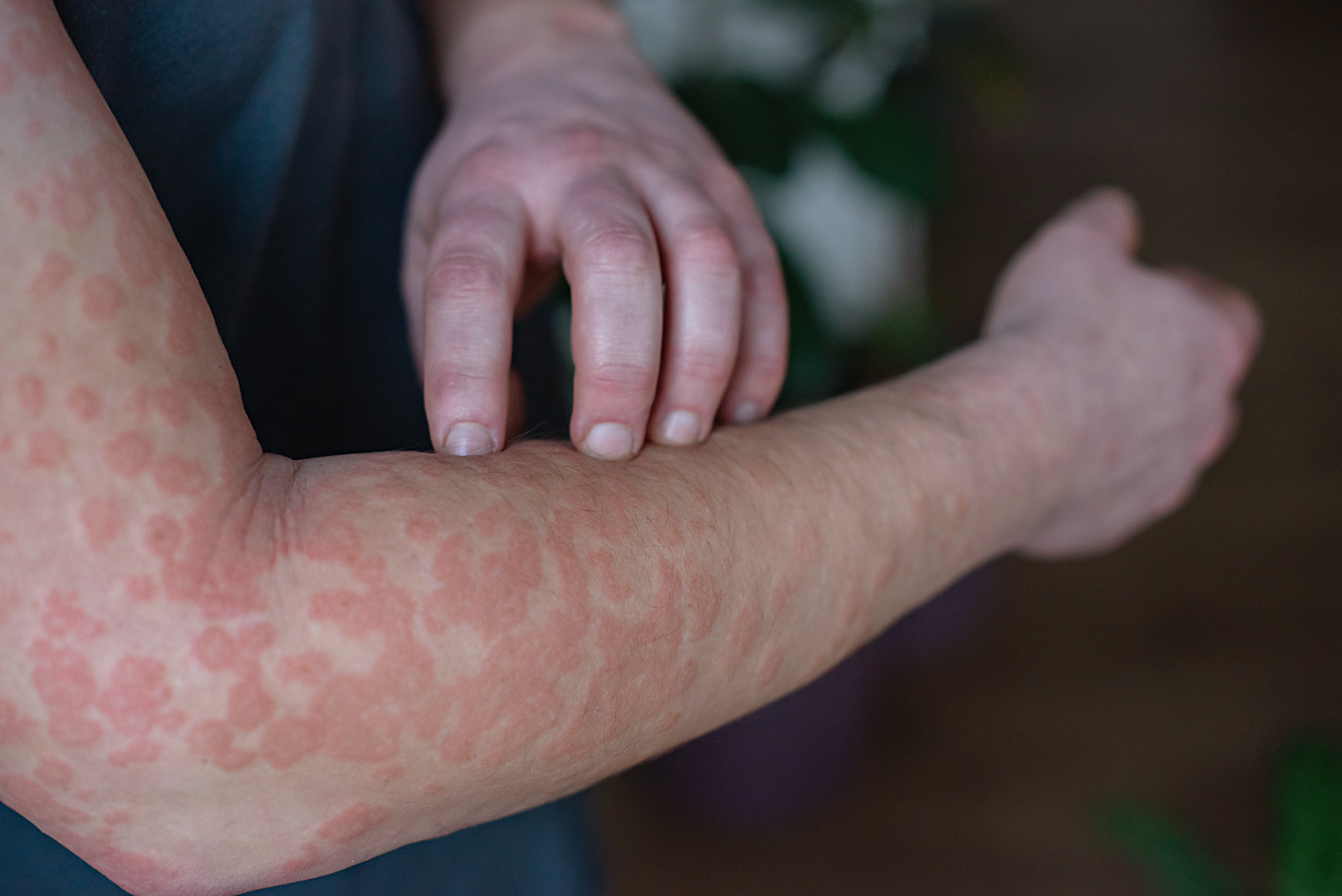
In more stubborn cases, doctors may prescribe older antihistamines like cyproheptadine, which has shown efficacy in treating physical urticarias. Timing is a critical factor in treatment; patients are often advised to take their medication approximately one hour before planned water exposure, such as a shower, to ensure the drug is active in their system.
For patients who do not respond to standard antihistamines, newer biological therapies are offering hope. Omalizumab (brand name Xolair), a monoclonal antibody originally designed for severe asthma and chronic spontaneous urticaria, has shown significant promise in treating aquagenic urticaria. Omalizumab works by binding to Immunoglobulin E (IgE), the antibody responsible for triggering mast cell activation. By lowering the amount of "free" IgE in the body, the drug raises the threshold required to trigger an allergic reaction.
Other supplementary treatments include:
- Barrier Creams: Applying petroleum-based products or thick emollients before showering can create a physical shield between the water and the skin.
- Phototherapy: Exposure to specific wavelengths of ultraviolet (UV) light can thicken the epidermis and reduce the reactivity of mast cells.
- PUVA Therapy: A combination of psoralen (a sensitizing medication) and UVA light has been used in severe cases to desensitize the skin.
Broader Implications and Future Research
The study of aquagenic urticaria provides valuable insights into the broader field of immunology and skin barrier function. It challenges the traditional understanding of "allergens" and forces researchers to look more closely at the complex chemical interactions occurring on the human skin surface.
The primary goal for future research remains the identification of the specific antigen involved. If scientists can determine exactly what substance on the skin is reacting with water to trigger mast cell degranulation, they may be able to develop targeted topical treatments or "neutralizing" washes that prevent the reaction from occurring in the first place.
Furthermore, the condition serves as a reminder of the psychological toll of rare diseases. Patients often face skepticism from peers or even medical professionals who find the concept of a "water allergy" unbelievable. Increasing awareness and providing accurate diagnostic pathways are essential for improving the quality of life for those living with this medical mystery.
As Dr. Bajoghli concludes, the medical community is still in the early stages of fully grasping this condition. "It’s still, medically, for us, a mystery. We’re really looking forward to finding out what that antigen is and hopefully one day solving this." For now, the small number of people affected by aquagenic urticaria must continue their delicate dance with the world’s most common substance, relying on fast showers and antihistamines to navigate a world that is fundamentally wet.