

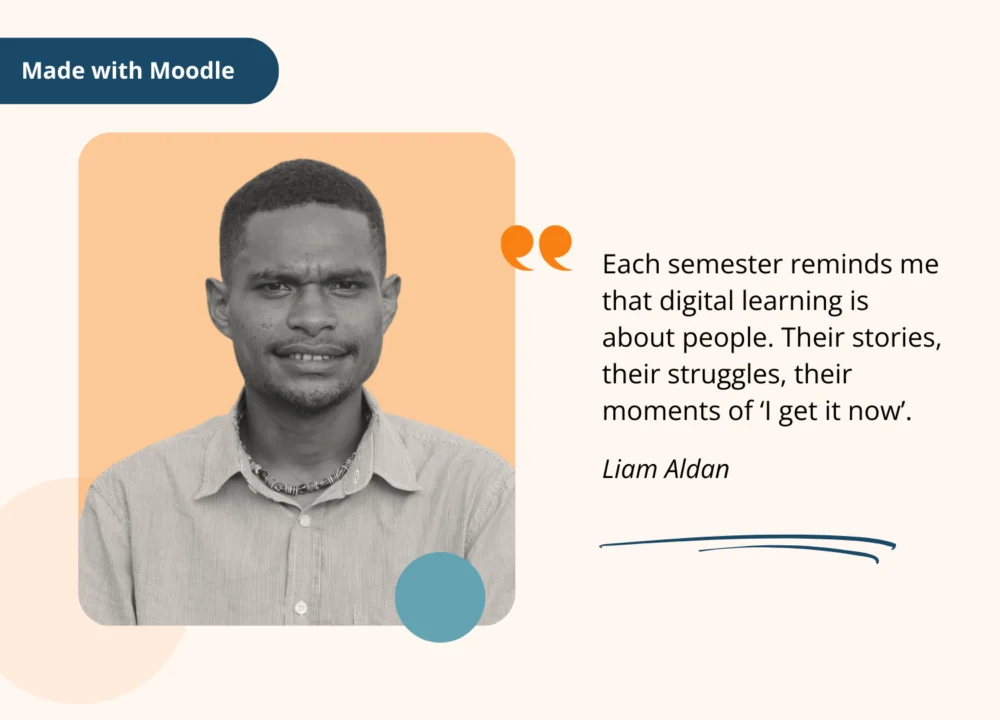
The pursuit of effective online education is a constant evolution, and at Divine Word University (DWU) in Papua New Guinea, this journey has been significantly shaped by the thoughtful application of the Moodle Learning Management System (LMS). Liam Aldan, a Moodle Learning Designer at DWU, embodies the "Made with Moodle" series’ commitment to showcasing innovative and impactful uses of the platform. His work over the past four years has demonstrably shifted the university’s digital learning landscape from a series of disconnected information repositories to a dynamic and supportive environment, underscoring the profound impact of intentional design on the student experience.
The Genesis of a Design Philosophy
Aldan’s entry into learning design at Divine Word University was not a predetermined path but rather one forged through observation, empathy, and a genuine desire to enhance student success. Upon his arrival, he encountered a digital learning environment that, while functional, often presented as a series of isolated modules. "When I look back, it’s hard to believe that this year marks my fourth year as a Moodle Learning Designer," Aldan remarks, reflecting on the significant transformation he has witnessed and facilitated. His initial observations revealed that students frequently struggled to navigate these digital "corridors," unsure of how to access and utilize the provided information. Simultaneously, academic staff, often pressed for time, found it challenging to create engaging and intuitive online courses within the Moodle LMS. This disconnect between the potential of the platform and the reality of its implementation became the catalyst for Aldan’s shifted perspective. He realized that simply "designing courses" was insufficient; the true objective was to "design clear, meaningful learning experiences."
This realization marked a pivotal moment, shifting Aldan’s focus from mere content delivery to pedagogical strategy and user-centered design. He began to view Moodle not just as a technical tool, but as a canvas for fostering deeper student engagement and comprehension. This proactive approach, driven by a need to address tangible challenges faced by both students and faculty, laid the groundwork for a more student-centric approach to online learning at DWU.
A Collaborative Approach to Enhancing Digital Pedagogy
Aldan’s strategy for revitalizing DWU’s Moodle environment was rooted in collaboration and a deep understanding of the needs of the university’s diverse stakeholders. He initiated a process of active engagement with academic staff, dedicating time to "listening to their challenges and learning their teaching styles." This empathetic approach allowed him to gain invaluable insights into the practicalities of their teaching and the specific hurdles they encountered when translating traditional pedagogy into a digital format.
By understanding the nuances of each lecturer’s subject matter and pedagogical approach, Aldan was able to translate these requirements into Moodle course structures that were both effective and user-friendly. This involved not only optimizing the existing Moodle infrastructure but also actively training and supporting colleagues in best practices for online course design. This mentorship component was crucial; it empowered faculty to take ownership of their digital course development, fostering a culture of continuous improvement. The university’s Moodle site, once a collection of disparate digital resources, began to transform into a cohesive and supportive learning ecosystem. This evolution was particularly beneficial for students with varying levels of digital literacy and access, ensuring a more inclusive and welcoming online educational experience.
The Visible Impact: From Corridors to Connection
The impact of Aldan’s design interventions was not merely aesthetic; it had a profound and measurable effect on the learning process itself. He likens the redesign of each course to "opening a window – more light, more structure, more room for engagement." This vivid metaphor captures the essence of the transformation. First-year students, who previously felt disoriented, now found clear pathways to their learning materials and activities. Lecturers, initially intimidated by the technological demands of online course creation, experienced a renewed sense of inspiration and confidence.
The quantitative and qualitative shifts in engagement were evident. Online course forums, once sparsely populated, became vibrant hubs for discussion and peer-to-peer learning. The integration of multimedia elements, such as videos, interactive quizzes, and engaging presentations, transformed static content into dynamic learning experiences. This richer, more immersive approach to online pedagogy directly addressed the need for active participation and deeper understanding, moving beyond passive consumption of information.
The success of these early interventions is often quantified through student feedback and faculty adoption rates. While specific university-wide data for this period is not publicly available, the anecdotal evidence provided by Aldan speaks volumes. The shift from a perception of "long corridors with closed doors" to "opening a window" signifies a substantial improvement in usability and pedagogical effectiveness, directly impacting student retention and academic performance.
A Continuous Evolution: Weaving Multimedia and Rethinking Assessment
Aldan’s work at Divine Word University is a testament to the fact that effective learning design is not a static achievement but an ongoing process. His role has expanded to encompass a more strategic and comprehensive approach to online education. This includes the development of consistent, reusable course templates that streamline the design process for faculty and ensure a uniform, high-quality user experience for students.
The integration of multimedia has become a cornerstone of his design philosophy. Beyond simple video embeds, Aldan focuses on utilizing multimedia to explain complex concepts, demonstrate practical skills, and provide diverse learning pathways that cater to different learning styles. This strategic use of rich media is supported by research indicating that well-integrated multimedia can significantly improve knowledge retention and comprehension. For instance, a meta-analysis published in the Journal of Educational Psychology has consistently shown that multimedia learning, when designed effectively, can lead to deeper understanding and better transfer of knowledge compared to text-only presentations.
Furthermore, Aldan is actively involved in helping staff "rethink what online learning could look like," particularly in the realm of assessment. This involves moving beyond traditional, summative assessments that often favor rote memorization. Instead, there’s a growing emphasis on formative assessments that provide ongoing feedback, encouraging continuous learning and skill development. This could include the implementation of authentic assessments, such as problem-based learning scenarios, digital portfolios, or collaborative projects, all facilitated through Moodle’s robust assessment tools.
The implications of this shift are far-reaching. By fostering a more dynamic and engaging online learning environment, DWU is not only enhancing the immediate educational experience of its students but also preparing them with the digital literacy and critical thinking skills necessary for success in an increasingly interconnected world. This aligns with broader trends in higher education, where institutions are increasingly recognizing the need to embrace flexible and technology-enhanced learning models to meet the evolving demands of the global workforce.
The Human Element: Stories of "I Get It Now"
At the heart of Liam Aldan’s dedication lies a profound understanding that digital learning, at its core, is about people. His work is driven by the desire to witness those pivotal moments of comprehension – the "I get it now" instances that signify genuine learning and intellectual growth. This human-centric perspective is what truly elevates his contributions beyond technical proficiency.
One particular anecdote stands out as a poignant illustration of his impact. Aldan recounts a moment when a first-year student, overwhelmed by the initial transition to university and online learning, expressed profound relief and understanding: "’I actually understand where everything is now,’ she told me." For Aldan, these simple words carried immense weight. They validated his belief that "thoughtful design really does change the learning experience – in ways people don’t always see." This sentiment underscores the often-invisible yet critical role of learning design in demystifying complex systems and empowering individuals to engage confidently with their educational journey.
This focus on the student’s journey is echoed in broader educational research. Studies on student engagement consistently highlight the importance of clear navigation, accessible resources, and supportive learning environments in fostering academic success and reducing attrition rates. The impact of effective learning design, as championed by Aldan, directly contributes to these positive outcomes by creating a more equitable and empowering educational experience.
A Legacy of Empowerment and Innovation
Liam Aldan’s journey at Divine Word University exemplifies the transformative power of Moodle when wielded with intention and a deep commitment to the learner. His work has not only optimized a digital platform but has fundamentally reshaped how knowledge is imparted and acquired within the institution. By prioritizing user experience, fostering collaboration, and embracing innovation, Aldan has cultivated a Moodle environment that is not merely a repository of information but a vibrant ecosystem for learning, growth, and empowerment.
The "Made with Moodle" series continues to shine a light on individuals like Liam Aldan, celebrating their ingenuity and dedication. These stories serve as inspiration for educators and institutions worldwide, demonstrating that with thoughtful design and a human-centered approach, Moodle can indeed be a powerful catalyst for meaningful and impactful learning experiences. The ongoing evolution of online education at DWU, driven by Aldan’s vision, promises to continue shaping the academic futures of countless students, one "I get it now" moment at a time.