



In a critical juncture for educational systems, particularly within the United States, the fundamental element of student voice has been increasingly marginalized amidst a prevailing focus on standardized test scores, rigid top-down curricula, and metrics of success that often fail to capture the holistic development and humanity of students. This narrow focus has not only fallen short in its primary objective of elevating academic performance, as evidenced by recent data indicating a decline in reading scores to new lows on the NAEP assessments, fueled by significant drops among struggling students (Schwartz, 2025), but it has also contributed to a palpable dissatisfaction within the educational community. A recent survey revealed that nearly half of all educators perceive student behavior as worse than pre-pandemic levels, a statistic that has alarmingly escalated in just two years (Stephens, 2025). This confluence of declining academic outcomes and deteriorating school environments underscores an urgent need for a fundamental re-evaluation of current educational strategies. While pockets of excellence undeniably exist within individual schools, the broader system frequently misses the mark, persistently attempting to resolve these deep-seated issues without genuinely engaging with the individuals most profoundly affected: the students themselves.
The Crisis in Education: A Call for New Approaches
The current state of education reflects a systemic challenge that transcends mere pedagogical adjustments. The relentless pursuit of quantifiable outcomes, often through high-stakes testing, has inadvertently fostered an environment where the unique experiences, perspectives, and emotional well-being of students are overlooked. This detachment from the student experience manifests not only in academic performance but also in the broader school climate. Reports of increased behavioral issues, declining student engagement, and a growing sense of disaffection among learners highlight the inadequacy of approaches that do not account for the human element of education. The long-term implications of this trend are significant, potentially leading to a generation of students who feel unheard, disempowered, and disengaged from their own learning journey and civic responsibilities. The prevailing model, largely characterized by an emphasis on compliance over creativity and rote memorization over critical thinking, has struggled to adapt to the complex social and emotional needs of contemporary students, particularly in the wake of unprecedented global disruptions.
The Genesis of Street Data: A Paradigm Shift
A promising alternative to these conventional, often ineffective, school improvement models emerged four years ago with the publication of Street Data: A Pathway Toward Equitable, Anti-Racist Schools. Authored by Shane Safir and Jamila Dugan, this seminal work introduced an innovative approach to school improvement that diverged significantly from existing frameworks. Street Data champions a methodology centered on slow, deliberate listening sessions, specifically targeting students at the margins—those whose voices are historically underrepresented and whose educational needs frequently remain unmet. The core premise is that authentic solutions to systemic problems can only be developed by directly engaging with the lived experiences of those most impacted. From these deeply empathetic listening sessions, new strategies are conceived, rigorously piloted, and iteratively refined. This process is then reinforced by subsequent listening sessions, creating a continuous feedback loop that ensures changes are genuinely responsive and effective. Unlike numerous other school improvement programs, many of which are prohibitively expensive and often yield superficial results, the Street Data model presented a cost-effective and inherently human-centered alternative, offering a pathway to meaningful, sustainable change. Its focus on qualitative data—the "street data"—rather than solely quantitative metrics, marked a significant departure, advocating for an understanding of the intricate social and emotional landscapes within schools.
From Theory to Practice: The Cult of Pedagogy’s Role
The potential of the Street Data methodology quickly garnered attention within the educational community. The Cult of Pedagogy podcast played a pivotal role in disseminating this new approach, commencing with an interview with authors Shane Safir and Jamila Dugan in episode 178. Recognizing the profound implications of their work, the platform further committed to illustrating the practical application of Street Data. This commitment materialized in a mini-documentary produced by Cult of Pedagogy, which captured Safir and Dugan guiding two schools through the Street Data process. This visual resource offered educators an invaluable, up-close perspective on how the approach functioned in real-world settings. A year later, an eight-episode video series was released, detailing further implementations and insights, culminating in a follow-up podcast conversation with some of the project participants in episode 203. This systematic progression, from theoretical introduction to practical demonstration and subsequent reflection, underscored the growing interest and urgent need among educators for actionable strategies rooted in student voice. The frequent query that emerged from these discussions was clear: What does it truly look like when teachers intentionally center student voice and agency in their daily pedagogy? If a school is genuinely invested in the Street Data process and committed to transforming its practices, what specific classroom-level strategies would they employ?

Introducing Pedagogies of Voice: A "Seed Store" for Educators
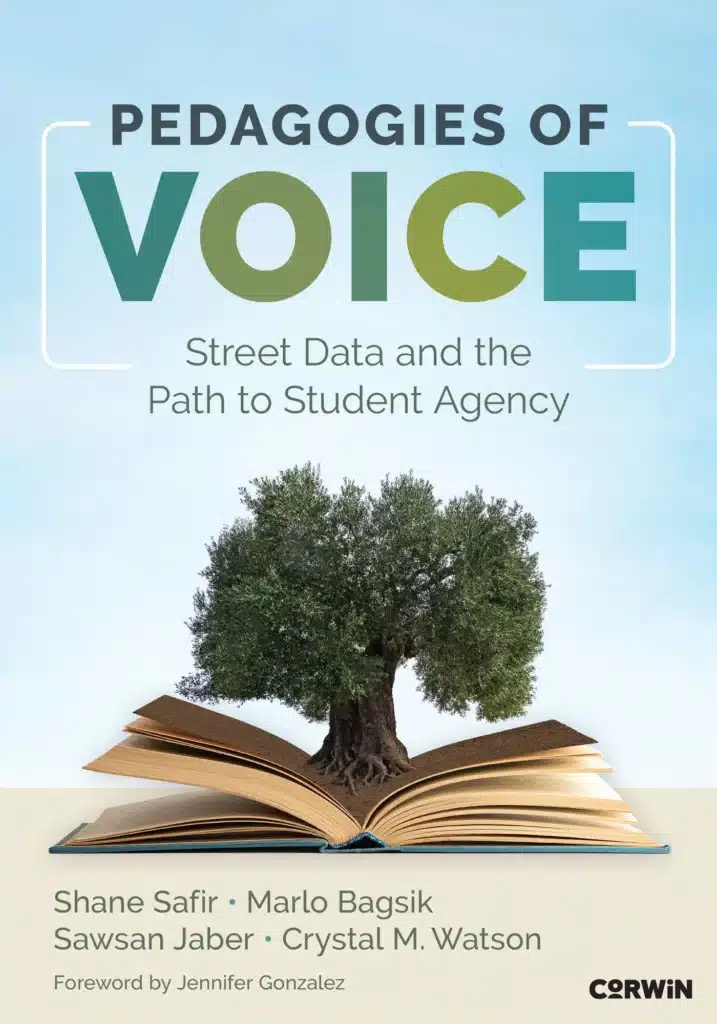
To address this crucial question, Shane Safir collaborated with three distinguished educators—Marlo Bagsik, Sawsan Jaber, and Crystal Watson—to co-author the new book, Pedagogies of Voice: Street Data and the Path to Student Agency. This collaborative effort bridges the gap between the overarching philosophy of Street Data and its concrete application in the classroom. Rather than offering a prescriptive, one-size-fits-all curriculum, the book is designed as a "seed store" of practices. This rich collection comprises small, replicable instructional moves and pedagogical strategies that educators can readily implement to center student voice, cultivate agency, and create fertile ground for deep, meaningful learning experiences. The book’s timing is particularly salient, arriving at a moment when marginalized voices, which had recently begun to gain much-needed recognition and space, are facing aggressive efforts to push them back into the shadows. Across the nation, alarming trends such as book bannings, teacher censorship, and broader threats to democratic principles underscore the urgency of empowering student voices. For educators navigating these challenging and often disheartening times, Pedagogies of Voice offers a compelling and practical response: to teach in ways that amplify student voice, fostering spaces where students can reflect critically, express themselves authentically, and engage in constructive action. It advocates for classrooms where democratic practices such as active listening, respectful challenging of diverse opinions, and collaborative problem-solving can flourish, ultimately helping students develop into individuals equipped to reshape the world for the better.
The accompanying podcast interview features the four authors, each sharing one or two of their favorite classroom practices from the book. These specific, actionable strategies provide immediate takeaways for educators seeking to integrate student voice into their teaching. The practices are organized into an Agency framework comprising four interconnected domains: Identity, Belonging, Inquiry, and Efficacy.
The Four Pillars of Student Agency: Identity, Belonging, Inquiry, and Efficacy
The framework outlined in Pedagogies of Voice is built upon four foundational domains, each essential for cultivating student agency and ensuring every learner thrives.
1. Practices that Awaken Identity: Valuing Every Learner’s Narrative
This domain is dedicated to creating learning environments where every student can unequivocally affirm, "My ways of being, knowing, and and learning are valued here." It recognizes that a student’s identity is intrinsically linked to their engagement and success in school. Sawsan Jaber highlights the power of storientation, a pedagogical approach that leverages personal and collective stories as a catalyst for learning and identity development. One powerful practice within this domain is the Identity Mandala. In this activity, students visually represent various facets of their identity—cultural heritage, passions, family stories, personal beliefs, and aspirations—within a circular design. This creative and introspective exercise allows students to explore and articulate their multifaceted identities, fostering self-awareness and providing teachers with invaluable insights into their students’ worlds. By sharing these mandalas, students not only validate their own experiences but also build empathy and understanding among peers, recognizing the richness and diversity within the classroom community. This practice moves beyond superficial introductions, inviting students to bring their full selves into the learning space, which is crucial for building trust and psychological safety.
2. Practices that Awaken Belonging: Creating Inclusive Learning Communities
The second domain focuses on practices that cultivate a profound sense of belonging, ensuring each student feels seen, acknowledged, and cherished within the classroom community. Crystal Watson emphasizes the transformative impact of a seemingly simple yet profoundly effective practice: circling up. This involves arranging classroom seating in a circular formation for a wide array of activities, from discussions and problem-solving to reflections and community-building exercises. Watson articulates the fundamental equity inherent in this arrangement: "I just love the fact that when you circle up, you’re all equidistant from the center. At any given time, an identity, an idea, a person can be centered. We’re not centering one or two identities or thoughts or ideals. We can center them all at any given time in our time together." This spatial arrangement subtly yet powerfully shifts the classroom dynamic, dismantling traditional hierarchies and fostering an environment of shared responsibility and equal participation.
Watson, whose work frequently centers on math education, finds circling up particularly potent in this subject area. She observes that many individuals who express a dislike for math often cite the rote, isolated nature of their past experiences: "You just sit there and do problems. That’s the problem. It should be more conversational. Argumentation should be a part of the math classroom." Circling up inherently invites dialogue, collaborative problem-solving, and the articulation of diverse mathematical thinking, transforming math from a solitary, often intimidating, pursuit into a communal, engaging exploration. This practice helps to democratize the learning process, ensuring that every voice has the opportunity to contribute and be heard, thereby strengthening the collective sense of belonging.
3. Practices that Awaken Inquiry: Empowering Critical Thought
This domain is dedicated to empowering students to ask probing questions, challenge assumptions, and construct knowledge in increasingly sophisticated ways. Shane Safir poignantly notes, "Inquiry has been stripped from the learning environments, so many places. The ability for young people to wrestle with big questions about the world, to be curious, to stay curious, to develop not just literacy, but critical literacy about text, about media, about the world." In an educational landscape often dominated by prescribed content and standardized answers, fostering inquiry is paramount. Practices in this domain encourage students to move beyond passive reception of information to active investigation. This can involve designing student-led research projects where students identify a topic of genuine interest, formulate their own research questions, and pursue answers through various sources and methodologies.
Another powerful inquiry-based approach involves the consistent use of Socratic seminars or student-led discussions where learners analyze complex texts, ethical dilemmas, or real-world problems. Here, the teacher acts as a facilitator, guiding students to deepen their understanding through open-ended questions, encouraging them to listen actively, build upon each other’s ideas, and respectfully challenge differing viewpoints. This cultivates not just content knowledge but also crucial critical thinking, communication, and argumentation skills. By engaging in authentic inquiry, students develop intellectual curiosity, resilience in the face of ambiguity, and the capacity for independent thought, all of which are vital for navigating a complex world. The emphasis here is on the process of questioning and discovery, rather than solely on the product of a correct answer, thereby giving students agency over their intellectual journey.
4. Practices that Awaken Efficacy: Equipping Students for Impact
The final domain focuses on cultivating learning spaces where every student develops a deep-seated belief in their ability to effect positive change on issues that genuinely matter to them. This is about moving students from understanding to action, fostering a sense of purpose and empowerment. Marlo Bagsik shared two interconnected practices in this domain that effectively bookend a week, creating a cyclical process of action and reflection.
The first practice is Micro-Activism or "Small Wins" Projects. This involves guiding students to identify small, tangible actions they can take to address issues within their immediate community—be it the classroom, school, or local environment. Instead of overwhelming students with large-scale, seemingly intractable problems, micro-activism focuses on achievable goals. For instance, students might initiate a campaign to reduce classroom waste, advocate for a new book in the library, or develop a peer tutoring system. The emphasis is on identifying a problem, brainstorming solutions, planning a concrete action, and executing it. This hands-on experience allows students to see the direct impact of their efforts, building their confidence and reinforcing the idea that even small actions can lead to meaningful change. It teaches practical skills in project management, collaboration, and advocacy.
The second practice, serving as a powerful close to the week, is Community Celebration and Reflection. After engaging in micro-activism, students gather to share their progress, challenges, and successes. This is not merely a reporting session but a dedicated space for collective celebration of effort and impact, however small. Students reflect on what they learned, what worked well, what could be improved, and how their actions contributed to the community. This reflective practice reinforces the sense of collective efficacy and personal agency. It allows students to internalize the lessons learned, acknowledge their contributions, and feel valued for their efforts. This practice fosters a sense of shared accomplishment and reinforces the idea that their voices and actions genuinely matter, inspiring continued engagement and a belief in their capacity to shape their world.
Broader Implications: Student Voice as a Bulwark for Democracy
The methodologies presented in Pedagogies of Voice extend far beyond the confines of the classroom, carrying profound implications for the health of democratic societies. In an era marked by increasing political polarization, challenges to factual discourse, and concerted efforts to suppress diverse perspectives, the cultivation of student voice and agency becomes a vital civic imperative. By empowering students to reflect, speak, and act critically and constructively, educators are not merely improving academic outcomes; they are nurturing future citizens equipped with the skills and conviction necessary to participate meaningfully in a democratic society.
The practices within Pedagogies of Voice directly counter the erosion of democratic values by fostering environments where critical thinking, respectful dissent, active listening, and collaborative problem-solving are not just taught but lived. When students are encouraged to challenge different opinions, engage in reasoned argumentation, and work together to find solutions, they are practicing the very tenets of democracy. Furthermore, by centering marginalized voices, these pedagogies actively resist forces that seek to silence, censor, and exclude. In a climate where intellectual freedom is under threat through book bans and restrictions on educational content, creating spaces where students are encouraged to explore complex ideas, question narratives, and articulate their own perspectives becomes an act of resistance and a safeguard for future democratic engagement. The book implicitly argues that a robust democracy depends on an educated citizenry capable of critical thought and empathetic engagement, qualities that are meticulously fostered through the pedagogies of voice.
Conclusion and Outlook
The insights and practical strategies offered by Pedagogies of Voice: Street Data and the Path to Student Agency represent a timely and essential contribution to educational reform. By systematically re-centering student voice, identity, belonging, inquiry, and efficacy, the book provides educators with a powerful framework to move beyond the limitations of traditional, top-down approaches. The challenges facing education—declining test scores, deteriorating student behavior, and systemic disengagement—demand a human-centered response. The Street Data philosophy, now made actionable through Pedagogies of Voice, offers a clear pathway forward. It calls for a fundamental shift in how schools approach improvement, advocating for deep listening, iterative learning, and the empowerment of every student. As educational leaders and teachers increasingly recognize the vital link between student well-being, engagement, and academic success, the principles and practices outlined in this work will undoubtedly become cornerstones of truly transformative and equitable educational systems, nurturing a generation of empowered individuals ready to shape a more just and democratic world.