

The modern corporate landscape is currently witnessing a paradoxical trend: while organizations are investing more capital than ever into identifying high-potential talent and formal leadership development programs, a significant portion of the workforce remains unprepared for the complexities of senior management. Data from the Global Leadership Forecast 2025, published by DDI, reveals that 80 percent of organizations report a lack of confidence in their current leadership pipelines. This widespread insecurity suggests that the traditional mechanisms of succession planning are failing to bridge the gap between identifying future leaders and ensuring they are genuinely equipped to lead when the moment arrives.
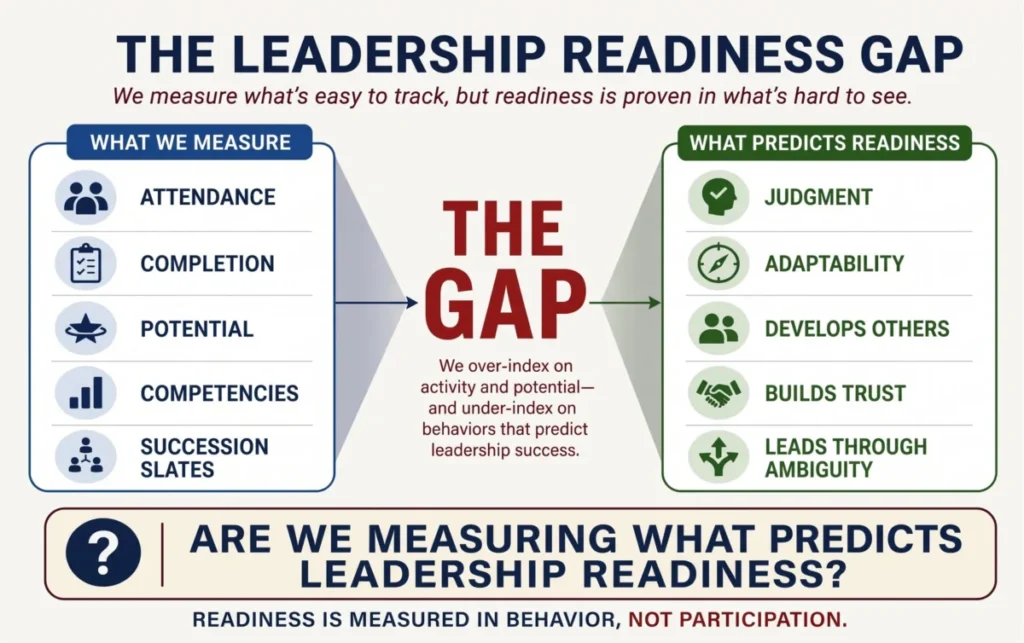
The distinction between "potential" and "readiness" has become the defining challenge for human resources departments and executive boards worldwide. While potential represents an individual’s latent ability to grow, readiness is an objective measure of whether a candidate possesses the specific capability, judgment, and experience required to navigate the unique challenges of a particular role. When this distinction is ignored, organizations risk a "readiness gap" that can undermine business continuity and organizational morale.
A Chronology of the Succession Planning Evolution
The shift in how companies approach leadership has evolved over several decades. Historically, succession planning was a static, top-down exercise—often a closed-door discussion among board members and CEOs to identify a singular successor. In the 1990s and early 2000s, the focus moved toward broad-based leadership development programs, where the goal was to create a "pool" of talent through standardized training modules and mentorship programs.
However, the volatility, uncertainty, complexity, and ambiguity (VUCA) of the post-2020 business environment has rendered these legacy models insufficient. The timeline of this shift is marked by three distinct eras:
- The Era of Potential (Pre-2010): Organizations relied heavily on performance reviews and "nine-box" grids to identify future leaders. The focus was on past performance as a predictor of future success.
- The Era of Programmatic Development (2010–2020): Companies moved toward massive investments in leadership academies and e-learning platforms, prioritizing participation metrics and standardized curriculum completion.
- The Era of Readiness (2020–Present): In the wake of global disruptions, the focus has shifted toward agility, contextual leadership, and "lived performance." Organizations are now moving away from theoretical training and toward immersive, project-based readiness testing.
Supporting Data and the Cost of Misalignment
The inability to accurately assess readiness is not merely an HR administrative concern; it carries significant financial and strategic implications. According to studies by organizational research firms, the cost of a failed executive hire can range from three to five times the individual’s annual salary, not accounting for the loss of institutional knowledge or the potential destabilization of teams.
The DDI research highlights that the primary point of failure is often the misalignment between the development program and the actual requirements of the role. When a leader who has been trained for a stable, growth-oriented environment is suddenly tasked with managing a major corporate turnaround or a digital transformation, the lack of context-specific readiness becomes glaringly obvious. The data suggests that organizations that fail to integrate "lived experiences" into their development cycles are 3.5 times more likely to report a lack of leadership bench strength.
The Anatomy of the Readiness Gap
The "readiness gap" occurs when a high-potential employee is promoted into a role that requires a fundamental shift in their professional identity. For instance, a technical expert who is promoted to a leadership role often struggles because the skills that made them successful—individual problem-solving and deep subject matter expertise—are the very skills they must relinquish to become an effective manager of people.
In many instances, the failure of a newly promoted leader is categorized as a personal shortcoming. However, a more rigorous analysis suggests that the failure often rests with the organizational system. If the promotion process does not include a trial-by-fire or a simulation that tests the candidate’s ability to influence, delegate, and manage ambiguity, the organization has effectively set the candidate up for a high-stakes failure.
Shifting from Activity to Impact: The New Metric
Leading organizations are now pivoting their measurement frameworks from "activity-based" metrics to "readiness-based" metrics. Traditional dashboards have long prioritized quantitative data:

- Number of participants in leadership training.
- Total hours of leadership education delivered.
- Completion rates of mentorship cycles.
While these metrics provide a snapshot of engagement, they offer zero insight into actual capability. A more robust, forward-looking framework, such as the one implemented by progressive firms like BDO Canada, focuses on the "Activity to Impact" progression:
- Activity: The training or program attended.
- Capability: The new knowledge or skill acquired.
- Behavior: The consistent demonstration of that skill in daily operations.
- Impact: The measurable business value resulting from the leader’s influence on their team.
By shifting the focus to "What does the leader do differently on Monday morning?" companies can better evaluate whether a development investment has truly created a state of readiness.
Official Perspectives and Industry Implications
Industry experts argue that the solution lies in the implementation of "leadership systems" rather than isolated programs. A system-based approach links succession planning directly to the business strategy. In this model, if a company identifies a potential gap in their executive pipeline, the development of the successors becomes a strategic project.
"The objective is to replace the binary ‘ready or not’ decision with a spectrum of readiness," notes one organizational psychologist working with Fortune 500 firms. "We need to identify the specific gaps—whether it is financial literacy, cross-functional influence, or crisis management—and provide targeted experiences that bridge those gaps before the promotion occurs."
This sentiment is echoed by many in the talent development space, who emphasize that readiness is not a static state. A leader may be "ready" for the current version of the organization but entirely unprepared for the organization of three years from now. Consequently, the most successful firms are now adopting a model of continuous assessment.
Broader Economic and Organizational Consequences
The implications of this shift are far-reaching. In an era where human capital is the primary competitive advantage, the inability to produce capable leaders acts as a bottleneck for innovation. Organizations that fail to address the readiness gap often experience higher rates of turnover, as talented employees who are promoted too soon become disillusioned when they realize they lack the support and skill sets to thrive.
Furthermore, the pressure on the C-suite to deliver short-term results often prevents leaders from investing in the time-intensive process of developing their successors. This creates a vicious cycle: because there is no one currently "ready," organizations default to hiring externally, which in turn demotivates the internal pipeline and reinforces the perception that the internal bench is weak.
Moving Toward a Future-Ready Framework
To successfully close the readiness gap, organizations must adopt a more deliberate and transparent approach. This requires:
- De-coupling Potential from Readiness: Recognizing that high potential is a starting point, not a guarantee of future performance.
- Context-Specific Development: Creating developmental opportunities that mirror the actual challenges the organization expects to face in the future.
- Evidence-Based Assessment: Moving away from subjective "gut feelings" about who is ready, and toward gathering concrete evidence of behavior change and leadership impact.
Ultimately, the goal is to transform succession planning from a periodic administrative exercise into a continuous strategic process. By replacing the question "Who is next?" with "Who is ready, and how do we know?" organizations can build a sustainable, resilient leadership culture that is prepared to meet the demands of an increasingly complex global marketplace. The success of this transition will define which organizations lead their sectors in the coming decade and which ones falter in the face of inevitable leadership transitions.