



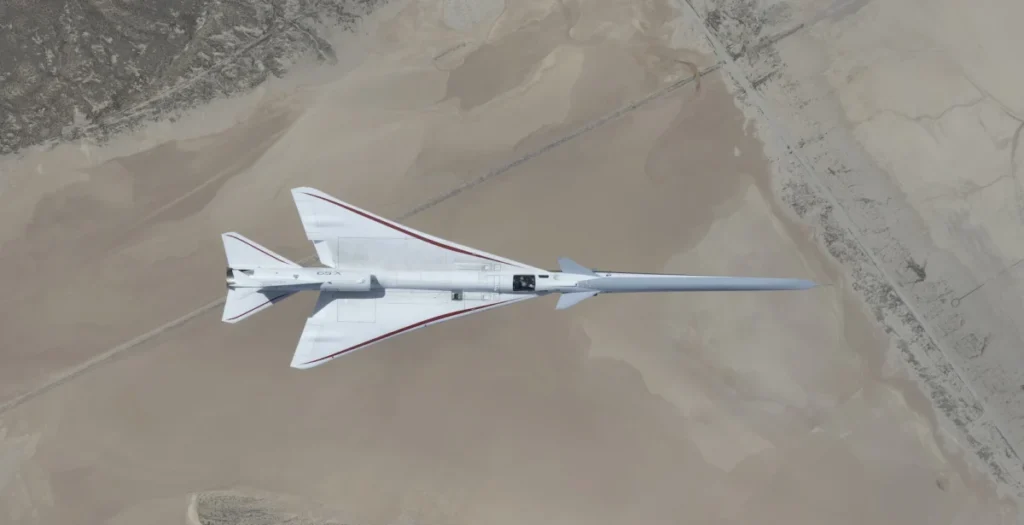
The global competition to revive commercial supersonic air travel has entered a new phase as international aerospace engineers race to overcome the acoustic and thermal barriers that grounded the industry decades ago. While the United States continues flight testing with NASA’s experimental X-59 quiet supersonic aircraft over the Mojave Desert, China has officially advanced its own contender into the final assembly phase. Developed jointly by the Tianmushan Laboratory and Beihang University, the TMS-10 experimental demonstrator plane is currently on schedule to conduct its maiden test flight before the end of the year, marking a significant milestone in modern high-speed transportation engineering.
The progression of the TMS-10 from a conceptual design to a full-scale physical aircraft highlights a methodical, step-by-step approach to high-mach aviation. The project builds directly upon extensive low-speed aerodynamic testing conducted in June 2025, when researchers successfully evaluated a 1:18-scale prototype. During those initial trials, the miniature model flew at speeds below Mach 0.2 to gather critical data regarding takeoff dynamics, low-speed stability, manual and automated flight control systems, and landing performance. Having validated those foundational metrics, the full-scale TMS-10 will now attempt to breach the sound barrier while deploying advanced acoustic engineering to mitigate the disruptive shock waves traditionally associated with supersonic flight.
Chronology of the TMS-10 Development and the Global Supersonic Revival
The timeline of the TMS-10 project reflects the rapid acceleration of hypersonic and supersonic research in academic and state-backed laboratories across the globe. Following decades of stagnation in commercial supersonic travel—largely catalyzed by the retirement of the Concorde in 2003 and strict regulatory bans on overland supersonic flight implemented by agencies like the Federal Aviation Administration (FAA)—interest in high-speed point-to-point transit has recently experienced a major resurgence.
In June 2025, the Tianmushan Laboratory and Beihang University completed their initial wind-tunnel and flight trials using the 1:18-scale model of the TMS-10. These tests focused on low-speed operational envelopes, ensuring the unorthodox airframe could safely take off and land at conventional commercial airports. Throughout late 2025 and early 2026, engineers refined the thermal protection shielding and internal structural components to withstand the extreme frictional heat generated at high Mach numbers. By September 2026, project leads confirmed that the full-scale demonstrator had transitioned into the final assembly phase, setting the stage for its upcoming late-year flight trials.
This timeline runs parallel to parallel milestones achieved by NASA and its aerospace contractor, Lockheed Martin, with the X-59 QueSST (Quiet SuperSonic Technology) aircraft. Earlier in 2026, the X-59 successfully executed high-altitude flight tests over California’s Edwards Air Force Base, reaching Mach 1.5 (approximately 990 miles per hour) at an altitude of 55,000 feet. While the American and Chinese programs share the overarching goal of shrinking global transit times, their underlying engineering philosophies diverge significantly in how they manage the environmental hurdle of the sonic boom.
Engineering Contrasts: The TMS-10 Versus NASA’s X-59 Approach
To understand the technological significance of the TMS-10, aviation analysts must examine the distinct aerodynamic strategies employed by competing international programs to solve the sonic boom problem. When an aircraft exceeds the speed of sound, it continuously generates pressure waves that coalesce into powerful shock waves at the nose and tail. When these shock waves reach the ground, observers hear a thunderous double-bang known as a sonic boom, which historically prompted aviation regulators to ban commercial supersonic flight over landmasses.
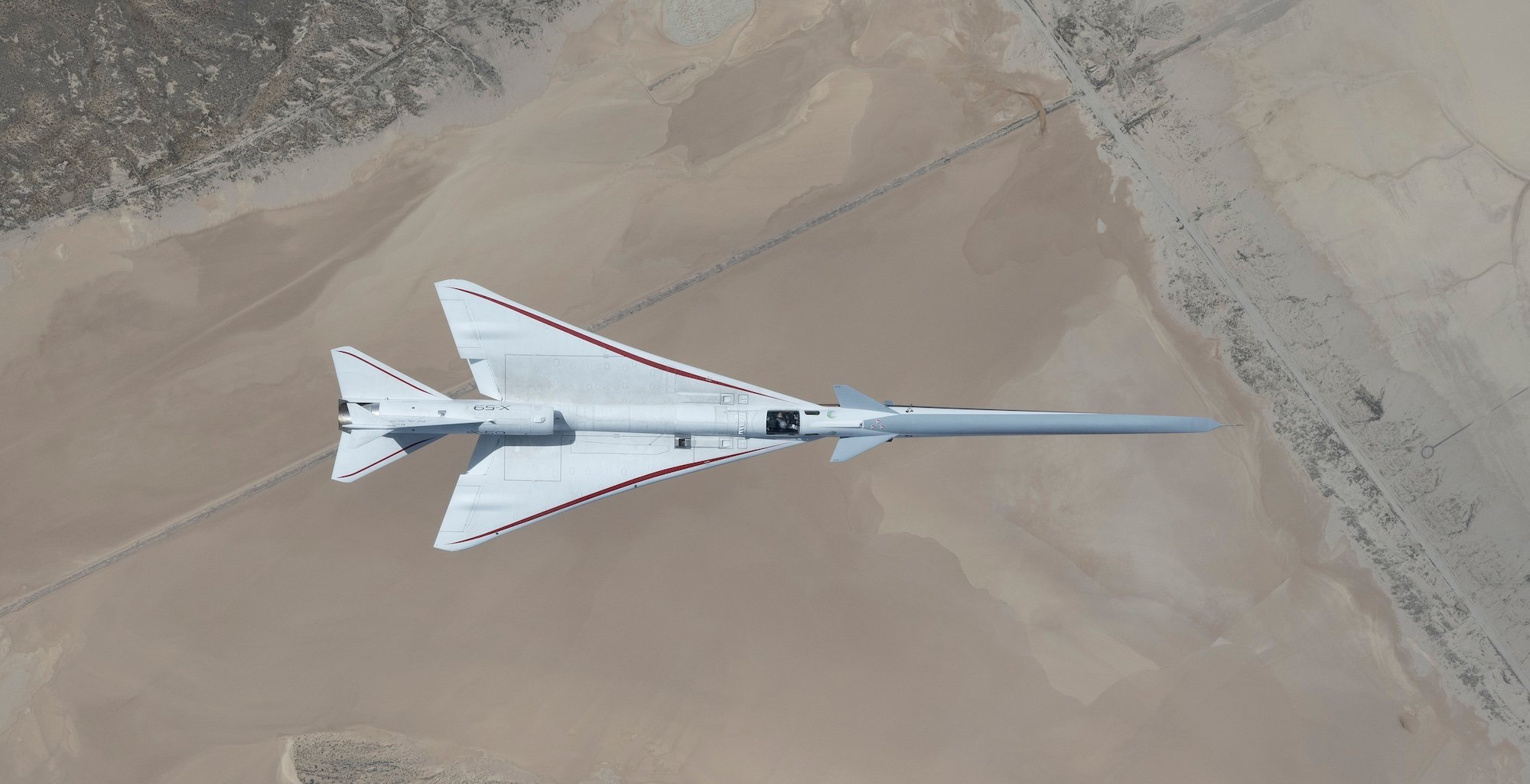
NASA’s X-59 is explicitly designed to alter how these pressure waves interact with the atmosphere, rather than completely preventing them from forming. Featuring an elongated, needle-like nose spanning nearly a third of the aircraft’s total length, the X-59 prevents the nose and tail shock waves from merging. Instead, the waves disperse harmlessly as they travel to the ground, resulting in a muffled acoustic signature that researchers describe as a distant "thump" or "bump" comparable to a car door slamming down the street.
In contrast, the TMS-10 adopts a structural geometry specifically tailored to disrupt and weaken shock-wave propagation through precise aerodynamic interference. The aircraft utilizes a forward-mounted canard wing configuration combined with a distinctive T-tail structure. This layout is engineered to actively prevent the shock waves generated around the forward nose and primary wing structures from combining into a single, high-decibel pressure front. Furthermore, specialized aft-end features and exhaust geometries are integrated into the airframe to redirect and dissipate residual sound energy, reducing the noise footprint before it reaches populated areas below.
Performance Metrics and Projected Route Economics
Engineers project that the TMS-10 will ultimately serve as a boutique business-class passenger transport capable of seating between 10 and 15 travelers. The aircraft is designed with a dual-regime operational capability, supporting both efficient subsonic cruising at approximately Mach 0.95 (roughly 730 miles per hour) and high-speed supersonic cruising peaking at Mach 2 (approximately 1,300 miles per hour).
If these performance benchmarks are successfully realized in production aircraft, the geopolitical and economic implications for regional transit could be transformative. Transportation planners estimate that a Mach 2 cruising speed would reduce the typical flight time between major economic hubs like Beijing and Shanghai—currently a standard two-hour commercial journey—to a mere 30 minutes. Similar point-to-point corridors across domestic and international markets could see analogous compression, fundamentally altering executive travel schedules and logistics networks.
Technical Hurdles and Remaining Engineering Challenges
Despite the enthusiasm surrounding the impending maiden flight of the TMS-10, aerospace scientists emphasize that transitioning from an experimental demonstrator to a certified commercial passenger vehicle remains a formidable undertaking. According to technical briefings published by project engineers and reported by state media outlets such as the Global Times, several critical subsystems require extensive validation before production can even be considered.
Foremost among these challenges is the development, testing, and thermal certification of the engine core. Sustained supersonic flight subjects propulsion systems to extreme thermal stress and mechanical fatigue, requiring advanced metallurgical alloys and sophisticated cooling channels within the turbine blades. Additionally, the TMS-10 design team must thoroughly refine and test the aircraft’s specialized air intake and exhaust systems, which must efficiently regulate airflow transitioning from supersonic speeds down to the subsonic levels required by the turbine engines.
Thermal management presents another primary engineering obstacle. At Mach 2, skin friction from air molecules moving across the airframe creates surface temperatures high enough to degrade conventional aluminum structures, necessitating extensive use of lightweight titanium composites and high-temperature carbon-fiber reinforced polymers. Before the TMS-10 can transition to passenger service, it will need to undergo exhaustive structural integrity testing, wind-tunnel analysis, and hundreds of hours of flight testing to verify its durability across varied meteorological conditions.
Broader Industry Implications and the Future of High-Speed Transit
The rapid advancement of the TMS-10 underscores a broader geopolitical and industrial reality: the commercial aerospace sector is actively preparing for a post-concorde era where speed is once again prioritized, provided environmental and economic concerns can be satisfactorily addressed.
For decades, the commercial aviation industry accepted lower speeds in exchange for higher fuel efficiency, reduced ticket prices, and regulatory compliance. However, advancements in computational fluid dynamics, composite material science, and acoustic modeling have unlocked new possibilities for shape-optimized airframes. As nations like China and the United States pour resources into experimental testbeds like the TMS-10 and the X-59, regulatory bodies are under increasing pressure to reevaluate outdated bans on overland supersonic flight.
While the United States currently holds a temporary lead in flight-tested supersonic velocity through NASA’s Mach 1.5 milestones with the X-59, the entry of the TMS-10 into final assembly demonstrates that international competition in high-speed aviation is intensifying. As the TMS-10 prepares for its debut flight trials in the coming months, aviation watchdogs and industry executives will closely monitor its acoustic and aerodynamic data. The results will not only determine the future of China’s domestic supersonic aspirations but will also help shape the global standards for the next generation of high-speed commercial air travel.