


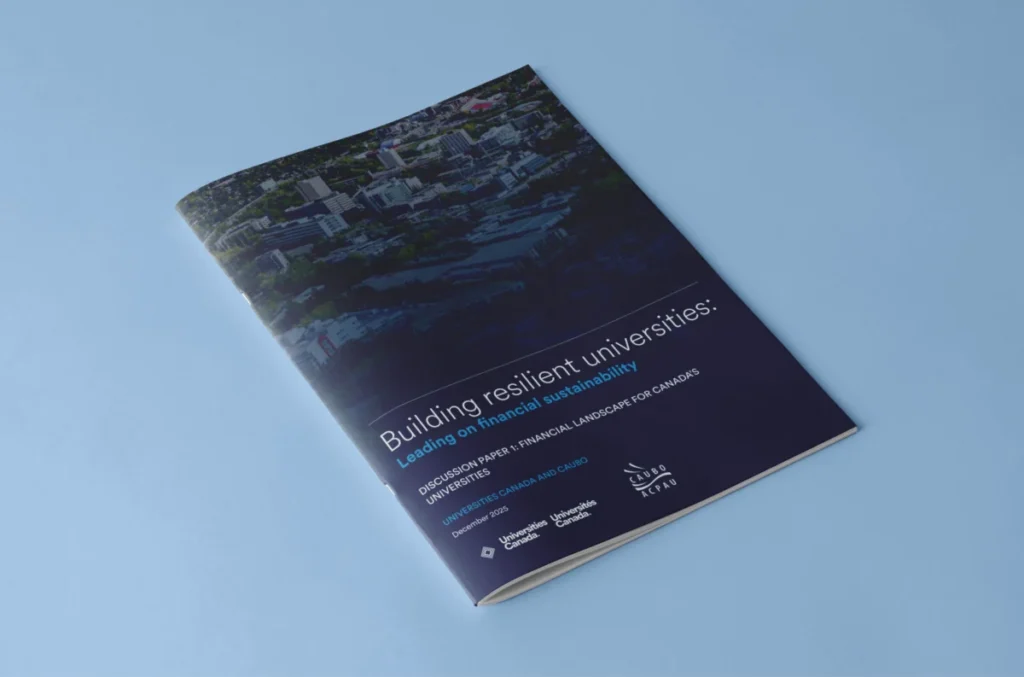
A stark warning has emerged regarding the financial health of Canada’s public post-secondary institutions, with a new report published today detailing a deteriorating outlook and urging immediate, prioritized federal interventions to ensure sector stability. The comprehensive analysis, titled "Building resilient universities: leading on financial sustainability," was jointly prepared by Universities Canada, the publisher of University Affairs, in collaboration with the Canadian Association of University Business Officers (CAUBO). It paints a grim picture of a higher education system grappling with profound and persistent financial pressures that threaten its capacity to meet the evolving needs of students, researchers, and the Canadian economy.
The report’s authors contend that a confluence of factors, including years of underfunding, escalating operational expenditures, aging infrastructure, and a landscape of policy uncertainty coupled with expanding regulatory demands, has significantly eroded the ability of universities to adapt. This diminished capacity leaves them ill-equipped to respond effectively to shifting labour market demands, significant demographic transformations, and the relentless pace of technological advancement.
"This report comes at a critical moment for Canada’s university system," stated Nathalie Laporte, CAUBO’s executive director. "Over the past decade, public funding per student has declined while costs have continued to rise, and institutions have very limited flexibility to respond." Laporte emphasized that the financial pressures are no longer abstract concepts for those within the sector. They manifest in tangible ways, including stretched resources, larger class sizes, the difficult decision to close programs, and constraints on crucial research initiatives. "The report is needed now to clearly lay out these realities and to identify practical steps to stabilize the system and protect its core academic mission," she added, underscoring the urgency of the situation.
While acknowledging that many of the structural challenges facing universities fall within provincial jurisdiction, the report highlights significant federal policy levers that could provide crucial relief and bolster the sector’s financial footing.
Key Federal Interventions Proposed
The report outlines three primary areas where federal action is deemed essential for the stabilization and future resilience of Canadian universities.
Tax Policy Reform: A Common-Sense Adjustment
A significant recommendation centers on tax policy, specifically advocating for an increase in the federal Goods and Services Tax/Harmonized Sales Tax (GST/HST) rebate for universities. The report proposes that Ottawa increase this rebate to 100 percent, mirroring the existing rate afforded to municipalities and designated municipal service providers. The authors estimate that raising the rebate from its current 67 percent would translate into an annual savings of approximately $240 million across the entire sector.
Gabriel Miller, president and CEO of Universities Canada, characterized this tax adjustment as a matter of fundamental logic. "When these institutions are under the gun, does it really make sense for them to be using student tuition and government subsidies to pay sales tax to the federal government? I don’t think so," Miller remarked, questioning the current financial logic. This proposed change would alleviate a direct financial drain on university budgets, freeing up funds that could be reinvested in academic programs, infrastructure, or student services.
Coordinated National Talent and Immigration Strategy
The second major recommendation calls for a more synchronized national approach to talent, skills, and immigration policy. This strategy should be deliberately aligned with Canada’s economic and regional workforce priorities, crucially removing existing barriers that hinder the influx of skilled talent. The report’s authors underscored the inherent risks of sector stakeholders operating in isolation, particularly in light of recent federal immigration policies. The implementation of an international student visa cap in 2024 serves as a prominent example of how uncoordinated policies can negatively impact the post-secondary sector.
A recent audit by the Auditor General of Canada concerning changes to the international student program specifically highlighted Immigration, Refugees and Citizenship Canada’s failure to adequately consider the needs of smaller provinces when rolling out a nationwide policy. This occurred despite the department’s mandate to do so and in the face of provincial efforts to recruit and retain foreign students as a means to counteract declining populations.
"We can’t have federal and provincial governments pursuing contradictory policies in terms of which parts of the country we’re trying to draw people to or what talent we need," stated Mr. Miller. He emphasized the need for a unified message: "You have to line up your research investments, your global marketing and your immigration policies so you’re sending a strong message to the world that we want to attract the best and the brightest." A cohesive national strategy would ensure that immigration policies support, rather than hinder, the recruitment of international students and researchers, thereby bolstering Canada’s research capacity and contributing to its economic growth.
Federal Safeguards for Institutions in Financial Distress
The third critical recommendation urges the federal government to establish safeguards to protect universities facing severe financial crises. Without such measures, institutions could be left with the untenable options of ceasing operations entirely or undergoing complex and financially burdensome provincial bailouts.
This concern is underscored by recent legislative changes. Bill C-59, which received royal assent in June 2024, amended the Bankruptcy and Insolvency Act and the Companies’ Creditors Arrangement Act (CCAA). These amendments effectively bar applications from public post-secondary institutions under these insolvency frameworks. This legislative shift followed the unprecedented case of Laurentian University in Sudbury, Ontario, which became the first public university in Canada to seek CCAA protection in 2021. The CCAA process allowed Laurentian to temporarily suspend creditor claims while it implemented significant cost-cutting measures, program closures, and financial restructuring.
Universities Canada and CAUBO are now advocating for the establishment of a robust "safety net" designed to protect students, ongoing research, and the communities that depend on these institutions. The report suggests this could involve developing a "viable, sector-specific alternative" to the CCAA or creating a mechanism for "orderly, transparent, court-supervised restructuring that balances public accountability with institutional autonomy." Such a framework would provide a structured pathway for institutions in financial difficulty, ensuring continuity for students and preserving valuable research and community ties.
The Current Financial Landscape
The report underscores that the current financial pressures are not a recent development but rather the culmination of a decade-long trend. Public funding per student has stagnated or declined in real terms across much of the country, while the costs associated with delivering high-quality education and research have steadily increased. These rising costs encompass everything from faculty and staff salaries, increasingly dictated by market forces and the need to attract top talent, to the escalating expenses of maintaining and upgrading complex laboratory equipment, IT infrastructure, and campus facilities.
The aging infrastructure of many Canadian universities presents a particularly daunting challenge. Decades of deferred maintenance have resulted in buildings and systems that are not only inefficient but also pose safety risks and require substantial capital investment for modernization or replacement. The report implicitly suggests that these capital needs are often unmet due to the tight operating budgets universities are forced to adhere to.
Furthermore, the increasing complexity of regulatory environments, both at the federal and provincial levels, adds to administrative burdens and associated costs. Universities are required to navigate intricate compliance protocols related to research ethics, data privacy, accessibility, and environmental standards, all of which demand dedicated resources and personnel.
Broader Implications and Future Risks
Beyond the immediate financial strains, the report identifies several long-term risks that could further imperil the viability of Canada’s university sector.
Demographic Shifts and Enrollment Pressures
Demographic trends present a dual challenge. On one hand, a growing youth population in some regions, coupled with an aging workforce, will likely increase demand for post-secondary education. Statistics Canada projections indicate that if current enrollment trends persist, Canada could see an additional 218,000 to 488,000 university students by 2040. This surge in demand necessitates expanded capacity, both in terms of physical space and academic programming, while simultaneously maintaining the quality of education.
Conversely, Canada’s aging population is poised to exacerbate labour shortages as older workers retire. This trend is expected to place increased pressure on the healthcare system and other sectors. Between 2022 and 2031, Canada is forecasted to experience nearly 8 million job openings, with the majority attributed to retirements. A significant proportion of these openings, approximately two-thirds, will require post-secondary education or management experience. The greatest impacts of these labour shortages are anticipated in rural regions and provinces with aging demographics, such as Newfoundland and Labrador, Nova Scotia, and New Brunswick. Universities are crucial in training the skilled workforce needed to address these shortages, but their ability to expand their offerings is directly linked to their financial health.
Community Reliance and Economic Impact
The report also highlights the profound risks to Canadian communities that are heavily reliant on their local universities. These institutions often serve as major employers, drivers of research and innovation, and significant attractors of talent. Further reductions in university funding could inevitably lead to job losses within the institutions themselves, with ripple effects that negatively impact local economies through reduced consumer spending and diminished economic activity. The closure or severe downsizing of a university can have devastating consequences for the social and economic fabric of a community, particularly in smaller cities and towns.
A Path Forward: Collaboration and Optimism
Despite the sobering assessment of the current financial situation and future risks, there is a palpable sense of optimism within the post-secondary sector regarding the potential for collaborative solutions. Mr. Miller expressed confidence that federal and provincial governments, in concert with sector stakeholders and leaders, can work together to effectively mitigate the challenges ahead.
"We feel there is a government in Ottawa that wants to be part of the solution, and we see in Prime Minister [mention specific relevant minister if known, otherwise omit or use a general term like ‘key figures’] someone who understands the importance of universities and why their contributions to Canadian life and our economy are so important," Miller stated, suggesting a receptiveness to dialogue and action from the federal government.
The report, currently under discussion among sector stakeholders at Universities Canada’s annual membership meeting in Vancouver, is intended to serve as a foundational document for the "coordinated action that needs to follow." This proactive approach, driven by evidence and collaborative dialogue, aims to secure the long-term sustainability and continued vitality of Canada’s public post-secondary institutions. The coming months will be critical in determining the extent to which these urgent recommendations are heeded and translated into concrete policy and financial support.