




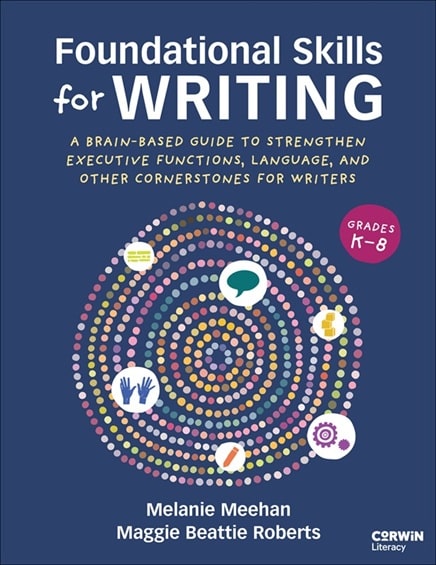
The landscape of educational discourse has long been dominated by intense debates surrounding literacy, with a pronounced emphasis on reading instruction, including phonics, fluency, and comprehension. However, a significant omission often persists in these critical conversations: the pivotal role of writing. Despite the undeniable, deeply intertwined relationship between reading and writing, the latter frequently receives disproportionately less attention, leading to a silent crisis in student writing proficiency. This long-standing imbalance is now being robustly addressed by two prominent educators, Melanie Meehan, a former curriculum coordinator and founder of an in-person writing center, and Maggie Roberts, a literacy consultant and veteran middle school teacher. Their collaborative effort culminates in the newly released book, Foundational Skills for Writing: A Brain-Based Guide to Strengthen Executive Functions, Language, and Other Cornerstones for Writers.
Published earlier this month, the book seeks to re-center writing in the literacy dialogue by offering a comprehensive, neuroscience-informed framework for teaching this complex skill. Meehan and Roberts delve into the intricate cognitive processes the brain orchestrates when students engage in writing, meticulously identifying the common impediments that hinder effective written expression. Their work emerges at a crucial time, as national assessments, such as the National Assessment of Educational Progress (NAEP), consistently reveal stagnant or declining writing scores among American students, underscoring an urgent need for more effective, evidence-based instructional strategies. For instance, the 2011 NAEP Writing Assessment (the last year it was administered nationally) showed that only 24% of eighth and twelfth graders performed at or above the "proficient" level, a figure that has prompted widespread concern among educators and policymakers alike.

The Overlooked Pillar of Literacy: Why Writing Has Lagged
For decades, educational policy and pedagogical focus have largely concentrated on decoding and reading comprehension, often to the detriment of explicit writing instruction. This historical trend can be attributed to several factors. Firstly, the "Reading Wars"—the perennial debates over phonics versus whole language—have consumed considerable resources and attention, leaving less room for parallel discussions about writing. Secondly, teaching writing is inherently more challenging than teaching reading for many educators. Reading instruction can often rely on more standardized, systematic approaches, particularly in foundational skills. Writing, however, demands the simultaneous orchestration of numerous cognitive and motor skills, making it difficult to diagnose specific weaknesses and implement targeted interventions.
Research consistently highlights that writing is arguably one of the most cognitively demanding tasks students undertake. It requires not only mastering mechanical aspects like handwriting, spelling, and grammar but also higher-order thinking skills such as planning, organizing ideas, selecting appropriate vocabulary, adapting to audience and purpose, and revising. Each of these components places a significant load on a student’s working memory and executive functions. When foundational skills are not automatized, the cognitive burden becomes overwhelming, leaving little mental capacity for the creative and critical thinking essential for coherent and persuasive writing. Consequently, many students, particularly those with learning differences or from disadvantaged backgrounds, struggle to translate their thoughts into written form, impacting not only their academic performance but also their future communication capabilities.
A Brain-Based Blueprint for Writing Proficiency
Meehan and Roberts’ Foundational Skills for Writing directly confronts these challenges by presenting a multi-faceted approach grounded in an understanding of brain development and function. The authors categorize the vast domain of writing into three core skill areas, each critical for developing proficient writers:
- Transcription Skills: This category encompasses the physical and mechanical aspects of writing, including legible handwriting, efficient keyboarding, accurate spelling, and the development of both large and small motor skills necessary for forming letters and manipulating writing tools. The automatization of these skills is paramount, as it frees up cognitive resources for higher-level thinking.
- Oral Language: Recognizing that speaking and listening are direct precursors to written expression, this section focuses on developing strong oral language abilities. This includes fostering robust vocabulary, understanding sentence structure, and practicing clear verbal articulation, all of which lay the groundwork for coherent written communication.
- Executive Functioning: This critical domain addresses the set of cognitive processes that enable goal-directed behavior. Key executive functions for writing include working memory (holding information in mind while processing it), cognitive flexibility (adapting to new information or changing strategies), and inhibitory control (filtering distractions and resisting impulses). These functions are vital for planning, organizing, drafting, and revising written work.
The book provides educators with practical, actionable strategies designed to cultivate these skills incrementally, recognizing that mastery is a developmental process. By breaking down the complex act of writing into manageable components, Meehan and Roberts empower teachers to identify specific areas of need and implement targeted instruction, thereby reducing the cognitive load on students and fostering greater confidence and competence.

"Minute Moves": High-Impact Strategies for Daily Practice
A cornerstone of Meehan and Roberts’ pedagogical framework is a collection of easily implementable, brief activities dubbed "Minute Moves." These strategies are designed to be flexible, requiring only a few minutes, making them ideal for integration into classroom transitions, as warm-ups, or even during routine activities like walking to lunch. The underlying principle of "Minute Moves" is to help students automatize foundational writing skills, thereby conserving cognitive energy for the more complex aspects of composing. When transcription, oral language, and executive functions become second nature, students can dedicate their mental bandwidth to idea generation, organization, and stylistic choices.
Here are eight of these high-leverage "Minute Moves" elaborated with their pedagogical rationale:

Spelling Minute Moves
-
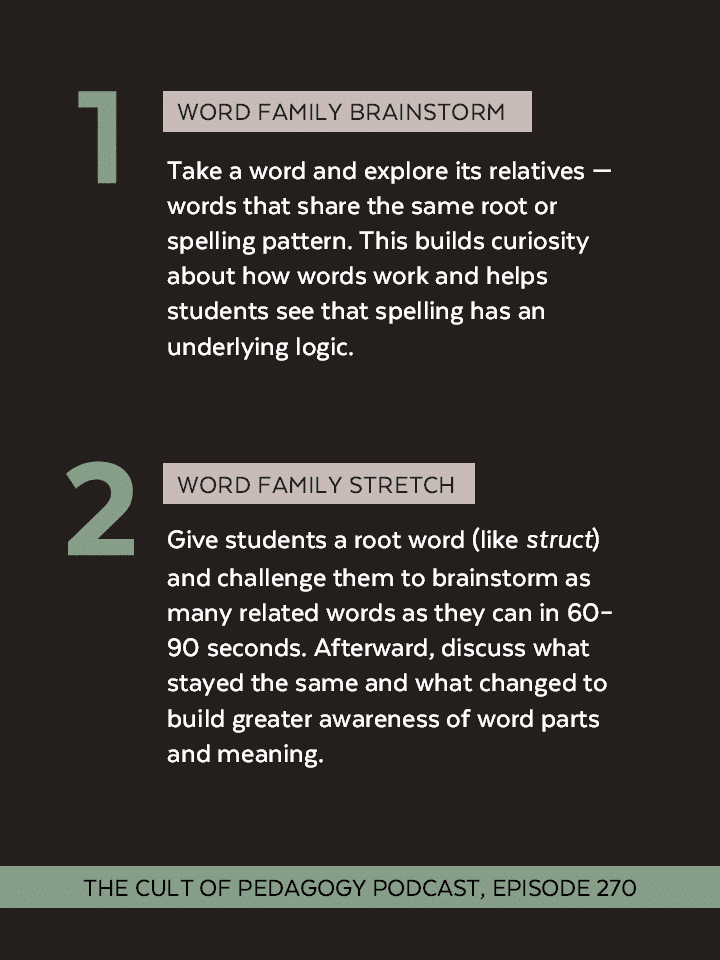
Word Family Brainstorm: Inspired by spelling researcher Rebecca Treiman, this activity encourages students to explore the etymological and morphological connections between words. Instead of rote memorization, students are guided to uncover the "relatives" of a given word. For example, by connecting "two" (the number) to "twin," "twine," and "twenty," students discover the "TW" pattern often signifies "twoness." This approach transforms spelling from a seemingly arbitrary task into an engaging exploration of language patterns, fostering curiosity and deep understanding of word structure. For multilingual learners, recognizing cognates and shared roots across languages can be particularly empowering, accelerating their vocabulary acquisition and spelling accuracy.
-
Word Family Stretch: Building on the previous concept, this activity centers on a specific root, such as "struct" (meaning "to build"). Teachers set a short timer (e.g., 60-90 seconds) and challenge students to brainstorm as many related words as possible (e.g., structure, destruction, construct, structural, instruct, instruction). The crucial follow-up is a debriefing session where students discuss what remained consistent (the root) and what changed (prefixes, suffixes), and how these changes altered the meaning. This exercise not only expands vocabulary but also reinforces the understanding that word parts carry meaning, revealing patterns across academic language. Roberts highlights the distinction between "bound" roots (like "struct," which cannot stand alone) and "free" roots (like "form," which can be a word on its own but also appears in reform, transform, inform), further deepening students’ morphological awareness.
-
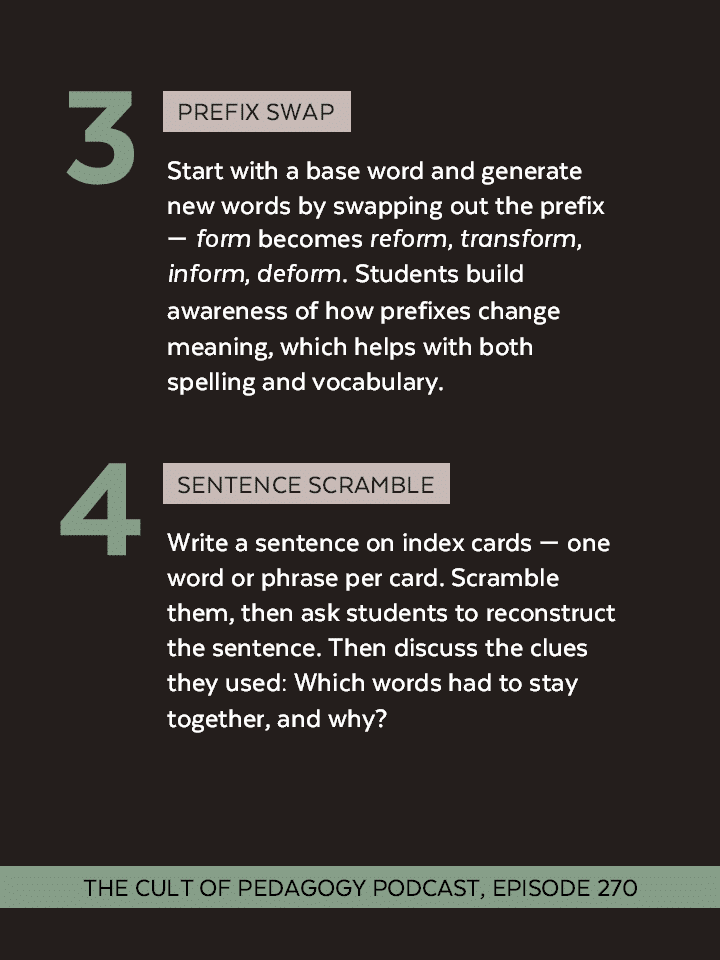
Prefix Swap: This move directly targets the power of prefixes in modifying word meaning. Students are given a base word (e.g., "form") and tasked with generating variations by changing the prefix (e.g., reform, transform, inform, deform). The subsequent discussion focuses on how each prefix shifts the word’s meaning. This strategy is particularly effective for enhancing vocabulary and comprehension, especially for multilingual learners who may recognize prefixes like "bene" (good) and "mal" (bad) from their native languages, allowing them to infer the meanings of complex English words more readily. Meehan emphasizes that these three spelling activities collectively build essential neurological pathways, aiding students in retaining words rather than constantly struggling with retrieval.
Sentence Construction Minute Moves
-
Sentence Scramble: This activity involves dissecting a sentence into its constituent words or phrases, typically written on individual index cards. Students then work to reassemble the sentence. The tactile nature of manipulating cards allows for experimentation and problem-solving. After reconstruction, students engage in a metacognitive discussion, reflecting on their process: How did they determine the correct order? What clues did they use (e.g., capitalization, grammatical agreement)? Which words or phrases functioned as inseparable units? To increase complexity, teachers can remove punctuation, introduce a "distractor" word, or challenge students to extend the sentence. Roberts notes that the primary goal is to foster an "internalized understanding of sentence patterns and sentence construction," which students can then transfer to their own writing.
-
Sentence Expander: Beginning with a simple "kernel sentence" (e.g., The cat purrs), students collaboratively build more complex sentences by answering a series of guiding questions: Which cat? What color? Where? When? Why? Meehan advocates for using more accessible terms like "doer" and "doing" instead of the potentially abstract "subject" and "predicate" to help students grasp the core elements of a sentence. Once a sentence is fully expanded (e.g., The fluffy orange cat is sleeping soundly on the plush couch this afternoon because he is utterly exhausted), students experiment with rearranging phrases to create stylistic variations. This playfulness helps them understand how sentence elements contribute to meaning and how to construct richer, more nuanced sentences.
-
Sentence Combining: Roberts describes sentence combining as a "high-impact, quick way for kids to graduate from writing a series of simple sentences to ones that are more syntactically complex, interesting, and precise." In this activity, students are given two short, basic sentences (e.g., My cat is orange. My cat is big.) and asked to combine them into a single, more sophisticated sentence (e.g., My big orange cat…). For beginners, teachers can scaffold by underlining words to be "harvested" from one sentence and integrated into another. As proficiency grows, students can combine three or more sentences, experimenting with various conjunctions (e.g., because, and, but, although) to alter meaning and flow. Consistent practice with sentence combining directly translates into students’ ability to produce less choppy and more sophisticated writing in their own compositions.
Executive Functioning Minute Moves
-
What’s Another Way?: This strategy directly targets cognitive flexibility, a crucial executive function that involves the ability to adapt approaches, consider alternatives, and revise thinking. Students are presented with a sentence and challenged to rewrite it in multiple ways. This might involve starting with a dependent clause instead of an independent one, replacing a noun with a pronoun, or making the sentence more concise. Meehan emphasizes that effective writing isn’t solely about crafting long, complex sentences; sometimes, a short, impactful sentence is the most powerful choice. This activity teaches students the "art and craft of writing" by varying sentence structure intentionally. Naming this skill as "cognitive flexibility" can be particularly empowering for students, especially those who have struggled with writing, as it frames their efforts within the context of developing a sophisticated cognitive ability.
-
New Angle: Also focused on cognitive flexibility, this activity broadens the scope from sentence-level manipulation to narrative perspective. Students are asked to retell a familiar scene—from a class text, a book they are reading, or a short film—from the viewpoint of a different character. Roberts illustrates this with a vivid memory of a cafeteria food fight, noting how the narrative shifts dramatically when told from the perspective of a teacher who got applesauce in her hair. This exercise demands that students hold multiple viewpoints simultaneously, making deliberate choices about voice, detail, and interpretation. Meehan often uses short animated videos, such as Pixar’s "Snack Attack," which depicts the same event from two contrasting perspectives, to facilitate this activity. Engaging in this practice not only enhances writing skills but also cultivates empathy and the critical ability to understand diverse perspectives, a skill with profound implications far beyond the classroom, extending into civic engagement and democratic participation.
Broader Implications and a Call for Re-evaluation
The work of Melanie Meehan and Maggie Roberts, encapsulated in Foundational Skills for Writing and their "Minute Moves" strategies, represents a significant contribution to the ongoing effort to improve literacy education. Their brain-based approach offers a vital counter-narrative to the prevailing focus on reading alone, advocating for a truly balanced literacy instruction that acknowledges the symbiotic relationship between reading and writing.
The implications of this work are far-reaching. For teachers, it provides a clear, actionable roadmap for integrating effective writing instruction into daily routines without requiring extensive curriculum overhauls. For students, it promises to demystify the writing process, breaking it into manageable steps that build confidence and competence. For educational systems, it serves as a powerful reminder that neglecting writing has profound consequences for academic achievement, critical thinking, and overall communication skills, which are essential for success in higher education and the modern workforce.
As educators and policymakers continue to grapple with persistent literacy challenges, the insights offered by Meehan and Roberts underscore the urgent need to re-evaluate current instructional priorities. By embracing a comprehensive, brain-informed approach to writing, schools can empower a new generation of students to not only read with understanding but also to write with clarity, precision, and purpose, ensuring they are well-equipped to navigate and shape the complexities of the 21st century.