



In an era where educational reform in the United States often prioritizes standardized metrics and top-down directives, the profound importance of student voice has regrettably diminished. Contemporary efforts to enhance academic outcomes frequently hinge on test scores, mandated curricula, and quantitative measures of success that, by their very nature, struggle to encapsulate the holistic development and individual humanity of students. This narrow focus has not only fallen short in its primary goal of elevating test scores, with recent data from the National Assessment of Educational Progress (NAEP) indicating a decline in reading proficiency, particularly among struggling students (Schwartz, 2025), but has also engendered widespread dissatisfaction within the educational community. A survey conducted in early 2025 revealed that nearly half of all educators perceive student behavior as having deteriorated since the pre-pandemic period, a significant increase from just two years prior (Stephens, 2025). This confluence of declining academic performance and escalating behavioral challenges underscores a systemic disconnect, signaling an urgent need for a paradigm shift in how schools approach improvement.
While isolated pockets of excellence undoubtedly exist, a pervasive issue across the educational landscape is the failure to meaningfully engage the primary stakeholders: the students themselves. Many institutions persist in addressing complex challenges through conventional means, overlooking the invaluable insights and perspectives that could be gleaned from those most directly affected by the educational environment. This oversight has perpetuated a cycle of reforms that, despite good intentions, often miss the mark on fostering genuine engagement and addressing root causes of disaffection.
The Genesis of "Street Data": A New Pathway to Equity
Four years ago, a groundbreaking publication, Street Data: A Pathway Toward Equitable, Anti-Racist Schools, introduced a refreshingly different approach to school improvement. Co-authored by Shane Safir and Jamila Dugan, the book posited a methodology distinct from the prevailing, data-driven frameworks that often rely on "satellite data" – large-scale, standardized metrics that, while offering a broad overview, frequently fail to capture the nuanced realities and lived experiences of individual students, particularly those from marginalized communities.
"Street Data," in contrast, advocates for a granular, human-centered approach. It champions the practice of conducting "slow, thoughtful listening sessions" directly with students, especially those at the "margins" – individuals whose voices are habitually overlooked and whose educational needs remain consistently unmet. These intimate dialogues are designed to unearth authentic experiences, perceptions, and aspirations, providing rich, qualitative insights into the daily workings of the school environment. From these deep listening sessions, the methodology prescribes a cycle of co-creation: new solutions are collaboratively developed, carefully piloted within specific contexts, and then iteratively refined based on continuous feedback. Subsequent listening sessions serve as crucial checkpoints, guiding further adjustments and ensuring that changes remain responsive to student needs.
What distinguished Street Data from numerous other educational programs, many of which involve substantial financial investment, was its promise of efficacy rooted in authenticity and its accessibility. The model, grounded in human connection and iterative adaptation, resonated as a genuinely workable framework for fostering equitable and anti-racist schools. The inherent practicality and potential for profound impact immediately sparked interest among educators and leaders seeking more meaningful pathways to change.
A Journey of Dissemination: Bringing Street Data to the Forefront

Recognizing the transformative potential of the Street Data methodology, a concerted effort was made to disseminate its principles widely. The journey began with the authors, Shane Safir and Jamila Dugan, appearing on Episode 178 of a prominent educational podcast, where they introduced the core concepts of their work to a broad audience of educators. This initial conversation served as a vital springboard, generating significant interest and prompting further exploration.
Building on this momentum, a mini-documentary was produced, offering a visual and experiential understanding of the Street Data process in action. This documentary captured Shane and Jamila guiding two schools through the methodology, allowing teachers and administrators to observe firsthand how deep listening sessions unfolded, how student insights were gathered, and how these insights translated into actionable strategies. The visual narrative provided an invaluable bridge between theory and practice, demonstrating the nuanced dynamics of implementing student-centered improvement.
A year later, the commitment to illustrating the practical application of Street Data deepened with the release of an eight-episode video series. This comprehensive series delved further into various facets of the methodology, showcasing diverse implementations and outcomes. Participants from the documented projects were subsequently invited to a follow-up podcast discussion (Episode 203), where they shared their experiences, challenges, and successes, offering authentic testimonials to the power of the Street Data approach. This phased and multi-platform dissemination strategy ensured that educators could engage with the methodology through various mediums, fostering a robust understanding of its principles and practicalities.
Bridging Data to Pedagogy: The Emergence of "Pedagogies of Voice"
As the Street Data methodology gained traction across educational institutions, a frequently recurring question emerged from practitioners: What does it look like when teachers intentionally center student voice and agency within their daily pedagogical practices? While Street Data provided a framework for systemic improvement through listening, educators sought concrete classroom strategies that could embody these principles. This critical inquiry highlighted a need for practical tools that would enable teachers to translate the insights gleaned from "street data" into tangible, student-empowering classroom experiences.
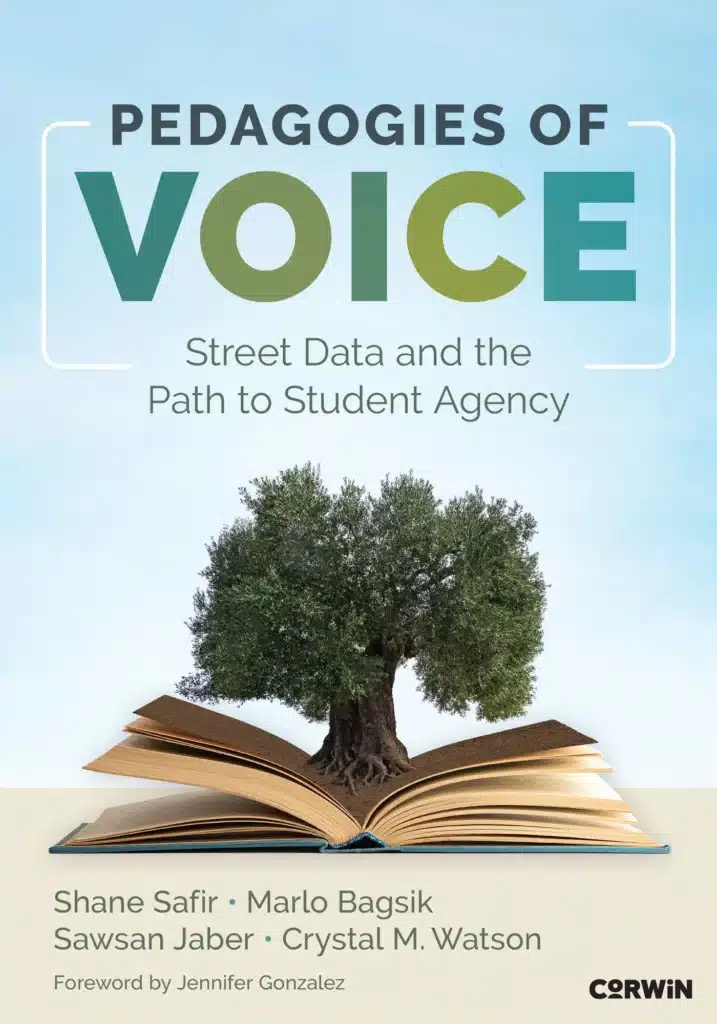
To address this vital question, Shane Safir collaborated with three distinguished educators: Marlo Bagsik, Crystal Watson, and Sawsan Jaber. Their collective expertise and deep commitment to student-centered learning culminated in the publication of the new book, Pedagogies of Voice: Street Data and the Path to Student Agency. This collaborative effort was designed to fill the pedagogical gap, offering educators a rich repository of actionable strategies directly aligned with the Street Data philosophy.
Rather than prescribing a rigid, one-size-fits-all curriculum, Pedagogies of Voice positions itself as a "seed store" of practices. This metaphor underscores its flexible and adaptable nature, offering a diverse collection of small, replicable moves that educators can integrate into their teaching. The book’s core purpose is to equip teachers with the means to consistently center student voice, cultivate genuine student agency, and create classroom environments conducive to meaningful, equitable learning.
A Timely Imperative: Fostering Democracy Through Voice
The publication of Pedagogies of Voice arrives at a particularly critical juncture in the broader socio-political landscape. In recent years, a disconcerting trend has seen marginalized voices, which had begun to gain long-overdue recognition and platforms, aggressively pushed back into the periphery. Across the nation, educational institutions are grappling with challenges such as book bans, censorship imposed on teachers, and broader threats to democratic principles. In this climate of frustration and apprehension, Pedagogies of Voice offers a compelling and proactive response to educators grappling with where to channel their energy.
The book posits that one of the most powerful and enduring forms of resistance and positive change lies within the classroom itself: teaching in a manner that fundamentally amplifies student voice. By creating intentional spaces where students are encouraged to reflect critically, articulate their perspectives, and act meaningfully, educators can foster democratic practices at their most fundamental level. These practices include active listening, engaging respectfully with differing opinions, and collaborating towards shared goals. Through such pedagogical approaches, students are empowered to develop into individuals who are not only academically proficient but also civically engaged, capable of critically assessing their world, and equipped to contribute to its positive reshaping.
The Four Domains of Student Agency: Practical Strategies for Empowerment
Pedagogies of Voice organizes its wealth of classroom practices within an innovative "Agency framework," structured around four interconnected domains: Identity, Belonging, Inquiry, and Efficacy. This framework provides a comprehensive lens through which educators can systematically nurture student agency. During a recent podcast interview, the book’s four authors shared practical examples from each domain, offering immediate, actionable strategies for teachers.
Practices that Awaken Identity
The Identity domain focuses on cultivating learning environments where every student can authentically assert, "My ways of being, knowing, and learning are valued here." This domain recognizes that a strong sense of self is foundational to engagement and learning. Sawsan Jaber, one of the co-authors, highlighted two strategies centered on storientation, a powerful approach that leverages personal narratives as a springboard for learning and identity development.
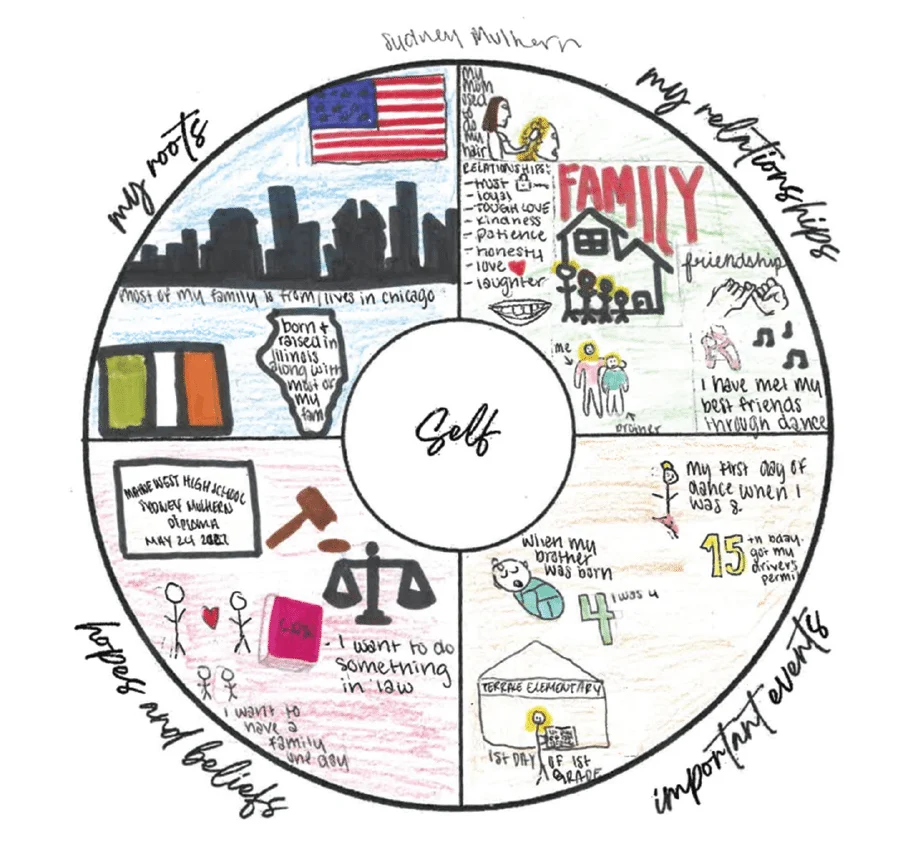
Storientation moves beyond simple storytelling; it’s a pedagogical method where students are invited to share personal narratives, experiences, and cultural backgrounds as integral components of their learning journey. For example, students might create "Identity Mandalas" – visual representations that use symbols, colors, and words to articulate various facets of their identity, from family heritage to personal interests and future aspirations. These mandalas become shared artifacts, fostering mutual understanding and respect within the classroom. Another approach involves using "story circles" where students respond to a prompt related to the curriculum by sharing a personal anecdote, connecting their lived experience to academic content. This not only validates diverse perspectives but also deepens comprehension by grounding abstract concepts in personal relevance. By actively integrating student stories, educators affirm the unique identities of each learner, creating an inclusive space where cultural capital is recognized as a valuable asset.
Practices that Awaken Belonging
This domain emphasizes creating a classroom culture where every student feels seen, acknowledged, and genuinely cared for. Crystal Watson, another co-author, elucidated the transformative power of a seemingly simple practice: circling up. This involves arranging classroom seats in a circular formation for a variety of activities, from discussions to problem-solving sessions.
Watson eloquently explains the profound impact of this spatial arrangement: "I just love the fact that when you circle up, you’re all equidistant from the center. At any given time, an identity, an idea, a person can be centered. We’re not centering one or two identities or thoughts or ideals. We can center them all at any given time in our time together." This physical equality inherently promotes psychological safety and encourages equitable participation. In a circle, there is no "front" or "back," no designated leader in terms of seating arrangement, which democratizes interaction and amplifies individual voices.
Watson, whose work frequently involves math education, finds circling up particularly potent in this subject area. She observes that many students who express a dislike for math often describe it as a solitary activity: "You just sit there and do problems." This highlights a fundamental flaw in traditional math instruction. Circling up, however, inherently invites conversation, collaboration, and "argumentation" – not in a confrontational sense, but as a process of reasoning, explaining one’s thought process, and defending mathematical ideas. In a circle, students can easily share their strategies, critique solutions constructively, and collectively build understanding, transforming math from a solitary chore into a dynamic, social, and deeply engaging intellectual pursuit. This fosters a sense of collective endeavor and shared responsibility for learning, reinforcing belonging.
Practices that Awaken Inquiry
The Inquiry domain focuses on empowering students to ask profound questions, explore complex phenomena, and construct knowledge through increasingly sophisticated intellectual processes. Shane Safir notes the alarming erosion of inquiry-based learning in many educational settings. "Inquiry has been stripped from the learning environments, so many places," she laments, highlighting a trend towards prescribed learning paths that stifle natural curiosity.
Practices within this domain are designed to reignite this innate curiosity and develop critical literacy. One such practice might be "Question Formulation Technique" (QFT), where students are guided through a structured process to generate, categorize, and prioritize their own questions about a given topic or text. This shifts the locus of inquiry from the teacher to the learner, making students active participants in defining their learning journey. Another strategy involves "Text Rendering Protocol," where students collaboratively extract significant words, phrases, and sentences from a complex text, then discuss their interpretations. This deepens comprehension and encourages diverse perspectives, moving beyond superficial reading to critical engagement. By fostering an environment where challenging assumptions, exploring ambiguities, and seeking multiple perspectives are celebrated, educators cultivate students’ ability to not just consume information but to critically analyze, synthesize, and ultimately, create new knowledge. This process is crucial for developing students who can navigate the complexities of information in the modern world, distinguishing between reliable sources and misinformation.
Practices that Awaken Efficacy
In the Efficacy domain, the ultimate goal is to cultivate learning spaces where every student genuinely believes in their capacity to effect positive change on issues that truly matter to them. Marlo Bagsik shared two complementary practices that effectively "bookend a week," creating a consistent cycle of reflection, goal-setting, and action.
At the beginning of the week, students engage in "Future Self Journaling." This involves a structured reflective practice where students envision their "future self" in relation to their learning goals, personal growth, and impact they wish to make. They articulate specific intentions, set personal challenges, and connect their academic work to broader aspirations. This practice helps students develop a clear sense of purpose and ownership over their learning journey. Then, at the end of the week, students participate in "Action Planning and Public Commitment." Here, they review their progress, reflect on successes and challenges, and publicly commit to specific, actionable steps for the upcoming week or a larger project. This might involve presenting their learning to peers, sharing their plans for community engagement, or simply articulating their next steps in a classroom forum. The "public commitment" aspect adds a layer of accountability and fosters a sense of collective support. By regularly engaging in these practices, students learn to connect their efforts to tangible outcomes, fostering a powerful sense of agency and reinforcing the belief that their actions can indeed make a meaningful difference. This cycle not only improves academic performance but also instills invaluable life skills related to planning, self-regulation, and civic responsibility.
Expert Perspectives and Future Outlook
The collective vision presented by the authors of Pedagogies of Voice is one where schools move beyond being mere conduits of information to become vibrant hubs of human development and democratic practice. By consciously prioritizing and nurturing student voice through the domains of Identity, Belonging, Inquiry, and Efficacy, educators can counteract the detrimental effects of a system too often fixated on narrow metrics. The strategies outlined in the book offer a powerful counter-narrative to the prevailing challenges in education, providing a pathway towards more equitable, engaging, and ultimately, more effective learning environments.
The emphasis on creating spaces for reflection, critical discourse, and collaborative action is not merely about improving test scores; it is about cultivating the kind of citizens essential for a healthy democracy. In a world increasingly fragmented and challenged by complex global issues, the ability of young people to listen, challenge, collaborate, and act with purpose is paramount. Pedagogies of Voice offers a practical and profound answer to the question of how educators can contribute to this vital endeavor, empowering students to not only succeed academically but to emerge as thoughtful, engaged individuals ready to reshape the world for the better. The call to action is clear: embrace student voice, and through it, unlock the full potential of education.