

Four months after the United States, under President Donald Trump’s administration, imposed an oil embargo on Cuba, the profound and escalating crisis within the Caribbean nation has struggled to maintain a consistent presence in the global news cycle. Despite increasingly dire circumstances, including widespread shortages and significant disruptions to daily life, the international spotlight has shifted, leaving many Cubans feeling isolated and abandoned as their nation grapples with multifaceted challenges that predate and are exacerbated by the recent U.S. policy.
The impact of the U.S. embargo, formally enacted through an executive order that restricted the flow of oil and other critical resources, has been a significant factor in the current economic downturn. However, to understand the full scope of Cuba’s predicament, it is crucial to acknowledge that the nation’s struggles are rooted in a complex interplay of internal governance issues, the enduring legacy of past economic policies, and the long-standing U.S. trade embargo, often referred to as the "blockade."
A Nation Under Strain: From Pandemic Echoes to Embargo’s Grip
The economic hardship in Cuba is not a new phenomenon. The country experienced a severe downturn in the 1990s, known as the "Special Period," following the collapse of the Soviet Union, which had been a crucial economic benefactor. This period saw widespread shortages of food, fuel, and basic necessities, forcing the Cuban government to implement rationing and austerity measures. While Cuba has since diversified its economic partnerships and made some attempts at reform, it has never fully recovered from the economic shock of that era.
Adding to the existing vulnerabilities, the COVID-19 pandemic further strained Cuba’s economy, which relies heavily on tourism. Travel restrictions and reduced visitor numbers significantly impacted foreign currency earnings, exacerbating pre-existing shortages. The government’s response to the pandemic, while achieving some successes in vaccine development and distribution, was also hampered by resource constraints.
The Trump administration’s executive order, signed in February of the current year (2025), intensified these pressures by targeting Cuba’s energy sector. The embargo aimed to cut off a vital supply line, with the stated goal of pressuring the Cuban government to implement political and economic reforms. However, critics argue that such measures disproportionately affect the civilian population, leading to severe consequences for ordinary Cubans.
Voices from the Ground: Academic Perspectives and Personal Testimonies
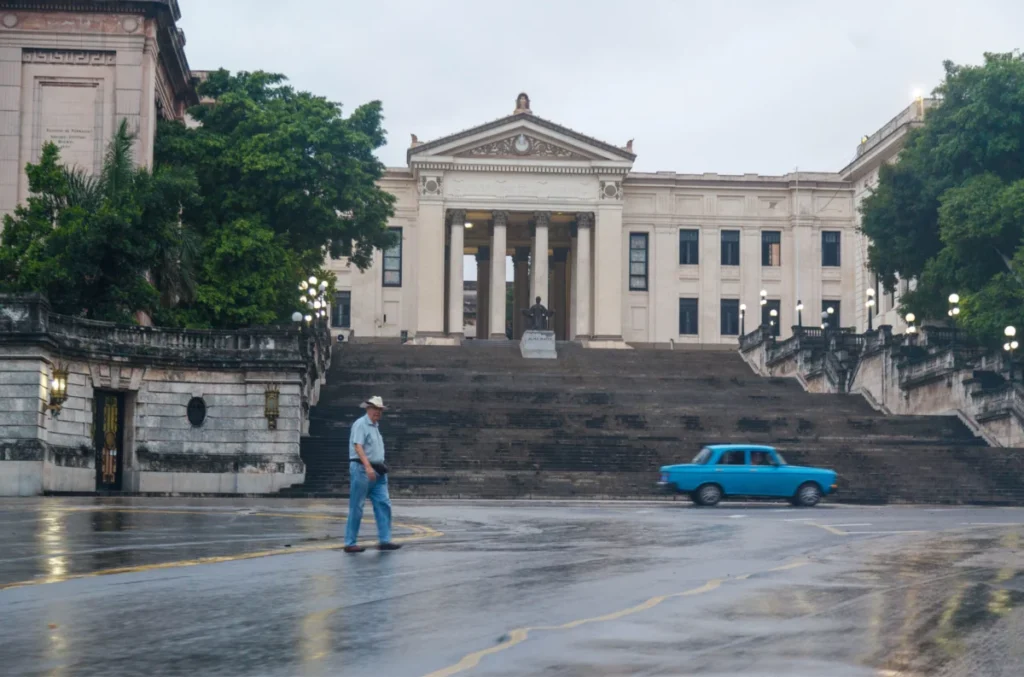
The ripple effects of the embargo are keenly felt by those with deep connections to Cuba. Karen Dubinsky, a professor emerita of Global Development Studies and History at Queen’s University, has dedicated much of her academic career to understanding the intricate relationship between Canada and Cuba. Her recently published book, Strangely, Friends: A History of Cuban-Canadian Encounters (2025), delves into this unique bilateral dynamic. For years, Dubinsky taught Queen’s University’s "Cuban Culture and Society" course, which included immersive two-week study periods at the University of Havana, fostering direct cultural exchange. This reciprocal relationship saw Cuban scholars and musicians frequently visiting Queen’s campus.
Dubinsky’s firsthand experience of the escalating crisis offers a poignant glimpse into the lived reality of Cubans. She was in Havana in February 2025, attending the Havana Jazz Festival and planning to stay for the wedding of a former graduate student. The sudden influx of Canadian evacuations, necessitated by the intensifying crisis, disrupted these personal plans and underscored the gravity of the situation. "He wanted his family to be part of it, and they’re all still in Havana. That came to a screeching halt with the airplanes. I was there and the groom was there, but that was it. No bride, nobody else. I was there for the first two or three weeks of the oil blockade. It was already a mess," she recalled.
Dubinsky emphasizes that the current dire circumstances are not solely a product of the recent embargo. "I’ve never seen it as bad as I’ve seen it in the past few years," she stated. "Now there’s a lot of images of garbage not being collected and literally burned in the streets. That started to happen two or three years ago." Her regular communication with friends in Cuba paints a grim picture of daily life, marked by persistent power outages and the struggle to obtain essential goods.
A Nation’s Grievances: Beyond External Pressures
Beyond the immediate impact of the oil embargo, Cubans are grappling with a confluence of factors contributing to their hardship. Longstanding frustration over perceived government incompetence, coupled with the slow recovery from the pandemic’s economic disruptions, has fueled a sense of disillusionment. Dubinsky notes, "People feel either active opposition, or at best, a kind of abandonment. That was the word that I kept hearing before this super dramatic moment, from people who still had some sense that they were looking to their own government for help when inflation ran wild, with the economy in shambles."
The increased pressure from the U.S. embargo has significantly worsened the mood. "They’re super frustrated. I think many are despairing. If you have the misfortune of getting sick or having an accident, you’re really in trouble," Dubinsky observed. This pervasive sense of desperation has manifested in increasingly visible public discontent. Regular protests, characterized by citizens banging on pots and pans after dark, have become a nightly occurrence in various cities. International media also reported a rare student sit-in at the University of Havana on March 9th, protesting disruptions to their academic schedules, a clear indication of the widespread impact on daily life and education.
Historical Parallels and Evolving Political Landscape
The current crisis is frequently compared to Cuba’s "Special Period" of the 1990s, a time of severe economic hardship. Following the death of Fidel Castro in 2016, his brother Raul Castro led the ruling Communist Party, with President Miguel Díaz-Canel now overseeing daily operations. Amidst these leadership transitions, persistent rumors of corruption and a noticeable repression of independent media have contributed to internal criticism. While the U.S. embargo has undoubtedly intensified the existing crisis, many Cubans have been voicing calls for change and reform for years, demonstrating a deep-seated desire for a different path forward.
The spectrum of proposed solutions within Cuba is broad, ranging from calls for immediate regime change to a focus on internal self-reliance and bootstrapping. Dubinsky, while acknowledging these diverse perspectives, finds herself at a loss for a definitive path forward. "I believe in the rule of law. I believe in national sovereignty. I think people have a right to make their own nations, their own decisions," she stated. "Just in this case, it’s harder to imagine what that looks like." The immense effort required to restore essential infrastructure, such as the electrical grid, highlights the scale of the challenge in returning to any semblance of normalcy.
Canada’s Enduring, Though Limited, Connection
In February 2025, Canadian airlines repatriated approximately 28,000 Canadian citizens from Cuba, a significant undertaking that underscored the severity of the situation. Beyond such large-scale evacuations, academic and student exchanges represent one of the few remaining avenues for sustained contact between Canada and Cuba. This enduring, albeit limited, connection highlights the importance of cultural and intellectual diplomacy in maintaining bilateral relationships, even amidst political tensions and economic hardship.
Dubinsky’s own work exemplifies this bridge-building. As a Canadianist whose research has evolved to focus on Cuba-Canada relations through an interest in Cuban music and culture, she has authored several books on the subject and co-produces a podcast series dedicated to the history of Cuban musicians in Canada. She expresses optimism for the next generation of scholars, noting a master’s student she recently supervised whose thesis explored Canada-Cuba economic ties and who plans to pursue a PhD in the field. Such dedicated scholarship, focusing on nuanced bilateral issues, offers a vital counterpoint to the often-oversimplified narratives surrounding Cuba’s challenges.
The Broader Implications: A Humanitarian Concern and a Geopolitical Question
The U.S. oil embargo on Cuba, while presented as a tool for political leverage, carries significant humanitarian implications. The disruption to energy supplies directly impacts critical services, including healthcare, transportation, and food distribution, exacerbating existing shortages and contributing to a worsening quality of life for the Cuban populace. The international community faces a growing concern about the potential for a humanitarian crisis as the situation deteriorates.
From a geopolitical perspective, the embargo raises questions about the effectiveness of unilateral sanctions in achieving desired policy outcomes. While intended to pressure the Cuban government, such measures often lead to unintended consequences, impacting civilian populations and potentially fostering resentment rather than reform. The international response to Cuba’s crisis remains divided, with many nations advocating for a more diplomatic and less punitive approach.
The resilience of the Cuban people, their ability to innovate and adapt in the face of adversity, has long been a subject of fascination and study. Despite the current hardships, Cuba’s rich cultural heritage, including its vibrant music and film industries, continues to attract global attention and scholarly interest. As the nation navigates this challenging period, the ongoing struggle for normalcy and the quest for sustainable solutions remain central to its future. The long-term implications of the U.S. embargo, combined with Cuba’s internal dynamics, will undoubtedly shape the nation’s trajectory for years to come, demanding sustained attention and a deeper understanding of its complex realities.