

In an era saturated with fleeting digital content and the pervasive influence of social media, educators are constantly seeking innovative methods to cultivate deep analytical skills in young learners. Carol Jago, a distinguished English educator and associate director of the California Reading and Literature Project at UCLA, proposes a compelling solution: leveraging the power of fine art to bridge the gap and foster a more profound engagement with complex literary texts. Jago, a former middle and high school English teacher in Santa Monica, California, and past president of the National Council of Teachers of English, argues that visual art can serve as a crucial "hook" for teenagers, encouraging them to develop the patience and analytical rigor often found lacking when confronting challenging literature.
The Visual Age and the Challenge of Attention Spans
The contemporary landscape of teenage life is undeniably dominated by visual stimuli. From the rapid-fire scrolling of social media feeds to the immersive nature of video games and streaming services, young people are accustomed to rapid information consumption. This environment, while rich in engagement, can inadvertently shorten attention spans, making sustained focus on dense literary works a significant hurdle. Research consistently highlights this challenge. A 2018 study by Common Sense Media found that teenagers spend an average of 7 hours and 22 minutes per day on screen media, a significant portion of which is dedicated to visual content. This constant barrage of easily digestible images and short-form videos can create a cognitive environment where deeper, more sustained intellectual engagement is perceived as difficult or even unappealing.
Jago’s pedagogical approach directly addresses this issue by capitalizing on a strength. "I always say to new teachers, run with your strengths," Jago advises. Her own passion for art, she explains, revealed its potential as a tool for nurturing interpretive risk-taking in students. "Because art was always a love of mine, I saw it as a perfect way to help students begin to take interpretive risks," she states. This contrasts sharply with their typical reaction to complex texts: "That’s what they don’t do with complex texts. They give up: ‘It’s too hard. I don’t get it.’” The inherent challenge for educators is to reframe the perception of difficulty, transforming it from an insurmountable obstacle into an engaging puzzle.
Building "Reading Muscles" Through Visual Analysis
Jago advocates for a structured approach, suggesting that educators can effectively build students’ "reading muscles" by employing a protocol centered on visual analysis. The core idea is to encourage a deliberate and sustained observation of a piece of art, mirroring the focused attention required for literary interpretation. "Two minutes is a long time for a teenager today," Jago acknowledges, underscoring the need for a deliberate and structured exercise.
The proposed method involves presenting a painting and guiding students through a process that encourages detailed observation. Instead of simply asking them to "stare at it," Jago recommends a protocol that prompts specific engagement. For instance, students might be asked to list eight things they notice about the painting. This initial step encourages active observation and the identification of concrete details. Following this individual exploration, students are encouraged to share their observations with a partner, fostering peer learning and diverse perspectives. This collaborative exchange then culminates in a larger class discussion, where interpretations can be explored, debated, and refined.
This process is designed to combat the perceived lack of "stamina for reading" that many English teachers report. "One of the things that every English teacher in America right now says is that kids don’t have the stamina for reading," Jago observes. "We need to build that stamina." By successfully engaging students in a focused observation of a painting for a sustained period, educators can demonstrate that focused attention can lead to rich discoveries.
The Metacognitive Bridge: Connecting Art to Text
The crucial next step, according to Jago, is the metacognitive connection. Educators must proactively guide students to recognize the skills they have just employed and then apply them to literary analysis. "Draw their attention to it, metacognitively," she urges. "‘Look at how much more you noticed. Let’s take this opening paragraph of a novel and give it that same kind of attention.’” This explicit linking of the visual exercise to literary engagement helps students internalize the transferable nature of these analytical skills.
By consciously drawing parallels between the process of observing art and the process of interpreting text, educators can help students "bottle" these newly developed skills in a way that makes them feel less intimidated. "What this does, Jago said, is ‘bottle’ those skills in a way ‘they feel less put-off by.’” The goal is to demystify the process of deep reading, making it seem less like an insurmountable academic chore and more like an extension of enjoyable observational activities.
Harnessing Visual Strengths for Textual Comprehension
Jago emphasizes that modern teenagers are inherently visual learners, a strength that can be strategically leveraged. "Today’s teenagers are good visual learners," she notes. "They’re surrounded by images. Help them take that strength and apply it to text.” This approach acknowledges the reality of students’ lived experiences and integrates them into the learning process, rather than viewing them as distractions.
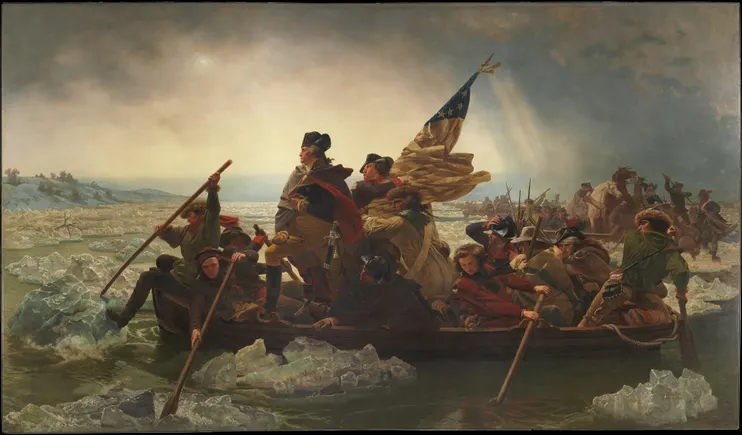
To further enhance this connection, Jago suggests selecting artworks that have thematic or historical relevance to the literature being studied. For example, a lesson on historical fiction set during the Revolutionary War could be enriched by displaying Emanuel Leutze’s iconic painting, "Washington Crossing the Delaware." This visual anchor can provide context and spark curiosity. "There’s real power in understanding art," Jago states. "It helps you understand the past. Ask students, ‘What do you notice about what people are wearing, what they’re eating, what tools they’re using? What’s different and what’s the same?’”
By encouraging students to analyze historical details within a painting – such as clothing, tools, and societal customs – educators can illuminate the historical context of literary works. This comparative analysis helps students realize that historical creations, whether in art or literature, are not abstract or alien entities but are rooted in human experience and societal evolution. "Finding parallels to the 21st century can help students realize that creations of the past, whether fine art or literature, are not ‘from outer space. They’re part of our world,’” Jago explains.
Navigating Pedagogical Pitfalls and Fostering Genuine Interest
While the integration of art offers significant pedagogical advantages, Jago cautions against educators becoming overly engrossed in their personal artistic preferences to the detriment of the learning objectives. The focus must remain on student discovery. "You want to set up a situation where they’re discovering things in a piece of art or piece of literature for themselves," she advises. The educator’s role is to facilitate, not to dominate the interpretive process.
Furthermore, Jago strongly cautions against approaches that either dismiss student interests or falsely promote the inherent "fun" of challenging literature. She criticizes the "vegetables" approach, where literature is presented as a necessary but unpleasant task for future benefit: “‘It’s good for you, you’ll hate it now but thank me later.’ That never worked.” Conversely, she also rejects the simplistic "reading is fun" mantra when applied to demanding texts. “At the same time, it can’t be, ‘Reading is fun,’" she states. "Pick up ‘The Aeneid.’ Pick up ‘The Odyssey.’ It’s not fun.”
Instead, Jago proposes a more honest and realistic framework for introducing challenging literature. The approach should be framed with transparency and support: "‘This is going to be hard. I’m here to help you. You’re going to find some things here you’re going to be interested in.’ And use that as an entry point to the world of intellectual life.” This candid acknowledgement of difficulty, coupled with a commitment to guiding students toward points of genuine interest, is crucial for building intellectual resilience and fostering a lasting appreciation for complex ideas.
Addressing the Digital Entrapment: A Call for Deeper Engagement
Ultimately, Jago’s strategy is a response to a broader societal challenge: the "digital entrapment" of today’s youth. She candidly acknowledges the reality that few 14-year-olds will naturally gravitate towards deep literary immersion. "How can we help this generation of kids who are not OK?" she asks. "Let’s be clear. They’re locked into a bell jar of social media and phones."
The power of integrating art lies in its potential to disrupt this pattern. By encouraging students to slow down, observe closely, and engage analytically with a single, rich visual artifact, educators can offer a compelling alternative to the "endless feed of Instagram." This deliberate practice of sustained attention, honed through the appreciation of fine art, can equip teenagers with the essential "reading muscles" and the intellectual stamina needed to navigate the complexities of literature and, by extension, the wider world of ideas. The goal is not to eliminate digital engagement but to provide a counterbalance, demonstrating the profound rewards of focused intellectual exploration.