



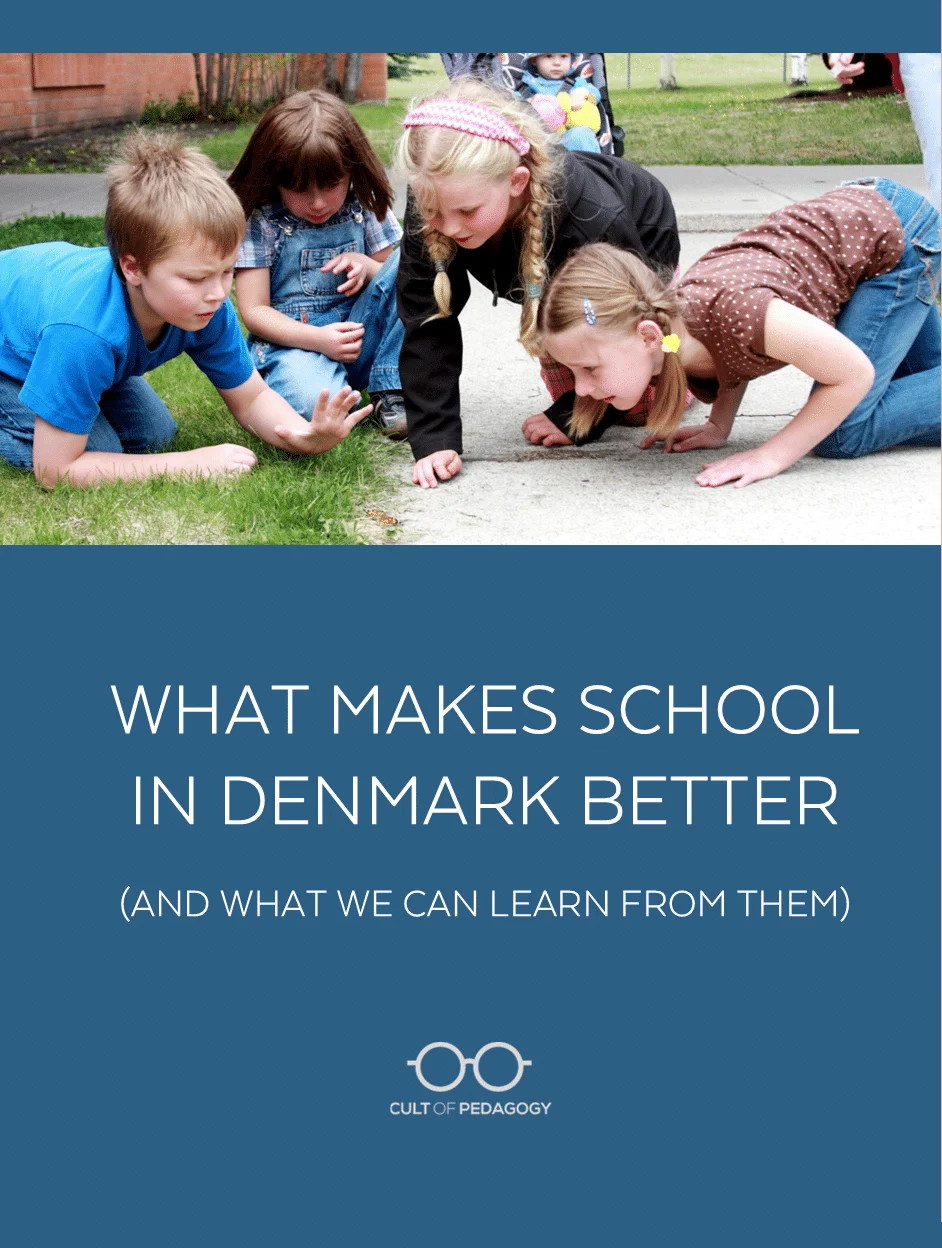
A compelling comparative analysis of the American and Danish education systems, spearheaded by veteran educator Pernille Ripp, reveals a stark contrast in pedagogical philosophy, with the Nordic nation’s approach emphasizing trust, autonomy, and a "less is more" ethos. Ripp, who transitioned from teaching in the U.S. to her native Denmark, highlights how a deliberate reduction in bureaucratic oversight and an increased focus on professional discretion and student well-being could offer a transformative blueprint for American schools grappling with teacher burnout and student disengagement. Her insights, shared in a recent interview, challenge the prevailing U.S. paradigm of control and standardization, suggesting that significant improvements may not require additional resources but rather a strategic divestment from complex mandates.
The Philosophical Bedrock: Trust and Well-being in Danish Education
The Danish educational system operates on a foundational principle of trust in its educators and a holistic view of child development, starkly different from the often-prescriptive environment found in many U.S. schools. This philosophy is deeply embedded in the broader Danish welfare state model, which prioritizes social cohesion, individual well-being, and a high degree of civic engagement. In Denmark, education is viewed not merely as a pathway to academic achievement but as a crucial component in nurturing well-rounded, responsible citizens capable of thriving within a community. This societal value translates directly into school policies that grant teachers significant professional autonomy and allow students greater freedom to explore and develop at their own pace.
Historically, Danish education has maintained a focus on experiential learning and a less rigid curriculum compared to many other developed nations. While academic rigor remains a core expectation, it is pursued without the relentless pressure and early formalization often seen in the U.S. This approach is supported by national policies that streamline educational goals, allowing local schools and individual teachers to tailor their methods to student needs without constant external monitoring. The government recently pared down its extensive list of educational objectives from hundreds to approximately ten, a move illustrative of the system’s commitment to simplicity and trust in professional judgment.
Teacher Empowerment: A Foundation of Trust, Not Control
One of the most profound differences Ripp identifies is the prevailing assumption of teacher competence in Denmark. Unlike the U.S., where teachers frequently operate under mandated pacing guides, scripted curricula, and extensive checklists, Danish educators are given broad, age-based goals and the professional liberty to determine the most effective path to achieve them. This high degree of professional trust translates into palpable improvements in teacher morale and job satisfaction. According to the OECD’s Teaching and Learning International Survey (TALIS), teachers in countries with higher levels of autonomy often report greater job satisfaction and a stronger sense of professional efficacy. In Denmark, decisions regarding curriculum and pedagogical approaches are often made at the school level, enabling responsiveness to the unique needs of diverse student populations. Ripp recounts instances where teachers can quickly implement new ideas by consulting colleagues, bypassing the protracted committee approvals common in American districts. This streamlined decision-making process empowers teachers to innovate and adapt their teaching strategies, fostering a dynamic and responsive learning environment.
In the U.S., the proliferation of standardized testing, accountability measures, and top-down mandates has, for many educators, eroded this sense of professional trust. Teacher advocacy groups, such as the National Education Association (NEA) and the American Federation of Teachers (AFT), frequently cite lack of autonomy and excessive bureaucratic demands as significant contributors to teacher burnout and high attrition rates. The implication from Ripp’s experience is clear: when teachers are treated as skilled professionals rather than mere implementers, their engagement and effectiveness soar.

Optimized Workload and Professional Working Conditions
Beyond autonomy, Danish schools offer teachers professional working conditions that significantly alleviate stress and prevent burnout. Ripp details a structured 40-hour work week, with approximately half of that time dedicated to direct student instruction. The remaining hours are protected for planning, collaboration, and professional development. When faced with an overloaded schedule due to extra committees, Ripp’s principal responded by asking what could be removed from her plate, a stark contrast to the common U.S. expectation of "doing more with less."
Furthermore, Danish schools often provide dedicated, quiet office spaces for teachers to prepare, free from classroom distractions or administrative interruptions. This physical separation helps teachers compartmentalize their work and avoid the constant pressure of maintaining and decorating their personal classrooms, a common, often unpaid, expectation in the U.S. Perhaps most strikingly, the Danish system handles teacher absences with remarkable efficiency and grace. Teachers merely call in sick, with no requirement to prepare substitute plans. This is made possible by a system of permanent substitute teachers attached to each building, who are familiar with the students and school culture and arrive prepared with their own instructional activities. This ensures continuity and significantly reduces the burden on sick teachers, allowing them to truly rest and recover. The average U.S. teacher reports working upwards of 50-55 hours per week, often extending into evenings and weekends, with much of that unpaid time dedicated to planning and grading—a clear area for improvement when compared to the Danish model.
Fostering Student Autonomy and Well-being
The Danish approach to education extends its philosophy of trust to students, fostering autonomy from an early age. Children are entrusted with responsibilities like packing their own backpacks, managing their materials, and making choices about where to sit. This developmental approach contrasts sharply with many U.S. schools, where student movements and decisions are often highly controlled, sometimes even into middle and high school. When students make a poor decision in Denmark, it is typically viewed as a "teachable moment" rather than a failure warranting punitive measures. This cultivates resilience and problem-solving skills, allowing children to learn from experience within a supportive framework.
Crucially, Danish school design and daily schedules prioritize student regulation through movement, outdoor time, and unstructured play. Students are encouraged to spend time outdoors every day, regardless of weather, and even "risky play," such as wrestling or snowball fights in designated zones, is encouraged. The focus is on making play safe, not eliminating it. This stands in stark contrast to the declining recess times and highly structured indoor activities often observed in U.S. schools. Research consistently demonstrates the critical role of unstructured play and physical activity in children’s cognitive development, social-emotional learning, and overall well-being. The benefits range from improved concentration and creativity to reduced stress and enhanced conflict resolution skills. In Denmark, such activities are not justified by an "educational objective" but are understood as fundamental to a child’s natural development.
Rethinking Academic Pressure: The "Slow Down" Approach
Danish schools demonstrate that academic rigor does not necessitate constant pressure or early formalization. Grades typically do not begin until seventh grade, and formal reading instruction is often delayed until what would be the equivalent of second grade in the U.S. This allows children to develop foundational skills and a love for learning without the anxiety of early assessment. Ripp observed students who struggled with reading in first grade blossom into fluent readers by third grade, underscoring the benefits of a less urgent, more developmentally appropriate timeline.
Homework, particularly in elementary school, is minimal and purposeful. Parents in Denmark are known to push back against excessive homework, asserting that evenings should be reserved for family time and childhood pursuits. This approach acknowledges that learning extends beyond the classroom and that a balanced life is crucial for a child’s development. This perspective challenges the U.S. trend of increasing homework loads, which often leads to stress for both students and families and has questionable academic benefits, particularly for younger children. International comparisons, such as the Programme for International Student Assessment (PISA) scores, show that countries with less homework or later academic starts often perform comparably or even outperform the U.S. in key academic areas, suggesting that intensity does not always equate to superiority.
Cultivating Community and Voice as Core Curriculum
Rather than treating social-emotional learning (SEL) as an add-on, Danish schools integrate student voice and community building as an intrinsic part of the curriculum through a regular "class hour." This dedicated time is used for students to discuss how things are going, navigate real conflicts, and learn to function effectively within a community. It is a space for self-regulation and understanding how individual choices impact the collective. This contrasts with many U.S. SEL programs, which, while valuable, can sometimes feel disconnected from the daily life of the classroom when delivered as a separate, prescribed curriculum. In Denmark, the entire experience of functioning as a community is considered core curriculum, preparing students not just for academic success but for civic life.
Implications for U.S. Education: A Path to Subtraction
Pernille Ripp’s experience offers a powerful challenge to the entrenched practices of American education. Her central message for U.S. teachers is one of "grace" and "purposeful slowing down." Even without top-down mandates, she encourages educators to take a critical look at their curriculum, identify areas to cut, and prioritize depth over breadth. "Forgive yourself for doing less," she advises, suggesting that the energy recovered can be redirected to personal well-being outside of school.
Implementing these changes in the U.S. would require a fundamental shift in mindset from policymakers, administrators, and parents. Education policy analysts suggest that while systemic changes like those in Denmark might seem distant, individual schools and districts can begin by piloting elements of this approach. This could involve re-evaluating field trip policies, loosening restrictions on student movement, protecting teacher prep time, or establishing school-wide substitute systems. Teacher advocacy groups could leverage these insights to push for greater professional autonomy and more humane working conditions. Critics of the current U.S. system argue that a reduction in mandates and a renewed focus on trust could lead to more innovative teaching, higher teacher retention, and ultimately, more engaged and well-adjusted students. The Danish model demonstrates that true progress in education may not come from adding more programs, assessments, or requirements, but from the courageous act of subtraction, empowering professionals, and fostering intrinsic motivation in learners.
Ultimately, the Danish educational model, as illuminated by Pernille Ripp, serves as a powerful reminder that any system created by people can be changed by people. By embracing principles of trust, autonomy, and simplicity, U.S. schools could embark on a journey of transformation that benefits both its dedicated educators and its diverse student population, leading to a more humane and enriching educational experience for all.