


The persistent challenge of cultivating genuine learning ownership among students continues to be a central concern for educators worldwide. Despite the widespread adoption of innovative pedagogical approaches such as project-based learning, Universal Design for Learning (UDL), and makerspace initiatives, many teachers report a lingering sense that students, while compliant, often fail to truly internalize and drive their own educational journeys. This observation was recently underscored during instructional rounds, where a teacher, after a classroom observation, voiced a common frustration: "I am trying to get them to own their learning. They are sweet. They do what I ask, but they just won’t own it." This sentiment highlights a critical gap in contemporary education, prompting a deeper investigation into how students can be equipped with the fundamental competencies to become self-directed and effective learners.
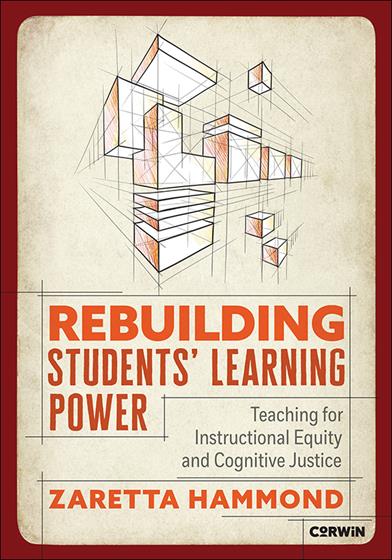
The prevailing understanding is that true learning is not merely a byproduct of engaging activities or robust scaffolding; it is an inherently internal process. As neuroscientific research increasingly demonstrates, the human brain’s information processing cycle—involving attention, elaboration, and consolidation—cannot be compelled by external instruction alone. Learning is ultimately an act of agency, dependent on a student’s intellectual curiosity, a psychologically safe learning environment, and, crucially, the explicit skills to navigate new information effectively. Without these foundational "learn-to-learn" skills, even the most dedicated teaching efforts may not translate into deep, lasting understanding. This pivotal insight forms the core of Zaretta Hammond’s forthcoming work, Rebuilding Students’ Learning Power (Corwin, 2025), which advocates for coupling motivational strategies with concrete tools and techniques to transform students into proficient information processors.
The Foundational Importance of Metacognition and Self-Regulation
The concept of "learn-to-learn" skills is not a novel pedagogical construct but rather a synthesis of established principles often referred to as the "game of learning" by Harvard’s Project Zero founder David Perkins, or the "craftsmanship of learning" by Ron Berger of EL Education. These skills represent the metacognitive and self-regulatory abilities that empower individuals to understand and manage their own learning processes. From an equity perspective, these competencies are often described as the "hidden curriculum"—implicit knowledge and strategies that are frequently assumed rather than explicitly taught, thereby exacerbating opportunity gaps for students who lack prior exposure or innate development in these areas. By making these "trade secrets" explicit, educators can create a more equitable learning landscape, enabling all students to access and master complex content.
It is vital to distinguish "learn-to-learn" skills from executive function skills, which, while important, focus primarily on organizational and planning aspects such as managing binders or developing study habits. While executive functions provide the necessary structure, learn-to-learn skills directly address the cognitive load and information processing mechanisms required for deep understanding and retention. They are the operational "moves" that students employ to actively engage with, make sense of, and integrate new knowledge.
Deconstructing "Moves" and "Skills" in Learning
To facilitate student acquisition, these "learn-to-learn" abilities are conceptualized as a set of five distinct "moves," which collectively form a comprehensive skill set. A "move" is a discrete, actionable technique executed at a specific moment, much like a chess move or a dance step. A "skill," conversely, is a broader, developed competency encompassing the judgment, understanding, and capacity to effectively deploy various moves. For instance, in basketball, a "crossover dribble" is a move, while "ball-handling" is a skill that involves choosing and executing various dribbling moves appropriately. In learning, skills enable students to select the right cognitive "moves" at the optimal time, fostering adaptability and effectiveness beyond rote application. This dynamic interplay between specific moves and overarching skills allows students to build robust learning power through flexible, adaptive engagement with new content.
The Five Learn-to-Learn Moves: A Framework for Cognitive Engagement
Hammond’s framework outlines five essential "learn-to-learn" moves, each designed to optimize a particular phase of the information processing cycle:
1. Move 1: Size It Up and Break It Down
This initial move centers on task analysis, a crucial metacognitive process. Students are guided to "size up" a task by engaging in a structured cognitive routine to decipher its demands, objectives, and underlying principles. The subsequent "break it down" phase involves crafting a strategic plan, dissecting the task into manageable cognitive activities, and identifying the necessary tools and strategies for completion. This move primes the brain for learning by activating decision-making processes and establishing an appropriate emotional and intellectual stance. It addresses questions such as: "What is this task asking me to do?", "What does success look like?", "What are the key components?", and "What prior knowledge might be relevant?" This foundational step is critical for setting students up for success, allowing them to approach challenges with intentionality rather than reactive compliance.
2. Move 2: Scan the Hard Drive
Central to effective learning is the activation of prior knowledge, or "funds of knowledge," as neurobiology dictates that new learning must connect with existing neural pathways. The "Scan the Hard Drive" move prompts students to consciously search their internal "database" for any related experiences, definitions, or concepts, no matter how distant they may seem. This process, often occurring during the attention phase of information processing, helps the brain establish connections, creating a scaffold for new information. When confronted with novel or confusing content, students are encouraged to ask: "What do I already know about this?", "Where have I encountered something similar?", or "What definitions or concepts come to mind?" Research on schema theory consistently shows that activating prior knowledge significantly improves comprehension and retention by providing a meaningful context for new information. This move directly addresses a natural "choke point" in learning—the need to link new data to existing frameworks for effective integration.

3. Move 3: Chew and Remix
The "Chew and Remix" move is the engine of the elaboration phase, where active meaning-making occurs. Once students have activated relevant schema, they are encouraged to actively integrate new content with their identified background knowledge. This "mixing the new with the known" process involves critical thinking, analysis, and synthesis. It demands productive struggle within Vygotsky’s Zone of Proximal Development (ZPD), moving students beyond superficial understanding to deeper cognitive engagement. This move is where students grapple with complex, conflicting, or competing information, leading to higher-order thinking skills as described by Bloom’s Taxonomy or Webb’s Depth of Knowledge. Key questions include: "How does this new information connect to what I already know?", "What are the implications or consequences?", and "How can I explain this in my own words?" The act of "chewing" new ideas and "remixing" them with existing understanding is fundamental to constructing durable knowledge.
4. Move 4: Engage in Skillful Practice
While "Chew and Remix" focuses on general meaning-making, "Skillful Practice" targets the deepening of understanding for core concepts and the development of automaticity in specific skills and procedures, particularly in subjects like mathematics and reading. This move emphasizes deliberate practice, a process of focused, repetitive effort with continuous refinement, aimed at myelination—the strengthening of neural pathways for efficiency and automaticity. Students are prompted to identify weaknesses in their execution of a skill or application of a concept and to concentrate on improving specific "moves." This meta-strategic awareness allows for targeted improvement, ensuring that practice is not merely repetitive but progressively enhances proficiency. Questions guiding this move include: "Where am I getting stuck?", "What small adjustment can I make to improve?", and "How can I practice this in a more focused way?" The emphasis here is on quality over quantity, ensuring that practice leads to mastery rather than the reinforcement of errors.
5. Move 5: Make It Sticky
The final move, "Make It Sticky," addresses the critical consolidation phase of information processing, counteracting the brain’s natural "pruning" mechanism that can delete fragile dendrites if new learning isn’t reinforced within 24 to 48 hours. This move focuses on strengthening new neural pathways through the application of recently acquired content in diverse settings. Students are encouraged to revisit and apply their learning outside of formal instruction, within a specific timeframe after the initial learning episode. This could involve teaching the concept to someone else, connecting it to a real-world scenario, or creating a mnemonic device. The goal is to make the learning durable and readily accessible. Prompting questions might be: "How can I use this information today?", "Who can I explain this to?", or "What real-world problem does this solve?" This move directly addresses the "forgetting curve" and underscores the importance of spaced retrieval and active application for long-term retention.
Fostering Learning Ownership: Beyond Instruction
Implementing these "learn-to-learn" moves effectively requires more than simply presenting them to students. True ownership emerges when students internalize and consistently apply these strategies without constant prompting. This transformation into a cognitively independent learner involves a multi-pronged approach:
1. Initiate Students into a Cognitive Apprenticeship:
Drawing parallels with traditional apprenticeships in crafts like carpentry or culinary arts, educators can structure classrooms as cognitive apprenticeships. This involves an explicit onboarding process, followed by phases of skill-building and habit formation, culminating in mastery of learning how to learn. This initiation period, ideally lasting 4-6 weeks, clearly articulates the journey towards becoming a proficient information processor. During this phase, teachers explicitly model, coach, and scaffold the use of the five moves, helping students develop the six capacities of a good information processor: self-awareness, metacognition, self-regulation, resilience, critical thinking, and collaborative learning. This deliberate framing establishes a culture where learning is viewed as a craft to be honed, not just content to be consumed.
2. Invite Students to Revise Their Learner Identity:
A critical component of this apprenticeship is encouraging students to reflect on and potentially revise their self-perception as learners. Learner identity encompasses an individual’s beliefs about their abilities, motivations, and belonging within the academic sphere. Many students, particularly those who have historically struggled, may internalize negative self-labels (e.g., "I’m not a math person"). By explicitly teaching learn-to-learn skills and providing opportunities for success, educators can help students challenge these limiting beliefs. A positive learner identity is strongly correlated with academic persistence and a sense of belonging. Through structured conversations and evidence of their growing capabilities, students can begin to see themselves as capable, adaptable, and powerful learners, moving from a fixed mindset to a growth mindset.
3. Integrate Regular Opportunities for Reflection and Feedback:
Developing learning power is an iterative process that thrives on reflection and constructive feedback. Students need consistent, structured opportunities to articulate their learning processes, identify "choke points" (natural cognitive constraints like limited working memory or rapid forgetting), and recognize "pitfalls" (self-sabotaging behaviors like cramming or multitasking). Regular instructional conversations—several times a week—can guide students to reflect on how they managed confusion, navigated mistakes, and deployed specific "moves" to overcome challenges. For example, a "choke point" like working memory’s limited capacity can be managed by breaking down information into smaller "chunks," while a "pitfall" like believing re-reading is effective can be addressed by introducing spaced self-quizzing. This metacognitive dialogue helps students become adept at diagnosing their learning needs and adjusting their strategies, fostering genuine self-regulation.
The Broader Implications for Educational Equity and Future Readiness
The intentional cultivation of "learn-to-learn" skills represents a fundamental shift towards instructional equity. These are not merely supplementary strategies but rather essential components of a curriculum that empowers every student, regardless of background, to become a truly independent and powerful learner. In an increasingly complex and rapidly evolving world, the ability to continuously learn, unlearn, and relearn is paramount. Equipping students with these metacognitive tools prepares them not just for academic success but for lifelong adaptability, critical thinking, and problem-solving in future careers and civic life.
By democratizing access to the "craftsmanship of learning," educators can dismantle the invisible barriers that perpetuate achievement gaps. When students understand how they learn, they gain agency, resilience, and the capacity to navigate new challenges with confidence. This approach transcends traditional content delivery, focusing instead on building the cognitive infrastructure necessary for sustained intellectual growth. The call for "learn-to-learn" skills is, therefore, a call for a more equitable, effective, and future-ready education system where every student is empowered to own their learning journey.