




Across universities and colleges worldwide, a familiar scenario unfolds daily: a seasoned faculty member, minutes before a critical hybrid lecture, grapples with malfunctioning classroom technology. The camera is askew, the projector stubbornly refuses to display, or the system defaults to an incorrect input, despite years of teaching experience and familiarity with the course material. This frustrating ritual, often ending with an urgent call to the IT department, has become an unwelcome norm, tacitly accepted as an unavoidable byproduct of modern educational technology. However, this pervasive issue is not an inherent flaw in the technology itself but rather a glaring symptom of foundational infrastructure deficiencies, a problem that is not only preventable but also carries significant hidden costs.
The Genesis of Disconnect: A Historical Perspective
For decades, technology adoption in higher education classrooms largely followed a reactive, piecemeal approach. Prior to the widespread advent of advanced multimedia and networked learning, classroom technology primarily consisted of standalone projectors, VCRs, and overhead transparency machines. As digital tools emerged, universities began integrating them incrementally, often driven by individual faculty requests, departmental initiatives, or the allure of the latest gadget. An architect might lay out the initial room design, often without substantial input from the institution’s audiovisual (AV) or IT teams, fixing a budget before a comprehensive understanding of the space’s pedagogical requirements was established. This often led to a "shopping in the wrong order" paradigm, where brand and platform choices were made through committees, but the critical space design – encompassing how technology would be physically integrated and supported – was largely an afterthought.
The AV team, frequently brought in late in the process, was then tasked with the unenviable job of retrofitting the chosen technologies into pre-determined physical constraints. This involved scrambling to find ways to mount displays, rack equipment, route cabling, and manage power, often after purchase orders were already signed and construction was underway. This approach, akin to purchasing a high-performance sports car only to discover the roads it must traverse are riddled with potholes, prioritizes the "car" (the visible technology) over the "road" (the underlying infrastructure). When crucial elements such as display mounting systems, cabling pathways, rack enclosures, power management, AV signal distribution, and wireless network infrastructure are treated as secondary considerations, the result is predictable: learning spaces that operate intermittently, demand constant technical intervention, and lack the inherent flexibility to adapt to evolving teaching methodologies.
The Pandemic’s Unveiling: A Stress Test for Infrastructure
The global COVID-19 pandemic served as an unprecedented stress test for higher education’s technological backbone. Almost overnight, institutions were forced to pivot to hybrid and remote learning models, demanding robust, reliable, and scalable AV solutions in every classroom. This accelerated timeline, coupled with existing infrastructure weaknesses, brought the underlying problem into sharp relief. Campuses invested heavily and rapidly in new cameras, microphones, interactive displays, and streaming platforms. However, the foundational issues – inadequate network bandwidth, insufficient power outlets, poorly managed cabling, and non-standardized equipment racks – became immediate bottlenecks.
The scramble to equip hundreds or thousands of classrooms simultaneously often meant quick fixes and temporary solutions were prioritized over long-term, integrated design. This period, while showcasing the resilience and adaptability of IT and AV teams, inadvertently cemented many of the ad-hoc practices that had long plagued campus technology deployments. The expectation for seamless hybrid instruction, once a niche demand, became a universal requirement. Post-pandemic, students and faculty alike expect a consistent, high-quality experience whether they are physically present in the classroom or participating remotely. This sustained demand places immense pressure on infrastructure that was never designed for such rigorous and varied use cases. The gap between a polished product demonstration and the often-frustrating reality of daily classroom operation is no longer merely an inconvenience; it represents a critical impediment to educational delivery and institutional reputation.
The Hidden Costs: Quantifying the Inefficiency

The financial implications of this infrastructure neglect are substantial, extending far beyond the initial procurement costs. Universities globally spend billions annually on AV technology. However, a significant portion of this investment is effectively eroded by the hidden costs of managing unreliable systems.
- Increased Support Burden: IT departments report that AV-related issues consistently rank among the top categories for helpdesk tickets. This translates to countless hours of technician time spent on "firefighting" – diagnosing and resolving recurring problems, rather than on strategic planning or proactive maintenance. A single technician dispatch, including travel time, diagnosis, and resolution, can cost an institution hundreds of dollars per incident. Multiply this by hundreds or thousands of classrooms experiencing issues daily, and the costs quickly escalate into millions annually.
- Downtime and Disruption: Each technical glitch represents lost instructional time, disrupting lesson flow and potentially impacting student learning outcomes. Faculty frustration can lead to decreased morale and reluctance to adopt new pedagogical tools that rely on technology.
- Premature Equipment Replacement: Shoddy infrastructure can lead to premature wear and tear on expensive AV components. Poor cable management can damage ports and connectors, inadequate power conditioning can stress electronics, and improper mounting can lead to equipment failure. This shortens the lifespan of technology, forcing institutions into more frequent and costly replacement cycles.
- Lack of Scalability and Adaptability: When infrastructure is not designed for future growth or flexibility, adapting to new technologies or teaching models becomes a costly overhaul rather than a simple upgrade. This renders campuses less agile and responsive to educational innovation, potentially putting them at a disadvantage in a competitive landscape.
- Energy Inefficiency: Disorganized power management and inefficient cooling in poorly designed racks can lead to higher energy consumption, increasing operational costs and contributing to a larger carbon footprint.
Redefining "AV": The Ecosystem-First Philosophy
The profound shift required to overcome these challenges is not merely technical; it is philosophical. Instead of viewing technology components as individual purchases, institutions must adopt an "ecosystem-first" approach. This means starting with a fundamental question: What does this room need to do? What teaching formats must it support? How will it be serviced? How will it scale and adapt over time?
When these strategic questions drive the planning and procurement process, every layer of the infrastructure is recognized as the critical architectural decision it truly is. This encompasses:

- Display and Projector Mounting: Secure, adjustable, and aesthetically integrated mounting systems that consider sightlines, accessibility, and future upgrades.
- Projection Screens: Appropriately sized and positioned screens that offer optimal viewing angles and integrate seamlessly with the room’s lighting.
- Rack Systems and Power Distribution: Organized, well-ventilated rack enclosures with robust and intelligent power management systems, including uninterruptible power supplies (UPS) and surge protection.
- Structured Cabling and Cable Management: High-quality, properly terminated, and clearly labeled cabling for audio, video, data, and control signals, with dedicated pathways that facilitate easy maintenance and future expansion. This includes fiber optics for long-distance runs and high-bandwidth requirements.
- PTZ and Fixed Cameras: Strategic placement and mounting for optimal coverage of instructors, whiteboards, and student interactions in hybrid environments.
- Wireless Access Points (WAPs): Sufficient density and strategic placement of WAPs to ensure ubiquitous and reliable Wi-Fi coverage for all devices, crucial for BYOD (Bring Your Own Device) policies and cloud-based learning tools.
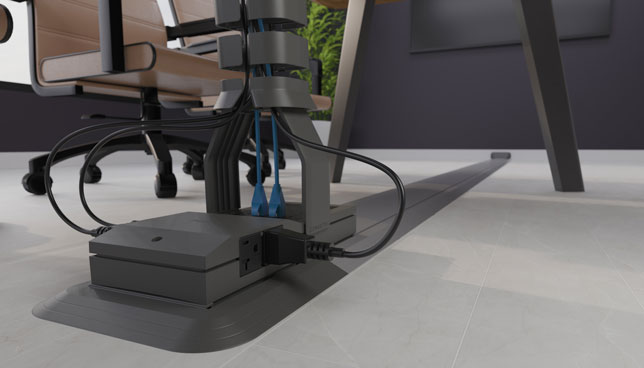
- Floor Connectivity Systems: Integrated floor boxes and conduits in flexible learning spaces, providing power and network access without creating trip hazards or visual clutter.
- Acoustic Treatment: Often overlooked, room acoustics directly impact the effectiveness of microphones and speakers, particularly in hybrid settings. Integrated acoustic panels and sound-dampening materials are critical infrastructure components.
This ecosystem-first perspective has immediate, tangible benefits, most notably the ability to achieve standardization. When infrastructure decisions are made intentionally and consistently across campus, IT teams transition from troubleshooting unique, one-off configurations to managing a coherent, predictable system. A technician familiar with the rack layout, cabling schema, and power distribution in one building can confidently navigate and resolve issues in another. This isn’t merely a gain in efficiency; it’s a profound improvement in operational sanity and staff morale.
Stakeholder Perspectives: A Unified Call for Change
The call for prioritizing infrastructure resonates deeply across various university stakeholders:
- IT Directors and Managers: "We’re trapped in a reactive cycle. Every budget cycle, we’re asking for more funds to fix problems that could have been prevented with better initial planning," states one anonymous IT director. "The shift to proactive, standardized infrastructure isn’t just about saving money; it’s about making our teams more effective and allowing us to innovate instead of just firefighting."
- University Administrators: "Our institution invests millions in creating cutting-edge learning environments, but if the underlying systems aren’t reliable, those investments are undermined," a Provost from a large public university remarked. "We need to ensure that our infrastructure strategy aligns with our pedagogical goals, making technology an enabler, not a barrier, for both faculty and students. It impacts everything from student retention to our competitive standing."
- Faculty Members: "When I walk into a classroom, I need the technology to simply work, every single time," explains a professor of engineering. "My focus needs to be on teaching, not on troubleshooting. Consistent, reliable systems free me to experiment with new teaching methods and engage students more effectively."
- AV Industry Experts: "The industry has long championed advanced devices, but the conversation is fundamentally shifting towards the importance of the foundational layers," notes a leading AV consultant. "The integration of AV over IP, IoT sensors, and AI-driven analytics into learning spaces demands an incredibly robust and intelligently designed physical and network infrastructure. Without it, even the most sophisticated technologies will fail to deliver on their promise."
Architecting for Resilience: Practical Implementation Strategies

Implementing an ecosystem-first approach does not necessitate a complete overhaul of every campus facility overnight. Instead, it requires a strategic shift in the sequence of decisions and an expansion of what constitutes an "AV decision" in the first place.
- Early Collaboration: Integrate AV and IT professionals into the architectural and design phases of any new construction or renovation project from its inception. Their input on space requirements, power, cooling, network drops, and cabling pathways is critical.
- Needs Assessment First: Before selecting any specific technology, conduct a thorough needs assessment for each learning space. What are the pedagogical requirements? What teaching styles need to be supported? What level of flexibility is required?
- Standardization Guidelines: Develop and enforce campus-wide standards for infrastructure components. This includes specifications for cabling types, connector standards, rack configurations, power distribution units, and network port provisioning.
- Modular Design: Design infrastructure to be modular and easily accessible. This facilitates quicker repairs, simpler upgrades, and reduced disruption during maintenance.
- Documentation and Training: Meticulous documentation of all infrastructure components, including cable runs, rack layouts, and network configurations, is essential. Comprehensive training for IT staff on these standardized systems improves efficiency and reduces troubleshooting time.
- Lifecycle Planning: Incorporate infrastructure considerations into the technology lifecycle management. Plan for regular upgrades and maintenance of foundational elements, not just the visible hardware.
Beyond Troubleshooting: The Strategic Advantages of a Robust Foundation
When infrastructure is treated as the variable that enables technology to become the constant, the benefits extend far beyond merely reducing helpdesk tickets. A robust, well-planned infrastructure empowers institutions to:
- Enhance Student Experience: Provide a seamless, equitable learning environment for all students, regardless of their physical location or device. This positively impacts student satisfaction, engagement, and retention rates.
- Boost Faculty Productivity and Morale: Free faculty from technological anxieties, allowing them to focus on innovative teaching and research, fostering a more dynamic academic environment.
- Future-Proof Learning Spaces: Create environments that are inherently adaptable to emerging technologies, from virtual reality and augmented reality applications to advanced AI-powered analytics, without requiring costly, disruptive overhauls. This ensures long-term value from technology investments.
- Improve Operational Efficiency: Reduce operational costs associated with maintenance, support, and premature equipment replacement, allowing IT budgets to be reallocated towards innovation.
- Strengthen Institutional Reputation: Project an image of technological sophistication and pedagogical foresight, making the institution more attractive to prospective students and faculty.
- Promote Sustainability: Well-designed infrastructure often leads to more energy-efficient systems, reducing the institution’s environmental footprint.
The persistent issues plaguing classroom technology in higher education are not insurmountable. By shifting focus from individual gadgets to the foundational ecosystem that supports them, universities can move beyond a cycle of reactive problem-solving. This strategic reorientation, emphasizing collaboration, standardization, and foresight in infrastructure design, is not merely a technical upgrade; it is a fundamental investment in the future of learning itself, ensuring that technology serves as a powerful enabler for education, rather than a frustrating impediment. The choice is clear: continue to patch potholes on a crumbling road, or invest in building a robust, resilient highway for the future of higher education.