
The human story, as poetically recounted in the second chapter of Genesis, begins with a profound act of creation: "The Lord formed Adam from the dust of the earth. He blew into his nostrils the breath of life and man became a living being." This foundational text, echoing through millennia, encapsulates an enduring theological and philosophical inquiry into the essence of humanity. While modern scientific understanding offers a different lens on human origins, the symbolic power of this narrative continues to inform our understanding of what defines us. Crucially, the Hebrew term translated as "living being" has been subject to varied interpretations, each shedding light on a unique aspect of human distinctiveness.
Historical and Theological Foundations of Human Speech
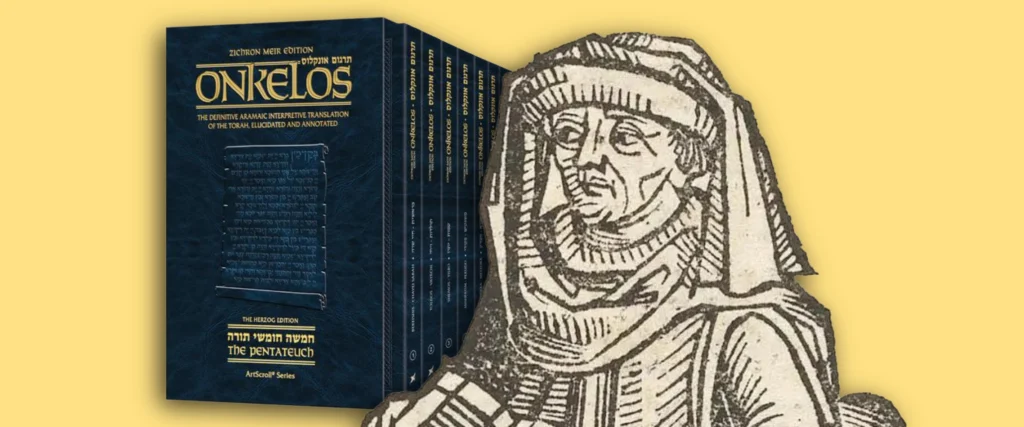
One of the most influential interpretations comes from Onkelos, a Roman nobleman who converted to Judaism and became a renowned Torah scholar. His Aramaic translation of the Hebrew term renders "living being" as ruach memalela, or "speaking spirit." This interpretation, as elaborated by Rabbi Shai Held in "The Heart of the Torah," posits that speech is not merely a faculty but a constitutive element of human identity. It suggests that the ability to communicate through words is central to our very humanity, distinguishing us fundamentally from other forms of life. This perspective underscores a profound connection between the divine breath imbuing life and the emergence of articulate communication.
Onkelos’s view is not an isolated one but resonates with broader Jewish intellectual tradition. The esteemed medieval commentator Rashi further emphasized this concept, asserting that speech is not only central to human existence but also key to our uniqueness among God’s creations. According to this tradition, human beings alone possess the capacity for complex, symbolic speech, making it a sacred gift and a hallmark of our elevated status. This historical consensus highlights that the deep significance of language has been a cornerstone of human self-understanding for thousands of years, long before the advent of modern linguistic theories.
The reverence for speech articulated by these ancient scholars reflects a deep awareness of its transformative power, a power that became increasingly evident in the post-Paleolithic era. Words enable an almost miraculous alchemy: the intangible state of mind is transformed into vocalized phonemes or inscribed letters, which can then be decoded and understood in the mind of a receiver. This intricate process, a form of inter-human telepathy, facilitates the sharing of knowledge, emotions, and complex ideas, forming the bedrock of human culture and society.
The historical trajectory of human communication further emphasizes the profound impact of language. The development of alphabet systems in the ancient Near East, for instance, marked a pivotal moment in human history. Prior to alphabetic literacy, knowledge transmission was largely oral or confined to complex, often priestly, scribal systems. The advent of simpler, phonetic alphabets democratized literacy, making it accessible to a wider segment of the population. This democratization of knowledge played a critical role in fostering individual agency and critical thought. It is arguably within this context that foundational notions of human dignity, individual worth, and universal justice began to take root and flourish, as individuals gained direct access to sacred texts, laws, and philosophical discourse. The ability to read, interpret, and engage with written words empowered individuals in ways previously unimaginable, laying the groundwork for many of the societal values we now often take for granted.
The Rise of Generative AI and its Conversational Prowess
Fast forward to the 21st century, and humanity stands at the precipice of another transformative linguistic revolution, driven by the rapid advancements in generative artificial intelligence. The ability of large language models (LLMs) to produce remarkably coherent, contextually relevant, and lexically fluid text has introduced a new dimension to our understanding of communication. Companies like OpenAI, co-founded by Sam Altman, and Anthropic, led by Dario Amodei, are at the forefront of developing these sophisticated AI systems, which are increasingly integrated into various aspects of daily life, from customer service to content creation.
The technological underpinnings of this revolution are complex, involving vast neural networks trained on colossal datasets of human language. These models operate by autoregressively generating one "token" (a word or sub-word unit) after another, based on statistical probabilities derived from their training data. While this process is essentially a sophisticated form of pattern recognition and prediction, the outputs can be astonishingly human-like, leading to fluent conversations with chatbots that can mimic human dialogue with uncanny accuracy.
This seemingly magical ability, however, has not been without its challenges, particularly concerning public perception and the inherent unease many experience when engaging with these systems. A recent study by Stanford University’s Human-Centered AI Institute in 2023 indicated that while 70% of Americans believe AI will eventually perform tasks currently done by humans, a significant portion also express concerns about the authenticity and ethical implications of AI-generated content. The disquiet stems from the perception that while AI can replicate human-like speech, it lacks genuine understanding, consciousness, or intent. This "lexical fluidity," though a product of intricate algorithms and massive computation, often creates a disconcerting sense of transgression, challenging deeply held assumptions about the exclusivity of meaningful communication.
Ethical Quandaries: Redefining "Living Being" in the Digital Age
The profound discomfort many feel when conversing with AI chatbots can be partly understood through the lens of the sacredness traditionally ascribed to human speech. If, as ancient scholars suggested, speech is constitutive of our humanity and a unique divine gift, then the replication of this faculty by machines raises fundamental existential and ethical questions. The ease with which AI now engages in sophisticated linguistic exchanges forces a re-evaluation of what it means to be a ruach memalela, a "speaking spirit."
Should humanity be so quick to extend the defining characteristic of speech to machines? Allowing AI to become an active participant in what has historically been considered an exclusively human ritual of communication begs serious contemplation. The implications extend beyond mere utility. When AI writes articles, drafts emails, or even serves as a conversational companion in the absence of authentic human interaction, it blurs the lines between genuine expression and algorithmic mimicry. This raises concerns about the potential erosion of human connection, the devaluation of genuine human effort in creative and intellectual pursuits, and the very definition of authenticity in an increasingly mediated world.
The prospect of AI writing and speaking on our behalf, or acting as a "golemic" conversational partner, evokes a feeling that, for many, borders on the profane. The Golem, a figure from Jewish folklore, is an anthropomorphic being animated by mystical means but lacking a soul or true consciousness. The analogy is apt: while AI can animate words, it lacks the subjective experience, emotional depth, and moral agency that we associate with human communication. This absence, despite the surface-level fluency, contributes to the unsettling sense that something sacred is being co-opted or diluted.
The Nascent Field of Digital Ethics
These deep questions and feelings of unease underscore the urgent need for a robust framework of "digital ethics." This emerging field finds itself in a position strikingly similar to where bioethics stood five decades ago. In the mid-20th century, rapid advancements in medical technologies – from organ transplantation to life support systems and genetic engineering – presented unprecedented moral quandaries. Bioethics emerged as an interdisciplinary field dedicated to examining the ethical, legal, and social issues arising from medicine and biological research. It brought together philosophers, theologians, lawyers, and medical professionals to grapple with questions concerning the sanctity of life, patient autonomy, equitable access to care, and the very definition of death.
Today, digital ethics faces a comparable challenge. The rapid, often unbridled, progress in artificial intelligence, robotics, and digital technologies is forcing society to confront profound moral questions about data privacy, algorithmic bias, the future of work, and, critically, the nature of human communication and interaction in an AI-pervasive world. Scholars and practitioners active in this field, often drawing on philosophical traditions, social sciences, and technological expertise, are working to develop principles and guidelines for the responsible development and deployment of AI. Institutions like Georgetown University’s Digital Ethics Center are at the forefront of these efforts, engaging in research, public discourse, and policy recommendations.
Key challenges for digital ethics include establishing clear boundaries for AI autonomy, ensuring transparency and accountability in AI decision-making, mitigating algorithmic harms, and preserving human agency in an increasingly automated environment. The debate extends to fundamental questions about intellectual property in the age of AI-generated content, the potential for deepfakes and misinformation to undermine democratic processes, and the long-term impact on human cognition and social structures if our primary mode of interaction increasingly shifts towards machine intermediaries.
Societal Implications and the Path Forward
The implications of the generative AI revolution for society are vast and multifaceted. In education, the rise of AI writing tools challenges traditional methods of assessment and learning, necessitating new approaches to fostering critical thinking and original expression. In the workplace, AI-driven automation promises efficiency but also raises concerns about job displacement and the need for workforce retraining. More broadly, the pervasive presence of AI in communication could subtly reshape human relationships, potentially diminishing empathy and the nuanced understanding that comes from genuine human-to-human interaction.
As we stand at this juncture, it is imperative that society does not blindly embrace every AI product declared "inevitable" by tech leaders. The history of technological advancement is replete with examples where foresight and ethical deliberation could have mitigated significant societal harms. Before fully integrating AI into the core fabric of our communicative existence, a robust public discourse is essential to determine what we, as a global society, are truly willing to accept. This involves engaging not just technologists and ethicists, but also policymakers, religious leaders, educators, and the broader public in a thoughtful and deliberate process of inquiry.
The questions raised by generative AI are not merely technical; they are deeply humanistic, touching upon our understanding of consciousness, creativity, and connection. Reaffirming the unique value of human speech and the ethical considerations surrounding its technological replication is not about stifling innovation, but about guiding it responsibly. It is about ensuring that as we forge ahead into a future increasingly intertwined with artificial intelligence, we do so with a clear sense of our humanity, preserving the sacred dimensions of our unique capacity to speak, to understand, and to truly connect. The work of digital ethics is therefore not just about technology; it is about defining the future of human identity itself.