
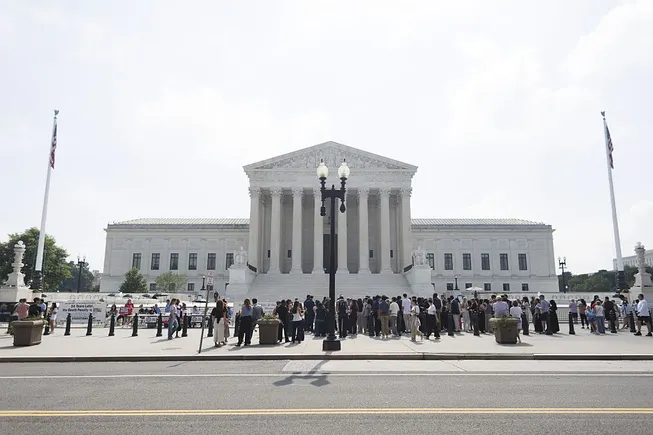
The U.S. Supreme Court’s recent term has once again significantly reshaped the nation’s education policy, with several high-impact K-12 issues reaching the justices for review. While the Court hears thousands of petitions annually, a select few, often concerning contentious social and legal matters, rise to the level of oral arguments. This past term saw a concentrated focus on education, delivering substantial rulings that have immediate implications for students, parents, and educators nationwide. The Court’s decisions have notably advanced the parental rights movement while posing challenges for LGBTQ+ rights advocates, leaving a complex and evolving legal terrain for schools to navigate.
Shadow Docket’s Growing Influence on Education Policy
In recent years, the Supreme Court has increasingly utilized its "shadow docket" – a procedural mechanism for granting immediate review and issuing decisions without the benefit of traditional oral arguments or extensive deliberation. This approach has allowed the Court to weigh in on critical education matters with remarkable speed, often shaping policy before comprehensive legal arguments can be fully developed. This past term, the shadow docket played a pivotal role in a case with far-reaching consequences for how schools handle student gender identity disclosures.
Mirabelli v. Bonta: A Landmark Ruling on Parental Notification
A prime example of the shadow docket’s impact is the case of Mirabelli v. Bonta, which originated from California’s policies regarding the disclosure of students’ LGBTQ+ identities to their parents. The case was brought forth by teachers and parents who argued that state regulations preventing educators from informing parents about a student’s gender identity or dysphoria violated their First and Fourteenth Amendment rights. The Supreme Court’s swift intervention in March of this year delivered a significant victory for the parental rights movement.
The Court ruled that California’s policies, which shielded a student’s LGBTQ+ identity from parental notification, infringed upon parental rights. While the decision did not delve into broader constitutional questions, its emergency nature and immediate effect have prompted nationwide changes. Federal agencies have begun leveraging this ruling to initiate investigations into school districts, and appellate courts are re-evaluating previous decisions in light of the Supreme Court’s pronouncement.
Nancy Potter, founder of Potter Law and an attorney specializing in education civil rights, noted the immediate practical impact: "Districts are already looking to the decision for guidance because there is little settled national authority." She further elaborated, "Parental notification may be decided in a hallway by a first-year teacher who has about thirty seconds to determine what the teacher’s obligation is. That is the interaction districts are now governing based in part on an interim order. If I were sitting in a district office this month, I would want that conversation to happen before the building opens rather than after." Potter advised school districts to meticulously review their current policies, ensure alignment with state laws, and clarify staff protocols for handling parental notification issues.
However, the Court’s use of the shadow docket in this instance drew criticism. Justice Elena Kagan, in a dissenting opinion, expressed concern about the mechanism’s potential for "malfunction," citing "scant and, frankly, inadequate briefing about the legal issues in dispute." She pointed out that nearly 40 similar cases were progressing through lower courts, presenting opportunities for more thorough review.
Adding to the complexity, the Supreme Court subsequently rejected at least three other similar parental rights cases, creating a pattern where the Court makes an immediate, impactful decision but then declines to engage in the more comprehensive review that would establish durable legal precedent. This approach, according to Potter, results in a fragmented legal landscape where schools must adhere to varying rules depending on their state and federal circuit. This inconsistency leaves educators in a precarious position, often requiring split-second decisions on sensitive matters without clear, nationwide guidance.
Setbacks for Transgender Rights in Education
Beyond the Mirabelli ruling, the Supreme Court’s recent term also saw decisions that have been viewed as significant setbacks for the transgender rights movement, particularly concerning participation in athletics. Two consolidated cases, B.P.J. v. West Virginia and Little v. Hecox, addressed state policies that ban transgender students from participating in sports teams aligning with their gender identities. These bans are currently in effect in at least 27 states.
Proponents of these bans argue they are permissible under Title IX, the federal law prohibiting sex-based discrimination in education, and are necessary for the protection of cisgender women athletes. Critics, however, contend that such bans violate Title IX’s protections for transgender students.
In a rare display of unanimity, all justices agreed that Title IX allows for the separation of sports teams based on sex. The majority opinion, issued last month, affirmed that Title IX permits such bans, but importantly, it stopped short of mandating them. This nuanced ruling means that while bans enacted by Republican-governed states may remain in place, states with policies allowing transgender students to compete on teams aligning with their gender identities, such as California, can also continue their current practices.
While the decision specifically addressed state bans on transgender athletes, education policy experts anticipate that the U.S. Department of Education will likely interpret and apply this ruling to inform policy in other areas impacting LGBTQ+ students, including issues such as pronoun usage and access to school facilities like bathrooms and locker rooms. The lack of a definitive mandate, however, leaves room for ongoing legal challenges and varying interpretations across different jurisdictions.
Unresolved Questions and Future Legal Battles
As the Supreme Court enters its recess, its actions during the past term have left a number of significant questions unanswered, setting the stage for future legal battles and policy debates.
On the Title IX front, a central unresolved issue is the distinction between what the law permits and what it requires. This includes determining whether schools and states can allow transgender students to participate in girls’ and women’s sports teams, and whether policies mandating such participation violate Title IX or the Equal Protection Clause. Furthermore, the Court has yet to address whether a more tailored approach is necessary for students undergoing hormone therapy or puberty blockers.
The Court also declined to hear several education-related free speech cases, leaving ambiguities regarding the boundaries of students’ free speech rights in educational settings. In one such denial, E.D. v. Noblesville School District, Justice Samuel Alito signaled his willingness to take up the issue in the future. The case involved an Indiana high school student whose flyers promoting an anti-abortion club were rejected by administrators due to their inclusion of slogans like "Defund Planned Parenthood." Justice Alito’s statement highlights the ongoing tension between school authority and student expression, particularly on controversial topics.
"Until the Court accepts an appropriate case, that judgment remains with the assistant principal who must decide, often in the moment, whether a student’s flyer is the student’s speech or the school’s," Potter observed. "Those are fact-specific questions, and the same flyer can come out differently in different circuits." This lack of clarity means that the interpretation of student speech rights remains largely in the hands of local school administrators, leading to potential inconsistencies across the country.
A Glimpse into the Next Term: St. Mary Catholic Parish v. Roy
Looking ahead, the Supreme Court has accepted one K-12 case for its upcoming term: St. Mary Catholic Parish v. Roy. This case centers on whether private schools receiving public funding from a state’s universal preschool program can exclude children of same-sex couples based on their religious tenets. The Trump administration has already filed a "friend-of-the-court" brief in support of the schools’ position, setting the stage for a potentially significant ruling on the intersection of religious freedom, public funding, and LGBTQ+ rights in early childhood education. The case is expected to be heard during the Court’s next term, promising further deliberation on the evolving legal landscape of education.
The Supreme Court’s engagement with K-12 issues over the past term underscores the judiciary’s critical role in shaping educational policy. The decisions have favored parental rights and introduced new complexities for transgender student participation in athletics, while leaving fundamental questions about student speech and Title IX’s full scope unresolved. As the nation grapples with these evolving legal standards, the outcomes of future cases will undoubtedly continue to define the educational experience for millions of American students.