




The landscape of renewable energy has traditionally been dominated by massive infrastructure projects, such as offshore wind farms, sprawling solar arrays, and hydroelectric dams. However, a recent project by an amateur engineer and YouTuber known as Flamethrower has shifted the focus toward a much smaller, more domestic source of kinetic energy: the common household hamster. By converting a standard exercise wheel into a functional micro-turbine, this project highlights the untapped potential of localized energy harvesting and the principles of electromagnetic induction. While the total wattage produced is modest, the engineering hurdles overcome during the project offer a compelling look at the complexities of power management and the growing DIY movement in sustainable technology.
The Genesis of the Hamster-Powered Turbine
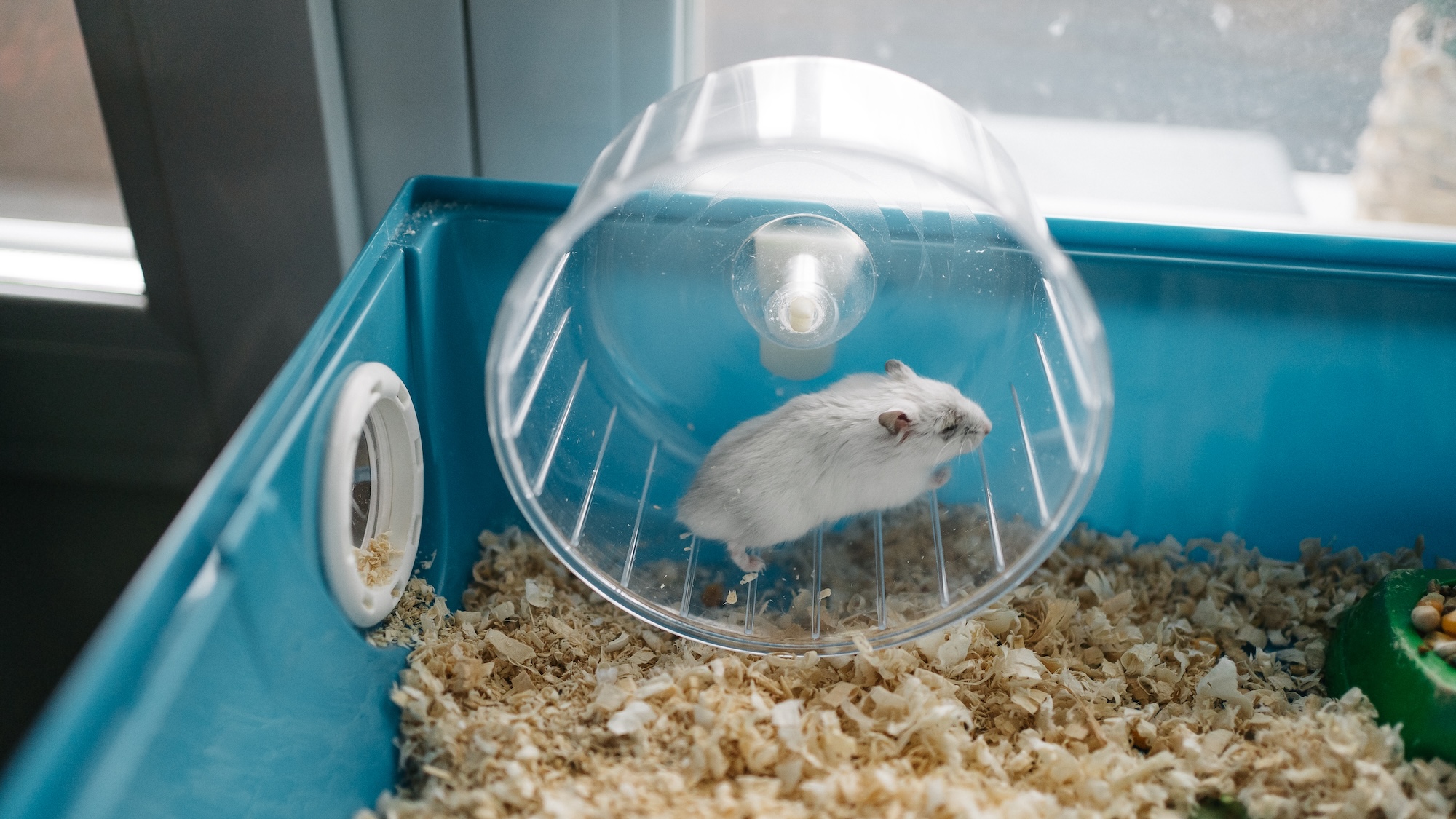
The motivation for this project was born out of a common domestic annoyance. When the inventor’s brother received a hamster for his birthday, the family quickly discovered the realities of owning a nocturnal rodent. Hamsters are most active during the late-night hours, often spending several hours at a time running on their exercise wheels. The repetitive, squeaky mechanical motion can be disruptive to sleep, but for an engineer, it represents a consistent source of kinetic energy going to waste.
Flamethrower’s realization was simple in theory but complex in execution: if the rotational energy of the wheel could be harnessed to spin a motor, that motor could act as a generator. This concept is the fundamental basis for most of the world’s power generation. Whether the prime mover is steam from a nuclear reactor, falling water in a dam, or wind hitting a blade, the goal is to spin a turbine within a magnetic field to induce an electrical current. In this case, the "prime mover" was a small rodent seeking exercise.
Technical Foundations: From Kinetic Energy to Electrical Storage
To understand the challenge of charging a modern smartphone with a hamster, one must first look at the physics of electrical generation. A standard DC motor is, in essence, a generator running in reverse. When electricity is applied to the terminals, the internal magnetic fields cause the shaft to spin. Conversely, when the shaft is spun by an external force—such as a hamster wheel—the motor generates a voltage across its terminals.
However, modern consumer electronics, particularly smartphones, are highly sensitive to the quality and consistency of the power they receive. Most modern devices require a steady 5-volt (V) input and typically draw between 5 and 15 watts (W) for standard charging. A direct connection between a hamster-driven motor and a phone is impossible for several reasons:
- RPM Requirements: For a small 5V DC motor to produce enough voltage to overcome the internal resistance of a charging circuit, it would theoretically need to spin at speeds exceeding 10,000 revolutions per minute (RPM). A hamster, while fast, cannot maintain such speeds.
- Voltage Fluctuations: A hamster does not run at a constant speed. It starts, stops, and changes pace, leading to erratic voltage spikes and drops that could damage sensitive electronics.
- Current Limitations: The amount of torque a hamster provides is insufficient to drive a high-output generator without significant mechanical advantage, which would, in turn, make the wheel too difficult for the animal to turn.
Overcoming Engineering Hurdles with Power Management
To solve these issues, the project utilized a sophisticated power management system. The core of the solution involved an energy harvester module. These modules are designed to take very small, inconsistent voltages—often in the millivolt range—and "boost" or amplify them to a level that can be stored in a battery.
A critical component of this setup was the implementation of Maximum Power Point Tracking (MPPT). Commonly used in solar power systems, MPPT is an electronic logic system that optimizes the match between the energy source (the generator) and the storage system (the battery). It ensures that the generator is always operating at its most efficient point, regardless of the speed of the wheel, by adjusting the electrical load in real-time.
For energy storage, the inventor turned to sustainability by salvaging lithium-ion cells from a discarded electric scooter. This choice not only provided a high-capacity reservoir for the energy generated by the hamster but also underscored the project’s theme of circular engineering—using waste products to create new utility.
The Chronology of the Experiment
The project moved from conceptualization to physical prototype over several weeks. The first phase involved mounting the DC motor to the axle of the hamster wheel. This required a friction-drive or geared system to ensure that the rotation of the wheel translated efficiently to the motor’s shaft. Once the mechanical link was established, the inventor wired the motor to the MPPT controller and the energy harvester.
The initial testing phase occurred overnight. As the hamster began its nightly exercise routine, the system began to trickle-charge the salvaged lithium-ion batteries. Monitoring equipment confirmed that even at lower speeds, the energy harvester was successfully capturing the small amounts of electricity generated by the rodent’s movement.
The following day, the inventor attempted to charge a smartphone using the accumulated energy. The initial results were underwhelming; while the phone recognized the charger, the rate of energy transfer was extremely slow. Using a thermal imaging camera, the inventor conducted a diagnostic check of the system to identify points of high resistance or heat loss.
The investigation revealed that the bottleneck was not the hamster or the generator, but a faulty, outdated USB cable. The resistance in the old cable was causing a significant drop in current. Upon replacing the cable with a modern, high-efficiency version, the charging speed increased dramatically, proving that the biomechanical system was indeed capable of powering a modern mobile device.
Statistical Context: The Scale of Pet-Generated Power
While one hamster-powered wheel is a novelty, the aggregate potential across the United States is statistically significant. According to the American Veterinary Medical Association (AVMA), there are over one million households in the U.S. that own hamsters or similar small rodents.

If one considers that a single hamster can run up to 5 to 8 miles in a single night, the total kinetic energy produced across the nation is substantial. While a single hamster might only produce a few milliwatts of usable power at any given moment, a million hamsters running simultaneously represents a theoretical output in the kilowatt range.
| Metric | Estimated Value |
|---|---|
| Average Hamster Speed | 1.5 – 3.0 mph |
| Distance per Night | 5 – 8 miles |
| Potential Power Output | 0.5 – 2.0 Milliwatts (continuous) |
| Total U.S. Hamster Population | ~1,000,000+ |
While this "hamster-grid" is not a viable solution for national energy independence, it serves as a powerful educational tool for understanding micro-generation and the importance of efficiency in energy conversion.
Broader Implications for DIY Engineering and Education
The success of the hamster-powered charger has resonated with the global DIY and "maker" community. It highlights a shift in how individuals interact with technology. Rather than viewing consumer electronics as "black boxes" that simply plug into a wall, projects like this encourage a deeper understanding of the physics and engineering that make modern life possible.
The project also aligns with broader trends in "energy harvesting" for the Internet of Things (IoT). As we move toward a world with billions of small sensors and devices, finding ways to power them without traditional batteries or grid connections is a major field of research. Kinetic energy harvesting—whether from the vibration of floors, the movement of human limbs, or the exercise of pets—is a legitimate area of study for powering low-energy sensors in smart homes.
Official Reactions and Future Potential
While there have been no official statements from major energy corporations regarding rodent-based power, the academic community often views such projects as excellent "proof-of-concept" models for introductory engineering courses. Dr. Aris Xanthos, a researcher in sustainable systems, notes that "the value of these projects is not in their total energy yield, but in the demonstration of system integration. Managing the interface between an unpredictable biological source and a regulated digital load is a classic engineering problem."
The inventor, Flamethrower, has suggested that the principles used in the hamster wheel could easily be scaled up to other household items. Stationary exercise bikes, for example, could produce significantly more power—enough to run a laptop or a television—given that a human can sustain an output of 50 to 150 watts.
Ultimately, the hamster-powered charger serves as a reminder that renewable energy is all around us, often in the most unexpected places. By combining a bit of curiosity with salvaged electronics and fundamental physics, even a small pet can contribute to the energy needs of a modern household. The project stands as a testament to human ingenuity and the ongoing quest to make the world—and our pets—a little more productive.