



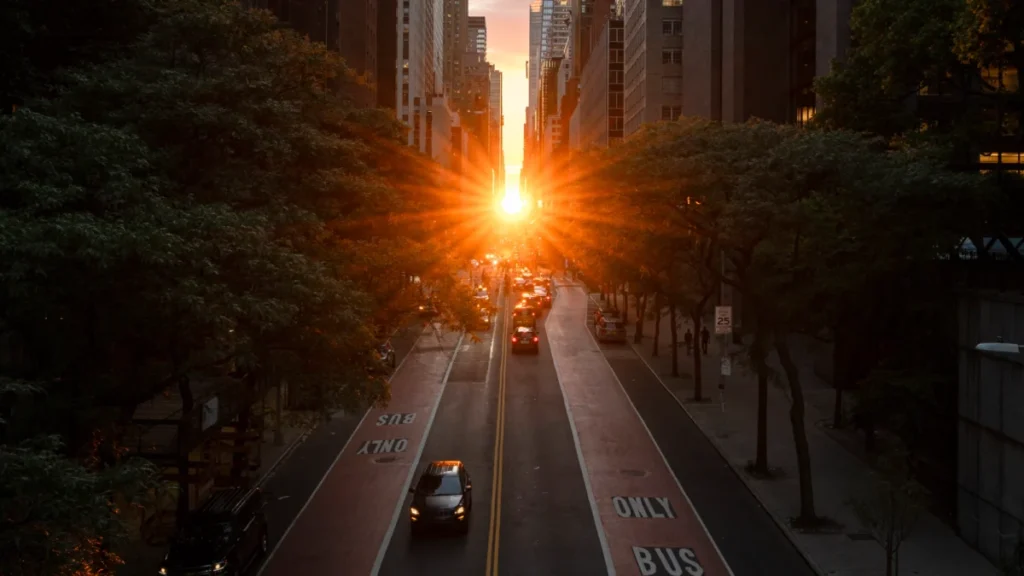
The celestial phenomenon known as Manhattanhenge, a period when the setting sun aligns perfectly with the east-west grid of Manhattan’s streets, is set to return to New York City beginning May 28, 2024. This biannual event transforms the city’s concrete canyons into a corridor of golden light, drawing thousands of spectators, photographers, and amateur astronomers to the intersections of the world’s most famous island. While the event has long been a staple of New York culture, new technological tools and a deeper understanding of urban geometry are expanding the "henge" experience to cities across the globe.
The 2024 season is divided into two distinct windows: the first occurring in late May and the second in mid-July. According to the American Museum of Natural History’s Hayden Planetarium, the "Half Sun" alignment will occur on Tuesday, May 28, followed by the "Full Sun" alignment on Wednesday, May 29. The phenomenon will repeat later in the summer, with the "Full Sun" visible on Friday, July 12, and the "Half Sun" on Saturday, July 13. During these specific windows, the sun rests precisely on the horizon at the center of the cross streets, creating a visual effect reminiscent of ancient monolithic structures like Stonehenge.
The Architectural and Astronomical Foundation
To understand why Manhattanhenge occurs, one must look back to the Commissioners’ Plan of 1811. This monumental urban planning effort established the rectangular grid of streets and avenues that defines Manhattan today. However, the grid does not follow a perfect north-south or east-west orientation. Instead, the streets are rotated approximately 29 degrees clockwise from true east-west to better align with the natural shape of the island.
Because of this 29-degree offset, the sun does not align with the grid on the actual spring and fall equinoxes. Instead, the alignment occurs roughly halfway between the equinoxes and the summer solstice. If Manhattan were aligned perfectly with the cardinal directions, the "henge" would occur on the first day of spring and the first day of autumn. Because of the tilt, New Yorkers receive this solar gift during the warmer months of May and July.
Neil deGrasse Tyson, an astrophysicist and the director of the Hayden Planetarium, is credited with coining the term "Manhattanhenge" in 1997. Tyson was inspired by Stonehenge, the prehistoric monument in England where the sun aligns with the stones during the summer solstice. Unlike Stonehenge, which was intentionally designed for astronomical tracking, Manhattanhenge is a "happy accident" of urban engineering—a collision of 19th-century logistics and 21st-century aesthetic appreciation.
The Rise of Hengefinder: Democratizing the Solar Event
While Manhattan remains the most famous site for such alignments, the phenomenon is not unique to New York. Data scientist Victoria Ritvo and software engineer John Pribyl have sought to broaden this experience through the creation of "Hengefinder," a web-based tool and accompanying app designed to locate solar alignments in any city with a grid system.
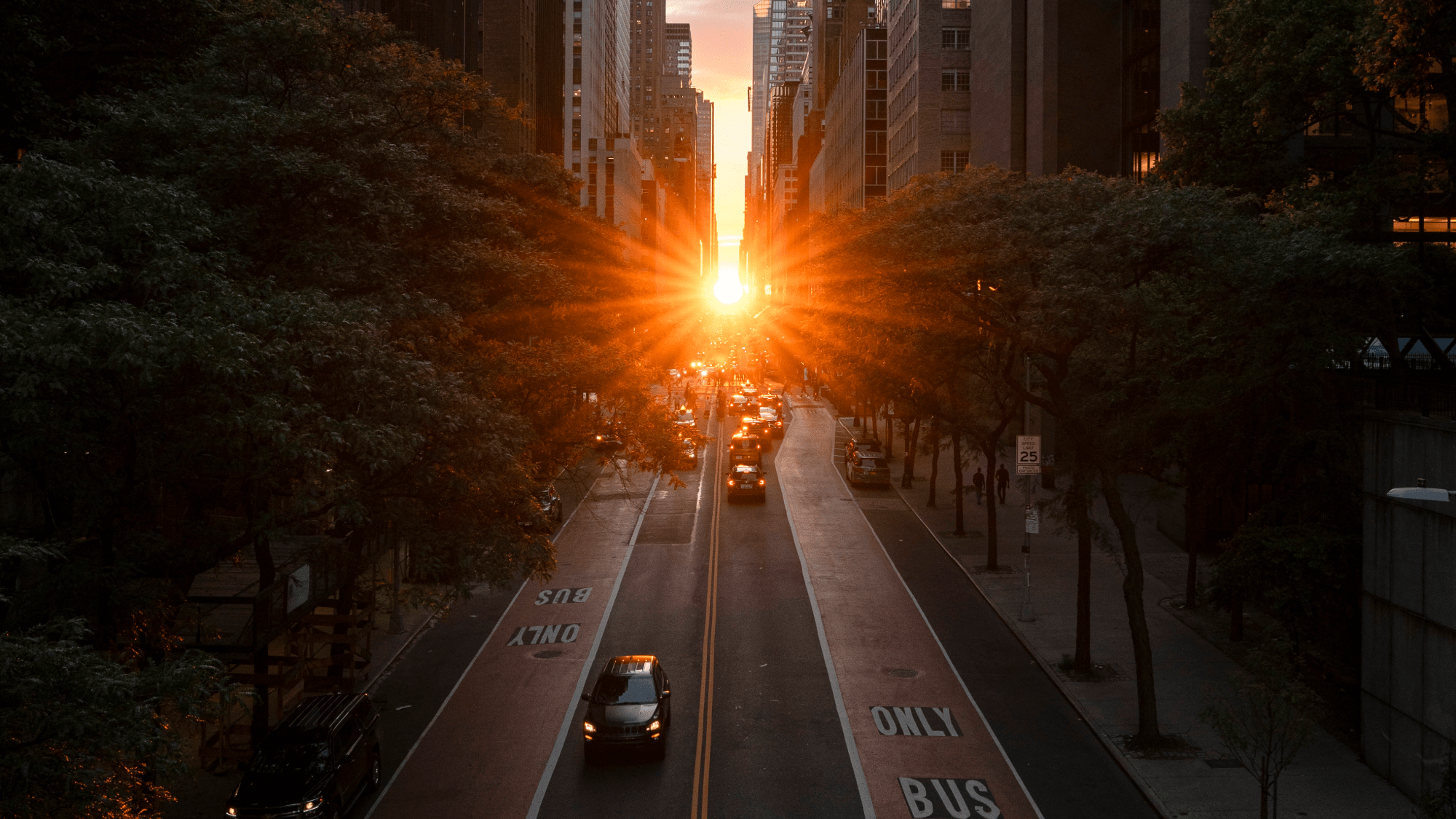
The methodology behind Hengefinder involves three critical variables: the bearing of a road relative to true north, the azimuth of the sun at sunset, and the specific calendar dates when these two angles intersect. Ritvo’s work highlights that while Manhattan’s grid is iconic, other cities offer equally stunning, if less publicized, alignments. For instance, Chicagohenge and Baltimorehenge occur closer to the equinoxes because those cities utilize a grid that more closely follows the cardinal directions.
Ritvo has noted that searching for these events requires a blend of geospatial data and local knowledge. In her analysis, she points out that much of Europe is excluded from the "henge" phenomenon due to medieval urban planning, which favors winding, organic street patterns over rigid grids. However, unique exceptions exist. Ritvo highlighted the Haarlemmertrekvaart canal in Amsterdam as a potential "henge" site where the sun reflects off the water, tracing a path that has likely existed for over 400 years.
Chronology of the 2024 Manhattanhenge Events
For those planning to witness the event in New York City, timing is critical. The following timeline outlines the expected peak visibility for the 2024 season:
- May 28, 8:13 p.m. EDT: Half Sun on the Grid. The top half of the solar disk is visible above the horizon between the buildings.
- May 29, 8:12 p.m. EDT: Full Sun on the Grid. The entire solar disk sits perfectly on the horizon, offering the most dramatic lighting.
- July 12, 8:20 p.m. EDT: Full Sun on the Grid. The mid-summer return of the alignment, often characterized by warmer, hazier skies that can enhance the orange and red hues of the sunset.
- July 13, 8:21 p.m. EDT: Half Sun on the Grid. The final opportunity of the year to witness the alignment in Manhattan.
Experts suggest arriving at viewing locations at least 30 minutes prior to these times to secure a vantage point, as the "sweet spot" of the alignment lasts only a few minutes before the sun sinks below the horizon.
Supporting Data and Optimal Viewing Locations
Data from the National Oceanic and Atmospheric Administration (NOAA) emphasizes that atmospheric conditions play a significant role in the quality of the "henge." Low humidity and clear skies are ideal, as heavy cloud cover on the western horizon (over New Jersey) can completely obscure the event.
Historically, the best viewing locations are the wide cross-streets of the Manhattan grid. These include:
- 42nd Street: Particularly near the Tudor City Bridge, which provides an elevated view of the sun framed by the Chrysler Building and other skyscrapers.
- 34th Street: Offering a clear view near the Empire State Building.
- 14th Street: A wider thoroughfare that allows for larger crowds.
- 57th Street: Providing a view through the "Billionaire’s Row" corridor.
- Hunter’s Point South Park: Located in Long Island City, Queens, this spot offers a panoramic view of the sun setting directly between Manhattan’s skyscrapers from across the East River.
Public Safety and Official Responses
The popularity of Manhattanhenge has grown to the point of becoming a logistical challenge for the city. In previous years, the New York City Department of Transportation (DOT) and the NYPD have had to manage significant pedestrian and vehicular traffic. Spectators often spill into the middle of active streets to capture photos, leading to safety warnings from local officials.

"We encourage everyone to enjoy this beautiful New York moment, but we urge photographers to stay on the sidewalks and obey traffic signals," a spokesperson for the city’s tourism board, NYC Tourism + Conventions, noted in a previous season. "The beauty of the event is not worth a traffic accident."
The economic impact of the event is also notable. Local businesses, particularly rooftop bars and restaurants along 42nd and 34th streets, report a surge in bookings during the Manhattanhenge windows. The event has transitioned from a niche interest for science enthusiasts into a major tourism draw that rivals the city’s traditional holiday attractions.
Broader Implications: The Intersection of Nature and the Built Environment
Manhattanhenge serves as a powerful reminder of the relationship between human architecture and the natural world. While the city is often viewed as a triumph of artificial construction over nature, these solar alignments prove that even the most dense urban environments remain subject to celestial cycles.
From a scientific perspective, the event provides an accessible entry point for the public to learn about the Earth’s orbit and tilt. By using tools like Hengefinder, residents in cities like Toronto (Torontohenge in February and October) or Montreal can engage with their local geography in a way that highlights the precision of urban planning.
The analysis of these "urban henges" also touches on environmental concerns. Urban heat island effects and air quality can change the visual appearance of the sun during these events. Increased particulate matter in the air can lead to more vivid, scattered light, while high-rise developments—such as the new towers on 57th Street—can occasionally alter the "frames" through which the sun is viewed, creating new "henges" or obscuring old ones.
As the May 28 kickoff approaches, New York City prepares once again to be the center of an astronomical stage. Whether viewed through the lens of a professional camera or the simple curiosity of a passerby, Manhattanhenge remains a testament to the enduring allure of the sun and the grid that attempts to capture it.