

In an era where educational accessibility and effectiveness are paramount, Moodle, a leading open-source learning platform, is actively championing a more inclusive approach to learning design. A recent episode of the Moodle Podcast delves into the critical advantages of neuro-inclusive design, featuring insights from Amy Foxwell of ReadSpeaker, a Moodle Certified Integration partner. This conversation highlights how embracing diversity in learning environments not only supports neurodivergent individuals but also elevates the experience for all learners, fostering innovation and improving overall educational outcomes.
The core philosophy underpinning Moodle’s approach is that "there’s no such thing as an ‘average learner.’" Instead, the organization emphasizes that individuals are unique and thrive when learning experiences are tailored to their diverse ways of engaging with information. This perspective is central to the discussion on neuro-inclusive design, which moves beyond reactive accommodations to a proactive, foundational approach to creating flexible and interactive learning environments.
Designing for Diversity: A Proactive Approach to Inclusion
Amy Foxwell, speaking on the Moodle Podcast, articulated the fundamental goal of neuro-inclusive design as the creation of learning environments that are inherently supportive, rather than requiring after-the-fact adjustments. "One of the core ideas behind Universal Design for Learning (UDL)," Foxwell explained, "is that variability is the norm." This principle advocates for designing learning experiences that cater to the broadest possible range of learners from the outset, rather than singling out neurodivergent individuals for separate accommodations.
This proactive strategy involves building flexibility into the very fabric of learning platforms and content. Instead of viewing neurodivergent learners as outliers, the focus shifts to creating universally accessible resources that benefit everyone. Examples of such design principles, though not explicitly detailed in the original excerpt, often include offering multiple means of representation (presenting information in various formats), multiple means of expression (allowing learners to demonstrate their knowledge in different ways), and multiple means of engagement (providing options for motivation and sustained interest).
The podcast episode also addresses the significant emotional toll of "masking," a phenomenon where neurodivergent individuals expend considerable energy trying to appear "normal" in traditional learning settings. This often leads to exhaustion and can hinder genuine learning and participation. By intentionally designing courses that reduce the need for masking, educators can create more authentic and supportive environments, allowing learners to focus on acquiring knowledge rather than on managing social expectations.
The "Curb-Cut Effect": Accessibility Benefits Everyone
The conversation further explores the concept of the "curb-cut effect," a powerful illustration of how features initially designed for specific accessibility needs can yield widespread benefits. Text-to-speech technology, for instance, was originally developed to assist visually impaired learners. However, its utility has expanded dramatically, now supporting individuals with dyslexia, ADHD, language processing differences, and even those who simply prefer to consume content aurally.
This phenomenon underscores a key tenet of inclusive design: what is designed to help a few often ends up improving the experience for many. In the context of digital learning, tools like text-to-speech, adjustable font sizes, clear navigation, and varied content formats (text, audio, video) contribute to a more digestible, engaging, and ultimately, more effective learning experience for all. The absence of a "downside" to accessible learning reinforces its strategic value.
Reducing Friction and Empowering Learners
Ultimately, the Moodle Podcast episode makes a compelling argument that neuro-inclusion is not merely a matter of compliance or an add-on, but a fundamental component of high-quality learning design. Neuro-inclusive environments are increasingly recognized for their correlation with enhanced innovation, creativity, and performance. By building adaptable and supportive learning experiences, organizations and educational institutions not only benefit their learners but also unlock greater potential within their student bodies and workforces.
The implications of this approach extend to educators and Learning & Development (L&D) professionals. Embracing neuro-inclusion can be viewed as a strategic advantage, leading to more resilient and effective learning programs. The episode promises practical insights, including "quick wins" for course designers and a deeper understanding of how to leverage neurodiversity as a strength.
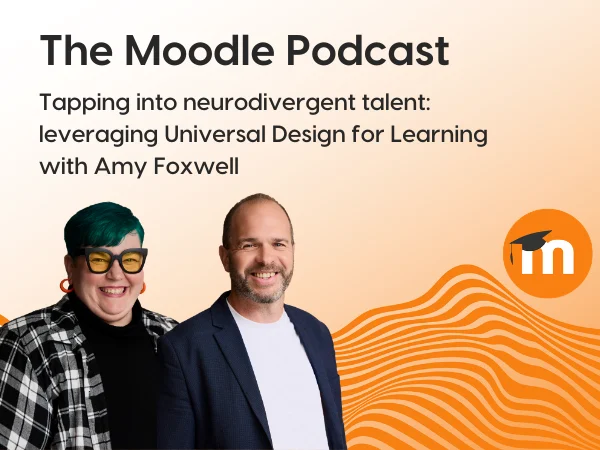
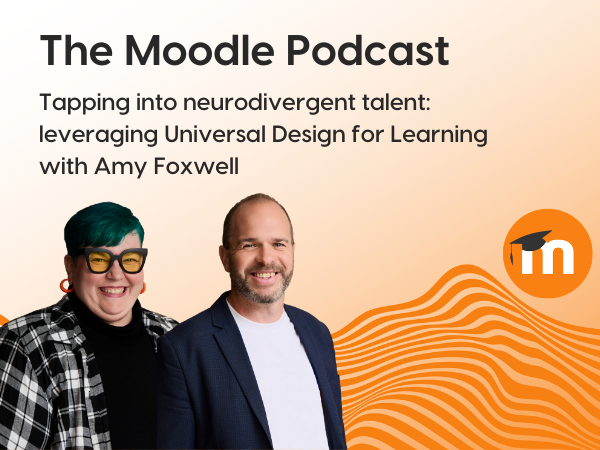
The podcast episode, titled "Tapping into neurodivergent talent: leveraging Universal Design for Learning with Amy Foxwell," is available for streaming on the Moodle Podcast platform. Moodle encourages its audience to follow the podcast to stay abreast of discussions on learning, technology, and the ongoing pursuit of educational inclusivity.
Broader Context: The Evolution of Learning Design
The discussion on neuro-inclusive design emerges at a critical juncture in the evolution of educational methodologies. For decades, educational paradigms have often centered on a standardized, one-size-fits-all model, assuming a homogenous learner. This approach, while effective for some, has historically marginalized individuals whose learning styles or cognitive profiles deviate from the perceived norm.
The rise of digital learning technologies over the past two decades has presented both challenges and opportunities. While offering unprecedented flexibility and access, these technologies can also inadvertently replicate or even amplify existing inequities if not designed thoughtfully. The concept of Universal Design for Learning (UDL), first introduced in the 1990s by researchers at the Center for Applied Special Technology (CAST), provided a foundational framework for addressing this challenge. UDL posits that learning environments should be designed from the outset to be usable by people with the widest possible range of abilities, without the need for adaptation or specialized design.
Neurodiversity, a term that gained prominence in the late 1990s and early 2000s, describes the concept that neurological differences, such as autism, ADHD, dyslexia, and Tourette syndrome, are a natural variation in the human genome. Rather than viewing these differences as deficits requiring "fixing," the neurodiversity movement advocates for acceptance, accommodation, and celebration of these unique cognitive profiles.
The integration of UDL principles with the understanding of neurodiversity forms the bedrock of neuro-inclusive design. This approach recognizes that many strategies that support neurodivergent learners—such as providing clear instructions, offering choices in how to demonstrate learning, using visual aids, and minimizing sensory overload—are beneficial for all learners, particularly in today’s complex and rapidly changing information landscape.
The Role of Moodle and Certified Integrations
Moodle’s commitment to open-source principles means its platform is highly adaptable and extensible, making it an ideal environment for implementing inclusive design strategies. The availability of certified integrations, such as ReadSpeaker, further enhances this capability. ReadSpeaker’s text-to-speech and other assistive technologies directly address the need for varied modes of content consumption, aligning perfectly with UDL guidelines and neuro-inclusive design goals.
The partnership between Moodle and companies like ReadSpeaker demonstrates a proactive effort to equip educators and institutions with the tools necessary to create more equitable and effective learning experiences. This collaborative approach is crucial for driving widespread adoption of inclusive practices.
Data and Implications: The Business Case for Inclusion
While the ethical imperative for inclusive design is clear, there is also a growing body of evidence suggesting a strong business and academic case for its adoption. Research indicates that inclusive learning environments can lead to:
- Increased Learner Engagement and Retention: When learners feel understood and supported, they are more likely to remain engaged and complete their courses. Studies in higher education have shown that students utilizing universal design features report higher satisfaction and better academic performance.
- Enhanced Creativity and Problem-Solving: Diverse perspectives, which are naturally fostered in inclusive environments, often lead to more innovative solutions and creative approaches to challenges. A study by McKinsey & Company, for example, found that companies with greater ethnic and cultural diversity were more likely to have above-average profitability. While not directly on neurodiversity, the principle of diversity driving innovation is applicable.
- Improved Digital Literacy and Adaptability: Learners who are exposed to a variety of learning modalities and technologies develop stronger digital literacy skills, making them more adaptable to future technological advancements and diverse work environments.
- Reduced Support Costs: Proactively designing for inclusion can reduce the need for costly, individualized accommodations later on. By building flexibility into the system from the start, institutions can often serve a broader range of needs more efficiently.
- Attracting and Retaining Talent: Educational institutions and organizations that prioritize inclusivity are more attractive to a wider pool of students and employees, fostering a more diverse and dynamic community.
The "curb-cut effect" is a tangible demonstration of these benefits. For example, a 2017 report by the World Health Organization highlighted that while assistive technologies are crucial for individuals with disabilities, their widespread adoption benefits broader populations. Subtitles on videos, initially designed for the hearing impaired, are now widely used by individuals in noisy environments or those learning a new language. Similarly, the availability of transcripts for audio content aids researchers, journalists, and anyone needing to quickly reference specific information.
Looking Ahead: The Future of Learning Design
The conversation on the Moodle Podcast signifies a broader shift in how we conceptualize learning. It moves away from a deficit-based model towards one that recognizes and leverages human variation. As technology continues to evolve, the responsibility lies with educators, platform providers, and content creators to ensure that these advancements serve to democratize education rather than create new barriers.
Moodle’s proactive stance, amplified by discussions with partners like ReadSpeaker, positions it as a leader in this movement. By championing neuro-inclusive design, Moodle is not just improving its platform; it is contributing to a future where learning is truly accessible, equitable, and empowering for everyone, everywhere. The ongoing exploration of these themes in the Moodle Podcast series offers valuable insights for anyone invested in the future of education and professional development.