


On August 28, 2025, a routine observation mission designed to refine the orbital parameters of a known near-Earth object led to a significant scientific revelation that has forced astronomers to reconsider the classification of thousands of space rocks. For over a quarter of a century, the object designated as 1998 SH2 was cataloged as a standard near-Earth asteroid—a rocky remnant from the inner solar system. However, when NASA’s Deep Space Network (DSN) planetary radar system attempted to ping the object at its predicted coordinates approximately two million miles from Earth, the results were unexpected. The space rock was not where the gravitational models suggested it should be. This discrepancy sparked an international investigative effort that ultimately confirmed 1998 SH2 is not an asteroid at all, but rather a "dark comet" exhibiting subtle but measurable outgassing.
The discovery, recently detailed in the journal Nature Astronomy, highlights the complexities of tracking near-Earth objects (NEOs) and the thin line that separates asteroids from comets. The reclassification was led by Davide Farnocchia, a navigation engineer at the NASA Jet Propulsion Laboratory’s Center for Near-Earth Object Studies (CNEOS), and involved a global network of high-powered optical observatories. The findings suggest that a significant portion of the NEO population may be composed of these elusive dark comets, which lack the brilliant, easily identifiable tails of their larger cousins but possess enough volatile material to alter their trajectories through the vacuum of space.
The Discrepancy in the Deep Space Network
The investigation began when the Deep Space Network, a sophisticated array of giant radio antennas managed by NASA’s Jet Propulsion Laboratory (JPL), failed to detect 1998 SH2 during its scheduled window. Radar observations are among the most precise tools available to astronomers; by bouncing radio waves off a solid object and measuring the time it takes for the signal to return, scientists can determine an object’s distance and velocity with incredible accuracy.
In the case of 1998 SH2, the radar was aimed at a specific patch of sky based on orbital data collected during the object’s previous 4.5-year journeys around the sun. When the radar returned a "no-show," it indicated that the object’s position had shifted significantly since its last confirmed observation in 2016. This shift suggested the presence of "nongravitational perturbations"—forces other than the gravity of the sun and planets that were pushing the object off its predicted course.
To locate the missing object, astronomers pivoted from radar to optical telescopes. By scanning wider swaths of the sky, they eventually pinpointed 1998 SH2, but the coordinates confirmed Farnocchia’s suspicions: the object was experiencing a slight acceleration consistent with the "rocket effect" typically seen in comets.
Defining the Boundary: Asteroids vs. Comets
The distinction between an asteroid and a comet is fundamental to planetary science. Asteroids are primarily composed of rock and metal. They typically form in the warmer inner regions of the solar system, between the orbits of Mars and Jupiter. Because they lack significant amounts of ice, their orbits are governed almost entirely by gravity.
Comets, conversely, originate in the cold, outer reaches of the solar system, such as the Kuiper Belt or the Oort Cloud. They are often described as "dirty snowballs," composed of a mixture of frozen gases (volatiles), dust, and rock. As a comet approaches the sun, solar radiation heats its icy surface, causing the ice to sublimate—turning directly from a solid into a gas. This process, known as outgassing, creates a visible coma (a cloud of gas and dust) and the iconic tail. Crucially, the release of gas acts like a thruster, providing a small amount of propulsive force that nudges the comet into a slightly different orbit than gravity alone would dictate.
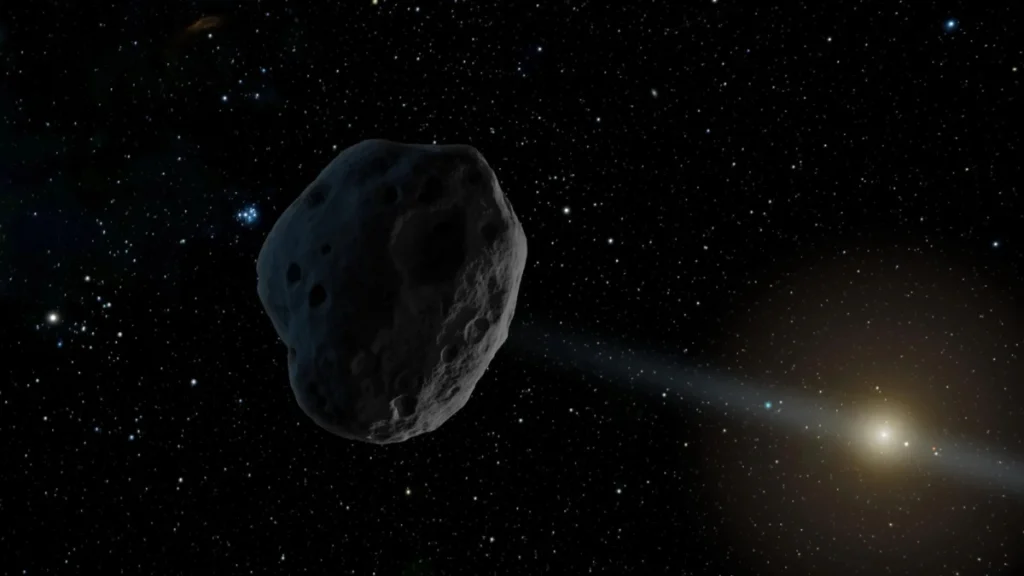
1998 SH2 had long been classified as an asteroid because it lacked these visible hallmarks. It appeared as a sharp point of light, devoid of a coma or tail, leading scientists to believe it was a dry, rocky body. The 2025 observations proved that looks can be deceiving.
A Chronology of Discovery and Reclassification
The history of 1998 SH2 spans nearly three decades of observation, illustrating how scientific understanding evolves as technology improves:
- 1998: The object is first discovered and cataloged as a Near-Earth Asteroid. Based on its initial brightness and lack of activity, it is added to the database of rocky bodies.
- 1998–2016: The object completes several orbits around the sun. During this period, it is observed multiple times, and its 4.5-year orbital period is established. It shows no signs of cometary activity.
- 2016: The last major set of observations before the recent event takes place. 1998 SH2 is still viewed as a stable, predictable asteroid.
- August 28, 2025: NASA’s Deep Space Network attempts radar tracking during a close approach. The object is not found at its predicted location, revealing a major orbital perturbation.
- Late 2025: An international campaign is launched using the Canada-France-Hawaii Telescope (CFHT) on Mauna Kea and the European Southern Observatory’s (ESO) facilities in Chile.
- 2026: Researchers publish their findings in Nature Astronomy, officially reclassifying 1998 SH2 as a comet after detecting a faint tail in deep-exposure imaging.
The International Search for the "Weak Tail"
Confirming the identity of 1998 SH2 required the world’s most sensitive optical equipment. Because the outgassing was so minimal, the resulting tail was invisible to standard survey telescopes. Farnocchia collaborated with Olivier Hainaut, an astronomer at the European Southern Observatory (ESO), to utilize the Very Large Telescope (VLT) on Chile’s Cerro Paranal.
The VLT, along with the Danish Telescope at La Silla and the CFHT in Hawaii, captured deep, long-exposure images of 1998 SH2. By stacking these images and filtering out background noise, the team successfully identified a "weak but clear" tail of dust and gas trailing behind the object. This visual evidence provided the definitive proof needed to support the mathematical models of nongravitational acceleration.
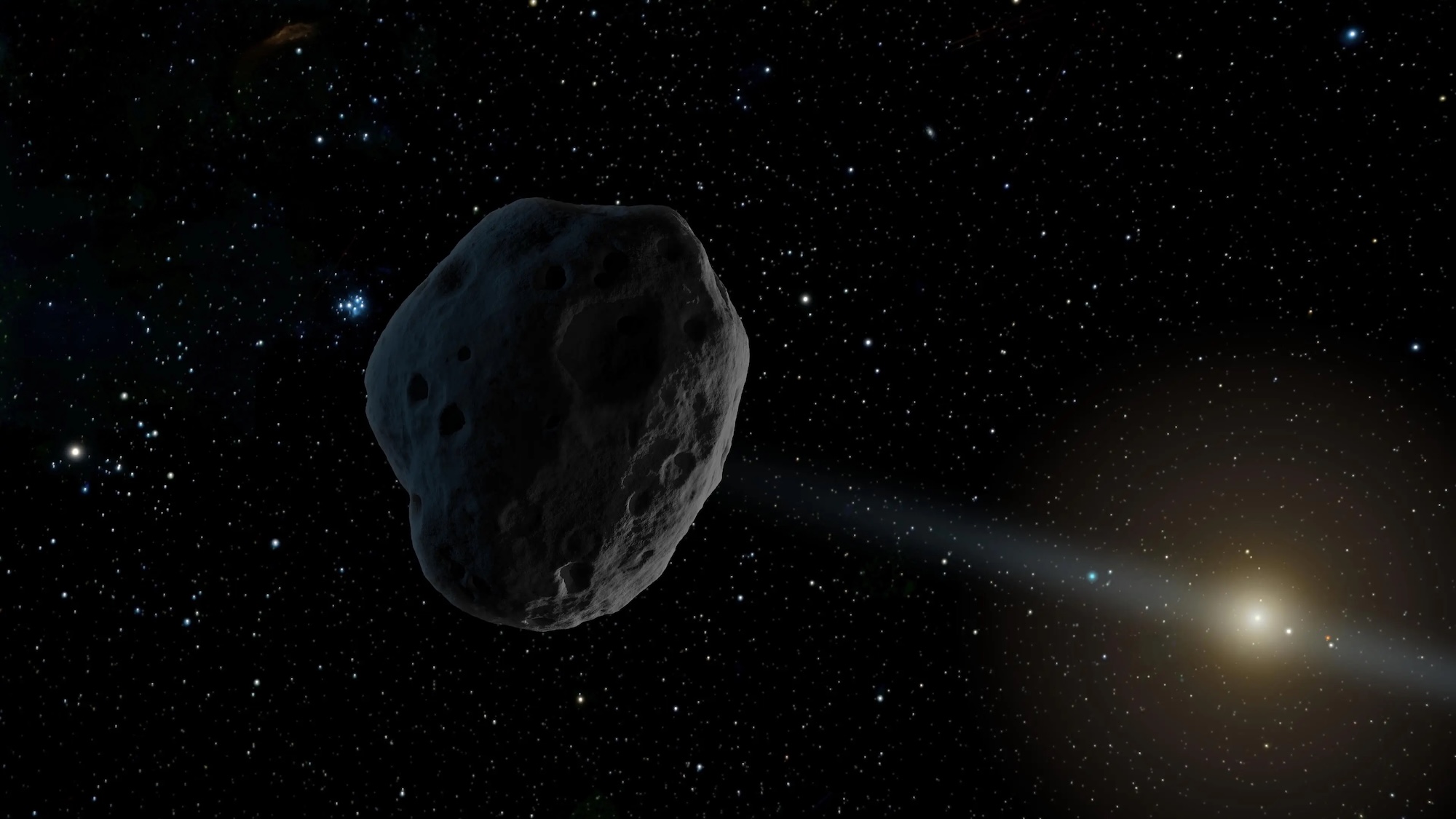
"The images we collected from these observatories showed a weak but clear tail, thus confirming that 1998 SH2 is, in fact, a comet," Hainaut stated. The discovery validated the hypothesis that the "asteroid" was venting gas into space, creating the propulsive force that had confused the Deep Space Network’s radar.
The Emergence of "Dark Comets"
The case of 1998 SH2 is not an isolated incident but rather a prominent example of a growing class of objects known as "dark comets." First identified by astronomers in 2016, dark comets occupy a middle ground between traditional asteroids and active comets.
These objects are typically small—often less than a kilometer in diameter—and may be "exhausted" comets that have lost most of their surface ice. However, pockets of volatile material remain trapped beneath a layer of insulating dust. When these pockets are heated by the sun, they vent gas through small fissures, providing enough thrust to alter the orbit without creating a large, bright coma.
To date, astronomers have identified approximately a dozen dark comets, but the reclassification of 1998 SH2 suggests there may be many more. Some researchers estimate that as many as 20% to 60% of near-Earth objects currently classified as asteroids could actually be dormant or dark comets.
Implications for Planetary Defense
The reclassification of 1998 SH2 is more than a matter of academic taxonomy; it has significant implications for planetary defense. Organizations like NASA’s CNEOS are tasked with identifying and tracking objects that could pose an impact risk to Earth. The accuracy of these impact assessments depends entirely on the ability to predict an object’s future path.
"Detecting these perturbations can be an important diagnostic tool for planetary defense," Farnocchia explained. If an object is an asteroid, its path can be projected decades into the future with high confidence using gravitational math. If an object is a comet, however, its path is subject to the unpredictable nature of outgassing. A sudden vent of gas could shift an object’s trajectory toward—or away from—Earth in ways that gravitational models cannot foresee.
By identifying which NEOs are actually dark comets, scientists can apply more sophisticated "nongravitational" models to their tracking. This ensures that impact probabilities are calculated with the highest possible degree of certainty, allowing for better-informed decisions regarding potential deflection missions in the future.
Analyzing the Broader Impact on Solar System History
Beyond the immediate concerns of Earth’s safety, the study of dark comets like 1998 SH2 provides a window into the history of our solar system. The presence of cometary material in the near-Earth population suggests a constant "leakage" of objects from the outer solar system into the inner regions.
This migration is often caused by the gravitational influence of Jupiter, which can kick objects out of the asteroid belt or pull them in from the Kuiper Belt. Understanding the composition of these objects helps scientists determine how water and organic molecules—the building blocks of life—might have been delivered to a young Earth billions of years ago.
Furthermore, the discovery of 1998 SH2’s true nature serves as a reminder of the limitations of current astronomical surveys. While we have cataloged the vast majority of "planet-killer" sized objects, smaller objects like 1998 SH2 can still harbor secrets. The continued advancement of telescope technology, such as the upcoming Vera C. Rubin Observatory, is expected to reveal thousands more of these "stealth" comets.
As Olivier Hainaut noted, the discovery of 1998 SH2 is a testament to the scientific method: "That’s how science works—you form a hypothesis, and you set out to test it. This data is exactly what was needed to confirm our hypothesis that 1998 SH2 was a comet." For the global astronomical community, 1998 SH2 is no longer just another rock in the sky; it is a vital piece of the puzzle in understanding the dynamic and ever-changing environment of our solar neighborhood.