


The Chief Learning Officer’s "Learning Insights" series is a cornerstone for understanding the strategic direction and personal journeys of leaders at the forefront of corporate learning and workforce development. This ongoing Q&A initiative provides a crucial platform for gleaning strategic insights, innovative approaches, and the challenges overcome by visionary leaders globally, offering a deep dive into the forces shaping the modern workplace. In a recent discussion, a prominent Chief Learning Officer (CLO) shared their extensive experience, outlining a career trajectory that has consistently prioritized the human element in professional growth and organizational success. Their insights reveal a nuanced perspective on learning and development (L&D), moving beyond traditional training models to embrace a more holistic and integrated approach to capability building.
The Genesis of a Learning Leader: From Curiosity to Capability Building
The CLO’s initial foray into the professional world was not preordained for a specialization in learning and development. Instead, a profound curiosity about the differential trajectories of leaders—why some flourish while others stagnate despite possessing similar technical proficiencies—served as the initial catalyst. Early experiences within Human Resources and Organizational Development illuminated a critical realization: the most significant differentiator among leaders was not raw intelligence or accumulated experience, but rather their inherent capacity for continuous learning, adaptive resilience, and the ability to foster inclusive environments. This observation became the foundational principle that guided the CLO into the intricate and impactful domain of capability building.
Over the years, the CLO’s professional role has undergone a significant evolution. The transition from simply facilitating existing programs to actively architecting comprehensive learning ecosystems within both corporate and academic settings marked a pivotal shift. This evolution was driven by an increasing focus on identifying and addressing the specific behaviors that either accelerate or impede the learning process. Key among these were self-awareness, humility, accountability, and the cultivation of psychological safety—elements that were identified as crucial for fostering genuine growth. These insights collectively shaped the development of the "ALL IN Mentality," a framework that fundamentally reframes leadership development not as a theoretical pursuit, but as a practical discipline grounded in intentional, observable behaviors.
Pioneering Initiatives for Employee Development and a Culture of Learning
A significant hallmark of the CLO’s tenure has been the implementation of impactful initiatives centered on three core pillars: leader capability enhancement, clarity of organizational culture, and systemic alignment. These initiatives are designed to move learning from being an isolated event to an embedded behavioral expectation, thus transforming it from an optional activity into an intrinsic aspect of the organization’s operational ethos.
One particularly effective strategy involved the implementation of a "Leadership Accountability and Inclusion Lab." This program, initially designed as a standalone initiative, was later integrated as a core module within a broader, dynamic leadership course for both existing and aspiring leaders. This academic integration allowed for the embedding of principles that underpin the "ALL IN Mentality" within a structured, semester-long learning experience. The course was meticulously designed to move beyond theoretical instruction, functioning instead as a deep behavioral immersion. Participants engaged in a series of targeted exercises and simulations aimed at cultivating critical leadership competencies. These exercises were designed to help individuals:
- Develop a nuanced understanding of their own leadership impact: Participants explored how their actions and communication styles influenced team dynamics and individual performance.
- Practice empathetic listening and perspective-taking: Through structured role-playing and feedback sessions, leaders learned to actively seek out and understand diverse viewpoints, a crucial component of inclusive leadership.
- Identify and mitigate unconscious biases: The lab provided tools and frameworks for recognizing and addressing personal biases that could inadvertently hinder equitable leadership practices.
- Build psychological safety within teams: Participants were guided on creating environments where individuals felt safe to express ideas, challenge the status quo, and admit mistakes without fear of reprisal.
The academic integration of this program proved to be a significant advantage. Participants were able to apply the concepts learned in the lab across various modules within the leadership curriculum, including communication, influence, and systems thinking. This cross-application fostered a compounding effect, building confidence and capability over an extended period.
The measurable outcomes of this approach were compelling. Participants consistently reported enhanced self-awareness, demonstrated stronger collaboration skills, and developed a more profound understanding of how inclusion directly correlates with improved performance. Faculty members observed a marked increase in the intentionality of dialogue within the cohort and a noticeable maturation of leadership styles across the group. Graduates of the program carried these enhanced behaviors back into their respective workplaces, contributing to tangible improvements such as higher levels of trust, more effective problem-solving, and the formation of more resilient and adaptable teams. This program underscored a critical lesson: when emerging leaders integrate inclusive leadership practices as a daily discipline, they significantly accelerate both their personal professional growth and their positive impact on the organization.
Deconstructing Misconceptions: L&D as a Strategic Accelerator
A pervasive misconception within the corporate world is that the Learning and Development (L&D) function is primarily responsible for "fixing" leaders or rectifying performance deficiencies. This view often positions L&D as a reactive "repair shop" capable of training away systemic cultural issues or individual performance gaps. The CLO counters this notion by reframing L&D as a "strategic accelerator" and a "capability engine" rather than merely a content provider.
This reframing is achieved through a collaborative partnership model with organizational leadership. Instead of simply delivering training, L&D professionals engage with leaders to:
- Co-diagnose capability needs: Working together to identify the root causes of performance gaps, ensuring that learning interventions are targeted and relevant.
- Design experiential learning journeys: Creating immersive and practical learning experiences that foster skill development and behavioral change.
- Integrate learning into daily work: Embedding learning opportunities within existing workflows and processes, making development a continuous, organic part of the job.
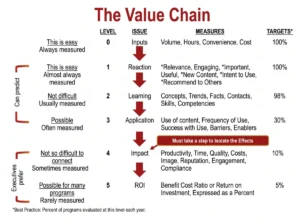
- Measure impact beyond completion rates: Focusing on the behavioral and business outcomes of learning initiatives, demonstrating their strategic value.
By positioning L&D as a strategic lever rather than a mere service desk, organizations foster a more engaged and proactive approach from leadership. This shift encourages leaders to become co-owners of capability development, moving away from being passive consumers of training programs. This collaborative dynamic is crucial for ensuring that learning initiatives are aligned with business objectives and are sustainable in the long term.
The Future of Workplace Learning: Embracing Capability Development
The CLO expresses significant excitement about the future of workplace learning, particularly the ongoing shift from a primary focus on knowledge transfer to a more profound emphasis on capability development. The future, in this view, is not about inundating individuals with more information, but rather about equipping them with the ability to effectively apply, adapt, and integrate their existing knowledge in real-time, dynamic situations.
Three key trends are particularly energizing:
- AI-powered personalized learning: The increasing sophistication of artificial intelligence offers unprecedented opportunities for tailoring learning experiences to individual needs, learning styles, and career aspirations. This allows for highly efficient and effective development pathways.
- Microlearning and just-in-time resources: The proliferation of accessible, bite-sized learning content and on-demand resources allows employees to acquire knowledge and skills precisely when and where they need them, fostering a culture of continuous, self-directed learning.
- Experiential and simulation-based learning: Moving beyond theoretical instruction, organizations are increasingly leveraging immersive simulations and hands-on experiences to build practical skills and foster deeper understanding, mirroring real-world challenges.
To prepare organizations for this evolving landscape, the CLO advocates for building robust "learning cultures" rather than solely focusing on the design of discrete learning programs. This involves:
- Championing curiosity and continuous improvement: Fostering an environment where asking questions, exploring new ideas, and seeking feedback are actively encouraged and rewarded.
- Empowering employees to drive their own development: Providing individuals with the autonomy, resources, and support to take ownership of their learning journeys and career paths.
- Creating safe spaces for experimentation and learning from failure: Encouraging a mindset where mistakes are viewed as valuable learning opportunities rather than punitive setbacks.
Ultimately, organizations that strategically embrace learning as a core capability, rather than a mere compliance requirement, will be best positioned for sustained success in the dynamic future of work.
Essential Qualities of a Successful L&D Leader
The CLO identifies a critical blend of strategic clarity, deep behavioral insight, and operational discipline as essential for successful L&D leadership. The most vital qualities include:
- Strategic Acumen: The ability to connect learning initiatives directly to organizational goals and demonstrate their impact on business outcomes.
- Empathy and Emotional Intelligence: Understanding and responding to the needs and motivations of learners and stakeholders, fostering trust and effective communication.
- Curiosity and a Growth Mindset: A perpetual desire to learn, adapt, and challenge existing assumptions, modeling continuous development for others.
- Data Fluency: The capacity to leverage data and analytics to measure learning effectiveness, identify trends, and inform strategic decisions.
- Resilience and Adaptability: The ability to navigate ambiguity, overcome challenges, and pivot strategies in response to evolving organizational needs and external dynamics.
These traits are cultivated through intentional practice. The "ALL IN Mentality" principles serve as a guiding framework for staying grounded in self-awareness, accountability, and purposeful action. Within their team, these qualities are reinforced through consistent coaching, opportunities for reflection, and fostering a shared sense of ownership over collective outcomes.
Timeless Advice for a Younger Self
Reflecting on their career trajectory, the CLO offers a piece of game-changing advice to their younger self: "Slow down enough to see what’s really happening." Early in their career, the CLO equated high activity levels and rapid pace with effectiveness. However, true leadership, they now understand, demands presence and intentional actions, not merely speed.
Further advice to their younger self includes:
- Focus on impact over activity: Prioritize initiatives that yield tangible results and drive meaningful change, rather than simply being busy.
- Seek diverse perspectives: Actively solicit input and feedback from individuals with different backgrounds and viewpoints to broaden understanding and refine strategies.
- Embrace vulnerability: Be willing to admit what you don’t know and ask for help, fostering a more authentic and collaborative leadership style.
Most importantly, the CLO emphasizes the power of one’s voice: "Your voice matters—use it intentionally." This underscores the responsibility of leaders to communicate clearly, advocate for what they believe in, and contribute thoughtfully to organizational discourse.
The Widening Gap: The Single Biggest Challenge Facing L&D
The most significant challenge confronting L&D professionals and the industry as a whole, according to the CLO, is the growing chasm between stated organizational values and the systems that actually reinforce them. While many organizations profess to value learning, inclusion, and leadership development, their internal structures often reward speed, output, and short-term results. This creates a dissonance where L&D professionals are tasked with driving transformative change without the necessary organizational alignment to sustain it.
The core challenge, therefore, is not in designing effective programs, but in ensuring that the organizational environment actively supports and reinforces the behaviors that these programs aim to cultivate. This is where the "ALL IN Mentality" becomes particularly powerful. It provides a framework for leaders to understand that inclusion, learning, and performance are not competing priorities but rather mutually reinforcing disciplines that, when integrated, lead to synergistic organizational success. By bridging this gap between rhetoric and reality, L&D professionals can truly unlock the potential for sustainable growth and positive change within their organizations.