



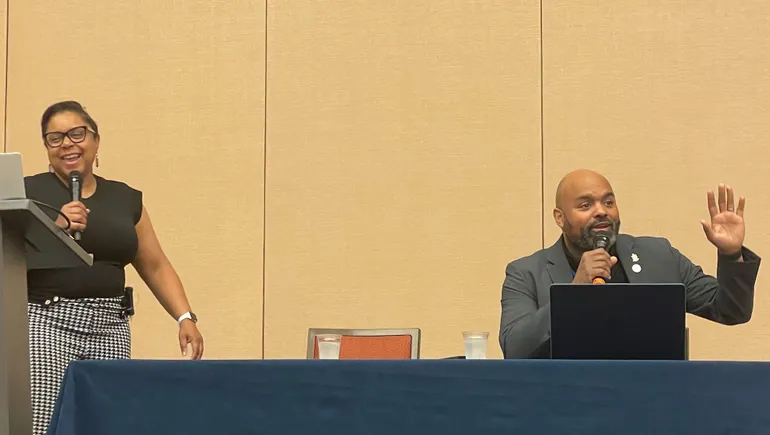
Change is an inherent constant in the dynamic landscape of education, but its effective implementation, particularly concerning new tools and processes within school districts, presents a formidable challenge. This sentiment was a central theme at the Consortium for School Networking’s (CoSN) annual conference, where information technology leaders shared critical insights into overcoming resistance and fostering successful adoption. Amy Jackson, an information technology project manager at Fairfax County Public Schools in Virginia, and Dwight Levens, chief technology and information officer at Oakland Schools in Michigan, led a session that underscored the paramount importance of human factors in technological and procedural transformations.
The COVID-19 pandemic, while accelerating digital adoption, also inadvertently exacerbated some long-standing issues in change management. Levens articulated this by explaining how districts, in a reactive mode, often prioritized immediate functionality over comprehensive engagement. "When learning had to transition to a virtual space, districts picked the best thing they thought would work and then just left people to deal with it and move forward," Levens observed. "We skipped over the part of engaging the people… We just had to react and make decisions, so we skipped over the people part." This experience highlighted a crucial gap: the necessity of prioritizing the human element in any organizational shift, a principle that remains vital as educational institutions continue to integrate new technologies and refine their operational frameworks.
Understanding the Human Element: Change as a Grieving Process
Jackson introduced a compelling analogy to frame the psychological impact of change: viewing it as a grieving process. She explained that individuals often develop deep attachments to familiar tools and processes, much like a preference for a favorite pair of shoes. "If I have a favorite pair of shoes and they break or they wear out, I don’t want to go buy another different kind of shoe," Jackson stated. "I’m going to go find that same shoe, because it’s what I like." This attachment stems from the investment of time and effort in learning and mastering existing systems. When these are replaced, it’s not merely a technical inconvenience; it can represent the loss of a comfort zone and a familiar workflow.
Drawing upon the widely recognized Kübler-Ross Change Curve, Jackson elaborated on the stages of grief that individuals often experience during periods of transition. These stages can include denial, anger, bargaining, depression, and eventually, acceptance. She illustrated this with a scenario involving a product upgrade due to security concerns or an expiring contract. Even if individuals previously voiced dissatisfaction with the existing product, the impending decision to change can trigger a defensive reaction. "Some people might have responses like, ‘It’s not secure? What do you mean it’s not secure?’" Jackson noted. "They’re grieving a pattern. They’re grieving a product that they may have sat in on the implementation of. They’re grieving an idea. They’re grieving a day-to-day thing." Recognizing these emotional responses is fundamental for effective change management, allowing leaders to address underlying anxieties and foster a more supportive transition.
Prioritizing Need Over Novelty: A Critical Evaluation of Change Initiatives
A significant pitfall in educational technology adoption, as highlighted by Jackson, is the tendency for administrators to pursue "better" tools simply because they are new or were presented compellingly at a conference. This can lead to what she termed an "urgent" priority for something that is not necessarily needed or beneficial. "So we end up wasting time, resources and care trying to implement something that the end user doesn’t want," Jackson cautioned. "We hurt relationships because we’re trying to do better." The implication is that such initiatives, driven by a desire for perceived improvement without a thorough needs assessment, can undermine trust and waste valuable resources.
Jackson offered a memorable anecdote from the restaurant industry: Wendy’s recurring discussions about abandoning their distinctive square hamburger patties. "They always say that they get to the point where they’re like, ‘It works. That’s what sets us apart from everybody else, right?’" This example underscores the importance of questioning the true necessity and potential impact of a proposed change. When new initiatives are presented with an air of urgency or emergency, Jackson advocates for a series of critical questions to be posed by leaders and stakeholders. These questions, though not explicitly detailed in the original text, would logically probe the underlying problem the change aims to solve, the specific benefits expected, the potential drawbacks, and the availability of alternative solutions.
To preempt such misaligned priorities, Jackson shared that Fairfax County Public Schools employs an IT project proposal form. This structured approach mandates detailed information regarding key stakeholders, the identified need, decision-making authority, and funding sources. Such a process ensures a more deliberate and informed approach to technology adoption, fostering a shared understanding and accountability from the outset. This proactive measure aims to prevent the adoption of solutions that are not strategically aligned with the district’s educational goals or user needs.
The Power of Listening: Gathering Stakeholder Input for Successful Implementation
The success of any new technological tool or process hinges on a deep understanding of the needs and concerns of all stakeholders, from frontline staff to district leadership. Levens emphasized that this crucial intelligence gathering often resides with individuals who might be overlooked in formal planning. "Secretaries can be key in this process," he stated. "They know everything." These individuals, he explained, possess invaluable insights into the daily operations, the informal dynamics within departments, and the potential resistance points. They can identify individuals who are likely to be early adopters, those who may require more support, and those who might become vocal opponents.
Jackson added to this by highlighting the pivotal role of middle school teachers in the adoption process. She humorously described them as being most likely to raise numerous questions and objections, a characteristic that, while potentially challenging, is also indicative of their deep engagement and critical thinking. "I always say if you don’t have a middle school teacher on your stakeholders side, it’s not happening," Jackson asserted. She further noted their adeptness at finding "trusted adults"—such as board members, community partners, or superintendents—when they disagree with a proposed change. This underscores the importance of securing buy-in from influential figures within the school community.
The implication of this emphasis on stakeholder input is a shift from a top-down mandate to a more collaborative and inclusive approach. By actively seeking out and valuing the perspectives of those who will be directly impacted by a change, educational leaders can identify potential roadblocks early, tailor implementation strategies to specific needs, and build a stronger foundation of support. This proactive engagement fosters a sense of ownership and shared responsibility, significantly increasing the likelihood of successful adoption and sustained use of new tools and processes.
Building Capacity: The Criticality of Adequate Training and Rollout Time
Even with strong buy-in and clear needs, the practical implementation of change demands sufficient time and resources for training and rollout. Jackson pointed out a common failing in this regard: "We do a good job of telling people we’re going to implement something, but what don’t we do? Show them how to use it." The expectation that individuals will intuitively master new, unfamiliar technologies without adequate support is a recipe for frustration and failure.
Jackson stressed that attempting to condense extensive training, such as a vendor-provided 16-week implementation guide, into a brief session within a professional learning day is unrealistic and counterproductive. "District leaders can’t expect people to walk themselves through using a product they don’t have any familiarity with and that the rollout will be successful," she cautioned. This highlights a critical need for strategic planning that explicitly allocates dedicated time for professional development and hands-on practice.
Levens echoed this sentiment, emphasizing that the commitment to professional learning time must be an integral part of the initial project planning. He posed the crucial question: "Where is that time going to come from?" The answer, he argued, cannot be a vague promise to "figure it out along the way," because, as he observed, "we often don’t, and then people don’t get trained and they can’t participate effectively." This underscores the financial and temporal investment required for effective change management. Without this investment, the intended benefits of new technologies and processes are unlikely to be realized, and the efforts to improve educational outcomes can be undermined.
The discussions at the CoSN conference collectively painted a picture of educational change management that is as much about human psychology and communication as it is about technology and logistics. By embracing a people-centric philosophy, critically evaluating the true need for change, actively soliciting stakeholder input, and committing to robust training and rollout strategies, school districts can navigate the complexities of transformation more effectively, ultimately fostering environments where innovation thrives and educational goals are met. The lessons learned from past implementations, particularly those influenced by the exigencies of the pandemic, provide a valuable roadmap for future endeavors, emphasizing that true progress in education is achieved when technology serves human needs and aspirations.