


OpenAI has announced a major strategic shift in how users and developers customize its artificial intelligence ecosystem, revealing plans to retire Custom GPTs in favor of a unified plugin architecture. The transition, which will phase out the standalone custom assistant model introduced during previous product rollouts, aims to consolidate workflow extensions across both the consumer-facing ChatGPT platform and the advanced Codex coding agent. According to official communications released by the artificial intelligence research and deployment company, the sweeping restructuring marks a definitive pivot from isolated, persona-based GPT assistants toward modular, reusable capabilities that integrate tightly with external software applications and enterprise IT infrastructure.
The decision represents a significant evolution in OpenAI’s product roadmap. When Custom GPTs were first introduced, they allowed developers and casual users alike to upload specific reference files, write tailored prompt instructions, and configure custom actions to build specialized versions of ChatGPT for niche tasks. However, as the company expanded its ecosystem to include powerful developer-centric tools like Codex and introduced advanced interoperability frameworks such as the Model Context Protocol (MCP), maintaining a separate silo for custom assistants became redundant. By moving to a universal plugin architecture, OpenAI is attempting to streamline how capabilities are developed, shared, and executed across its entire suite of products.

A carefully structured timeline has been established to guide users, developers, and enterprise organizations through the deprecation and migration process. The complete retirement of Custom GPTs is officially scheduled for December 11, 2026. However, the exact timing and the availability of migration pathways may vary depending on the specific account tier and workspace configuration. For enterprise customers, the transition schedule is notably accelerated. OpenAI has designated October 26, 2026, as the cutoff date for creating new Custom GPTs within enterprise workspaces. For organizations that qualify for approved extensions and formal deferrals, a hard deadline of February 11, 2027, has been set, after which all legacy Custom GPT support will cease entirely.
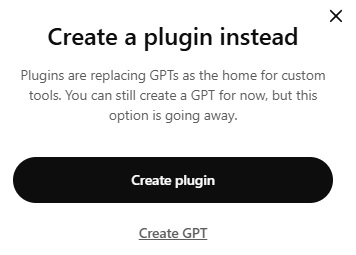
Early signs of this architectural pivot are already visible within the user interface. OpenAI has noticeably demoted the prominence of GPTs in its navigation menus. Furthermore, when users attempt to initiate the creation of a new Custom GPT within the platform, they are now actively greeted by a user interface prompt encouraging them to create a plugin instead. This proactive UI redirection signals to the developer community that the company expects rapid adoption of the new standard well ahead of the final sunset dates.
Under the newly standardized framework, customization is shifting away from isolated chatbots and toward versatile packages that combine repeatable instructions, reference materials, and direct connections to external services. The technical architecture of these new plugins is designed for high flexibility and scalability. According to official developer documentation, a modern plugin can incorporate one or more specialized skills—which contain structured instructions and resources for executing repeatable workflows—alongside a Model Context Protocol (MCP) server that exposes external tools and enterprise systems. Alternatively, developers can build plugins that utilize a combination of both approaches. A shared universal plugin directory will serve both ChatGPT and Codex, though certain environment-specific capabilities will retain isolated execution parameters where necessary.
For corporate environments and enterprise IT departments, this transition is far more than a simple nomenclature change. Organizations can now package complex, recurring business workflows into standardized skills while leveraging MCP servers or deeply integrated apps to grant those AI workflows secure, real-time access to proprietary enterprise databases, internal documentation repositories, and third-party software-as-a-service (SaaS) platforms.
To assist creators in transitioning their existing assets, OpenAI has built a migration pathway accessible through the My GPTs management interface. During the migration process, the primary instructions of an existing Custom GPT are automatically converted into a skill within the new replacement plugin. Additionally, uploaded knowledge files are copied over into the plugin’s dedicated reference files, and previously configured connected apps can be successfully carried across platforms.
Despite the provision of automated migration tooling, the transition is accompanied by several notable technical caveats and limitations that have sparked discussion across developer forums. Most significantly, historical conversations tied to existing Custom GPTs will not migrate to the new plugins. Furthermore, the specific AI model selected for a legacy GPT does not automatically carry over, requiring manual reconfiguration. Custom Actions, which previously allowed GPTs to interact with external APIs via OpenAPI schemas, often need to be entirely rebuilt using a supported app integration or a custom-built MCP server.

Sharing permissions and workspace access models are also undergoing a fundamental reset. Migrated plugins are initially set to private by default. Existing users who previously relied on a shared Custom GPT will not automatically receive access to its plugin replacement, and historical sharing configurations must be manually re-established by the creator.
Perhaps the most critical warning issued by OpenAI concerns behavioral consistency. The company explicitly cautions organizations against assuming that migrating a Custom GPT to a plugin format will preserve its operational behavior without deviation. In official migration guidance, OpenAI notes that a migrated plugin may respond differently to prompts due to underlying architectural changes. Consequently, the company strongly recommends that users comprehensively retest familiar prompts, evaluate reference material utilization, verify required output formats, and audit all backend integrations before deploying the replacement plugins into production environments.
This cautionary guidance has directly contributed to pushback from segments of the developer community. Numerous GPT builders have taken to official developer forums and community channels to express frustration, arguing that the new plugin architecture does not fully replicate the dedicated, highly predictable environment offered by traditional Custom GPTs. Additional complaints center on the operational complexity of migration, the loss of historical user chats, and subtle discrepancies in how migrated workflows interpret specialized instructions and reference datasets.

Despite these vocal concerns from early adopters, OpenAI remains steadfast in its strategic direction, viewing the consolidation around plugins as an essential step forward. By establishing a unified mechanism for extending artificial intelligence products, the company is simplifying its developer ecosystem. The updated documentation frames plugins as modular software packages that users can seamlessly discover, install, share, and publish across both ChatGPT and Codex. This effectively phases out the older, fragmented custom assistant model in favor of reusable, highly composable AI capabilities designed to interface natively with modern enterprise infrastructure.
The broader implications of this architectural shift extend far beyond software organization, signaling a mature phase in the commercial deployment of generative artificial intelligence. As enterprises move past the initial experimental phase of deploying standalone chatbots, the demand for secure, standardized, and deeply integrated tooling has intensified. By anchoring its ecosystem to protocols like the Model Context Protocol and modular plugin packages, OpenAI is aligning its platform with enterprise standards for software modularity, governance, and security compliance.
As the December 2026 deadline approaches, developers and enterprise administrators face a critical window to audit their existing AI deployments, test migration pathways, and rebuild custom actions as MCP servers or application integrations. While the transition introduces short-term friction for creators who invested heavily in the legacy Custom GPT format, the long-term consolidation promises a more robust, scalable, and interconnected foundation for the next generation of artificial intelligence workflows.