


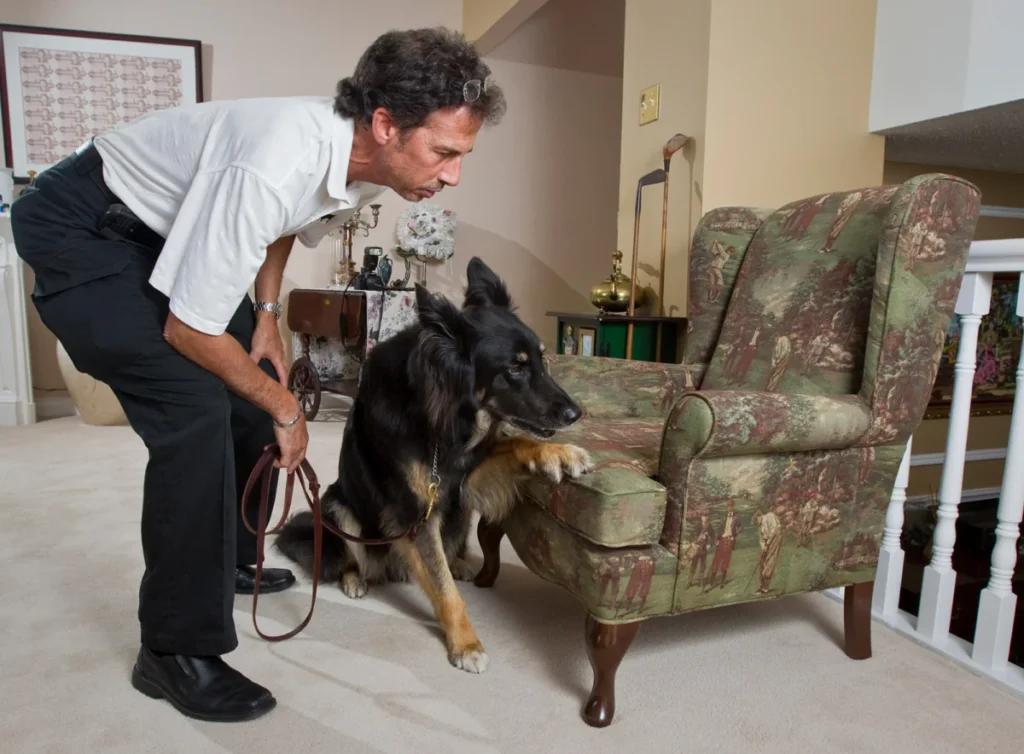
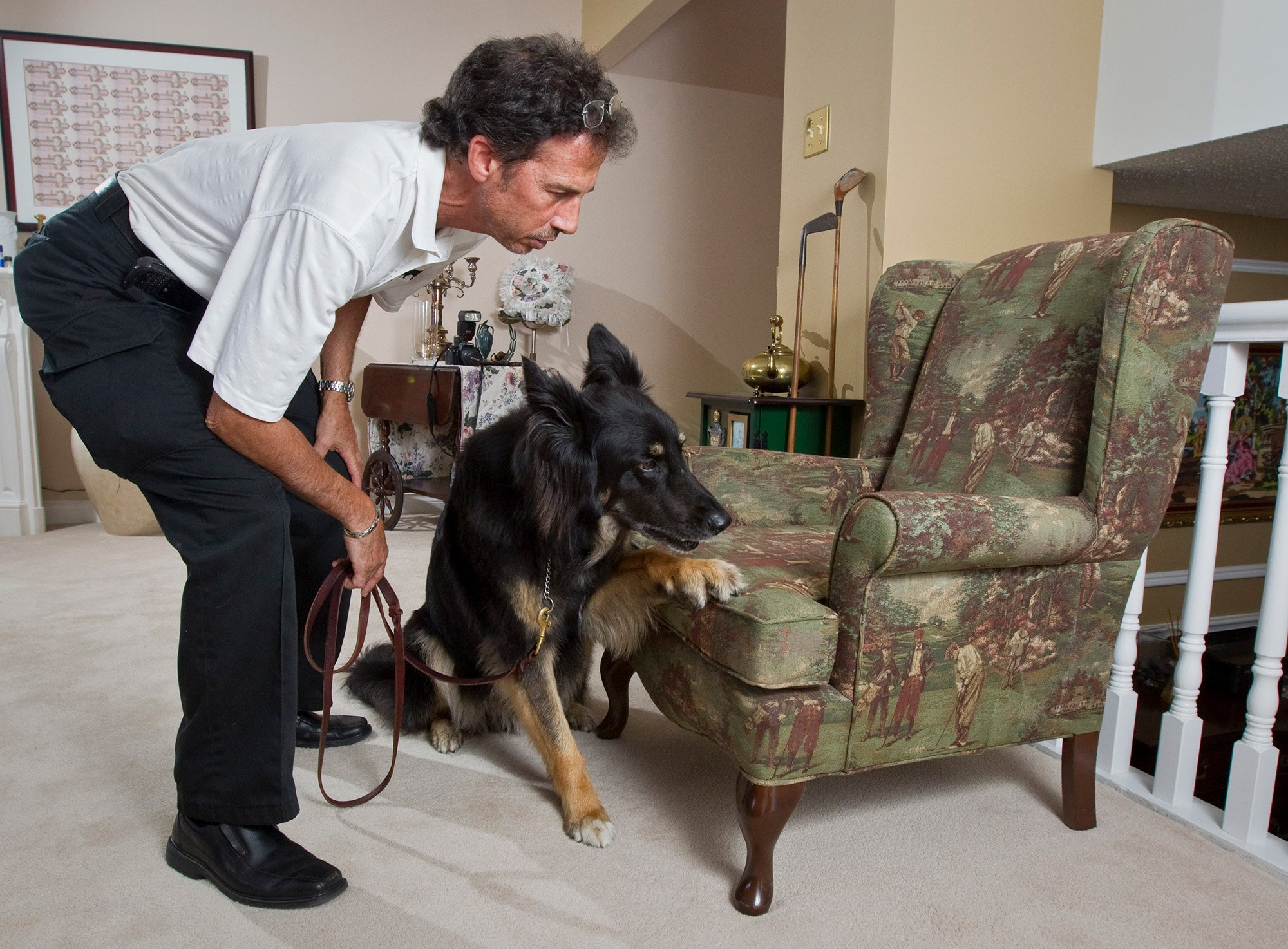
The modern battle against invasive agricultural pests is increasingly waged not with chemical pesticides or heavy machinery, but with the hyper-sensitive noses of the domestic dog. Across the United States, specialized canine units are transforming environmental protection, public infrastructure defense, and agricultural biosecurity. Among these frontline defenders is Lucky, a German Shepherd employed by the Pennsylvania Department of Agriculture whose primary responsibility is locating spotted lanternfly egg masses before they hatch and inflict widespread ecological damage.
Lucky’s journey to becoming the nation’s first canine operative dedicated specifically to spotted lanternfly detection began at the Penn Vet Working Dog Center. While her early training included standard tracks for potential police work, her handlers quickly noticed a distinct aversion to apprehension work—specifically, a reluctance to bite human suspects. Recognizing her exceptional olfactory capabilities and distinct behavioral profile, trainers redirected her talents toward scent detection. Today, she stands as a pioneer in an expanding field of canine conservation, utilizing her evolutionary advantages to protect delicate ecosystems from destructive foreign species.
The Evolution of Canine Pest Detection
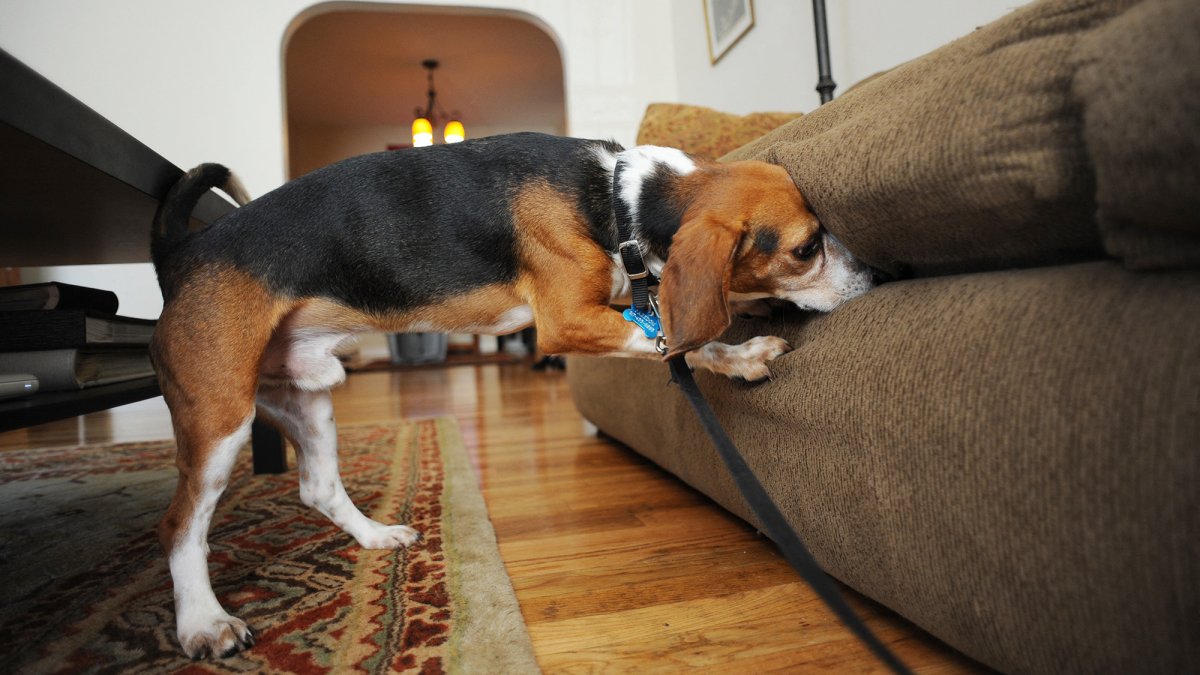
The integration of dogs into pest management is not a novel concept, though its applications have evolved significantly over the past half-century. The practice traces its modern commercial roots to 1979, when a former police officer who previously specialized in training dogs to detect narcotics and explosives established TADD (Termite and Ant Detection Dogs) Services Corporation. This enterprise deployed teams of beagles specifically trained to locate termites and carpenter ants, destructive insects capable of compromising the structural integrity of wooden buildings.
Subsequent scientific evaluations validated the efficacy of these animal operations. Controlled research demonstrated that properly trained dogs could identify the presence of termites with an accuracy rate of approximately 96 percent. Furthermore, researchers discovered that canines trained to locate a single termite species could generalize their skills to recognize four distinct related species. Scientists hypothesize that dogs are responding to a shared biochemical signature, potentially originating from the insects’ chitinous outer exoskeletons or metabolic gases such as carbon dioxide and methane emitted by active colonies.
When bed bug infestations surged across North America in the early 2000s, canine detection units expanded to address the urban crisis. A landmark 2008 study revealed that trained dogs could differentiate bed bugs from other common household pests—including cockroaches, carpenter ants, and termites—with a remarkable 97.5 percent success rate. Crucially, the study noted a minimal false-positive rate when no pests were present, alongside a 95 percent success rate in distinguishing live bed bugs and viable eggs from dead specimens, discarded exoskeletons, and fecal matter.
In recent years, the scope of agricultural scent detection has broadened substantially. Research institutions and government agencies now train dogs to identify microscopic agricultural threats, including Candidatus Liberibacter asiaticus, the destructive bacterium responsible for citrus greening disease; wood-boring longhorn beetles; and various life stages of the spotted lanternfly.
Expanding Horizons: The New World Screwworm Initiative
Building upon decades of operational success, researchers at the Penn Vet Working Dog Center are preparing to launch a specialized initiative to evaluate whether dogs can reliably detect the New World screwworm (Cochliomyia hominivorax). Unlike standard blowfly maggots, which feed exclusively on necrotic, decaying material, screwworm larvae burrow into and feed upon the living tissue of warm-blooded animals.
Dr. Cynthia Otto, founder and executive director of the Penn Vet Working Dog Center, describes the parasitic threat in stark terms. It is an exceptionally devastating condition for both livestock and wildlife populations, posing severe economic and humanitarian challenges for the agricultural sector. Although the United States successfully eradicated the pest decades ago through the sterile insect technique, sporadic reemergences continue to pose a threat. Recent monitoring reports have identified cases among cattle, sheep, and domestic dogs.
If ongoing trials confirm that canines can consistently and accurately locate screwworm infestations, public health officials and agricultural agencies hope to integrate these detection units into early-response protocols, potentially preventing widespread outbreaks before they destabilize regional livestock markets.
The Rigorous Methodology of Scent Training
Training an operational pest detection dog requires a complex, multi-year pedagogical framework. Recruits typically enter programs like the Penn Vet Working Dog Center at approximately eight weeks of age. The foundational phase relies on classical and operant conditioning, teaching puppies to associate a target odor with a tangible reward, such as a favorite toy or food treat.

To establish baseline scent-matching rules without exposing young dogs to hazardous biological materials immediately, trainers frequently employ safe, synthetic target odors—such as 1-bromooctane—which are rarely encountered in natural environments. Once the puppy demonstrates a thorough understanding of the search-and-reward paradigm, trainers transition the dog to real-world targets, such as viable lanternfly egg masses or specific insect pheromones.
Environmental conditioning forms the core of the advanced curriculum. Dogs are systematically exposed to progressively complex, naturalistic environments that mirror the conditions of their eventual deployment sites, such as shipping yards, agricultural nurseries, and forested state parks.
According to Dr. Otto, training a pest-detection dog presents distinct challenges compared to training an explosives or narcotics detection dog. While contraband detection often relies on a binary "presence versus absence" evaluation, agricultural pest detection requires the dog to isolate one specific, often faint organic scent amidst a complex olfactory landscape filled with competing natural aromas, decomposing matter, and background environmental odors.
Trainer selection and canine personality assessment also dictate program success. Canines exhibiting high degrees of persistence, independence, and detail orientation consistently outperform dogs characterized by a broader, less focused search style. Moreover, trainers must meticulously manage the learning environment to prevent the development of cognitive shortcuts. For example, if a trainee is consistently presented with insect eggs affixed to a specific type of tree bark, the dog may mistakenly learn to associate the bark itself with the reward, undermining its ability to recognize the target organism on alternative surfaces.
The Potential of Pet Dogs in Citizen Science
While elite operational dogs like Lucky undergo years of professional conditioning, recent scientific inquiries have explored whether companion animals can contribute to pest management efforts.
A 2025 study conducted by researchers at Virginia Tech evaluated the capability of family pet dogs, equipped solely with hobby-level scent training, to locate spotted lanternfly egg masses. Under tightly controlled laboratory conditions, pet dogs successfully identified the egg masses 82 percent of the time. When tested in unstructured, real-world environments, their accuracy rate decreased to 61 percent. Despite the performance drop in variable field conditions, researchers noted that the domestic dogs still outperformed typical human visual search methods, highlighting the latent olfactory potential present in household pets.
Addressing persistent misconceptions regarding breed suitability, Dr. Otto emphasizes that exceptional scent-detection capability is not restricted to traditional working breeds such as German Shepherds or Labrador Retrievers. While sighthounds and certain other breeds rely more heavily on visual cues, the vast majority of domestic canine breeds possess the neurobiological hardware necessary for complex scent work. Ultimately, an individual dog’s internal motivation, predatory drive, and working personality remain far more predictive of success than its pedigree.
Implications for Biosecurity and Trade
The integration of specialized canine units into national biosecurity infrastructure addresses a critical vulnerability in international trade and domestic transport. As global commerce accelerates the movement of goods, plant materials, and cargo across international borders, traditional visual inspection methods often prove insufficient for intercepting microscopic pests, hidden insect eggs, and localized plant pathogens.
By deploying biological detection systems capable of screening shipping containers, incoming agricultural shipments, and high-risk transportation corridors in real time, agricultural agencies can intercept invasive species before they establish self-sustaining populations in vulnerable ecosystems. The ongoing expansion of canine detection research underscores a broader shift toward proactive, nature-informed biosecurity strategies, securing agricultural supply chains and preserving biodiversity through the partnership of human expertise and canine olfaction.