



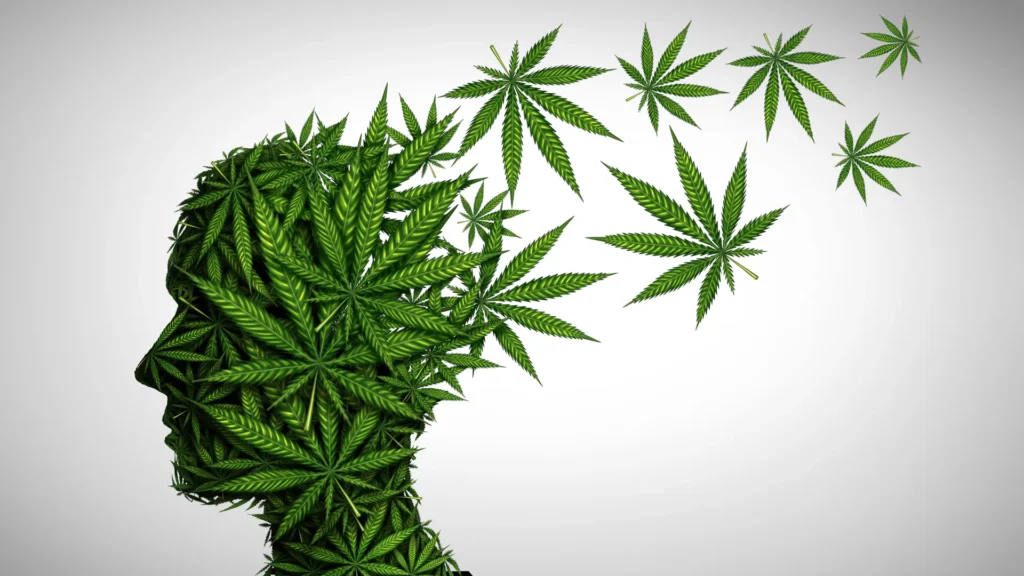
Smoking cannabis may do more than make memories fuzzy; it may actually fundamentally alter how memories form, are encoded, and subsequently retrieved, according to a landmark study from Washington State University (WSU). Published in the prestigious Journal of Psychopharmacology, this comprehensive research offers one of the most detailed examinations to date into the acute effects of cannabis on multiple facets of human memory, revealing a broad disruption across various cognitive systems critical for daily functioning.
The study’s findings indicate that individuals who consumed tetrahydrocannabinol (THC), the primary psychoactive compound in cannabis, were significantly more prone to recalling words that were never presented to them, a phenomenon known as false memory. Furthermore, participants under the influence of THC demonstrated marked difficulties in performing everyday memory tasks, such as remembering future intentions or appointments. This research not only confirms anecdotal observations but provides robust scientific evidence that cannabis intoxication broadly impacts cognitive processes far beyond simple recall, touching upon the very mechanisms that allow us to navigate our daily lives effectively.
A Comprehensive Look at Memory Disruption
Historically, most studies examining cannabis’s impact on memory have focused on one or two specific types, often involving simple recall tasks like remembering lists of words. The WSU study, however, stands out for its unprecedented scope, meticulously assessing a wide array of memory systems simultaneously. "This is the first study to comprehensively examine many different memory systems at once, and what we found is that acute cannabis intoxication appears to broadly disrupt most of them," explained Carrie Cuttler, senior author of the study and an associate professor of psychology at WSU. This holistic approach provides a far more complete picture of how cannabis interacts with the complex machinery of human memory.
The research team, led by Cuttler and co-author Ryan McLaughlin, an associate professor in the Department of Integrative Physiology and Neuroscience at WSU, recruited 120 regular cannabis users for a meticulously designed double-blind experiment. Participants were randomly assigned to vaporize one of three substances: a placebo cannabis, 20 milligrams (mg) of THC, or 40 mg of THC. The double-blind nature of the study ensured that neither the participants nor the researchers knew who received which substance, thereby minimizing bias and enhancing the reliability of the results.
Following the consumption of their assigned substance, participants engaged in approximately an hour of rigorous memory tests. These assessments were designed to probe various types of memory, including verbal memory (recalling spoken words), visuospatial memory (remembering visual information and spatial relationships), prospective memory (remembering to perform future actions), source memory (recalling where information came from), false memory (recalling information that was never presented), episodic content memory (recalling personal experiences), and temporal order memory (remembering the sequence of events). The breadth of these tests allowed for an unparalleled insight into the multifaceted impact of acute cannabis intoxication.
The results were stark: individuals who had consumed cannabis performed significantly worse than those in the placebo group on the vast majority of the tests. In total, cannabis acutely affected the majority of the memory measures, with statistically significant differences appearing in an alarming 15 of the 21 distinct memory tests administered. This widespread impairment underscores the pervasive nature of cannabis’s acute cognitive effects.
Adding another layer of crucial insight, researchers were surprised to find no meaningful differences in memory performance between participants who consumed 20 mg of THC and those who consumed 40 mg. This particular finding carries significant implications, suggesting that even moderate amounts of THC may be sufficient to induce substantial interference with memory functions, and that increasing the dose beyond a certain threshold might not necessarily lead to proportionally greater impairment in the short term. This implies a potentially low "threshold of effect" for cognitive disruption, which is vital for public health messaging and personal consumption decisions.
False Memories and Source Confusion: Distorting Reality
Among the most pronounced and concerning effects observed were those related to false memory and source memory. These two critical cognitive functions are instrumental in enabling individuals to accurately recall information and reliably determine the origin of that information. Disturbances in these areas can have profound implications for an individual’s perception of reality and their ability to make informed decisions.
In one particularly illuminating test designed to assess false memory, participants were exposed to lists of thematically related words, yet the central keyword connecting them was deliberately omitted. For example, a list might include "bed, rest, awake, snooze," but the word "sleep" would not be spoken. Later, individuals who had consumed cannabis were markedly more likely to erroneously claim they remembered hearing words that had not been presented, including the central, unmentioned keyword. "I found it was really common for people to come up with words that were never on the list," Cuttler noted, elaborating that these false recollections sometimes aligned with the list’s theme, but at other times were entirely unrelated. This propensity for generating false memories under acute cannabis intoxication raises serious questions about the reliability of memory in such states.
Concurrently, participants under the influence of cannabis also exhibited greater difficulty in accurately identifying where previously learned information originated. This impairment in source memory is not merely an academic curiosity; it has tangible real-world consequences. Problems with source memory can make it harder for individuals to discern whether information came from a trusted authority, a casual conversation, or a potentially unreliable online source. In an era rife with misinformation and disinformation, a compromised ability to trace the origins of information could exacerbate vulnerability to manipulation and misjudgment.
The potential for such memory distortions carries serious implications in scenarios where precise recall is paramount. Consider, for instance, the context of eyewitness interviews in legal proceedings. Errors in memory, or the susceptibility to suggestive questioning, can profoundly influence how events are remembered and recounted, potentially leading to miscarriages of justice. Similarly, in professional settings where accuracy of information is crucial, impaired source memory could lead to critical errors.
Impacts on Everyday Memory Tasks and Daily Functioning
Beyond the more abstract concepts of false and source memory, the researchers also documented significant impairments in prospective memory. This crucial form of memory refers to our ability to remember to perform specific tasks or actions in the future – a cornerstone of daily organization and responsibility. Prospective memory is involved in countless everyday responsibilities, from the simple act of taking medication at a prescribed time, to remembering to attend important meetings, or even stopping at the grocery store on the way home from work.
"These are things we rely on constantly in our day-to-day lives," Cuttler emphasized. "If you have something you need to remember to do later, you probably don’t want to be high at the time you need to remember to do it." This straightforward advice underscores the practical, immediate consequences of acute cannabis use on an individual’s ability to manage their personal and professional obligations. The findings suggest that activities requiring future planning and recall – whether academic, professional, or personal – could be significantly compromised under the influence of THC.
Interestingly, one specific form of memory, episodic content memory – which involves recalling personal experiences and the details surrounding them – did not show a statistically significant effect in this particular study. Cuttler prudently cautioned that additional research would be necessary before drawing firm conclusions about this type of memory, highlighting the nuanced and complex nature of cannabis’s effects on the brain.
Cannabis Use on the Rise, Research Gaps Remain
This groundbreaking study emerges at a critical juncture, as cannabis use becomes increasingly normalized and prevalent across North America, particularly in states like Washington where recreational use has been legalized. The rapid expansion of legalization, which began with Colorado and Washington in 2012, has seen over two dozen U.S. states, along with Canada, establish legal frameworks for either medical or recreational cannabis. This societal shift has led to an explosion in product availability and consumer access, yet scientific understanding of many short-term and long-term cognitive effects of cannabis has lagged significantly.
According to recent national surveys, the prevalence of cannabis use has been steadily climbing. For example, data from the National Survey on Drug Use and Health (NSDUH) consistently shows an upward trend in past-month and past-year cannabis use among adults. This growing user base underscores the urgent need for robust, evidence-based research to inform public health strategies and individual decision-making. Despite this increasing societal integration, a substantial knowledge gap persists regarding the full spectrum of cannabis’s acute effects on cognitive function, including memory, attention, and executive function.
One primary reason for this historical limitation in research is the federal classification of cannabis as a Schedule I substance under the Controlled Substances Act. This classification, which places cannabis alongside drugs like heroin, designates it as having a high potential for abuse and no accepted medical use, thereby imposing stringent regulatory hurdles on researchers. These barriers have historically restricted access to cannabis for scientific study, slowing the pace of critical inquiry. Consequently, much of the public’s understanding of cannabis effects has been shaped by anecdotal evidence or outdated research, rather than comprehensive modern scientific investigation.
The WSU study, by successfully navigating these regulatory challenges, provides invaluable data that can help bridge these information gaps. "We’re living in a state where cannabis use is very common, but there’s still a lot we don’t know about its acute effects," Cuttler reiterated. "The goal is to help people make informed decisions about the risks and benefits."
Broader Implications and Future Directions
The findings from Washington State University carry significant implications for public health, safety, and policy in an era of expanding cannabis legalization.
Public Health and Education: The study provides compelling evidence that public health campaigns must clearly communicate the acute risks of cannabis use, particularly concerning memory impairment. This is crucial for educating consumers about responsible use, emphasizing that tasks requiring clear memory, such as driving, operating machinery, or studying, should be avoided while acutely intoxicated. Educational initiatives should target both new and experienced users, as the lack of dose-dependent difference between 20mg and 40mg THC suggests that even seemingly moderate doses can have significant effects.
Workplace Safety and Productivity: For employers, these findings highlight the importance of clear policies regarding cannabis use, particularly in safety-sensitive professions. Impaired prospective memory could lead to critical errors, while compromised source memory could affect decision-making accuracy. Companies may need to revisit their drug testing protocols and provide education to employees about cognitive impairment risks.
Legal and Regulatory Frameworks: The study’s insights into false memory and source confusion could influence legal considerations, such as the reliability of testimony from individuals under the influence of cannabis. Furthermore, as states continue to refine their cannabis regulations, these findings could inform discussions around public consumption guidelines, potency limits, and packaging requirements that emphasize cognitive risks.
Medical Cannabis Context: While this study focused on recreational use, the findings prompt further consideration for medical cannabis patients. While cannabis offers therapeutic benefits for various conditions, understanding its cognitive side effects is essential for physicians to counsel patients effectively, especially those who may already have cognitive vulnerabilities due to underlying health conditions or age.
Future Research: The WSU study opens numerous avenues for further investigation. Longitudinal studies are needed to understand the long-term effects of chronic cannabis use on memory and cognitive function. Research into different cannabinoids (e.g., CBD, CBG) and their interactions with THC could provide a more nuanced understanding of cannabis’s overall cognitive profile. Additionally, exploring how these acute effects might vary across different demographics, age groups, and individuals with pre-existing cognitive conditions will be critical. Understanding the neural mechanisms underlying these memory disruptions could also lead to strategies for mitigation.
In conclusion, the comprehensive research from Washington State University represents a crucial step forward in understanding the acute cognitive effects of cannabis. By meticulously examining a broad spectrum of memory systems, the study provides robust evidence that THC intoxication broadly disrupts critical memory functions, including the formation of false memories and the ability to track information origins, even at moderate doses. As societies continue to grapple with the implications of widespread cannabis legalization, studies like this are indispensable for equipping individuals, policymakers, and public health officials with the scientific data necessary to make informed decisions about cannabis use and its profound impact on human cognition.