


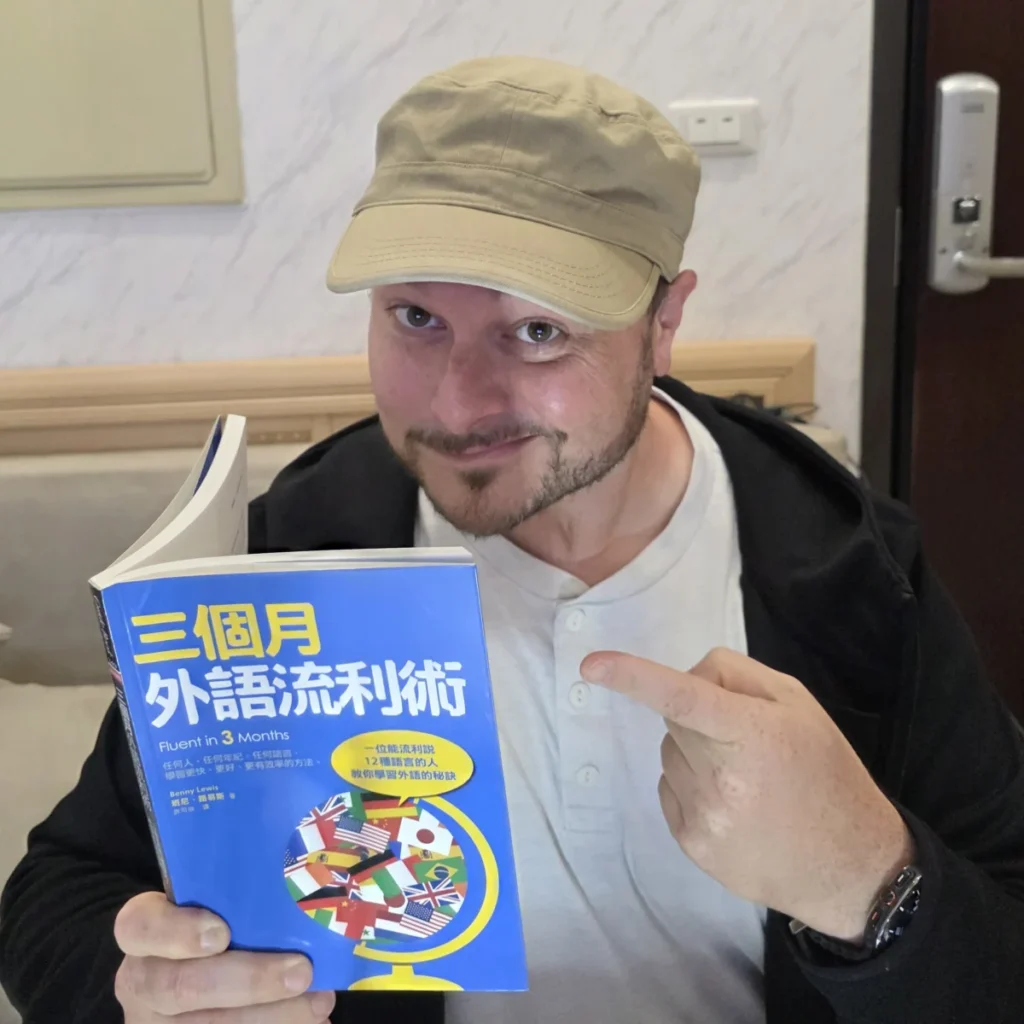
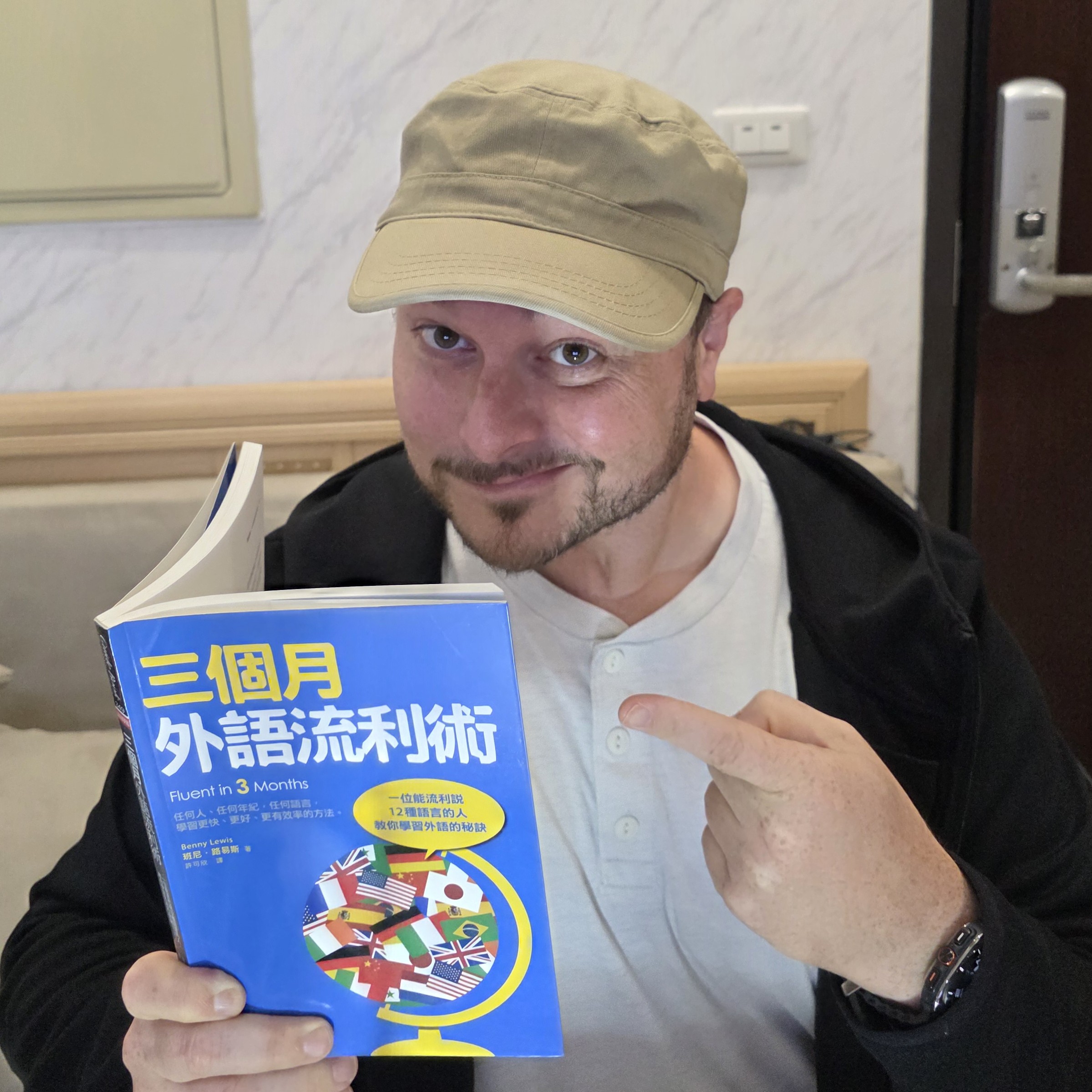
Benny Lewis, the founder of the prominent language-learning platform Fluent in 3 Months, has officially returned to Taipei, Taiwan, to initiate a high-intensity Mandarin Chinese immersion project. This move marks a significant return to the site of his original 2012 Mandarin mission, an endeavor that remains one of the most discussed and debated initiatives in the polyglot community. Lewis, an Irish-born author and language enthusiast, aims to regain and surpass his previous intermediate proficiency while documenting the process for a global audience. The project involves a rigorous daily regimen of self-study, digital tools, and localized social interaction, reflecting broader trends in the evolution of independent language acquisition.
The current initiative comes at a pivotal moment for both Lewis and the digital language-learning industry. After a decade of focusing on scaling his platform through a diverse team of contributors, Lewis is pivoting back to personal, narrative-driven content. This shift is largely a response to the changing landscape of search engine optimization (SEO) and the rise of generative artificial intelligence, which Lewis notes has significantly impacted the viability of traditional educational blogging.
Historical Context and the 2012 Mandarin Mission
The foundations of Lewis’s current project were laid fourteen years ago. In 2012, he embarked on what he termed the "Mandarin Mission," a three-month intensive study period in Taiwan followed by two months of travel across mainland China. The project was unique for its transparency; Lewis documented his struggles and successes in real-time, culminating in an independent evaluation that placed his spoken proficiency at the B1 level on the Common European Framework of Reference for Languages (CEFR).
While the 2012 project was a personal success, allowing Lewis to navigate rural China and engage in complex cultural activities—such as learning Kung Fu in a fishing village and interviewing a television presenter—it was not without controversy. Critics within the linguistics community often debated the feasibility of his "fluent in three months" methodology, particularly regarding a Category IV language like Mandarin, which the U.S. Foreign Service Institute (FSI) estimates requires 2,200 class hours for native English speakers to reach professional working proficiency.
In the years following the initial mission, Lewis’s Mandarin skills experienced a natural decline, a phenomenon known as language attrition. Aside from a brief period of intensive revision while co-authoring the "Language Hacking Mandarin" coursebook, his use of the language was relegated to occasional exchanges at international events. The decision to return to Taipei represents a concerted effort to transition Mandarin from a temporary project into a permanent fixture of his linguistic repertoire.
Catalyst for the Return: The Malaysian Influence
The impetus for this renewed focus on Mandarin originated during Lewis’s travels through Malaysia in early 2024. Malaysia’s unique demographic profile, where approximately 22.6% of the population is of Chinese descent, provided Lewis with frequent opportunities to observe and interact with Mandarin speakers.
According to ethnographic data, the Chinese diaspora in Southeast Asia maintains a high level of linguistic preservation. In Malaysia, Mandarin often serves as a lingua franca among different Chinese dialect groups, such as Hokkien and Cantonese speakers. Lewis noted that the inspiration to shift his focus from Malay back to Mandarin was a direct result of these interactions. The density of Mandarin speakers among both the local population and the influx of Chinese tourists in the region convinced him that a dedicated two-month immersion in a Chinese-speaking environment was the logical next step for his personal and professional development.
Methodological Framework of the Taipei Project
Lewis has structured his return to Taipei around a disciplined daily routine that combines traditional pedagogy with modern technological tools. This multifaceted approach is designed to address the specific challenges of "reactivating" a dormant language.
1. Grammar and Literacy Integration
Unlike his 2012 project, which focused almost exclusively on spoken communication, the current routine incorporates a formal study of grammar. Lewis utilizes textbooks that accommodate the linguistic nuances of Taiwanese Mandarin, which often differs from the "Putonghua" of mainland China in terms of vocabulary and certain grammatical structures. Furthermore, he is engaging with both Simplified and Traditional Chinese characters, the latter being the standard script in Taiwan.
While Lewis generally advises against a grammar-heavy approach for absolute beginners, he posits that for intermediate learners, a structural focus is essential for achieving "natural-sounding" sentences and overcoming the plateau often associated with B1-level proficiency.
2. Spaced Repetition and Digital Archeology
A cornerstone of Lewis’s vocabulary retention strategy is the use of Anki, a spaced repetition system (SRS) application. In a move highlighting the long-term nature of his journey, Lewis successfully recovered and updated his original vocabulary decks from 2012. This involved a complex process of data conversion, as the software architecture had evolved significantly over the intervening 14 years. These decks are particularly valuable because they contain personalized vocabulary derived from his previous one-on-one lessons, making the content highly relevant to his specific conversational needs.
3. The Role of Tutoring and AI
In addition to self-study, Lewis utilizes online tutoring platforms, specifically Preply, to maintain a high frequency of live conversation. These sessions provide the necessary momentum to overcome the "rustiness" associated with a long hiatus. Interestingly, Lewis also advocates for the use of AI-driven conversation tools as a cost-effective alternative for learners who may not have the resources for daily professional tutoring. This reflects a broader industry trend where AI is increasingly viewed as a supplementary tool rather than a replacement for human interaction.
4. Social Immersion and Environmental Challenges
Taipei serves as a "living laboratory" for Lewis’s project. He regularly attends social events found through platforms like Meetup.com to practice with local residents. However, he acknowledges the inherent difficulties of these environments. Noisy venues and the varying ability of native speakers to adjust their speech for foreigners (a skill known as "teacher talk") present significant hurdles. Lewis notes that "sit-down" group events are often more challenging than "standing" mixers, as they require following fast-paced, multi-person conversations.
Physical Fitness and Language Learning
An overlooked aspect of Lewis’s current routine is the integration of physical health. He reported a significant weight loss of 25 kilograms (approximately 55 pounds) since the COVID-19 pandemic and maintains a daily running regimen of over 90 minutes in Taipei.
Scientific literature has long suggested a link between aerobic exercise and cognitive function. Studies, such as those published in the Journal of Alzheimer’s Disease, indicate that regular exercise can improve neuroplasticity and memory retention—two critical components of language acquisition. By aligning his physical and linguistic goals, Lewis is employing a holistic approach to his immersion project.
Deep Travel and Regional Implications
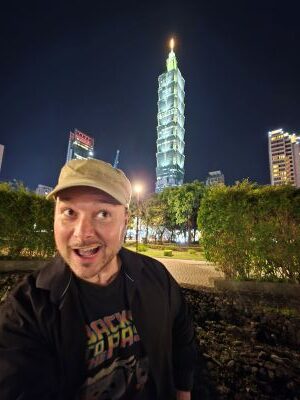
As the project progresses, Lewis plans to transition from the urban environment of Taipei to a "Deep Travel" exploration of rural Taiwan. This strategy is designed to eliminate the "English safety net" that often exists in major international hubs.
Taipei, while primarily Mandarin-speaking, still offers avenues for English interaction in high-end retail and international corporate sectors. Lewis recounted an early experience at a local Starbucks where a lack of English proficiency on the part of the barista forced him to utilize his Mandarin immediately upon arrival. By traveling to less-populated regions, he expects a near-total immersion experience.
This "Deep Travel" philosophy has been a recurring theme in Lewis’s recent work, including projects that spanned every state in Brazil, the 48 contiguous U.S. states, and every province in South Korea. From a journalistic perspective, this highlights a shift in the travel industry toward "slow travel" and cultural depth over traditional sightseeing.
The Evolution of Digital Content in the AI Era
Perhaps the most significant professional implication of Lewis’s return to blogging is his commentary on the state of the internet. For a decade, Fluent in 3 Months operated as a high-volume content site, optimized for search engines to provide specific language tips. However, Lewis has announced a return to personal, narrative-style blogging.
This decision is a direct response to Google’s implementation of AI-generated snippets, which often scrape information from specialized blogs and present it directly on the search results page. This "zero-click" search trend has decimated the traffic and revenue models of many independent publishers. Lewis’s move toward "human-sourced" narrative content is an attempt to provide value that AI cannot replicate: the lived, subjective experience of a human navigating a foreign culture.
Conclusion and Future Outlook
Benny Lewis’s return to Taipei is more than a personal quest for linguistic fluency; it is a case study in the modern landscape of independent learning and digital publishing. By combining traditional immersion with recovered data, AI tools, and a focus on physical well-being, Lewis is testing the boundaries of how a language can be reclaimed after years of disuse.
As he moves forward with his "Deep Travel" project across Taiwan, the results will likely provide valuable insights for the global community of language learners. In an era increasingly dominated by automated translations and AI-generated content, the persistence of the "human-in-the-loop" approach to language and culture remains a significant area of interest for educators and travelers alike. The project underscores a fundamental truth in linguistics: while technology can facilitate the process, the core of language remains a deeply personal and social human endeavor.