


Early last year, Ontario Premier Doug Ford appeared at a first ministers’ meeting wearing a navy baseball cap emblazoned with the phrase, “Canada is not for sale.” At the time, the accessory served as a localized political statement. Today, that sentiment has shifted from a defiant slogan to a central theme of Canadian foreign and domestic policy. As the federal government navigates an increasingly protectionist global landscape—highlighted by Prime Minister Mark Carney’s recent decision to step away from a proposed trade agreement with the United States—the concept of national sovereignty is being tested with unprecedented urgency.
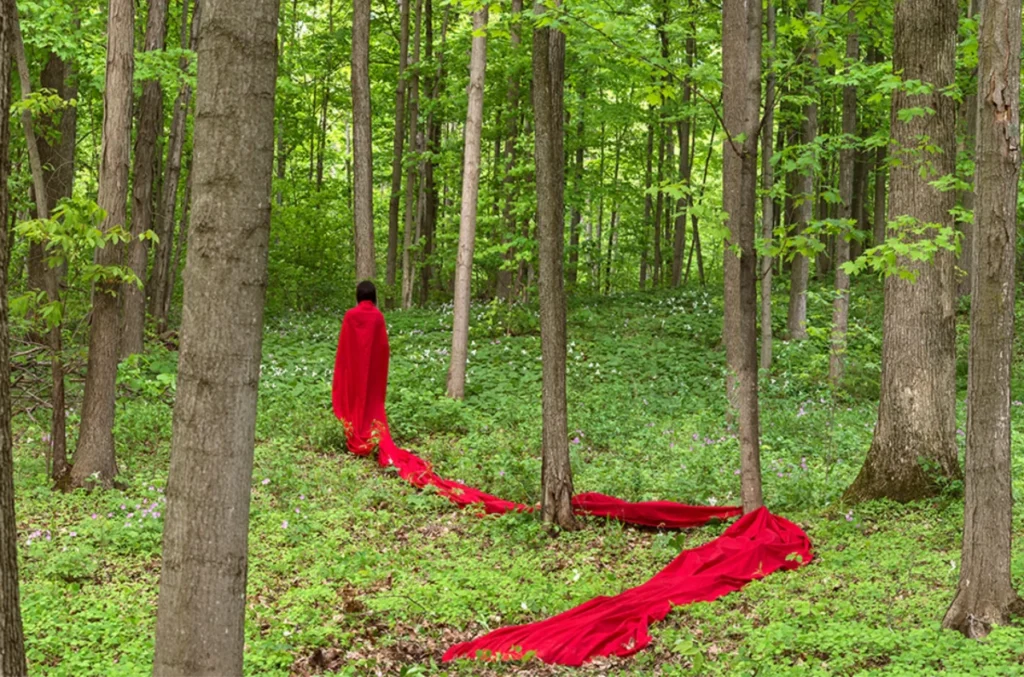
This transition from rhetoric to reality highlights a fundamental question: What does it mean for a nation to protect its independence, and what are the internal costs of doing so? These questions are currently being explored through an international lens at the Gwangju Biennale in South Korea, where OCAD University is presenting an exhibition titled Skennenkó:wa ken? (Do You Carry Great Peace?).
A Chronology of Sovereignty and Challenge
The discourse surrounding Canadian sovereignty has evolved rapidly since early 2023. The timeline of this shift reflects broader geopolitical pressures:
- Early 2023: Political leaders, including Premier Ford, emphasize economic nationalism, reflecting growing public anxiety over supply chain vulnerabilities and foreign influence in Canadian markets.
- Late 2023: Trade negotiations with the United States reach an impasse. Canadian officials express concerns that proposed terms would force concessions on intellectual property and regulatory autonomy, effectively compromising domestic policy levers.
- Mid-2024: The federal government formally halts negotiations, citing the necessity of preserving national sovereignty.
- Current Day: As economic pressures mount, the focus shifts to how the federal government manages the fallout—ranging from industrial subsidies to potential retaliatory tariffs.
The Philosophy of the Great Law
The exhibition at the Gwangju Biennale features the work of three Kanien’kehaka artists and OCAD University alumni: Shelley Niro, Melissa General, and Hannah Claus. The title of the exhibition, Skennenkó:wa ken?, is derived from the Kaianere’kó:wa—the Great Law of Peace, which serves as the living constitution of the Haudenosaunee Confederacy.
In this tradition, peace is not a static state of tranquility but an active, ongoing practice. It requires individuals and collectives to maintain a "good mind," characterized by clarity, responsibility, and long-term foresight. The exhibition invites viewers to consider how these ancient philosophical tenets might inform contemporary governance. By placing the Great Law in dialogue with modern geopolitical struggles, the curators—Ryan Rice and Ana Serrano—suggest that sovereignty is not merely the power to make a decision, but the wisdom to make decisions that honor one’s relationship to the land and future generations.
Economic Data and Geopolitical Realities
The decision to protect Canadian sovereignty is not without significant economic risk. According to Statistics Canada, the United States remains Canada’s largest trading partner, accounting for roughly 75 percent of all Canadian merchandise exports. When the federal government prioritizes independence over trade integration, it faces immediate economic pressures:
- Supply Chain Integration: Nearly 60 percent of Canadian manufacturing is inextricably linked to U.S. supply chains. A cooling of trade relations risks increasing costs for domestic manufacturers.
- Investment Volatility: Foreign Direct Investment (FDI) into Canada has fluctuated by nearly 12 percent over the last fiscal year, with analysts citing policy uncertainty as a primary driver.
- Regional Disparity: Economic pain resulting from trade disputes is rarely distributed evenly. Industrial hubs in Ontario and the automotive sector in the Midwest/Great Lakes corridor face the highest risk of disruption, while Western resource sectors may face different regulatory hurdles.
These data points illustrate why the concept of “carrying great peace” is so demanding. It forces policymakers to look beyond immediate economic shocks and consider the long-term integrity of the state.
The Role of Art in Diplomacy
Presenting this exhibition in Gwangju, South Korea, adds a layer of historical resonance. Gwangju is a city synonymous with the 1980 Democratic Uprising, a pivotal moment in the South Korean struggle for self-determination. The parallels between the Haudenosaunee approach to peace and the South Korean struggle for democracy are deliberate.

By showcasing Indigenous-led art at one of Asia’s premier contemporary art events, OCAD University is highlighting that sovereignty is also cultural. It involves the right of a people to define their own identity, document their own history, and manage their own relationship with the land. For OCAD University, which is celebrating its 150th anniversary in 2024, this exhibition represents a significant shift. Founded in 1876—a period of intense European-centric institution building—the university is now actively pivoting toward the incorporation of Indigenous political and artistic traditions that predate the Canadian state by centuries.
Institutional Perspectives and Official Responses
While the federal government has remained focused on the mechanics of trade, academic and cultural institutions are providing the necessary framework to discuss what sovereignty feels like for the individual.
"Sovereignty is not exhausted by the ability to decide," notes Ana Serrano, president and vice-chancellor of OCAD University. "It also lives in how power is used, especially over time and under pressure."
The artists involved—Niro, General, and Claus—utilize their work to address themes of land reclamation and memory. Their practices emphasize the central role of women in Haudenosaunee governance, asserting that women carry the primary responsibility for ensuring the continuity of the community. This perspective provides a necessary counter-narrative to the typically male-dominated, state-centric debates regarding national borders and trade tariffs.
Broader Implications for Canadian Policy
As Canada moves forward, the "Canada is not for sale" narrative will face its most significant test. The political fault lines that emerge when a nation experiences economic hardship are deep. If the government fails to balance its protectionist stance with clear, inclusive communication, it risks alienating the very citizens it aims to protect.
The philosophy of the Great Law suggests that the "good mind" required to navigate these crises involves:
- Attentiveness: Identifying which segments of the population are absorbing the most burden from trade disruptions.
- Responsibility: Making decisions that reflect a timeline extending far beyond the next election cycle.
- Balance: Maintaining the health of the community while asserting the independence of the state.
Conclusion: A New Standard for Sovereignty
The resonance of Skennenkó:wa ken? at this particular moment in Canadian history is not coincidental. As the country grapples with its place in an increasingly unstable world, the definition of sovereignty is being rewritten. It is no longer enough to simply declare that a nation is not for sale. The challenge lies in demonstrating that the nation is capable of acting with a good mind, practicing its sovereignty with a deep sense of responsibility, and maintaining peace even when faced with intense external pressure.
The exhibition serves as a reminder that the most enduring pillars of power are not found in the offices of trade negotiators or the boardrooms of corporations, but in the traditions and values that define a people. As OCAD University concludes its sesquicentennial year, the message from the Gwangju Biennale is clear: sovereignty is not a prize to be won, but a practice to be maintained, requiring constant renewal and a commitment to the generations yet to come. Whether Canada can uphold these standards in its practical dealings remains the central question of this era.