



The landscape of corporate learning and workforce development is undergoing a profound transformation, driven by visionary leaders who are reimagining how organizations equip their employees for success. The Chief Learning Officer magazine’s Learning Insights series has consistently championed these trailblazers, offering a platform for them to share their strategic thinking, innovative methodologies, and the challenges they’ve overcome. This in-depth exploration delves into the insights of a prominent Chief Learning Officer (CLO), offering a comprehensive look at their career trajectory, key initiatives, and their vision for the future of learning and development (L&D).
The Genesis of a Learning Leader: From Facilitator to Strategist
The journey into the realm of Learning and Development (L&D) is often rooted in a fundamental desire to empower others. For this featured CLO, the initial spark was a deep-seated motivation to foster individual growth and enhance performance. "I was drawn to L&D because I’ve always been motivated by helping people grow and perform better," they shared. This intrinsic drive set the stage for a career that has evolved significantly. Early in their career, the focus was primarily on the tactical aspects of training design and delivery. However, as the professional and organizational environments shifted, so too did their role. "Over time, my role has evolved from designing training to shaping strategy connecting learning directly to performance, engagement and business outcomes," they explained. This evolution signifies a broader industry trend, moving L&D from a support function to a strategic imperative directly tied to organizational objectives.
This transition from training designer to strategic architect is a common narrative among successful L&D leaders. Historically, L&D departments were often tasked with fulfilling specific training requests, acting as order-takers for pre-defined programs. However, the increasing complexity of business challenges, the rapid pace of technological change, and the growing recognition of human capital as a primary driver of competitive advantage have necessitated a more proactive and strategic approach. This CLO’s career trajectory mirrors this paradigm shift, emphasizing the importance of aligning learning initiatives with tangible business goals.
Building an Integrated Performance Ecosystem: Beyond Isolated Training Events
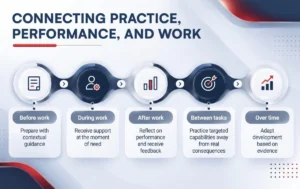
A cornerstone of effective L&D strategy is the creation of a learning environment that is not only engaging but also deeply integrated into the fabric of daily work. This CLO has been instrumental in architecting such an environment, moving away from the traditional model of standalone training events. "I’ve shifted L&D from isolated training events to an integrated performance ecosystem," they stated. This holistic approach encompasses several critical components:
- Standardized Onboarding: Recognizing onboarding as the crucial first impression and foundational experience for new hires, the CLO has implemented standardized programs across diverse roles and geographical locations. This ensures a consistent and equitable introduction to the company’s culture, values, and operational procedures, aiming to reduce the time-to-productivity for new employees. Data suggests that effective onboarding can improve new hire retention by as much as 82% and productivity by over 70% (Aberdeen Group).
- Competency-Based Leadership Development: Instead of generic leadership training, the focus has been on developing programs directly linked to observable and measurable competencies. This approach ensures that leadership development is not an abstract concept but a practical application of skills and behaviors critical for guiding teams and driving organizational success. The Society for Human Resource Management (SHRM) highlights that competency-based development leads to higher employee engagement and improved performance.
- Embedding Learning into Operational Systems: A significant innovation has been the integration of learning opportunities directly within the operational systems employees use daily. This "just-in-time" learning approach provides immediate support and reinforcement, making learning a natural part of task execution rather than a separate activity. This strategy addresses the challenge of knowledge retention and application, as learners are accessing information precisely when they need it.
- Data-Driven Decision-Making: To ensure accountability and continuous improvement, the CLO leverages key performance indicators (KPIs) to guide L&D decisions. Metrics such as "time to competency" (the time it takes for an employee to reach a defined level of proficiency), "Top Box scores" (often referring to customer satisfaction metrics), and productivity metrics are used to measure the impact of learning initiatives. This data-centric approach shifts L&D from a perceived cost center to a demonstrable value driver.
The implementation of these initiatives reflects a strategic understanding that learning is not a discrete event but an ongoing process embedded within the workflow. The emphasis on consistency and accountability ensures that development efforts are not only well-intentioned but also demonstrably effective in driving desired employee behaviors and organizational outcomes.
The Impact of a Redesigned Onboarding and Front-Line Performance Program
When asked about the most impactful learning program introduced, the CLO pointed to the organization’s redesigned onboarding and front-line performance initiatives. This program represented a fundamental rethinking of how new employees are trained and supported. "By rethinking how we train systems, service and leadership behaviors, we reduced time to competency by more than 60 percent, improved guest experience Top Box scores and saved significant training labor costs," they reported.
The tangible results of this program are significant. A 60% reduction in time to competency means that new hires become fully productive members of the team much faster, directly impacting business output and revenue generation. Improved "guest experience Top Box scores" indicate a direct correlation between the enhanced training and enhanced customer satisfaction, a critical metric for many service-oriented organizations. Furthermore, the reduction in training labor costs highlights the efficiency gains achieved through a more targeted and effective approach.
Beyond the quantifiable metrics, the CLO emphasized the profound impact on the individual employee experience. "More important, new hires leave onboarding confident, capable and ready to perform – not just ‘trained.’" This distinction is crucial. Being "trained" might imply the acquisition of knowledge or basic skills, whereas being "confident, capable and ready to perform" suggests a deeper level of readiness, self-assurance, and the ability to apply learning effectively in real-world scenarios. This outcome speaks to the program’s success in fostering not just skill acquisition but also the confidence and mindset necessary for sustained performance.
Addressing the "Cost Center" Misconception: Demonstrating Business Value
A persistent challenge within the L&D profession is the perception that it functions as a cost center rather than a strategic partner. This misconception often arises from a lack of clear alignment between learning initiatives and measurable business objectives. The CLO directly addresses this by advocating for a data-driven approach and a focus on business problems.
"That L&D is a cost center or an order-taker," the CLO stated when asked about common misconceptions. Their strategy for countering this is clear: "I address it by leading with data, business problems and outcomes. If learning doesn’t move a metric, it doesn’t matter." This powerful statement underscores the imperative for L&D professionals to speak the language of business and demonstrate a direct return on investment (ROI) for their programs.
By framing learning initiatives around specific business challenges and quantifying their impact through relevant metrics, L&D functions can elevate their standing within an organization. This requires a deep understanding of the business’s strategic priorities, operational challenges, and financial goals. When L&D can clearly articulate how its interventions contribute to increased revenue, reduced costs, improved efficiency, or enhanced customer loyalty, it transitions from being a perceived expense to a valuable investment. This proactive stance is essential for securing resources, gaining executive buy-in, and ensuring the long-term sustainability of L&D efforts.
The Future of Workplace Learning: Personalization, AI, and Performance Support
The future of workplace learning is dynamic and exciting, characterized by rapid technological advancements and evolving learner expectations. The CLO expresses particular enthusiasm for the growing emphasis on personalization, the integration of Artificial Intelligence (AI), and the rise of performance support tools.
- Personalization: Learners today expect tailored experiences that cater to their individual needs, learning styles, and career aspirations. Personalized learning paths, adaptive learning technologies, and customized content delivery are becoming increasingly vital for engagement and effectiveness.
- Artificial Intelligence (AI): AI is poised to revolutionize L&D by enabling more sophisticated data analysis, personalized content recommendations, automated feedback, and even virtual coaching. AI can help identify skill gaps at an individual and organizational level, predict future learning needs, and optimize the learning journey for each employee.
- Performance Support: Moving beyond traditional training, performance support focuses on providing employees with the resources and guidance they need precisely when they need them, directly within their workflow. This can include digital job aids, embedded microlearning modules, and readily accessible knowledge bases.
To prepare their organization for these shifts, the CLO emphasizes a proactive approach: "We’re preparing by experimenting early, upskilling our team and designing learning that fits into the flow of work, not around it." This strategy involves embracing innovation, fostering a culture of continuous learning within the L&D team itself, and ensuring that new learning solutions are designed to be seamlessly integrated into the daily work experience, rather than being perceived as an interruption.
Essential Qualities of a Successful L&D Leader
The effectiveness of an L&D function is intrinsically linked to the capabilities of its leadership. The CLO identifies three essential qualities that define a successful L&D leader: business acumen, courage, and curiosity.
- Business Acumen: This refers to a deep understanding of the organization’s strategy, operations, financial drivers, and market landscape. L&D leaders with strong business acumen can effectively align learning initiatives with organizational goals and demonstrate the business impact of their work.
- Courage: This quality is vital for challenging the status quo, advocating for necessary changes, and admitting when initiatives are not working. It involves the willingness to take calculated risks and to hold oneself and the team accountable for results.
- Curiosity: A curious L&D leader is driven by a desire to understand, explore, and innovate. This fuels a commitment to continuous learning, staying abreast of emerging trends, and seeking new and better ways to develop talent.
Cultivating these traits, the CLO explains, involves staying "close to operations, being honest about what works and what doesn’t, and encouraging my team to challenge assumptions – including mine." This commitment to transparency, continuous improvement, and fostering an environment where diverse perspectives are valued is crucial for building a high-performing L&D team.
Game-Changing Advice for the Younger Self: Focus on Impact Over Volume
Reflecting on their career journey, the CLO offers a piece of "game-changing advice" to their younger self: "Stop trying to prove your value through volume. Focus on impact, speak the language of the business, and trust that clarity is more powerful than complexity." This advice encapsulates a fundamental shift in L&D strategy. Historically, L&D departments might have measured their success by the sheer number of training hours delivered or courses offered. However, the true measure of value lies in the tangible impact these initiatives have on individual performance, team effectiveness, and ultimately, organizational success.
The emphasis on speaking "the language of the business" reinforces the importance of business acumen and data-driven communication. By framing learning in terms of business outcomes, L&D leaders can gain greater credibility and support from stakeholders. The final point, "clarity is more powerful than complexity," suggests a preference for straightforward, actionable strategies over convoluted or overly theoretical approaches. This aligns with the need for L&D to be practical, relevant, and easily understood by all stakeholders.
The Single Biggest Challenge: Reimagining Relevance in L&D
The CLO identifies "relevance" as the single biggest challenge facing L&D professionals and the industry as a whole. This challenge stems from a disconnect between the learning offered and the realities of the job. "Too much learning still exists outside the realities of the job," they state.
To overcome this, the industry must accelerate its evolution. This means moving with greater agility, embedding L&D functions more deeply within business units, and being willing to critically evaluate and discard outdated practices. The call for L&D to "move faster, get closer to the business and be willing to let go of what no longer works" is a powerful directive for the profession to remain vital and impactful in an ever-changing world. This requires a continuous cycle of assessment, adaptation, and innovation, ensuring that learning remains a dynamic and indispensable driver of individual and organizational growth.
The insights shared by this Chief Learning Officer offer a compelling roadmap for the future of workforce development. By prioritizing strategic alignment, embracing data-driven methodologies, fostering a culture of continuous learning, and staying attuned to the evolving needs of learners and the business, L&D leaders are well-positioned to navigate the complexities of the modern workplace and drive sustained success.