


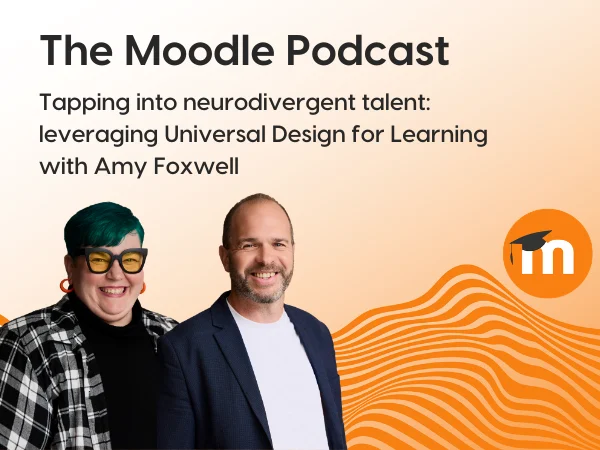
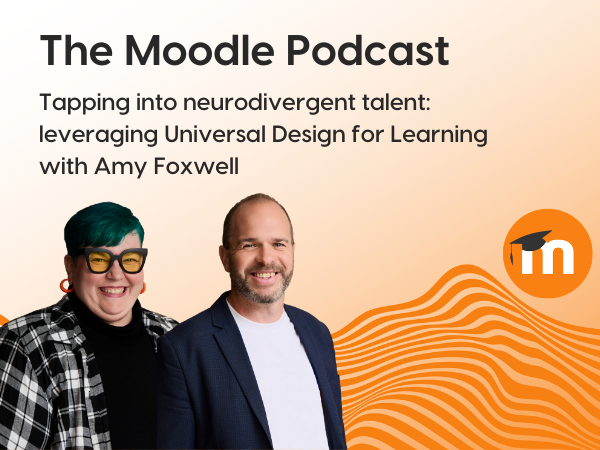
Moodle, a leading open-source learning platform, is actively championing a paradigm shift in educational design, moving beyond the concept of an "average learner" to embrace the unique strengths and learning styles of every individual. This commitment is underscored by a recent episode of the Moodle Podcast, featuring an insightful discussion with Amy Foxwell from ReadSpeaker, a Moodle Certified Integration partner. The conversation delved into the profound advantages of neuro-inclusive design and its critical role in creating truly effective and equitable learning environments, both now and for the future.
The core philosophy driving this initiative is the recognition that learners engage with the world in diverse ways, and learning experiences should mirror this inherent variability. Moodle’s stance is that no learner is "average." Instead, the platform advocates for flexible, interactive, and universally accessible design principles that cater to a broad spectrum of needs and preferences from the outset. This proactive approach aims to eliminate the need for separate, often stigmatizing, accommodations by building inclusivity into the very fabric of the learning experience.
Designing for Diversity: A Proactive Approach to Inclusivity
Amy Foxwell, representing ReadSpeaker, articulated a fundamental principle of neuro-inclusive design: the creation of learning environments that are proactive rather than reactive. This means architecting digital spaces and pedagogical approaches that inherently work for the widest possible range of learners. Foxwell highlighted the foundational concept of Universal Design for Learning (UDL), which posits that "variability is the norm." Rather than viewing neurodivergent learners as outliers requiring special provisions, UDL encourages educators and designers to anticipate and embrace these differences as integral to the learning landscape.
The implications of this approach are far-reaching. By designing learning experiences that are inherently flexible and adaptable, institutions can significantly reduce the cognitive load and emotional burden placed on neurodivergent individuals. A significant aspect of this burden, as explored in the podcast, is the phenomenon of "masking." This refers to the exhausting and often detrimental process many neurodivergent learners undertake to conceal their natural traits and appear "normal" within traditional educational settings. Intentional course design, informed by neuro-inclusive principles, can actively mitigate this need for masking, fostering environments where learners can be authentic and fully engaged without expending precious energy on assimilation.
For instance, providing multiple means of representation, such as offering content in various formats (text, audio, video, interactive simulations), allows learners to access information in a way that best suits their cognitive processing. Similarly, offering diverse options for action and expression, like allowing learners to demonstrate understanding through written assignments, oral presentations, visual projects, or even coding, empowers them to showcase their knowledge in ways that align with their strengths. This multi-modal approach not only benefits neurodivergent learners but also enhances engagement and comprehension for all students, regardless of their neurological profile.
The "Curb-Cut Effect": Broadening Accessibility for Universal Benefit
A compelling analogy used to illustrate the widespread benefits of inclusive design is the "curb-cut effect." This phenomenon, originally observed in urban planning with the introduction of curb cuts to aid wheelchair users, revealed unintended but significant advantages for a much broader population. Similarly, in the digital realm, tools initially developed to enhance accessibility for specific groups often improve the learning experience for everyone.
Text-to-speech technology, a prime example, was initially conceived to support visually impaired learners. However, its utility has expanded dramatically. Today, text-to-speech is invaluable for individuals with dyslexia, ADHD, and various language processing differences. Furthermore, it serves a significant population of learners who simply prefer or benefit from auditory learning, especially when multitasking or consuming content on the go. This demonstrates that investing in accessibility features is not merely about accommodating a minority; it’s about creating a more robust, versatile, and user-friendly learning ecosystem for all.
The widespread adoption of such technologies is supported by growing data on digital learning preferences. Studies have indicated that a significant percentage of students, particularly in higher education, utilize assistive technologies, even if they do not have a formal diagnosis. For example, a 2021 survey by the University of Michigan found that over 30% of students reported using at least one form of assistive technology for their studies, with text-to-speech and screen readers being among the most common. This underscores the universality of the benefits derived from designing for accessibility.
Reducing Friction, Empowering Learners: The Strategic Advantage of Neuro-Inclusion
The overarching message from this Moodle Podcast episode is that neuro-inclusive design is not merely a matter of ethical consideration; it is a strategic imperative for effective learning design. Environments that are neuro-inclusive are increasingly correlated with enhanced innovation, heightened creativity, and improved overall performance. By fostering adaptable and supportive learning experiences, organizations and educational institutions not only benefit their learners but also unlock significant advantages for themselves.
For educators, learning and development (L&D) professionals, and anyone involved in the intricacies of learning design, this conversation offers practical insights and strategic guidance. The episode explores neuro-inclusion as a key driver of competitive advantage, highlighting "quick wins" that course designers can implement to immediately enhance inclusivity. These might include adopting a UDL framework from the initial design phase, providing clear and concise instructions, offering regular opportunities for feedback and revision, and ensuring that digital content is compatible with a range of assistive technologies.
The implications extend beyond individual courses. Institutions that embed neuro-inclusive principles into their institutional policies and digital infrastructure are better positioned to attract and retain a diverse student body and workforce. This can lead to a richer learning environment, a wider pool of talent, and a more innovative and resilient organizational culture. The data supporting the link between diversity and innovation is robust; research by McKinsey & Company has consistently shown that companies with greater ethnic and gender diversity are more likely to outperform their less diverse peers financially. While this research often focuses on broader diversity metrics, the principles of embracing varied perspectives and cognitive styles are directly applicable to neurodiversity.
Broader Impact and Future Directions
The conversation with Amy Foxwell underscores Moodle’s dedication to advancing educational technology in ways that are both cutting-edge and deeply human-centered. By partnering with experts like ReadSpeaker and amplifying these crucial discussions through platforms like the Moodle Podcast, Moodle is actively contributing to a global movement towards more equitable and effective learning.
The integration of neuro-inclusive design principles is becoming increasingly vital in a world where lifelong learning is essential for professional and personal development. As educational institutions and workplaces grapple with the evolving demands of the 21st century, embracing the strengths of neurodivergent individuals and designing learning experiences that cater to a wide spectrum of cognitive styles will be a defining characteristic of successful organizations.
The Moodle Podcast continues to be a valuable resource for those seeking to understand and implement these transformative approaches. By encouraging listeners to follow the podcast, Moodle aims to foster a community of practice dedicated to making education more accessible, engaging, and ultimately, more impactful for everyone. The ongoing exploration of topics like neuro-inclusion, UDL, and the strategic advantages of diverse learning environments signals a commitment to shaping the future of education, one inclusive lesson at a time. The podcast episode, "Tapping into neurodivergent talent: leveraging Universal Design for Learning with Amy Foxwell," serves as a compelling call to action for educators, designers, and policymakers to rethink traditional approaches and embrace the full spectrum of human potential in learning.