



Representing ideas visually is an intrinsic human impulse, a natural inclination that often manifests when we seek to clarify complex information for ourselves or others. From sketching a simple diagram to illustrate a mechanical process to outlining a garden layout, visual aids serve as powerful conduits for understanding. Beyond purely visual concepts, these tools excel at representing abstract ideas, such as the intricate steps of a workflow depicted in a flowchart. Among the most potent and pedagogically valuable of these visual tools are concept maps.
A concept map stands as a sophisticated graphic organizer, a visual architecture designed to represent knowledge and its interconnections. While often conflated with terms like "mind maps" or "spider maps," concept maps distinguish themselves through their rigorous structure and explicit articulation of relationships. At their core, key concepts are encapsulated within "nodes" – typically boxes or bubbles containing words or short phrases – which are then linked by lines or arrows. Crucially, these links are often labeled with "linking words" that precisely describe the nature of the relationship between connected concepts. This seemingly simple framework belies a profound capacity to facilitate deeper learning and knowledge retention, a fact increasingly supported by a robust body of cognitive science research.
The unassuming nature of concept maps – requiring no complex technology and capable of rapid creation – belies their immense power as learning instruments. Their effectiveness stems from their alignment with fundamental principles of human cognition and memory. Dr. Kripa Sundar, a distinguished cognitive scientist specializing in concept mapping research, has been at the forefront of elucidating these principles. Her insights are prominently featured in the recently published book, Smart Teaching Stronger Learning: Practical Tips from 10 Cognitive Scientists. This collaborative work, edited by Dr. Pooja Agarwal, convenes a diverse group of cognitive scientists to distill actionable, evidence-based classroom practices, providing educators with direct access to cutting-edge research. Dr. Sundar’s chapter on concept mapping, in particular, offers a compelling exploration of why these tools are so effective and how they can be optimally utilized in educational settings. The practical application of these strategies has been further disseminated through recent educational podcasts, bringing these crucial insights to a broader audience of teachers and learners.
The Cognitive Architecture of Concept Maps: Why They Are So Effective
Dr. Sundar’s enthusiastic endorsement of concept maps is rooted in their multi-faceted engagement with cognitive processes. She describes them as a "packed strategy," indicating their ability to simultaneously activate several mechanisms beneficial for learning. In an article for the American Federation of Teachers (AFT), Dr. Sundar highlighted that multiple meta-analyses have consistently affirmed the efficacy of concept maps, often demonstrating a greater impact on learning outcomes than traditional methods like lectures, discussions, or text summaries. This extensive body of research provides a strong empirical foundation for their adoption in diverse educational contexts.

The profound effectiveness of concept maps can be understood by examining their interaction with the three core components of memory formation: encoding, storage, and retrieval.
-
Encoding: This initial stage involves processing new information and transforming it into a format that can be stored in memory. Concept mapping is an inherently active encoding process. Rather than passively receiving information, learners must actively identify key concepts, analyze their meaning, and determine how they relate to one another. This deep processing, involving synthesis and analysis, leads to more robust and meaningful encoding. The act of selecting appropriate linking words, for instance, forces learners to articulate precise relationships, thereby enhancing their understanding and the quality of the encoded information. This active engagement contrasts sharply with passive learning strategies, which often result in superficial encoding.
-
Storage: Once information is encoded, it needs to be organized and integrated into existing knowledge structures for long-term retention. Concept maps excel at facilitating this. By explicitly illustrating the hierarchical and non-hierarchical relationships between concepts, they help learners construct a coherent mental model of a subject. This structured organization makes new information more accessible and less prone to decay. Instead of isolated facts, concept maps build a network of interconnected ideas, making the knowledge more resilient and retrievable. This aligns with the principle that knowledge is best retained when it is meaningfully organized and connected to prior learning.
-
Retrieval: The final stage of memory involves accessing stored information when needed. Concept maps serve as powerful retrieval practice tools. When students construct a map from memory, they are actively testing their knowledge and recalling information and its relationships. This act of self-testing, a cornerstone of effective learning strategies, strengthens memory traces and identifies gaps in understanding. Even reviewing a pre-existing concept map can act as a form of retrieval practice, prompting learners to re-activate the neural pathways associated with the mapped concepts. The visual nature of the map also provides multiple cues for recall, making retrieval more efficient.
Beyond these core memory processes, concept maps also tap into principles like dual coding theory, which posits that information is better remembered when presented both visually and verbally. The nodes (verbal) and links (visual) of a concept map inherently leverage this principle. Furthermore, they help manage cognitive load by externalizing complex relationships, freeing up working memory for deeper processing rather than holding disparate facts.
Strategic Implementation: Best Practices for Maximizing Learning
While the foundational power of concept maps is clear, their optimal use requires adherence to specific best practices. Dr. Sundar, drawing from her extensive research, outlines several critical guidelines for educators and learners.
1. Be Clear About Your Motivation: The initial step in employing any instructional strategy, including concept mapping, is to articulate its purpose. As Dr. Sundar emphasizes, "the first question is why?" Concept maps are highly versatile and can be adapted for various pedagogical goals:
- Individual learning and note-taking: To deepen personal understanding and organize new information.
- Group activities: To foster collaborative learning, discussion, and consensus-building on complex topics.
- Whole-class engagement: To introduce new units, review material, or identify collective understanding.
- Formative and summative assessment: To gauge student comprehension and identify misconceptions.
Defining the specific objective will guide the design and implementation of the concept mapping activity, ensuring it aligns with desired learning outcomes.
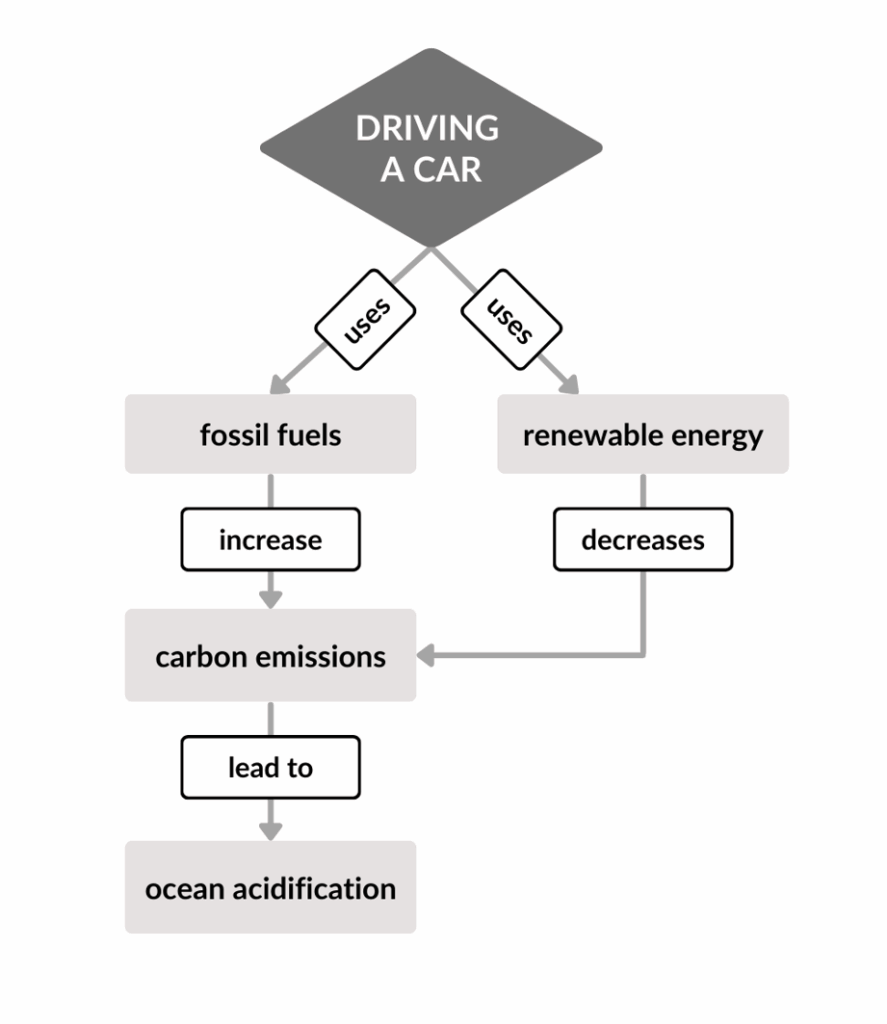
2. Have a Guiding Question: One of the most critical practices for effective concept mapping is to narrow the focus through a specific guiding question. Without such a question, concept maps can quickly become unwieldy, overwhelming, and less effective. A guiding question serves as an anchor, limiting the scope of concepts to be included and directing the relationships explored. Dr. Sundar illustrates this point vividly with examples related to ocean acidification:
- A guiding question like "What is the relationship between driving a car and ocean acidification?" leads to a relatively focused and manageable map, tracing a specific causal chain. This specificity allows for a deep dive into a particular aspect of a larger topic.
- In contrast, a broader question such as "What is the relationship between human activities and ocean acidification?" would necessitate a far more complex and expansive map, incorporating numerous variables and intricate interdependencies. While potentially comprehensive, such a map could be overwhelming for initial learning stages.
The guiding question therefore acts as a critical filter, ensuring that the concept map remains purposeful and digestible for the learner’s current stage of understanding.
3. Use Linking Words: Perhaps the most distinguishing and cognitively demanding feature of concept maps, compared to simpler mind maps, is the use of explicit linking words or phrases. These labels on the lines connecting nodes articulate the precise nature of the relationship between concepts. For example, instead of merely drawing a line between "Sun" and "Plants," a concept map might label the line "provides energy for."
- While Dr. Sundar acknowledges that adding these linking words "is a pain in the beep," she adamantly asserts that this additional effort is precisely what transforms a basic visual organizer into a robust learning tool. The act of formulating these precise linking phrases forces learners to deeply analyze and synthesize the connections between ideas. It pushes them beyond superficial recognition to a profound understanding of causal, hierarchical, or descriptive relationships. This active construction of propositional knowledge significantly enhances encoding and storage, making the learning more durable and transferable.
Versatile Applications in the Classroom
Concept maps offer a flexible framework that can be integrated into various pedagogical approaches, catering to different learning styles and instructional goals.

1. Expert Maps: Guiding the Learning Journey
- Expert maps are typically created by the teacher and serve as a visual representation of the key concepts and their relationships within an entire unit of study. These maps provide students with a "big picture" overview from the outset, acting as a valuable reference tool throughout the learning process. As Dr. Sundar explains, they are "a wonderful way to show people, look, over the next 16 weeks, we’re going to talk about all of these things. It’s going to feel random at points, but here’s how they all connect."
- However, Dr. Sundar cautions against "concept map shock," which occurs when students are overwhelmed by an overly dense and complex map presented all at once. To mitigate this, teachers can strategically reveal the map’s complexity over time. An initial expert map might show only the major concepts and their primary connections, with smaller details and sub-concepts being introduced progressively as the unit unfolds. This scaffolding approach ensures that students are not overwhelmed but rather build their understanding incrementally, integrating new information into an evolving conceptual framework.
2. Concept Mapping as an Active Note-Taking Strategy
- Traditional linear note-taking, while common, often leads to lengthy, undifferentiated text that obscures the hierarchical and relational aspects of information. Concept maps offer a more efficient and effective alternative. Instead of simply transcribing information, students using concept maps must actively identify core ideas, synthesize information, and articulate relationships. This process forces deeper engagement with the content.
- "Sometimes when we write, we just go on and on," Dr. Sundar notes. Concept maps, by contrast, demand conciseness and clarity, allowing students to capture a wealth of information in a visually organized and interconnected format, "jumping over a lot of the need for lengthy explanations and paragraphs." A practical approach involves maintaining a visible list of key terms (on a whiteboard, handout, or digital document) and regularly prompting students to construct maps that demonstrate how these terms interrelate. This encourages ongoing synthesis and metacognition.
3. Formative Assessment for Deeper Understanding
- Concept maps are exceptional tools for formative assessment, offering teachers a rich window into student comprehension. Unlike multiple-choice tests, which primarily assess factual recall, concept maps reveal the structure of a student’s knowledge – their understanding of relationships, hierarchies, and potential misconceptions.
- An effective strategy for assessment is to provide students with a partially completed concept map and ask them to fill in missing nodes or linking words, or to extend the map based on new information. This scaffolding ensures that the assessment is challenging yet manageable, allowing teachers to pinpoint specific areas where understanding is strong or weak. Analyzing student-created maps can illuminate common misunderstandings across the class, informing subsequent instructional adjustments. They also provide valuable feedback to students themselves, allowing them to visualize their own learning gaps and progress.
Broader Educational Implications and Future Directions
The insights from cognitive scientists like Dr. Kripa Sundar and Dr. Pooja Agarwal underscore the profound potential of concept maps to revolutionize teaching and learning. Their widespread adoption carries significant implications for various facets of education.
Curriculum Design and Integration: Integrating concept mapping explicitly into curriculum design can enhance coherence and interdisciplinary connections. Teachers could collaborate to create cross-curricular expert maps, demonstrating how concepts from different subjects interlink, thereby fostering a more holistic understanding of knowledge. This approach moves away from compartmentalized learning towards a more integrated, systems-thinking perspective.
Teacher Professional Development: To fully harness the power of concept maps, ongoing professional development for educators is essential. Training should focus not only on the mechanics of creating maps but, more importantly, on the cognitive science principles that underpin their effectiveness. Understanding why linking words are crucial or how a guiding question shapes a map empowers teachers to implement the strategy with greater intentionality and impact.
Student Metacognition and Self-Regulation: Beyond simply learning content, engaging with concept maps helps students develop crucial metacognitive skills. The act of mapping forces them to reflect on their own understanding, identify gaps in their knowledge, and consciously build connections. This process cultivates self-regulated learners who are better equipped to monitor and guide their own learning journeys, a skill invaluable far beyond the classroom.
Accessibility and Equity: The visual nature of concept maps can make complex information more accessible to a diverse range of learners, including those with different learning preferences or language backgrounds. While the original article implicitly acknowledges this by stating humans instinctively represent ideas visually, explicitly leveraging this innate ability can be a powerful tool for promoting educational equity. Providing digital tools for concept mapping, while maintaining the core principles of the pen-and-paper method, can further enhance accessibility and collaboration.
Further Research and Innovation: While meta-analyses confirm the efficacy of concept maps, ongoing research can refine best practices. Investigations into the optimal level of complexity for different age groups, the impact of collaborative versus individual mapping, and the integration with emerging technologies will continue to enhance our understanding and application of this powerful learning tool.
In an educational landscape increasingly focused on deeper learning, critical thinking, and durable knowledge, concept maps stand out as an indispensable, evidence-based strategy. By engaging the full spectrum of memory formation and leveraging the power of visual organization, they offer a clear pathway to more effective and meaningful learning experiences for all students. The work of cognitive scientists like Dr. Kripa Sundar and Dr. Pooja Agarwal provides not just theoretical validation but also practical, actionable guidance for educators ready to unlock this potential.