



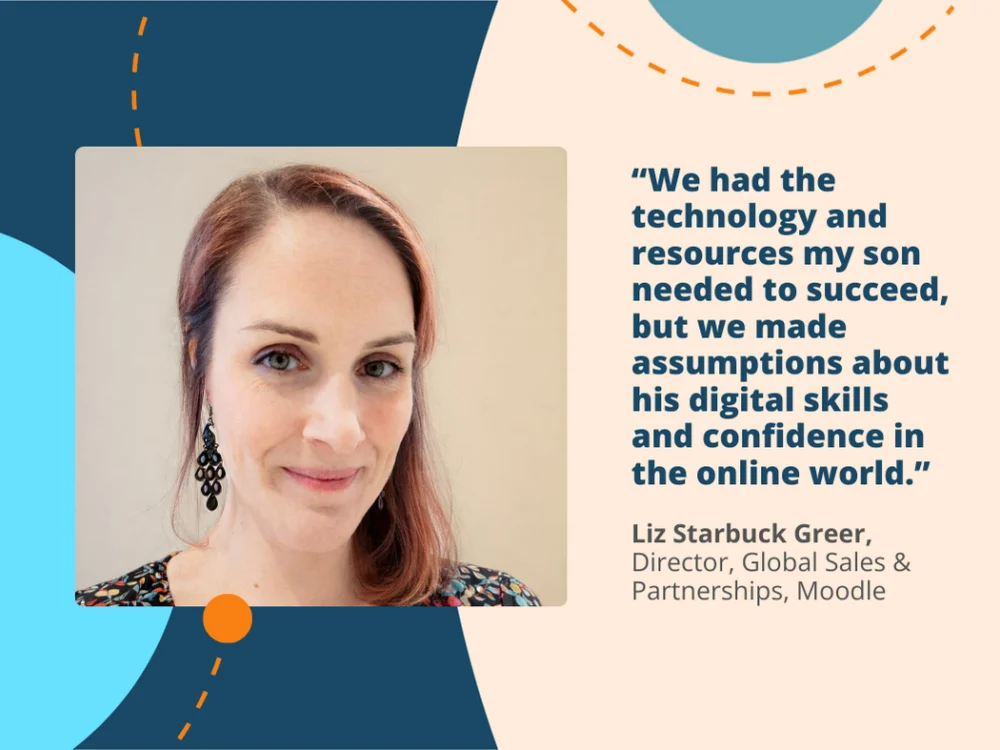
The shift to online learning, accelerated by global events, has exposed a critical gap in how we perceive and support learners in the digital realm. Liz Starbuck Greer, a prominent figure in educational technology and a presenter at MoodleMoot Global 2025, shared a deeply personal account that underscores the vital difference between digital confidence and digital competence, a distinction she argues is fundamental to understanding and addressing disparities in learner outcomes through the lens of "digital capital." Her insights, drawn from her experiences and echoed in a recent Moodle podcast, highlight the need for educators and institutions to move beyond assumptions about digital proficiency and design learning environments that cater to the diverse digital realities of their students.
The Genesis of Digital Capital: Beyond Access
Greer’s concept of digital capital, which she has explored in depth, moves beyond the simplistic notion of the "digital divide." She defines it as "the combination of access, skills, experience, and social support that shapes how effectively a person can use digital tools and participate in online environments." This multifaceted approach recognizes that simply providing technology—a laptop, a reliable internet connection—is only the first step. True digital capital encompasses the nuanced understanding of how to leverage these tools for specific purposes, the experience gained through consistent and purposeful use, and the social networks that can provide support and guidance.
Her work posits that digital capital can significantly explain why learners, even within the same course, can have vastly different experiences and achieve disparate outcomes. This is particularly relevant in today’s educational landscape, where online and blended learning models are increasingly prevalent. Without a holistic understanding of the digital advantages or disadvantages learners bring, educational institutions risk inadvertently creating new barriers to success.
A Personal Crisis: When Technology Wasn’t Enough
The catalyst for Greer’s profound realization came during the unprecedented disruption of the COVID-19 pandemic. Her son, a young student navigating the transition to high school, found his academic journey abruptly altered by widespread school closures and the rapid pivot to emergency online learning in the United Kingdom. While Greer herself was immersed in managing academic operations at a business school, supporting stressed faculty and students, and overseeing the online transformation of an MBA program, her son began to disengage from his studies.
This situation, seemingly counterintuitive given the family’s apparent digital advantages, served as a stark illustration of the limitations of mere access and confidence. The Greer household boasted a robust internet connection, multiple devices, and a professional background that necessitated daily interaction with technology. Both parents had experience with online learning, and Greer herself had a track record of designing and building online courses. Furthermore, their children, having grown up overseas, were accustomed to using technology for social connections, and Greer’s son was an enthusiastic and skilled gamer. By many metrics, the family possessed high levels of digital capital.
However, this perception of digital strength masked a critical deficit. The first indication that something was amiss came not from the son himself, but from a concerned teacher who alerted the parents to his lagging academic performance and missed online classes. This revelation was met with disappointment, not only in their son’s apparent lack of engagement but also in their own failure to recognize the burgeoning problem. They realized, with a growing sense of unease, that their son, still too young to independently navigate the sudden removal of school routines and structures, was struggling to adapt.
The "Untitled Document" Revelation: Unmasking Digital Incompetence
The true extent of the issue became painfully clear during a subsequent conversation aimed at helping their son catch up. When asked to retrieve his schoolwork, he opened his cloud storage to reveal hundreds of files labeled "Untitled Document." This bewildering discovery led to a cascade of further revelations: the assignment itself was lost, potentially buried within a disorganized digital landscape. His mother’s subsequent questioning unearthed a startling lack of fundamental digital literacy skills required for academic pursuits.

Her son admitted that he didn’t know how to properly name a document or create a functional folder structure. His typing speed was slow and rudimentary. He was unsure where to locate his assignments, and crucially, he lacked the knowledge to formulate and send an email to ask for clarification when he was confused. The inconsistency in how different teachers communicated assignments and expected submissions—some via email, others through chat, and still others through a learning management system—further compounded his confusion. He had no clear understanding of what was expected of him or when.
Greer’s account highlights a crucial miscalculation: the assumption that technological proficiency in a social context automatically translates to competence in an academic one. Her son’s gaming prowess, while demonstrating confidence and skill in a specific digital environment, did not equip him with the organizational and communicative skills necessary for online learning. The intricacies of managing academic files, adhering to submission protocols, and effectively communicating with instructors were as foreign to him as the strategic complexities of Fortnite were to his mother.
The article points out that the school, while attempting to adapt to challenging circumstances, had inadvertently created a labyrinth of inconsistent processes and expectations. Each unaddressed ambiguity, each poorly communicated instruction, further eroded the son’s motivation and likelihood of success. This situation, Greer notes, likely mirrored the experiences of her own business school students, who might have harbored similar frustrations with the faculty’s digital preparedness. Ultimately, her son felt lost and abandoned, leading him to simply give up.
Designing for the Digital Reality: A Call to Action
Reflecting on this experience, Greer emphasizes the critical need to reconsider our assumptions about learners’ digital capabilities. "We had the technology and resources my son needed to succeed," she stated, "but we made assumptions about his digital skills and confidence in the online world. Strength in one digital arena doesn’t promise success in another." This realization forms the bedrock of her advocacy for a more nuanced approach to designing online learning experiences.
The challenge she describes, though amplified by the pandemic, remains a pertinent issue in contemporary education. It is easy for educators to assume that online learners possess the inherent digital acumen required to thrive. However, not all learners opt for online learning by choice, and their comfort with social media or gaming does not automatically translate to the skills needed for academic engagement in a digital environment. Until they are actively engaged in the learning process, they may not even be aware of what they don’t know.
Greer critiques the tendency for instructors to design courses with individual preferences in mind, which, while offering freedom, can inadvertently create unnecessary hurdles for learners. The inconsistent expectations, processes, and technological approaches adopted by her son’s teachers had a detrimental effect. For learners with lower levels of digital capital, clarity and consistency in course structure, navigation, and communication are not just helpful; they are essential for success.
Implications for Educational Institutions and Educators
The implications of Greer’s insights are far-reaching for educational institutions and individual educators alike.
- Rethinking Digital Literacy Training: The distinction between confidence and competence suggests a need for more targeted and practical digital literacy training for students. This training should go beyond basic software operation and focus on skills directly applicable to academic tasks, such as file management, effective online communication, and navigating learning management systems.
- Standardizing Online Learning Processes: Institutions may need to develop clearer guidelines and standards for online course design and delivery. This could include protocols for how assignments are presented, how feedback is provided, and how communication channels are utilized. Consistency across courses can significantly reduce cognitive load for students, particularly those with less digital capital.
- Proactive Learner Support: Educators should be encouraged to adopt a proactive approach to identifying and supporting students who may be struggling with digital aspects of their learning. Regular check-ins, clear signposting within course materials, and modeling desired digital behaviors can make a significant difference.
- Empathy and Assumption Checking: The core lesson for educators is to constantly question their assumptions about students’ digital skills. What seems intuitive to an experienced digital user might be entirely new to a novice. Cultivating empathy and a willingness to explain the "obvious" is paramount.
Greer concludes with a hopeful note, emphasizing that her son ultimately navigated the challenges and moved on to greater achievements. Her experience serves as a powerful reminder to educators designing online learning environments: consider the digital realities of your learners. She also points to the inherent strength of the Moodle community—a network of supportive colleagues ready to share knowledge and assist—as a valuable resource in this ongoing endeavor. The journey toward truly inclusive and effective online learning requires a commitment to understanding and addressing the multifaceted nature of digital capital, ensuring that no learner is left behind. The call to action is clear: download resources like "Bridging the hidden learning gap" to begin building learning environments where every student can truly succeed.