



A recent report from the House of Commons Standing Committee on Citizenship and Immigration has issued a stern call for the Canadian government to implement robust measures against fraud within the international student program. The committee’s recommendations, detailed in a comprehensive report released yesterday, urge a decisive crackdown on fraudulent activities by international students and the establishment of clear penalties for universities and colleges found to be issuing misleading documents. This directive comes amidst growing concerns about the integrity of the immigration department’s oversight and its handling of the study permit cap, which was introduced in January 2024.
The committee’s findings paint a critical picture of Immigration, Refugees and Citizenship Canada (IRCC), highlighting significant failures in consultation with provinces and territories, and a bungled implementation of the study permit cap. Canada has historically been a prime destination for international scholars, hosting approximately one million international students in 2023. Prior to the introduction of the cap, the international education sector was a substantial contributor to the Canadian economy, injecting an estimated $38.6 billion into the country’s Gross Domestic Product (GDP).
Background to the Study Permit Cap
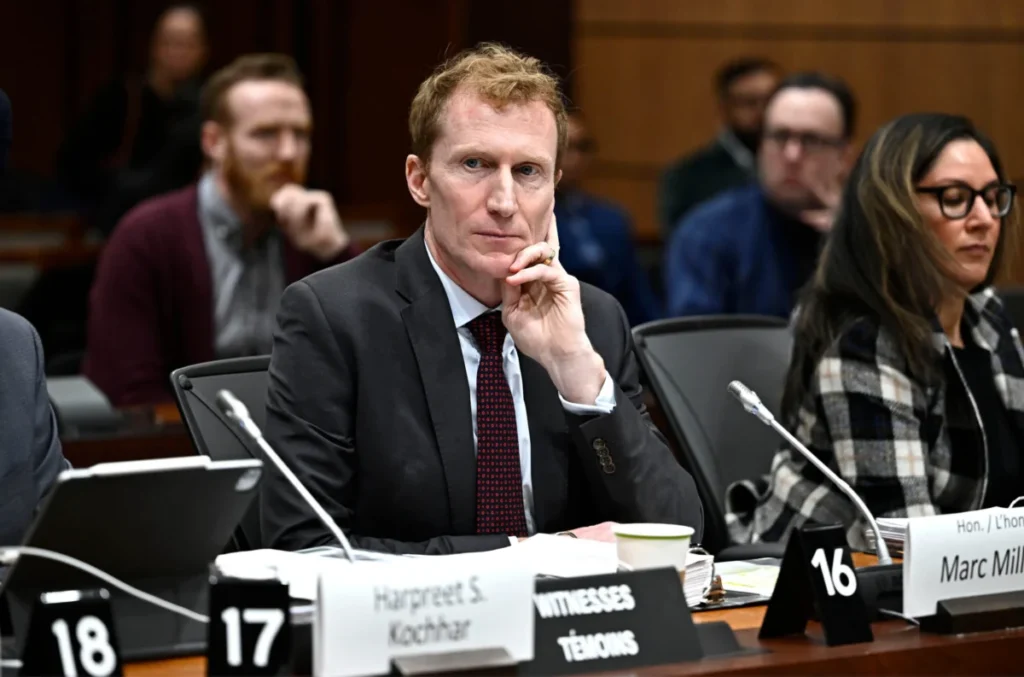
The decision to implement a cap on study permits was made in early 2024 by then-Immigration, Refugees and Citizenship Canada Minister Marc Miller. This move was a direct response to mounting evidence of fraud and systemic abuse within the international student system. Minister Miller famously described the situation at some educational institutions as akin to "puppy mills," suggesting a lack of genuine academic purpose and a focus on profit over education. This abrupt policy shift followed a period of rapid growth in international student numbers, raising questions about the sustainability of the system and its impact on Canadian infrastructure and services.
The committee’s report now echoes and expands upon criticisms leveled by Auditor General Karen Hogan in her investigation last month. Hogan’s report similarly faulted IRCC for its implementation of the study permit cap and its insufficient efforts to investigate potential fraud within the program. The confluence of these reports underscores a deepening parliamentary and governmental concern over the management and integrity of Canada’s international education pipeline.
Committee Urges Enhanced Fraud Investigations and Audits
A central recommendation from the House of Commons committee is a directive for IRCC to thoroughly investigate every alleged case of international study permit fraud. The report specifically calls for a detailed examination of 153,324 individuals who received study permits but may not have been actively attending classes. This suggests a significant number of permits may have been obtained under false pretenses.
However, the department’s current capacity to address these concerns appears to be severely limited. The Auditor General’s report revealed that IRCC possessed the resources to investigate only one percent of the identified potential problems. Furthermore, it was noted that inquiries were frequently dropped if a student failed to respond to requests for additional information, indicating a lack of diligent follow-up and enforcement.
In light of these shortcomings, the Commons committee is pushing for a stringent policy: any individual found to have entered Canada on a fraudulent basis should be denied study permit extensions. This recommendation aims to prevent individuals who have exploited the system from continuing to do so, thereby reinforcing the integrity of the program.
Random Audits and Penalties for Designated Learning Institutions (DLIs)
Beyond addressing individual cases of fraud, the committee has also called for a proactive approach to oversight. The report strongly urges the federal government to implement random audits of the approximately 1,500 Designated Learning Institutions (DLIs) across Canada – a category that includes universities, colleges, and other educational establishments. The purpose of these audits would be to verify that enrolled students are indeed attending classes and that all documentation is in order.
Crucially, the committee advocates for clearly defined penalties for DLIs that fail to adhere to these regulations. This is intended to create a stronger incentive for institutions to maintain compliance and to deter them from facilitating fraudulent activities.
The Auditor General’s report had previously highlighted that while the majority of DLIs diligently submitted required enrollment reports, approximately 50 institutions failed to do so. These non-compliant institutions collectively hosted around 10,000 international students, raising questions about the accountability of these specific DLIs and the potential for undeclared student activity.
Jurisdictional Challenges and Federal Responsibility
The International Student Program operates within a complex jurisdictional framework. The federal government is responsible for issuing study permits, while provinces and territories hold authority over the regulation of educational institutions. However, the committee’s report acknowledges that during the years leading up to the permit cap, a significant number of schools, particularly colleges in Ontario, aggressively recruited international students. This strategy was often driven by a desire to address budget shortfalls, with international student tuition fees forming a substantial revenue stream.
The committee’s commentary on this matter is pointed: "Although education and the regulation of learning institutions fall under provincial and territorial jurisdiction, the federal government was responsible for issuing an unsustainable number of study permits and allowing the system to be abused." This statement places a significant portion of the blame on federal policy decisions that allowed the system to become susceptible to abuse.
The Study Permit Cap: An Overcorrection?
The implementation of the 2024 study permit cap by Minister Miller was justified by arguments that the burgeoning number of international students was placing undue strain on Canadian housing and healthcare services. However, the policy’s execution has been met with considerable criticism for its abruptness and its unintended consequences.
The imposition of the cap led to a sharp decline in confidence among prospective international students, resulting in a much greater reduction in study permit applications and approvals than the government had initially anticipated. This overcorrection has had a cascading effect on the educational sector.
According to Ms. Hogan’s findings, a significant number of student spaces went unfilled in 2024. The department approved fewer than half of the projected number of new study permits for that year. This trend continued into 2025, with only slightly over 50,000 of the expected 255,000 permits authorized by December.
Impact on Canada’s Educational Reputation and Competitiveness
The rhetoric surrounding the study permit cap has also raised concerns about its impact on Canada’s international reputation as an educational destination. Larissa Bezo, president of the Canadian Bureau for International Education (CBIE), testified before the committee, expressing apprehension that labeling DLIs as "puppy mills" could irrevocably damage the perceived quality of Canada’s educational system.
Following the committee’s report, Ms. Bezo articulated her concerns to University Affairs: "Annual caps were followed by plummeting approval rates, drastically increased processing times and increased applicant requirements. We may have successfully addressed a numbers issue, but Canada is no longer competitive in attracting global talent."
The financial repercussions for educational institutions have been severe. Ms. Bezo indicated that the cap has come at a considerable cost, forcing schools to implement cuts in response to the loss of international student tuition revenue. These cuts have manifested as 35 site closures, the suspension of 863 programs, and an estimated 10,000 job losses.
David Robinson, executive director of the Canadian Association of University Teachers (CAUT), echoed these sentiments, lamenting the broad impact on Canadians employed in the post-secondary sector. "Across the country, we’re seeing the most significant round of hiring freezes, program cuts and job losses in a generation," Mr. Robinson stated. He attributed these widespread issues to a combination of federal government missteps, inadequate provincial and territorial funding for post-secondary education, and institutional operational challenges. "Now that the international student revenue stream has been turned off, it’s the people who work in universities who are paying the price," he added.
The damage to Canada’s global standing has also been felt keenly in specific regions. Christian Blanchette, rector of Université du Québec à Trois Rivières, informed the committee that his institution has only been able to recruit one-third of the students permitted under the cap since 2024. He reported similar challenges faced by other Quebec universities, concluding that the situation has resulted in "tragedy for many of the country’s universities."
The House committee’s final assessment of the policy changes reinforces this point: "After two years of caps, the 2024 policy changes seem to have reduced new study permit applications and enrolments much more than IRCC planned – and much more than provinces, territories and Designated Learning Institutions expected."
Concerns Over Asylum Claims and Dissenting Opinions
The committee also expressed concern about a subset of international students who, upon arrival in Canada, have sought asylum. The report calls for an investigation into 110 asylum seekers who allegedly entered Canada using fraudulent documents to obtain study permits.
In response to these concerns, the MPs proposed that the government establish country-specific limits on the number of international students admitted from nations with the highest rates of asylum claims. The report identifies India, the Republic of Guinea, and Nigeria as countries from which a significant number of asylum claims have originated.
A dissenting opinion was filed by Conservative MPs, led by Michelle Rempel Garner. They sharply criticized the Liberal government, asserting that its policies have eroded Canadian public support for immigration. The Conservatives characterized the International Student Program’s current state as "a headstone on the grave of Canada’s immigration consensus," warning that such mistakes should not be repeated. They further accused the government of acting out of "naked self-interest, with a maximum of willful blindness and the knowledge that their actions were morally wrong to Canadians and the students coming from abroad."
In contrast, Liberal MPs on the committee issued a statement emphasizing the importance of not blaming international students for broader societal issues. Their comment noted, "It is vitally important that international students are not blamed for the housing shortage and strains on other services."
A Call for a New Approach
As the educational sector grapples with the fallout from the policy changes, Ms. Bezo is advocating for a fundamental reevaluation of Canada’s international student strategy. She reiterated her perspective to University Affairs: "The changes represent a serious over-correction that risks further eroding Canada’s international reputation. Without action, there will be continued damage inflicted on our educational institutions, labour markets, economic prospects and competitiveness. Canada’s future prosperity and growth hinges on those who choose to study in Canada and ultimately make this country home." The ongoing debate surrounding the international student program highlights the complex balance between national interests, economic benefits, and the integrity of immigration policies.