



The Jevons Paradox, a 19th-century economic theory articulating the counterintuitive observation that increasing the efficiency with which a resource is used can lead to an overall increase in its consumption, has experienced a notable resurgence in contemporary discourse, particularly in discussions surrounding the transformative potential of artificial intelligence (AI). While initially applied to material resources like coal, its principles are now being re-examined through the lens of labor markets and information ecosystems, revealing both potential benefits and a less-discussed spectrum of unforeseen negative consequences. This renewed focus underscores a critical need for vigilance as technological advancements continue to redefine productivity and resource utilization across industries.
The Historical Genesis of the Paradox: Jevons and "The Coal Question"
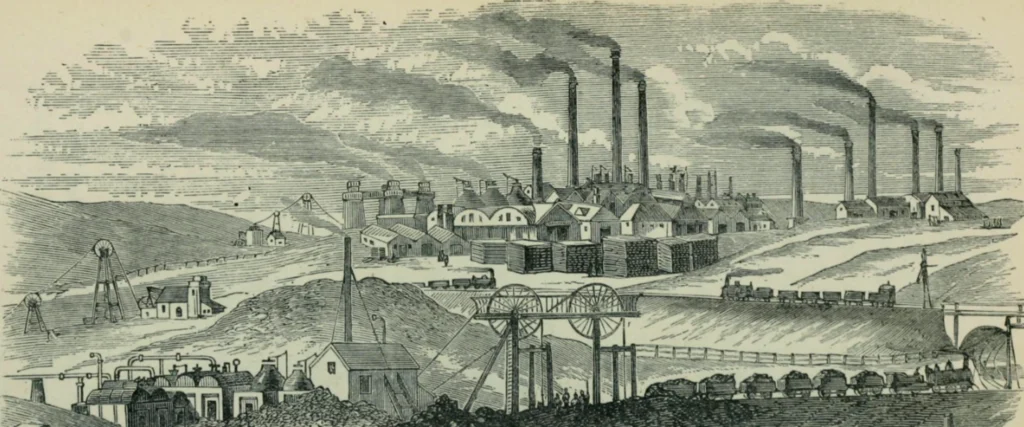
The concept was first rigorously articulated by William Stanley Jevons, a prominent English neoclassical economist and logician, in his seminal 1865 work, "The Coal Question: An Inquiry Concerning the Progress of the Nation, and the Probable Exhaustion of Our Coal-Mines." Jevons wrote during a pivotal era in British history—the height of the Industrial Revolution—when coal was the lifeblood of the nation’s burgeoning industrial might. Steam engines, powered by coal, were revolutionizing manufacturing, transportation, and mining, yet concerns about the finite nature of Britain’s coal reserves loomed large.
Conventional wisdom suggested that technological improvements in steam engine efficiency—meaning less coal was needed to generate the same amount of power—would naturally lead to a reduction in overall coal consumption, thereby conserving resources. Jevons, however, posited the opposite. He argued that as steam engines became more efficient, the cost of steam power would effectively decrease. This reduction in cost would, in turn, make steam power economically viable for a wider array of applications and industries, stimulating greater demand and ultimately leading to an increase in total coal consumption.
History largely validated Jevons’s prediction. Despite significant advancements in engine efficiency throughout the latter half of the 19th century and into the 20th, global coal consumption continued to rise dramatically. For instance, in the United Kingdom, coal production soared from approximately 64 million tons in 1855 to over 220 million tons by 1900. While new mining techniques and discoveries of additional reserves averted the immediate exhaustion Jevons feared, the overall trajectory of consumption aligned with his paradox. This massive increase in coal burning had profound, albeit then dimly understood, environmental ramifications, laying the groundwork for the widespread industrial pollution that characterized the era and contributing significantly to the early stages of human-driven climate change. The soot-stained cities and pervasive smog became indelible symbols of this era of unchecked industrial growth.
AI and the Modern Interpretation: Efficiency in the Labor Market
The Jevons Paradox is experiencing a contemporary revival largely due to its perceived relevance to the rapidly evolving landscape of artificial intelligence. Many observers initially reacted to AI’s advancements with trepidation, fearing a significant contraction of the labor market. The common apprehension was that if AI could enable a single programmer, for example, to accomplish the work previously requiring five, then companies would drastically reduce their workforce, leading to mass unemployment. This perspective envisions AI primarily as a substitute for human labor, leading to displacement.
However, the Jevons Paradox offers an alternative, potentially more optimistic, interpretation. If AI significantly enhances worker efficiency, it effectively lowers the cost of producing certain goods and services. This reduction in cost could stimulate an exponential increase in demand for those services, potentially leading to a net increase in employment or the creation of entirely new categories of work.
Consider the example of software development. If AI tools make coding faster and more accessible, the effective cost of creating software decreases. This could empower a broader spectrum of individuals and organizations—from small businesses to non-profits and even individual creators—to develop custom applications and digital tools that were previously prohibitively expensive or complex. This surge in demand could, theoretically, lead to a greater need for human oversight, refinement, integration, and entirely new roles focused on leveraging AI-assisted workflows, rather than a mere reduction in the number of programmers.
Leading economists and technology analysts have begun to explore this dynamic. A 2023 report by Goldman Sachs, for instance, estimated that generative AI could expose the equivalent of 300 million full-time jobs to automation, but also noted that a significant portion of these roles would be augmented rather than entirely replaced, potentially leading to new job creation and productivity booms that could boost global GDP by 7% over a decade. Similarly, research by institutions like the World Economic Forum, while acknowledging potential job displacement in specific sectors, often highlights the creation of new roles and the augmentation of existing ones as a more likely overall outcome, with a focus on reskilling and adaptability. The core argument here is that making output cheaper and more accessible unlocks latent demand, much like more efficient steam engines made power accessible to new industries.
The Dark Side Revisited: Unforeseen Consequences Beyond Consumption
While the prospect of AI stimulating demand and creating new jobs is a compelling counter-narrative to mass unemployment, the Jevons Paradox carries a "dark side" that warrants equally serious consideration. This refers not just to the quantitative increase in resource consumption but to the qualitative, often negative, side effects that arise from this increased demand and efficiency. These unintended consequences can manifest in environmental degradation, social disruption, and cognitive overload.
Environmental Repercussions: The Legacy of Industrial Efficiency
The most direct historical example of the Jevons Paradox’s dark side is the environmental cost of the Industrial Revolution. While more efficient steam engines made energy cheaper and more abundant, leading to unprecedented economic growth, the sheer volume of coal burned resulted in widespread air pollution, acid rain, and the first significant anthropogenic contribution to greenhouse gas emissions. The efficiency gains in individual engines were dwarfed by the exponential increase in the number of engines and their applications, demonstrating a classic "rebound effect" where efficiency improvements are offset by behavioral or systemic changes leading to increased consumption. This historical precedent serves as a stark warning: technological progress, while economically beneficial, can have profound and lasting ecological impacts if not managed with foresight.
The Digital Age: Communication Overload and Cognitive Strain
A more contemporary illustration of the Jevons Paradox’s dark side emerges from the realm of knowledge work and digital communication. The advent of tools like email, instant messaging platforms (e.g., Slack, Microsoft Teams), and video conferencing revolutionized communication efficiency. These technologies made it virtually costless (in terms of time and direct expense) to send a message, share information, or initiate a conversation across geographical and temporal barriers.
The predicted outcome, according to the paradox, was an explosion in communication volume. This is precisely what transpired. The ease and speed of digital communication led to an "always-on" culture, where the demand for fast interaction skyrocketed. Data from sources like Microsoft’s Work Trend Index indicate that the average knowledge worker is now interrupted, on average, once every two minutes. This relentless barrage of notifications, messages, and meeting requests fragments attention, reduces opportunities for deep work, and contributes to widespread cognitive overload, stress, and burnout. While individual messages are sent with greater efficiency, the aggregate volume has created a new form of "digital pollution" that paradoxically reduces overall productivity and employee well-being, despite the efficiency of the tools themselves. This phenomenon has been extensively documented in works like "A World Without Email," which argues for a fundamental rethinking of digital communication strategies.
Potential AI-Driven Dark Sides: Future Implications
Extending this analysis to AI, several potential "dark sides" warrant proactive consideration:
-
Energy Consumption and Environmental Footprint: While individual AI algorithms may become more efficient, the sheer scale of AI deployment could lead to a massive increase in global energy demand. Training large language models, for instance, requires immense computational power, consuming vast amounts of electricity. If AI becomes deeply integrated into every facet of society, from smart cities to personalized services, the collective energy footprint of data centers and AI infrastructure could escalate dramatically, potentially exacerbating climate change despite advancements in renewable energy sources. Recent estimates suggest that AI’s energy consumption could rival that of small countries in the coming years, presenting a significant sustainability challenge.
-
Information Overload and "Digital Pollution" at Scale: If AI makes content generation incredibly cheap and fast—producing text, images, video, and audio on demand—humanity could face an unprecedented deluge of information. While AI can help filter and summarize, the sheer volume of AI-generated content (both benign and malicious) could overwhelm human cognitive capacity, making it harder to discern truth, fostering echo chambers, and contributing to a pervasive sense of information fatigue. This "cognitive pollution" could erode trust in information sources and complicate public discourse.
-
Amplified Societal Risks: Increased efficiency in areas like surveillance, data analysis, or autonomous decision-making, if misdirected or unchecked, could amplify existing societal problems. For instance, highly efficient AI-powered propaganda tools could enable more pervasive and personalized disinformation campaigns. Similarly, the widespread deployment of efficient AI systems in critical infrastructure or autonomous weapons, without robust ethical safeguards, could introduce new vectors for systemic risks. The efficiency of these tools means that their negative applications could scale with unprecedented speed and impact.
-
Resource Scarcity for Hardware: The demand for advanced AI hardware (GPUs, specialized chips) relies on specific rare earth minerals and complex supply chains. If AI adoption continues its exponential growth, the increased demand for these materials could lead to intensified mining operations, geopolitical tensions over resource access, and additional environmental damage associated with extraction and processing.
Navigating the Paradox: Responses and Mitigations
Addressing the dark side of the Jevons Paradox requires a multi-faceted approach involving economists, policymakers, industry leaders, and the public.
Economists’ Perspectives: Many economists advocate for policy interventions to internalize the external costs associated with increased consumption. For instance, carbon pricing (taxes or cap-and-trade systems) can help mitigate the environmental impact of energy consumption by making polluters pay for the damage they cause, thereby incentivizing more sustainable practices. Similarly, economic models are being developed to quantify the "attention economy" and the costs of cognitive overload, potentially leading to new frameworks for valuing focused work and digital well-being.
Industry and Tech Leaders: The technology sector faces increasing pressure to prioritize "responsible AI" development. This includes investing in energy-efficient AI architectures, developing AI systems that help manage information overload rather than exacerbate it, and integrating ethical considerations into the design and deployment of AI. Many leading tech companies have established ethical AI review boards and are committing to sustainability goals for their data centers, though the scale of the challenge remains immense.
Policy Makers and Regulators: Governments worldwide are grappling with the need for robust AI regulation. This includes frameworks to ensure transparency, accountability, and fairness in AI systems, as well as policies to manage labor market transitions (e.g., retraining programs, social safety nets). Furthermore, environmental regulations will need to evolve to address the energy and resource demands of the digital economy, potentially through incentives for green computing and circular economy principles.
Labor Organizations and Civil Society: These groups play a crucial role in advocating for worker protections, ensuring that the benefits of AI are broadly shared, and raising awareness about the societal risks of unchecked technological progress. Calls for robust public education on AI literacy, digital hygiene, and critical thinking skills are also gaining traction to help individuals navigate the potential information deluge.
Conclusion: Vigilance in an Age of Efficiency
The Jevons Paradox serves as a powerful reminder that technological efficiency, while often hailed as an unmitigated good, carries inherent complexities and potential downsides. From the coal-fired engines of the Industrial Revolution to the digital communication tools of the modern knowledge economy and the burgeoning power of artificial intelligence, history consistently demonstrates that making a resource or service cheaper and more accessible often leads to greater overall consumption, with consequences that extend far beyond initial predictions.
As humanity stands on the cusp of an AI-driven transformation, it is tempting to focus solely on the potential for productivity gains and economic growth. However, a responsible and sustainable future demands an acute awareness of the paradox’s "dark side." This necessitates not just technological innovation, but also proactive policy-making, ethical foresight, and a collective commitment to managing the unintended environmental, social, and cognitive impacts. Learning from the complicated tales told by economic history, we must remain vigilant, critically assessing how efficiency might shape our world, and actively striving to harness its power for genuine progress without inadvertently creating new, unforeseen challenges. The goal is not to halt progress, but to guide it wisely, ensuring that our pursuit of efficiency aligns with broader goals of sustainability, equity, and human well-being.