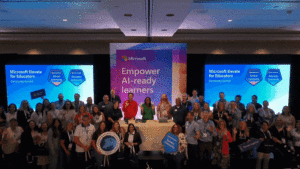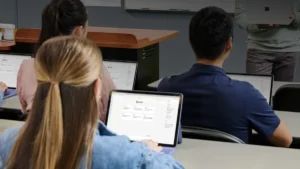



Microsoft has officially unveiled Microsoft Elevate for Educators, a comprehensive strategic initiative designed to integrate advanced artificial intelligence tools, professional development resources, and peer-to-peer community networking into the global education ecosystem. The announcement, timed alongside the lead-up to the Bett UK 2026 conference, represents a significant expansion of the company’s decade-long commitment to digital transformation in schools. By combining secure, education-specific generative AI with hardware-optimized software, Microsoft aims to address the growing administrative burden on teachers while providing students with personalized learning companions tailored to the demands of the modern workforce.
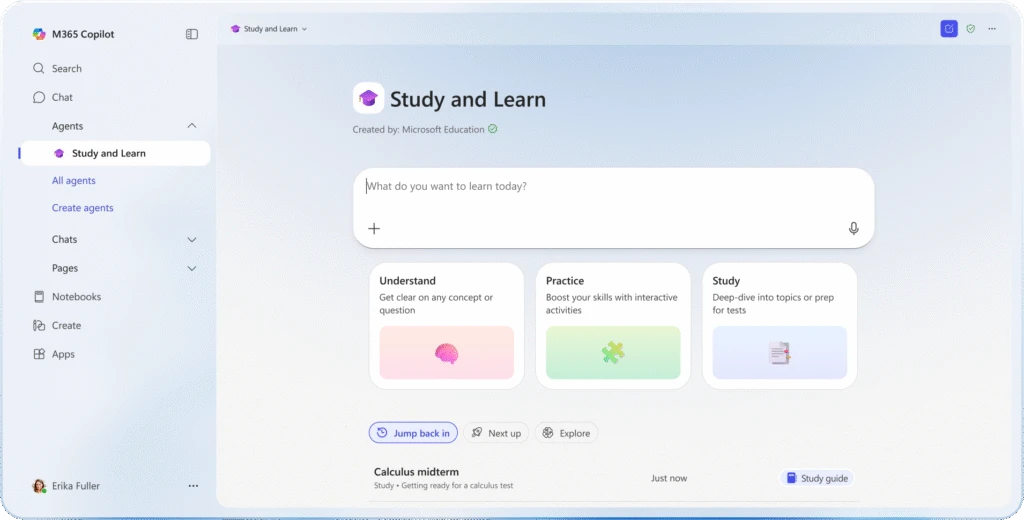
The program is a central pillar of the broader "Microsoft Elevate" commitment, a global corporate social responsibility and development goal to provide 20 million people with in-demand AI skilling credentials within the next two years. For the education sector, this translates into a multi-layered approach that includes the "Teach" assistant within the Microsoft 365 Copilot app, the "Microsoft Learning Zone" for interactive classroom engagement, and a "Study and Learn Agent" designed to foster student independence. Furthermore, Microsoft is extending high-value software tiers to higher education students to bridge the gap between academic achievement and professional employment.
The Evolution of AI in the Classroom: A Chronological Context
Microsoft’s involvement in education spans over 50 years, moving from basic operating system licensing to cloud-based collaboration through Microsoft Teams and the M365 suite. The current shift toward AI-integrated pedagogy began in earnest in early 2023 with the initial rollout of Copilot. By late 2024, pilot programs in major school districts—including Broward County in the United States and Brisbane Catholic Education in Australia—began testing the efficacy of generative AI in lesson planning and student feedback.
The January 2026 launch of Elevate for Educators marks the culmination of these pilot phases. This chronology reflects a move away from general-purpose AI toward "purpose-built" tools. While initial AI applications were criticized for being too broad, the new suite of tools introduced this year focuses on specific pedagogical needs, such as rubric creation, reading level adaptation, and standards-aligned curriculum development.
Empowering Instruction with the Teach AI Assistant
At the heart of the new offerings for K-12 educators is "Teach," an AI-powered assistant integrated directly into the Microsoft 365 Copilot app. Designed to mitigate the "burnout" crisis affecting global teaching populations, Teach automates the more mechanical aspects of instructional design.

The assistant allows educators to generate comprehensive lesson plans that are automatically aligned with local and national educational standards. One of the most significant features is its ability to adapt existing materials to different reading levels with a single prompt. This ensures that a single lesson plan can serve a neurodiverse classroom, supporting both high-achieving students and those requiring additional literacy support. Beyond lesson plans, Teach facilitates the creation of quizzes and rubrics, reducing the time teachers spend on administrative grading and allowing more focus on direct student interaction and mentorship.
Hardware-Software Synergy: Microsoft Learning Zone and Copilot+ PCs
To maximize the potential of localized AI, Microsoft has introduced the Microsoft Learning Zone app, specifically optimized for Copilot+ PCs. These devices, equipped with dedicated Neural Processing Units (NPUs), allow for on-device AI processing, which enhances data privacy and reduces latency in the classroom environment.
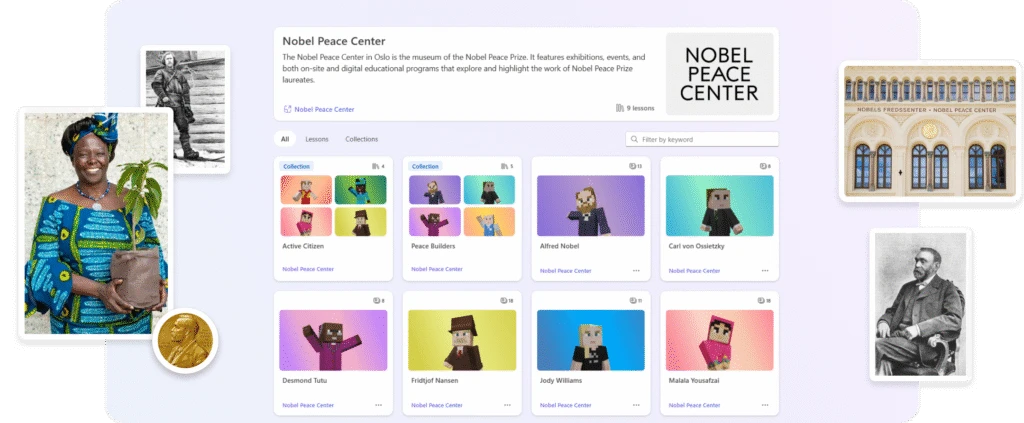
The Microsoft Learning Zone has notably received the ISTE (International Society for Technology in Education) Seal of Alignment. This certification confirms that the app meets rigorous standards for learning design and usability based on research-backed teaching practices. The app features content from a prestigious roster of partners, including:
- NASA: Providing real-world aerospace and earth science data.
- The Nobel Peace Center: Offering lessons on human rights and global citizenship through the stories of laureates like Malala Yousafzai.
- Minecraft Education: Using gamified environments to teach coding and problem-solving.
- OpenStax and PBS NewsHour: Delivering high-quality open-source textbooks and current affairs analysis.
The app’s ability to provide immediate feedback and personalized coaching to students—processed locally on the device—represents a shift in how educational software handles student data, prioritizing security without sacrificing interactive depth.
Supporting the Student Journey: From Literacy to Career Readiness
Recognizing that students are already utilizing AI for various academic tasks, Microsoft is introducing the "Study and Learn Agent" for learners aged 13 and older. Built on established learning science principles, this agent is not a "shortcut" for homework but a Socratic tutor. It utilizes adaptive exercises, flashcards, and guided study sessions to help students master complex concepts. The goal is to move students from passive consumption of information to active critical and reflective thinking.
In the higher education sector, Microsoft is addressing the "skills gap" by offering eligible students 12 months of free access to Microsoft 365 Premium and LinkedIn Premium Career. This dual-subscription offer is designed to assist students in their final years of study, helping them organize research and presentations while simultaneously providing the networking and job-application tools necessary for a successful transition into the workforce. This initiative recognizes that career readiness in 2026 requires both technical proficiency in AI tools and a robust professional digital presence.
Data-Driven Strategy: The IDC White Paper Findings
To support school leaders in their transition to AI-ready environments, Microsoft sponsored a comprehensive IDC White Paper titled "A Blueprint for AI-Ready Schools: Strategies from the Front Lines of K-12 Education." The report analyzes the successes and hurdles faced by early adopters in Canada, Australia, and the U.S.
The data suggests that schools with a clear AI strategy see a 30% increase in administrative efficiency within the first year of implementation. However, the report also highlights that "readiness" is not merely about purchasing hardware. It requires a three-pronged approach:
- Strategic Governance: Establishing clear policies on the ethical use of AI and data privacy.
- Professional Capacity: Investing in educator training so that teachers feel confident in supervising AI-generated content.
- Technological Infrastructure: Ensuring that school networks and devices can handle the processing demands of modern AI applications.
Strengthening the Security Posture of Educational Institutions
As schools become more reliant on digital tools, they become more frequent targets for cyberattacks. In response, Microsoft has released the Microsoft Education Security Toolkit. This resource is designed for IT administrators and school board leaders to simplify the complex task of securing student data.
The toolkit provides practical guidance on compliance with international data protection regulations and offers real-world case studies on mitigating ransomware and phishing attacks. Complementing this is the Microsoft Education AI Toolkit, which focuses on the "Responsible AI" framework, ensuring that AI deployments are transparent, inclusive, and unbiased. These resources aim to build trust among parents and administrators who may be hesitant to adopt generative AI technologies due to privacy concerns.
Global Implementation and Institutional Reactions
Initial reactions from the global education community have been largely positive, though institutional leaders emphasize the need for ongoing support. Administrators from the Coquitlam School District in Canada noted that the integration of AI tools has allowed their staff to focus more on social-emotional learning, as the "busy work" of document formatting and standard-mapping is now handled by Copilot.
In higher education, faculty members participating in "AI Bootcamps" have expressed that ready-to-use courseware from Microsoft Learn for Educators has significantly lowered the barrier to entry for teaching AI concepts in non-technical majors, such as the humanities and social sciences. This democratization of AI knowledge is seen as vital for ensuring that the future workforce is not divided by a "digital divide" of AI literacy.
Broader Implications and Future Outlook
The launch of Microsoft Elevate for Educators signals a turning point where AI moves from a peripheral novelty to a core component of educational infrastructure. By providing these tools at no additional cost to existing Microsoft 365 Education customers, Microsoft is positioning itself as the primary architect of the AI-powered classroom.
The long-term implications suggest a fundamental shift in the role of the educator. As AI takes over more of the "instructional delivery" and "administrative tracking," the teacher’s role is likely to evolve into that of a high-level facilitator and mentor. This transition, while promising, will require sustained investment in professional development—a need that the Elevate program aims to meet through its peer networks and credentialing opportunities.
As the education sector converges on London for Bett UK 2026, the focus will likely remain on how these tools perform in diverse, real-world settings. Microsoft’s commitment to supporting 20 million people with AI skills by 2027 sets a high benchmark for the industry, suggesting that the "AI-era" of education is no longer a future prospect, but a present reality. Through the combination of the Teach assistant, the Learning Zone app, and comprehensive security frameworks, the initiative provides a holistic roadmap for schools worldwide to navigate the complexities of this technological shift.