



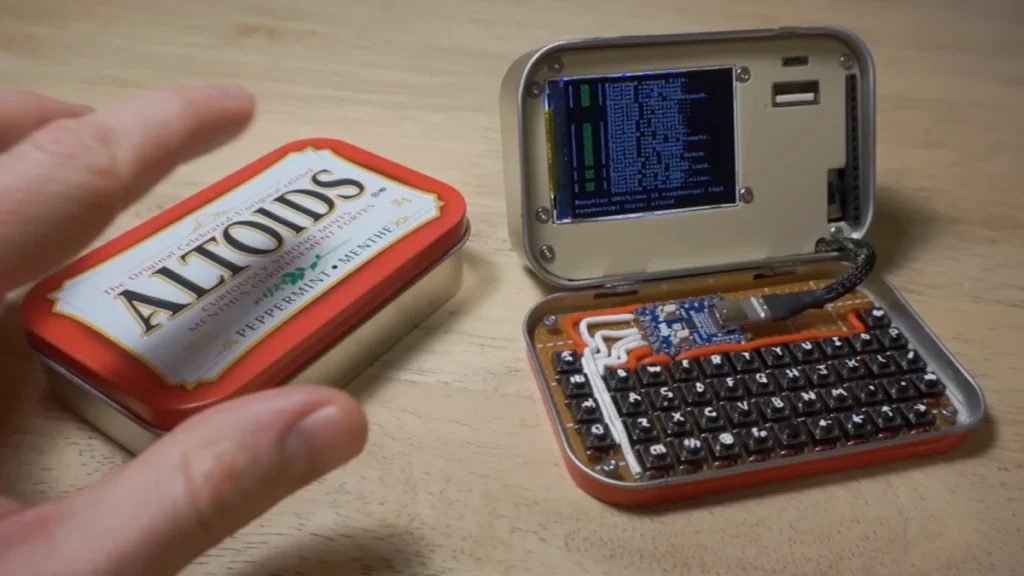
In a notable fusion of mid-century packaging and 21st-century micro-electronics, a hardware enthusiast known as Exercising Ingenuity has successfully engineered a fully functional, pocket-sized computer housed entirely within a standard Altoids peppermint tin. This project, which was detailed in a technical demonstration released in May 2024, represents a significant milestone in the "cyberdeck" community—a subculture of DIY makers who build custom, often ruggedized or aesthetically unique portable computers. While the repurposing of candy tins has been a staple of the maker movement for decades, the integration of a full Linux-based operating system, a custom-built mechanical keyboard, and an internal power supply within such a restricted volume demonstrates a high level of spatial engineering and electrical proficiency.
The Origins and Evolution of the Cyberdeck
To understand the significance of the "minty cyberdeck," one must first examine the cultural and technical origins of the term. The word "cyberdeck" was popularized by William Gibson in his seminal 1984 science fiction novel Neuromancer. In the book, a deck is a piece of hardware that allows hackers—referred to as "console cowboys"—to interface their brains directly with the global computer network known as the "Matrix." In the real world, the term has been adopted by hobbyists to describe portable computers that prioritize personality, modularity, and a "low-life, high-tech" aesthetic often associated with the cyberpunk genre.
Unlike mass-produced laptops, which strive for thinness and uniformity, cyberdecks are frequently bulky, feature mechanical keyboards, and utilize accessible microcontrollers like the Raspberry Pi. The project by Exercising Ingenuity departs from the traditional "rugged and oversized" cyberdeck aesthetic, instead focusing on extreme miniaturization. By utilizing the iconic Altoids tin—a container that measures approximately 3.8 by 2.4 by 0.8 inches—the creator has tapped into a long-standing tradition of "Altoids hacking" that dates back to the early 2000s.
Technical Specifications and Component Architecture
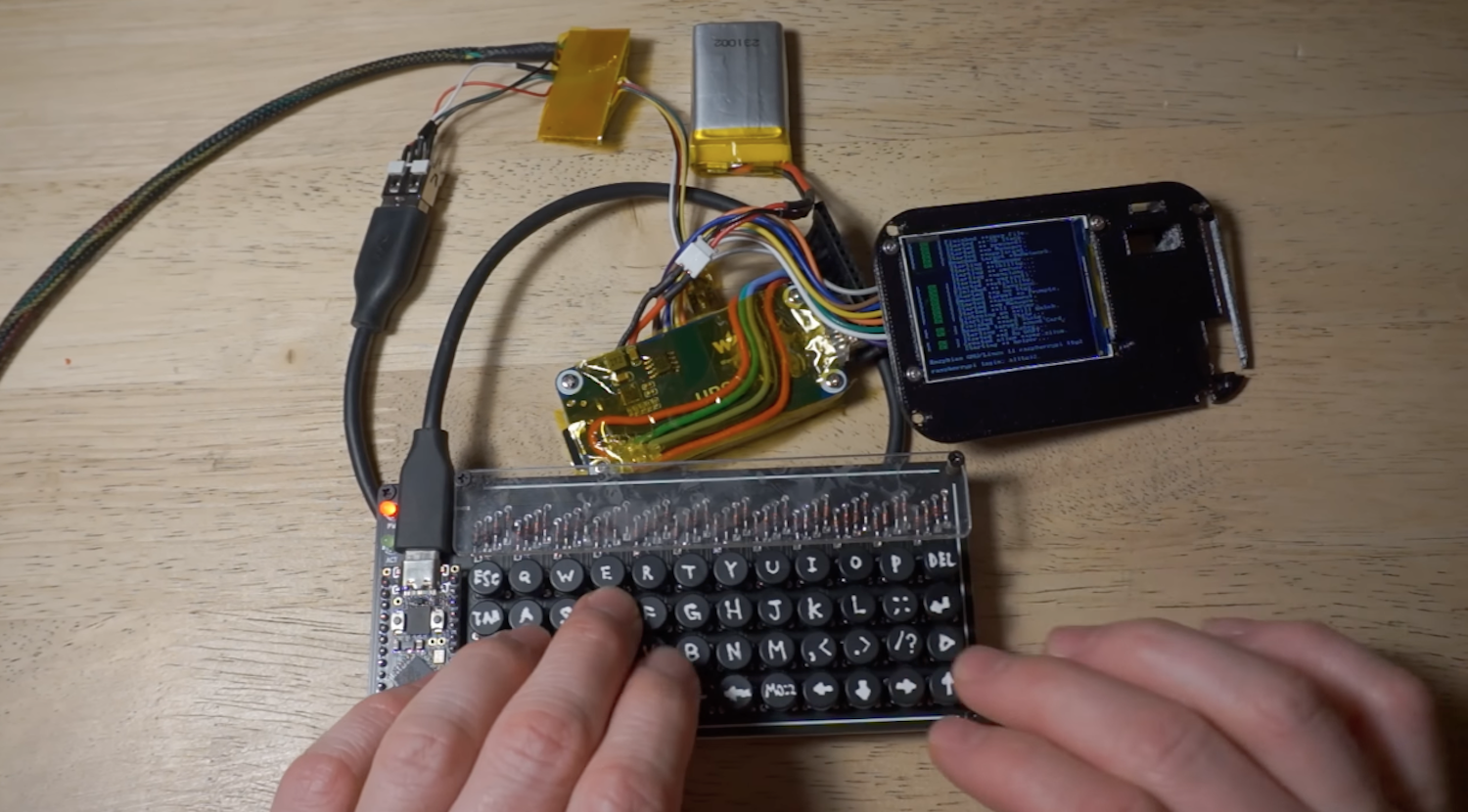
The core of the miniature computer is the Raspberry Pi Zero, a single-board computer (SBC) that has become the gold standard for compact DIY electronics. Despite its diminutive size, the Pi Zero features a Broadcom BCM2835 SoC, 512MB of RAM, and a mini-HDMI port, making it capable of running various distributions of the Linux operating system. To fit this board into the tin alongside other components, the creator had to perform significant modifications, including "de-pinning" headers and soldering connections directly to the board to save vertical space.
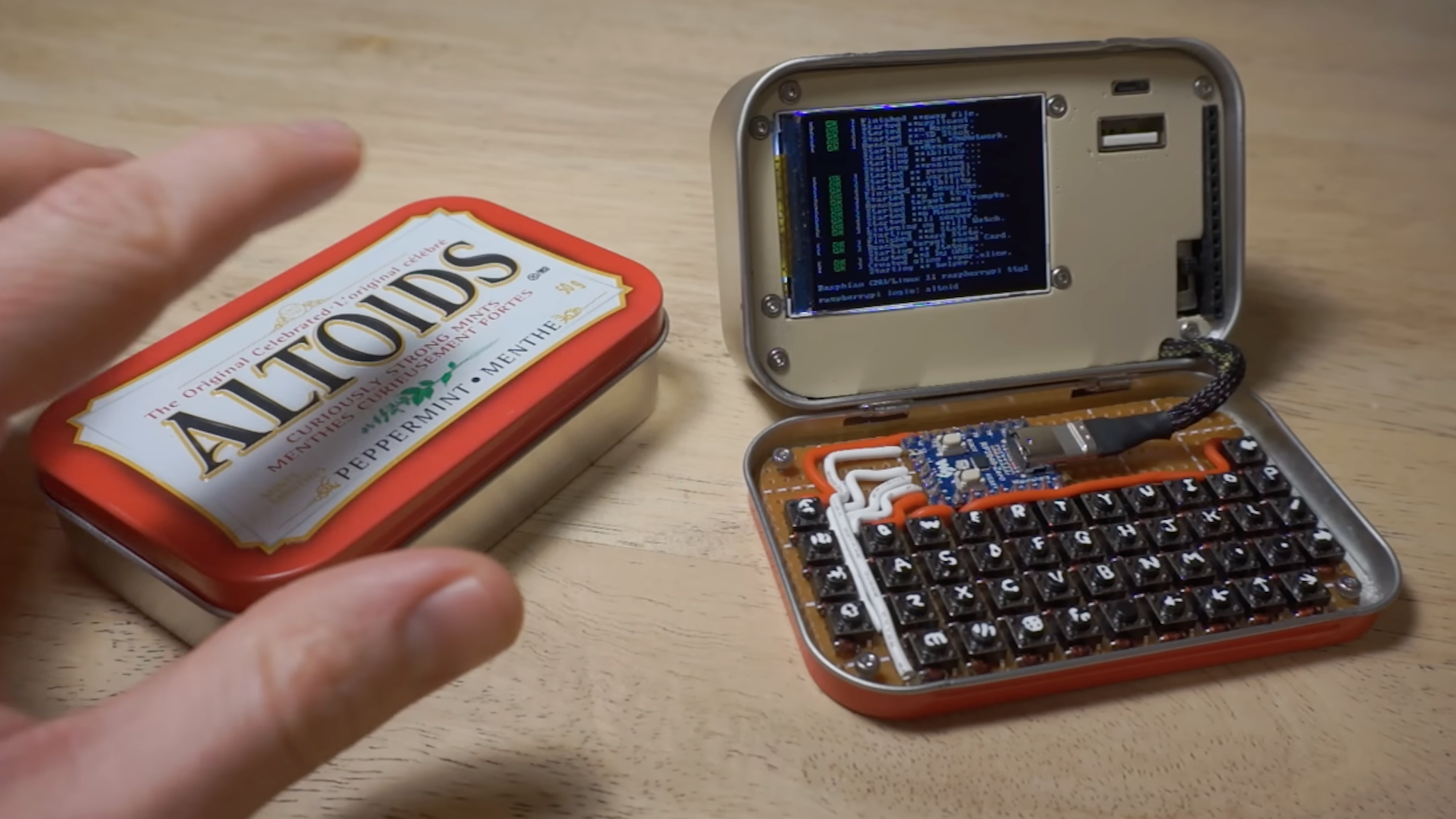
The display selected for the project is a two-inch LCD screen. While modern smartphones feature resolutions exceeding 400 pixels per inch (PPI), a screen of this size typically operates at a resolution of 320×240 pixels. This resolution is sufficient for terminal-based operations and basic graphical user interfaces, though it poses challenges for standard web browsing or complex productivity tasks. The screen was mounted to the lid of the tin, requiring a delicate wiring harness to navigate the hinge mechanism without fraying over time.
Powering the device is a Uninterruptible Power Supply (UPS) board paired with a slim lithium-polymer (LiPo) battery. Managing power in a metal enclosure presents unique risks; the creator had to ensure that all conductive surfaces were properly insulated to prevent short circuits, which could lead to thermal runaway in the battery. The integration of a charging circuit allows the device to be recharged via a standard micro-USB or USB-C port, effectively making it a standalone mobile workstation.
The Keyboard Challenge: A Feat of Micro-Soldering
The most technically demanding aspect of the build was the creation of a functional keyboard. Standard off-the-shelf keyboards are far too large for a candy tin, and even most "mini" Bluetooth keyboards exceed the internal dimensions of the Altoids container. Consequently, the creator opted to build a custom mechanical keyboard from scratch using a diode matrix configuration.
A diode matrix is an electronic circuit that allows a microcontroller to scan a large number of switches using a relatively small number of Input/Output (I/O) pins. In this build, each individual key switch had to be manually placed and soldered into a grid. This process is notoriously tedious; a single cold solder joint or a misplaced diode can result in an entire row or column of keys failing to register. The YouTuber described the process as a "labor of love," involving hours of micro-soldering under magnification.
To ensure the keyboard was usable, the creator used small-profile tactile switches. While these do not offer the ergonomic comfort of a full-sized mechanical keyboard, they provide the necessary "clicky" feedback required for a tactile typing experience. The firmware for the keyboard likely utilizes an open-source platform such as QMK or ZMK, which allows for complex key mapping and layers, enabling a 30-key layout to perform the functions of a full 104-key board.

Spatial Engineering and the "Tetris" of Assembly
The assembly process was described by the creator as a high-stakes game of "Tetris." To facilitate the organization of components, a custom 3D-printed internal frame was designed. This frame serves several purposes: it secures the Raspberry Pi and battery in place, provides a mounting surface for the keyboard, and acts as an insulator between the electronics and the aluminum tin.
One of the primary hurdles in the assembly was the tin’s original hinge mechanism. Standard Altoids tins use a simple rolled-metal hinge that does not allow for much internal expansion. To accommodate the thickness of the LCD and the keyboard when the lid is closed, the creator had to remove the original hinges and replace them with slightly larger, custom-fitted hardware. This modification ensured that the tin could snap shut securely, maintaining its deceptive appearance as a simple container of mints.
Furthermore, the creator had to minimize wire length throughout the build. In standard electronics, an extra inch of wire is a convenience; in an Altoids tin, it is an obstacle that can prevent the case from closing. Every connection was trimmed to the millimeter, and several components were "sandwiched" together using double-sided adhesive and Kapton tape—a heat-resistant polyimide film used frequently in aerospace and high-end electronics for insulation.
Chronology of the Build and Community Impact
The development of the "Curiously Minty Cyberdeck" followed a logical progression common in high-end maker projects:
- Prototyping (Weeks 1-2): Testing the Raspberry Pi Zero with the LCD screen and battery to ensure software compatibility.
- Design (Weeks 3-4): Using Computer-Aided Design (CAD) software to model the internal frame and keyboard layout.
- Fabrication (Week 5): 3D printing the frame and soldering the keyboard matrix.
- Integration (Week 6): The final "crunch" of fitting all components into the tin and troubleshooting hardware conflicts.
- Software Optimization (Week 7): Configuring the Linux kernel to support the small display and custom keyboard mapping.
Since the video’s release, the maker community has responded with significant interest. On platforms such as Reddit’s r/cyberdeck and Hackaday, users have praised the project for its "cleanliness" and the fact that the creator made the design files available for free. This open-source approach allows other hobbyists to iterate on the design, potentially adding features like external antennas for Wi-Fi auditing or integrated LoRa modules for long-range, off-grid communication.
Analysis of Implications for DIY Tech and Education
The successful construction of a computer inside a candy tin is more than a novelty; it is a testament to the accessibility of modern engineering tools. Twenty years ago, creating a device of this complexity would have required a professional laboratory and a massive budget. Today, with a $15 Raspberry Pi, a $200 3D printer, and free software, an individual can produce a device that rivals commercial products in specific niche applications.
From an educational standpoint, projects like the Altoids cyberdeck serve as an excellent curriculum for STEM (Science, Technology, Engineering, and Mathematics). The build touches on:
- Computer Science: OS installation and terminal navigation.
- Electrical Engineering: Circuit design, power management, and soldering.
- Mechanical Engineering: Structural design and physical constraints.
- Problem Solving: Iterative testing and debugging.
Moreover, this project highlights the "Right to Repair" movement. By building a device from individual components, the user gains total sovereignty over their hardware. If a key fails or the battery degrades, the owner has the knowledge and the access to fix it—a stark contrast to the "black box" philosophy of modern consumer electronics.
Conclusion
The Altoids Cyberdeck by Exercising Ingenuity stands as a pinnacle of the "small-scale" maker movement. It successfully bridges the gap between the whimsical history of candy-tin hacking and the serious application of modern micro-computing. While it may not replace the laptop for daily office work, its existence proves that with enough ingenuity and a steady soldering iron, even the most mundane household object can be transformed into a gateway to the digital world. As microprocessors continue to shrink and become more efficient, the boundary between everyday objects and high-performance computing will continue to blur, driven by the curiosity of makers who look at a tin of mints and see a computer.