



The human inclination to represent complex ideas visually is deeply ingrained, manifesting in our spontaneous urge to sketch or diagram when explaining intricate concepts. From simple machine schematics to intricate garden layouts, visuals instinctively clarify and communicate. Beyond depicting inherently visual subjects, these tools excel at representing abstract ideas, such as flowcharts illustrating processes. Among the most potent of these visual aids are concept maps, a robust method for organizing and understanding knowledge that is gaining renewed attention in pedagogical circles.
A concept map, often interchangeably referred to as a mind map or spider map, serves as a graphic organizer—a visual representation of knowledge designed to elucidate relationships between different ideas. Its core structure involves nodes, typically boxes or bubbles containing key concepts, interconnected by lines or arrows that denote their specific relationships. Despite their inherent simplicity and low technological barrier to entry, concept maps are recognized as exceptionally powerful learning tools, particularly when implemented with a clear understanding of their underlying cognitive principles.
The efficacy of concept mapping is a subject extensively researched by cognitive scientists. Dr. Kripa Sundar, a distinguished cognitive scientist specializing in this area, has been a vocal proponent of their utility. Her insights are prominently featured in the recently published book, Smart Teaching Stronger Learning: Practical Tips from 10 Cognitive Scientists, edited by Dr. Pooja Agarwal. This collaborative work brings together the expertise of ten cognitive scientists, each contributing actionable, evidence-based classroom practices. Earlier chapters of the book have already shed light on effective retrieval practice strategies, and the spotlight now turns to Dr. Sundar’s comprehensive exploration of concept mapping.
In a recent interview and detailed chapter, Dr. Sundar articulates the profound benefits of concept maps, describing them as a "packed strategy" for learning. She highlights that numerous meta-analyses consistently support the effectiveness of concept maps, often demonstrating a more significant impact on learning outcomes compared to traditional methods such as lectures, discussions, or basic text summaries. This robust empirical backing underscores their potential to revolutionize how students process and retain information.

The Cognitive Science of Concept Map Effectiveness
The remarkable effectiveness of concept maps stems from their ability to engage multiple facets of the memory formation model: encoding, storage, and retrieval. This tripartite model, fundamental to cognitive psychology, explains how information is acquired, maintained, and accessed by the brain. Dr. Sundar elaborates in Smart Teaching Stronger Learning (p. 60) that concept maps are uniquely positioned to optimize all three stages.
- Encoding: This initial stage involves processing incoming information and transforming it into a format that can be stored in memory. When constructing a concept map, learners are actively engaged in selecting key concepts, identifying relationships, and articulating those connections. This active processing, unlike passive listening or reading, compels deeper cognitive engagement. Students must analyze, synthesize, and organize information, which strengthens the neural pathways associated with that knowledge. The act of creating a visual structure forces learners to make explicit connections they might otherwise overlook, leading to a more robust initial encoding of the material.
- Storage: Once encoded, information needs to be effectively stored for later recall. Concept maps excel here by creating a highly organized, interconnected knowledge structure. Rather than storing isolated facts, the brain stores information within a meaningful framework. This hierarchical and networked organization mirrors how complex knowledge is optimally represented in long-term memory. When concepts are linked by specific propositions (the linking words), they form a semantic network that is much more resilient to decay and easier to navigate than a disorganized collection of facts. This structured storage facilitates the integration of new information into existing knowledge frameworks, thereby enriching overall understanding.
- Retrieval: The final stage, retrieval, involves accessing stored information when needed. Concept maps serve as powerful retrieval practice tools. The very act of constructing a map from memory, or even completing a partially filled one, requires active recall. This effortful retrieval strengthens memory traces and makes future recall easier and faster. Furthermore, the visual nature of the map provides multiple cues for retrieval; seeing a node or a link can trigger the recall of associated concepts. Regularly revisiting and modifying concept maps, perhaps as a form of spaced retrieval practice, can significantly enhance long-term retention and mastery of subject matter.
Beyond these three memory formation stages, concept maps implicitly leverage other cognitive principles. The Dual Coding Theory, for instance, suggests that learning is enhanced when information is presented both visually and verbally. Concept maps inherently combine textual nodes with spatial arrangement and directional links, providing dual coding for the learner. This redundancy in representation makes the information more accessible and memorable. Moreover, concept mapping aligns with constructivist learning theories, where learners actively construct their own understanding rather than passively receiving it. The process of building a map is a personal, interpretive act that deepens comprehension and ownership of the knowledge.
Best Practices for Maximizing Concept Map Efficacy
While concept maps are inherently beneficial, their power is amplified when implemented strategically. Dr. Sundar outlines several key best practices that educators can adopt to ensure these tools are used to their fullest potential.
-
Be Clear About Your Motivation:
The initial step, as with any instructional strategy, is to define the "why." Dr. Sundar emphasizes that understanding the purpose behind using a concept map is paramount. Is it intended as a collaborative group activity to foster peer learning? A whole-class exercise to build shared understanding? An individual study tool for note-taking and revision? Or is it for formal assessment of comprehension? Each objective might necessitate a different approach to map design and implementation. For instance, a map used for formative assessment might require specific constraints or a pre-defined set of concepts, whereas a map used for brainstorming might be much more free-form. Clarity of purpose allows educators to tailor the activity, provide appropriate guidance, and set clear expectations for students, preventing confusion and maximizing engagement. -
Have a Guiding Question:
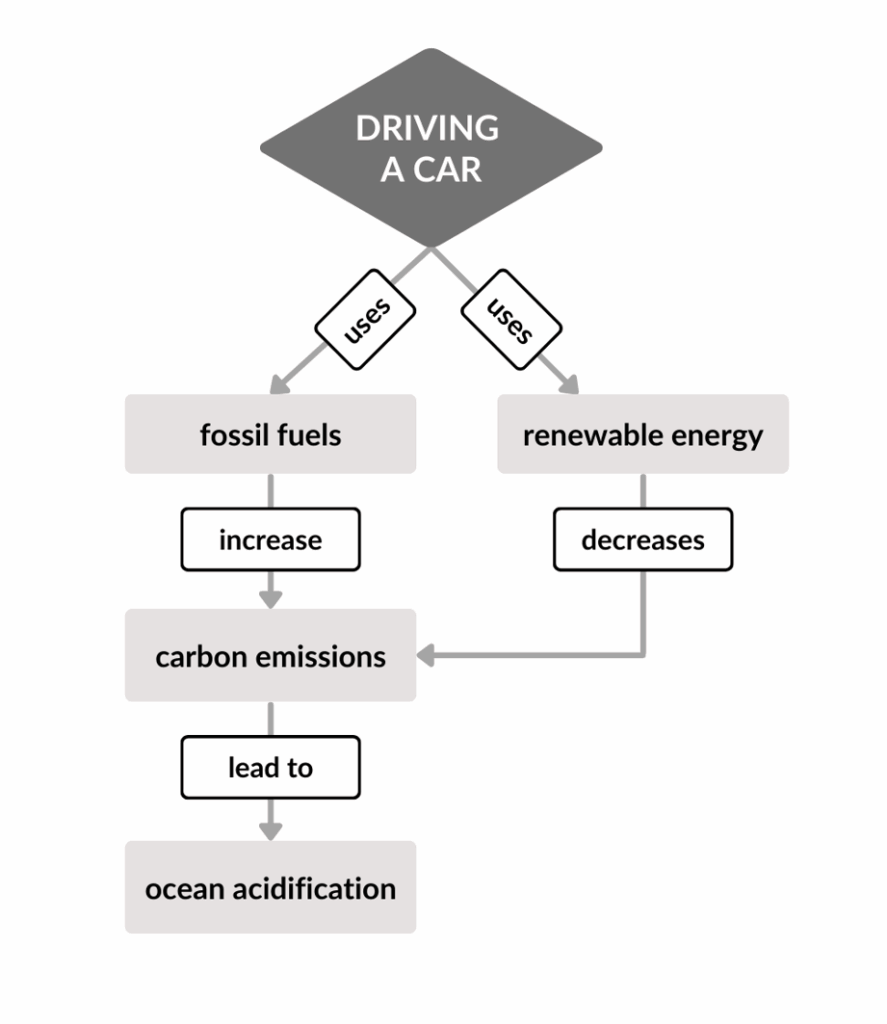
One of the most common pitfalls in concept mapping is attempting to map too much information at once, leading to overwhelming complexity. A well-defined guiding question acts as a crucial focal point, effectively limiting the scope of concepts to be included and ensuring the map remains manageable and relevant. Dr. Sundar provides compelling examples using the topic of ocean acidification.
If the guiding question is "What is the relationship between driving a car and ocean acidification?", the resulting concept map will be relatively focused, tracing a specific causal chain from vehicle emissions to atmospheric carbon dioxide, its absorption by oceans, and subsequent acidification. This narrow scope allows for a detailed exploration of a particular pathway.
In contrast, if the guiding question shifts to "What is the relationship between human activities and ocean acidification?", the map immediately becomes far more expansive and intricate. It would need to incorporate a wider array of human impacts, such as industrial emissions, deforestation, agricultural runoff, and their diverse contributions to ocean chemistry changes. The complexity would increase dramatically, potentially overwhelming a novice learner. By starting with a clear, specific question, educators can scaffold the learning process, gradually introducing more complexity as students develop their mapping skills and conceptual understanding. -
Use Linking Words:
Perhaps the most critical, yet often overlooked, best practice is the inclusion of linking words on the lines connecting the nodes. While simply drawing lines between concepts provides some indication of a relationship, labeling these lines with directional arrows and explicit linking words—such as "causes," "leads to," "is a type of," "is composed of"—transforms the map into a powerful propositional statement. Dr. Sundar acknowledges that adding these linking words "is a pain in the beep," requiring significantly more cognitive effort than merely drawing lines. However, she asserts that "that’s when you really push your learning harder." This effort forces learners to precisely articulate the nature of the relationship, moving beyond vague associations to form clear, accurate propositions. This precision deepens understanding, clarifies misconceptions, and reinforces the intricate web of knowledge. Without linking words, a map can be ambiguous; with them, it becomes a coherent, interpretable representation of knowledge.
Integrating Concept Maps into the Classroom: Practical Applications
Concept maps are versatile tools that can be adapted for various instructional purposes, from introducing new material to assessing student understanding.

-
Expert Maps:
Expert maps are comprehensive concept maps created by the teacher (or an expert in the field) that visually represent the key concepts and their relationships within a specific unit of study. These maps serve as invaluable reference tools for learners throughout the unit. Dr. Sundar emphasizes that expert maps offer students a crucial "big picture" overview from the outset. They act as an advanced organizer, showing students how disparate topics will eventually connect, preventing the feeling that content is "random" or disconnected. This holistic view helps students contextualize new information as it is presented, integrating it into a growing framework of understanding.
However, Dr. Sundar also issues a crucial caution: "There’s something called concept map shock." Presenting an overly complex expert map at the beginning of a unit can overwhelm students, leading to disengagement. To mitigate this, she suggests a gradual unveiling strategy. Teachers can initially display only the major concepts and their primary connections, revealing more granular details as the unit progresses. This layered approach ensures that students are not cognitively overloaded and can gradually build their understanding of the complete conceptual landscape. -
Note-Taking:
Traditional linear note-taking, while common, can often obscure the intricate relationships between ideas. Concept maps offer a more efficient and conceptually clearer alternative for capturing information. Dr. Sundar points out that linear writing can lead to lengthy, less structured explanations. Concept maps, by contrast, condense information into key terms and visual links, allowing for a more compact yet comprehensive representation of knowledge. The act of translating lecture material or text into a map forces students to actively summarize, prioritize, and connect information, thereby enhancing retention and comprehension.
A practical approach recommended by Dr. Sundar involves maintaining a running list of key terms (perhaps on a whiteboard or in student notebooks). Periodically, students can be tasked with constructing a concept map using a subset of these terms, illustrating how they interrelate. This iterative process not only serves as an effective note-taking strategy but also reinforces retrieval practice and ongoing synthesis of information. -
Formative Assessment:
Concept maps are exceptional tools for formative assessment, providing teachers with immediate, actionable insights into student understanding. By having students complete concept maps, educators can gauge how well they grasp content, identify misconceptions, and discern the strength of their conceptual connections. One highly effective method is to provide students with a partially completed concept map and ask them to fill in the missing nodes or linking words. This targeted approach can reveal specific areas of strength or weakness. Alternatively, students can be asked to create a concept map from scratch on a given topic. The resulting maps offer a rich tapestry of information about their cognitive organization of the subject matter, allowing teachers to tailor subsequent instruction to address identified learning gaps. This goes far beyond what a multiple-choice quiz can reveal, providing qualitative data on the depth and structure of student knowledge.
Broader Implications and the Future of Visual Learning
The consistent findings from cognitive science regarding concept maps hold significant implications for educational practice across all levels. Beyond the immediate classroom applications, the principles championed by Dr. Sundar and Dr. Agarwal suggest a paradigm shift towards more active, visually-oriented, and cognitively sound pedagogical approaches.
- Curriculum Design: Understanding how learners build and connect knowledge through concept maps can inform the very structure of curricula. Designing units and courses with explicit conceptual frameworks in mind, perhaps starting with an overarching expert map, can ensure logical progression and prevent fragmented learning.
- Promoting Metacognition and Self-Regulated Learning: The process of creating concept maps encourages students to reflect on their own thinking processes. They become more aware of what they know, what they don’t know, and how different pieces of information fit together. This metacognitive awareness is crucial for developing self-regulated learners who can independently monitor and adjust their learning strategies.
- Addressing Diverse Learning Styles: While visual learners may naturally gravitate towards concept maps, the multi-modal engagement (visual, linguistic, kinesthetic through creation) benefits a broad spectrum of learners. It offers an alternative to purely textual or auditory learning, making complex content more accessible.
- The Role of Technology: While the core principles of concept mapping are simple and require no complex technology, digital tools are increasingly available to facilitate their creation and sharing. Software like CmapTools, MindMeister, or Lucidchart allow for easy editing, collaboration, and integration into digital learning environments. However, the emphasis remains on the cognitive effort of the learner, not merely the tool itself.
- Challenges and Continued Research: While powerful, implementing concept mapping effectively requires initial investment in teaching students how to map. Educators need to provide clear instructions, model the process, and offer constructive feedback. Research continues to explore nuances, such as optimal complexity for different age groups, the impact of various linking word conventions, and how concept mapping integrates with other evidence-based strategies.
In conclusion, the work of cognitive scientists like Dr. Kripa Sundar and Dr. Pooja Agarwal, encapsulated in resources like Smart Teaching Stronger Learning, provides a compelling case for the systematic integration of concept maps into educational practice. By engaging the fundamental mechanisms of memory formation—encoding, storage, and retrieval—and by encouraging active, propositional thinking, concept maps move beyond simple visual aids to become transformative tools for fostering deeper, more interconnected understanding. Their simplicity belies a profound capacity to empower learners, clarify complex subjects, and provide educators with invaluable insights into the architecture of student knowledge. As education continues to evolve, the strategic application of concept maps stands as a testament to the enduring power of cognitively informed pedagogy.