


New research from the IMT School for Advanced Studies Lucca has provided groundbreaking insights into why some dreams manifest with startling vividness and lifelike detail, while others dissolve into confusing fragments or are swiftly forgotten upon waking. The study posits that the profound differences in our nocturnal narratives stem from a complex interplay of individual psychological traits and the indelible imprint of shared life experiences, both profoundly influencing the content and texture of our sleep-induced perceptions. This investigation, leveraging advanced artificial intelligence, marks a significant leap in dream research, moving beyond anecdotal evidence to systematic, data-driven analysis.
The Enigmatic World of Dreams: A Historical Perspective
For millennia, humanity has grappled with the mystery of dreams. Ancient civilizations, from the Egyptians to the Greeks, viewed dreams as divine messages, prophecies, or windows into the spiritual realm, often employing specialized interpreters to decipher their cryptic meanings. In the modern era, pioneering figures like Sigmund Freud and Carl Jung revolutionized the study of dreams, positioning them as critical pathways to the unconscious mind. Freud, with his seminal work "The Interpretation of Dreams" (1899), proposed that dreams are disguised fulfillments of repressed wishes, while Jung introduced the concept of the collective unconscious and archetypes, suggesting dreams tap into universal symbols and patterns.
However, despite these foundational theories, objective and scalable research into dream content remained challenging. Traditional methods often relied on subjective self-reporting, qualitative analysis, and small sample sizes, making it difficult to identify broad patterns or draw statistically robust conclusions. The inherent subjectivity of dream recall, coupled with the vast variability in individual experiences, presented a formidable barrier to a more scientific understanding. The IMT School’s study, by integrating large-scale data collection with sophisticated computational methods, directly addresses these historical limitations, offering an unprecedented lens into the architecture of dreaming.
Unveiling the Mechanisms: The IMT Study’s Rigorous Approach
Published in the esteemed journal Communications Psychology, the study meticulously examined over 3,700 detailed reports encompassing both dreams and waking experiences. These reports were gathered from a diverse cohort of 287 participants, ranging in age from 18 to 70, ensuring a broad representation of adult life stages. The data collection phase spanned two intensive weeks, during which participants diligently maintained daily records of their experiences, capturing the immediate nuances of their conscious and subconscious states.
Beyond subjective reporting, the researchers concurrently amassed a rich tapestry of objective data. This included granular details on participants’ sleep habits, such as sleep duration, sleep onset latency, sleep efficiency, and consistency of sleep-wake cycles, often monitored through actigraphy or self-reported sleep diaries. Cognitive skills were rigorously assessed using a battery of tests designed to measure attention, memory (e.g., working memory capacity, long-term recall), problem-solving abilities, and executive functions. Furthermore, comprehensive personality inventories were administered, typically including frameworks like the Big Five personality traits (Openness, Conscientiousness, Extraversion, Agreeableness, Neuroticism), alongside detailed psychological profiles that screened for conditions such as anxiety, depression, and stress levels, providing a holistic view of each participant’s mental landscape. This multi-modal data collection strategy laid the groundwork for a deeply contextualized analysis of dream content.
The Power of AI: Natural Language Processing in Action
The sheer volume and qualitative nature of the collected data—thousands of free-form text descriptions—necessitated a revolutionary analytical approach. The IMT researchers turned to advanced natural language processing (NLP) tools, a branch of artificial intelligence focused on enabling computers to understand, interpret, and generate human language. Unlike traditional content analysis, which can be labor-intensive and prone to human bias, NLP offered a systematic, scalable, and objective method to deconstruct the meaning and structure of the dream reports.
Specifically, the NLP models employed semantic analysis to identify key themes and concepts, sentiment analysis to gauge emotional tone (e.g., positive, negative, neutral emotions like joy, fear, anger), and topic modeling to uncover latent themes across the vast dataset. Techniques such as word embeddings allowed the researchers to represent words as numerical vectors, capturing their contextual meaning and relationships, thereby revealing subtle connections and patterns that might elude human observers. This AI-driven methodology allowed the team to process and interpret an unprecedented amount of qualitative data with speed and precision, transforming subjective narratives into quantifiable insights. The results unequivocally demonstrated that dreams are far from random or chaotic; instead, they emerge as intricate reflections of a complex interplay between intrinsic individual characteristics and potent external influences.
Dreams as Reconstructed Reality: Beyond Simple Playback
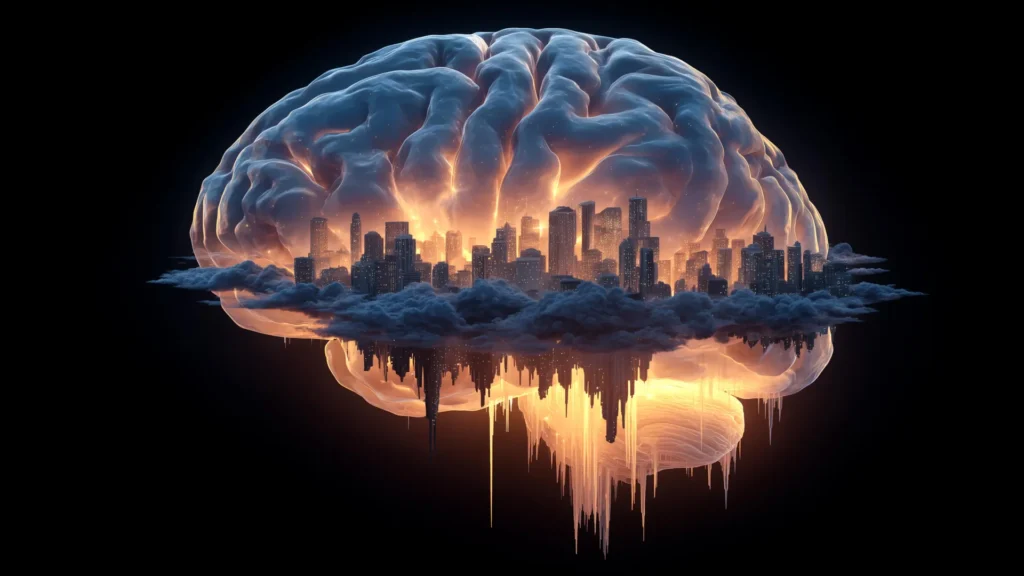
A pivotal finding of the study challenged the long-held notion that dreams merely replay waking life experiences. By meticulously comparing participants’ daily waking descriptions with their nocturnal narratives, the researchers discovered that the brain does not passively mirror reality during sleep. Instead, it actively and creatively reshapes those experiences. Familiar settings from waking life—be it the bustling office, the sterile environment of a hospital, or the structured classrooms of a school—are not simply reproduced in dreams. They are reimagined, often transcending their real-world constraints to become vivid, immersive, and sometimes surreal scenes.
This reconstructive process frequently involves the amalgamation of disparate elements, blending memories of real places with imagined or anticipated events. For instance, a participant might dream of their workplace, but it might feature architectural elements from their childhood home, populated by characters from a recent film, all while navigating a fantastical landscape. Perspectives might shift abruptly, defying logical continuity, and the emotional tone can amplify or distort the original waking experience. This suggests that dreams serve as a sophisticated cognitive mechanism for synthesizing information, consolidating memories, and perhaps even simulating future scenarios or problem-solving. The brain appears to be actively constructing new realities, blending the known with the unknown, to create novel narratives that extend beyond mere replication. This dynamic process underscores dreams’ potential role in memory consolidation, emotional regulation, and even creative thought, where the blending of memories and novel elements could foster innovative connections.
The Personal Tapestry of Dreaming: Individual Differences
The study illuminated the profound individual differences in dreaming styles, linking them directly to specific personality traits and cognitive habits. Not everyone dreams in the same fashion, and these variations are deeply rooted in our psychological makeup. For instance, individuals who exhibited a higher tendency for "mind-wandering"—a cognitive state characterized by spontaneous shifts of attention away from the current task towards internal thoughts, memories, or fantasies—reported dreams that were notably more fragmented, constantly shifting, and often lacking a coherent narrative arc. This suggests a continuity between waking cognitive styles and nocturnal mental processes, where a less focused waking mind translates into a less structured dreamscape.
Conversely, participants who ascribed greater importance to their dreams, believing them to possess significant meaning or to offer insights into their inner lives, tended to experience dreams that were richer, more immersive, and emotionally resonant. These individuals often reported dreams with clearer storylines, more vivid sensory details, and a profound sense of presence within the dream environment. This correlation suggests that a psychological disposition towards introspection and meaning-making in waking life extends to how the brain processes and experiences dreams, potentially enhancing their coherence and impact. Other personality traits, though not explicitly detailed in the summary, could also play a role; for example, individuals high in "Openness to Experience" often report more vivid and unusual dreams, while those high in "Neuroticism" might experience more emotionally intense or anxiety-laden dreams. This intricate relationship between personality and dream phenomenology opens new avenues for personalized psychological assessment.
Societal Echoes in the Nocturnal Mind: The Impact of Collective Trauma
Beyond individual traits, the IMT study also provided compelling evidence for how large-scale societal events can profoundly shape our collective dreamscape. A particularly poignant aspect of the research involved analyzing data collected during the initial phase of the COVID-19 lockdown. Researchers at Sapienza University of Rome had independently gathered dream reports during this unprecedented period, which were later compared with the findings from the IMT team, offering a unique chronological perspective on dream evolution under duress.
The data revealed a striking pattern: dreams experienced during the early lockdown phase were significantly more emotionally intense and frequently incorporated themes of restriction, limitation, and anxiety. Participants commonly reported dreams involving being trapped, unable to move freely, navigating crowded spaces without masks, or experiencing fear of contagion. Specific imagery, such as masks, medical facilities, or difficulties breathing, became prevalent. This phenomenon was not isolated to Italy; similar surges in "pandemic dreams" were reported globally, characterized by feelings of vulnerability, social isolation, and a preoccupation with health and survival.
As the lockdown progressed and individuals began to adapt to the new realities—developing coping mechanisms, adjusting daily routines, and processing the initial shock—these dream patterns gradually attenuated. The intensity of negative emotions lessened, and themes of restriction became less dominant, replaced by more varied content. This observation strongly suggests that dream content is not static but dynamically evolves alongside our psychological adjustment to major life changes and collective traumas. Dreams, in this sense, act as a sensitive barometer of our collective psyche, reflecting our ongoing attempts to process, integrate, and cope with significant external stressors. Historical precedents, such as the increased reporting of nightmares and trauma-related dreams following events like 9/11 or natural disasters, further underscore this powerful connection between collective experience and nocturnal mentation.
Dreams: A Dynamic Window into the Human Psyche
"Our findings show that dreams are not just a reflection of past experiences, but a dynamic process shaped by who we are and what we live through," explains Valentina Elce, researcher at the IMT School and lead author of the paper. Her statement encapsulates the essence of the study’s contribution: dreams are active, constructive processes, continuously integrating our personal histories, current psychological states, and external environmental pressures. They are not merely passive replays but sophisticated syntheses of our inner and outer worlds.
This "dynamic process" concept implies that dreams play a crucial role in our ongoing mental and emotional processing. They can serve as a canvas for emotional regulation, allowing us to confront and work through anxieties, fears, and unresolved issues in a simulated environment. They may also contribute to cognitive functions such as memory consolidation, learning, and creative problem-solving by reorganizing and recontextualizing information gathered during waking hours. The ability to combine large-scale data with advanced computational methods has allowed researchers to uncover subtle yet pervasive patterns in dream content that were previously impossible to detect through traditional, qualitative analysis, offering a more comprehensive and objective understanding of this fundamental human experience.
The AI Revolution in Dream Science: New Horizons
The IMT study stands as a powerful testament to the transformative potential of artificial intelligence in advancing the study of dreams and, by extension, our understanding of the human mind. The successful application of NLP models to analyze dream reports, achieving a level of accuracy comparable to that of human evaluators, is a critical validation. This capability not only streamlines the research process but also significantly enhances its objectivity and scalability.
The implications for future research are profound. With AI, researchers can now analyze vastly larger datasets of dream reports from diverse populations, overcoming geographical and linguistic barriers. This consistency and scalability could revolutionize several key areas:
- Consciousness Studies: By systematically analyzing dream narratives, scientists can gain deeper insights into the nature of subjective experience, self-awareness, and the continuum of consciousness between waking and sleeping states. What differentiates dream consciousness from waking consciousness? How do different brain states influence our sense of reality?
- Memory and Learning: Dreams are strongly implicated in memory consolidation. AI can help pinpoint how specific types of experiences or learning tasks during the day are processed and integrated into dream content, potentially revealing the neural mechanisms underlying memory formation and strengthening.
- Mental Health Diagnostics and Therapy: The ability to objectively analyze dream content could open new avenues for early detection of psychological distress, tracking the progression of mental health conditions, and monitoring the effectiveness of therapeutic interventions. For example, consistent patterns of anxiety-laden or trauma-related dreams might serve as early indicators of underlying issues, while changes in dream content could signal psychological improvement or deterioration.
- Cross-Cultural Dream Analysis: AI can facilitate the comparative study of dreams across different cultures and socio-economic contexts, revealing both universal aspects of human dreaming and culturally specific influences.
- Pharmacological Research: Investigating how different medications, particularly those affecting the central nervous system, impact dream content could provide valuable data for drug development and understanding their side effects.
This pioneering research was made possible through significant financial backing, specifically a grant from the BIAL Foundation (#091/2020), renowned for supporting innovative research in psychophysiology and parapsychology, and the prestigious TweakDreams ERC Starting Grant (#948891), awarded by the European Research Council to support frontier research. The collaborative spirit of the project, involving researchers from the IMT School for Advanced Studies Lucca, Sapienza University of Rome, and the University of Camerino, underscores the increasingly interdisciplinary nature of modern scientific inquiry, where expertise from neuroscience, psychology, linguistics, and computer science converge to tackle complex questions.
In conclusion, the IMT School’s study represents a monumental stride in dream research. By merging the rigor of computational science with the rich tapestry of human experience, it not only deciphers the intricate architecture of our nocturnal minds but also inaugurates a new era where AI serves as an indispensable tool for unlocking the profound mysteries of consciousness itself. The findings offer a compelling vision of dreams not as arbitrary mental noise, but as a dynamic, personalized, and socially resonant process, essential for understanding who we are and how we navigate the ever-changing landscape of our lives.