



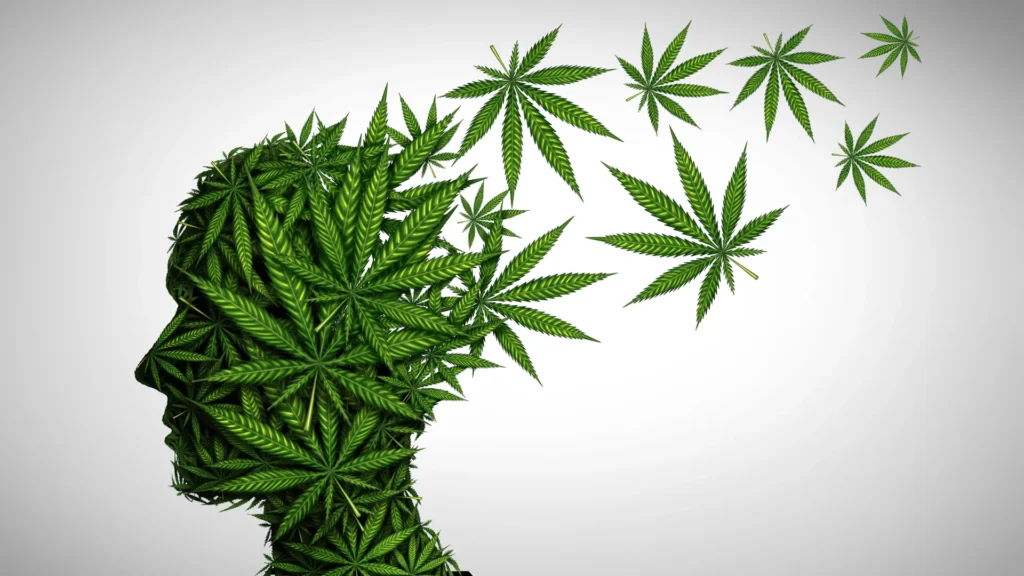
Smoking cannabis may do more than merely induce a temporary state of euphoria or make memories feel fuzzy. A groundbreaking new study from Washington State University (WSU) has meticulously uncovered that acute cannabis intoxication profoundly alters how memories are formed and recalled, affecting a wide array of cognitive functions essential for daily life. The research, published in the esteemed Journal of Psychopharmacology, represents one of the most comprehensive examinations to date of cannabis’s influence on memory, revealing pervasive disruptions across multiple memory systems.
The study’s findings indicate that individuals who consumed tetrahydrocannabinol (THC), the primary psychoactive compound in cannabis, were significantly more prone to recalling words that were never presented to them, a phenomenon known as false memory. Furthermore, participants under the influence of THC exhibited considerable difficulty with common everyday memory tasks, such as remembering to perform a future action or tracking the origin of information. This research challenges previous, more limited understandings of cannabis’s cognitive impact, suggesting a far broader and more intricate disruption than previously appreciated.
A particularly striking revelation from the WSU study was the absence of meaningful differences in memory impairment between participants who consumed 20 milligrams of THC and those who consumed 40 milligrams. This outcome strongly suggests that even moderate amounts of THC can significantly interfere with memory functions, implying that users may experience substantial cognitive deficits without necessarily consuming very high doses. This has critical implications for public health messaging and individual consumption choices as cannabis legalization expands across North America.
The Washington State University Study: A Deep Dive into Memory Disruption
The WSU study stands out for its methodical and comprehensive approach to assessing cannabis’s effects on memory. Unlike many prior investigations that often focused on one or two specific types of memory, this research set out to evaluate a broad spectrum of memory systems simultaneously. Carrie Cuttler, senior author of the study and an associate professor of psychology at WSU, emphasized the novelty of this holistic approach. "Most previous studies have only looked at one or two types of memory, like recalling lists of words," Cuttler noted. "This is the first study to comprehensively examine many different memory systems at once, and what we found is that acute cannabis intoxication appears to broadly disrupt most of them."
To execute this rigorous examination, Cuttler and co-author Ryan McLaughlin, an associate professor in the Department of Integrative Physiology and Neuroscience at WSU, meticulously recruited 120 regular cannabis users. The participants were then randomly assigned to one of three experimental groups in a double-blind setup: one group vaporized a placebo cannabis, another vaporized 20 milligrams of THC, and the third vaporized 40 milligrams of THC. The double-blind nature of the experiment ensured that neither the participants nor the researchers knew who received which substance, thereby minimizing potential biases.
Following the consumption of their assigned substance, participants engaged in approximately an hour of intensive memory tests. These assessments were designed to measure a diverse range of memory types, including verbal memory (recalling spoken words), visuospatial memory (remembering locations and patterns), prospective memory (remembering to do something later), source memory (recalling where information came from), false memory (recalling something that didn’t happen), episodic content memory (recalling personal experiences), and temporal order memory (recalling the sequence of events). The breadth of these tests provided an unprecedented level of detail regarding the multifaceted impact of acute cannabis intoxication on human cognition. The results were unequivocal: participants who consumed cannabis performed significantly worse than those in the placebo group on the vast majority of the tests. In total, cannabis acutely affected 15 out of the 21 memory measures assessed, demonstrating a pervasive and significant disruption across most memory domains.
Unpacking the Specific Memory Impairments
The WSU study meticulously detailed the specific ways in which cannabis impacts different memory systems, with some effects being particularly pronounced.
The Rise of False Memories: Recalling What Never Happened
One of the most striking findings pertained to false memory. In a critical test designed to probe this phenomenon, participants listened to lists of thematically related words, where a central keyword tying them together was intentionally omitted. For instance, a list might include "bed, rest, awake, dream," but the word "sleep" would never be spoken. Later, individuals who had consumed THC were significantly more likely to confidently assert that they remembered hearing the unspoken central keyword, or other words that were never presented.
Carrie Cuttler highlighted the frequency of this occurrence, stating, "I found it was really common for people to come up with words that were never on the list. Sometimes they were related to the theme of the list, and sometimes they were completely unrelated." This susceptibility to forming false memories has serious implications, particularly in contexts where accurate recall is paramount, such as eyewitness testimony in legal proceedings. Errors in memory, especially when compounded by suggestive questioning, can dramatically influence how events are remembered and recounted, potentially leading to miscarriages of justice.
Source Confusion and Its Societal Consequences
Another area where cannabis demonstrated particularly pronounced effects was source memory – the ability to accurately identify where previously learned information originated. Participants who had consumed THC experienced greater difficulty distinguishing whether information came from a trusted source, a casual conversation, a news article, or something encountered online.
In an increasingly complex information landscape, where distinguishing credible sources from misinformation is a daily challenge, impairments in source memory could have significant societal repercussions. Individuals under the influence might struggle to discern the reliability of information, potentially making them more susceptible to propaganda, scams, or inaccurate news. This raises concerns about critical thinking and informed decision-making in a world saturated with diverse and often conflicting information.
Prospective Memory: The Forgotten Tasks of Daily Life
The researchers also observed notable impairments in prospective memory, which is the cognitive ability to remember to perform intended actions in the future. This form of memory is fundamental to navigating daily life and fulfilling responsibilities, encompassing tasks as varied as remembering to take medication, attending scheduled meetings, making a specific purchase on the way home, or returning a phone call.
"These are things we rely on constantly in our day-to-day lives," Cuttler explained. "If you have something you need to remember to do later, you probably don’t want to be high at the time you need to remember to do it." The implications here are practical and immediate, suggesting that cannabis use could compromise an individual’s ability to manage personal responsibilities, adhere to professional commitments, or maintain safety in situations requiring future planning and execution.
While the study revealed broad disruptions, one form of memory, episodic content memory (the recollection of personal experiences), did not show a statistically significant effect. However, Cuttler cautioned that additional research is necessary before drawing definitive conclusions about this specific memory type, underscoring the ongoing need for further investigation into the nuanced effects of cannabis.
Broader Context: Cannabis Legalization and Persistent Research Gaps
The WSU study arrives at a pivotal moment in public policy and societal attitudes towards cannabis. The landscape of cannabis use is rapidly evolving, with a growing number of U.S. states, including Washington, having legalized its recreational or medical use. This trend is not isolated to the United States; numerous countries globally are re-evaluating their cannabis policies, leading to increased accessibility and, consequently, increased consumption.
According to the Centers for Disease Control and Prevention (CDC), cannabis is the most commonly used federally illegal drug in the United States, with millions reporting recent use. Data from states with legal markets consistently show rising sales and reported usage rates. For instance, in Washington State, cannabis sales have soared into the billions of dollars annually since legalization, indicating a widespread adoption of the substance by adults. While this growing acceptance reflects a shift in cultural norms and legislative priorities, it also underscores a critical scientific imperative: understanding the full spectrum of cannabis’s effects on human health and cognition.
Despite the surge in cannabis use and its increasing legal status, there remains a significant knowledge gap regarding many of its short-term and long-term cognitive effects. One primary reason for this research deficit has been the federal classification of cannabis as a Schedule I substance under the Controlled Substances Act. This classification, which places cannabis alongside drugs like heroin and LSD, implies a high potential for abuse and no accepted medical use, despite mounting evidence to the contrary.
This Schedule I designation has historically imposed severe restrictions on scientific research. Researchers face arduous bureaucratic hurdles, limited funding opportunities, and significant logistical challenges in obtaining legal, standardized cannabis for study. The inability to easily access research-grade cannabis and conduct large-scale clinical trials has severely hampered the scientific community’s ability to thoroughly investigate its effects. As Cuttler aptly put it, "We’re living in a state where cannabis use is very common, but there’s still a lot we don’t know about its acute effects." The WSU study, conducted under these challenging circumstances, highlights the critical need for policy reforms that would facilitate more robust and expansive cannabis research.
Previous studies, often limited by these regulatory constraints, tended to rely on self-reported cannabis use or examined only isolated aspects of cognitive function. The WSU study, with its controlled, double-blind design and comprehensive assessment of multiple memory systems, fills a crucial void, providing high-fidelity data that can inform both public health initiatives and future policy decisions.
Implications and Future Directions
The findings from the Washington State University study carry substantial implications for public health, safety, policy development, and future research endeavors.
Public Health and Safety Considerations
The demonstrated widespread disruption of memory systems by acute THC intoxication raises significant public health concerns. Individuals under the influence of cannabis may face impaired decision-making, reduced ability to respond effectively in emergencies, and compromised safety in tasks requiring clear recall and accurate information processing. This could extend to various critical activities, from operating machinery to complex problem-solving in academic or professional settings. Public education campaigns are vital to inform consumers about these cognitive risks, particularly concerning activities that demand full mental acuity. This includes clear warnings against driving or engaging in safety-sensitive occupations while impaired by cannabis.
Policy and Regulatory Responses
The study’s results provide crucial evidence that should inform cannabis policy and regulation. Policymakers should consider these findings when developing guidelines for responsible use, setting legal limits for impairment, and designing public awareness campaigns. For instance, the finding that even moderate doses of THC can significantly impact memory suggests that existing dosage recommendations or impairment thresholds might need re-evaluation. It could also lead to stronger requirements for clear labeling and public health advisories on cannabis products, akin to those found on alcohol or tobacco. The data supports calls for re-examining the Schedule I classification of cannabis to enable more unfettered research, which is essential for developing evidence-based policies that protect public health while respecting individual freedoms.
Legal and Societal Ramifications
Beyond individual health, the study’s implications extend to legal and societal spheres. The increased susceptibility to false memories, for example, could complicate eyewitness testimony in criminal investigations if witnesses were under the influence of cannabis. Similarly, the impact on prospective memory and source memory could affect workplace productivity, safety, and the ability of individuals to engage effectively in civic discourse by discerning credible information. Understanding these effects is crucial for developing fair legal frameworks and promoting a well-informed citizenry.
The Path Forward for Research
The WSU study, while comprehensive, also illuminates numerous avenues for future research. Key areas include:
- Long-term Effects: Investigating the chronic effects of sustained cannabis use on memory and overall cognitive function. Does memory impairment persist after cessation, or is it reversible?
- Demographic Differences: Examining how cannabis affects memory in different populations, such as adolescents whose brains are still developing, older adults, or individuals with pre-existing cognitive conditions.
- Cannabinoid Interactions: Exploring the effects of other cannabinoids (e.g., CBD) and terpenes, and how they might modulate THC’s impact on memory.
- Mechanisms of Action: Delving deeper into the neurobiological mechanisms through which THC disrupts memory at a cellular and molecular level.
- Real-World Scenarios: Conducting studies that simulate real-world tasks to better understand the practical impact of cannabis-induced memory impairments in daily activities.
Conclusion
The Washington State University study offers an invaluable contribution to the scientific understanding of cannabis’s acute effects on human memory. By comprehensively demonstrating that acute THC intoxication broadly disrupts multiple memory systems, leading to increased false memories, source confusion, and difficulties with everyday tasks, the research provides critical insights for consumers, public health officials, and policymakers. In an era of increasing cannabis legalization and use, the imperative for evidence-based information has never been greater. The goal, as articulated by Carrie Cuttler, remains to "help people make informed decisions about the risks and benefits." This study undeniably advances that goal, underscoring the profound and pervasive cognitive impacts of cannabis and paving the way for a more nuanced and responsible approach to its societal integration. The findings reinforce the urgent need for continued, unimpeded scientific inquiry to fully grasp the complex interplay between cannabis and the human mind.