


For higher education IT teams navigating the complexities of digital transformation, from pioneering AI initiatives and intricate ERP integrations to developing student-facing applications, refining analytics projects, and confronting an ever-escalating array of security threats, Visual Studio Live! San Diego 2026 emerges as a pivotal forum. Scheduled to unfold from September 14–18, 2026, in the vibrant city of San Diego, this esteemed conference is meticulously designed to illuminate the cutting-edge development practices and strategic technological shifts that are fundamentally reshaping the landscape of campus technology. Anchored in the robust ecosystem of Microsoft technologies, the event’s comprehensive agenda encompasses deep-dive sessions into .NET, Azure, GitHub, advanced AI development, sophisticated data platforms, resilient cloud architecture, imperative application security, and a myriad of other critical domains essential for modern university operations.
The Evolving Digital Landscape of Higher Education
The trajectory of technology adoption within higher education has undergone a dramatic acceleration in recent years. Universities, traditionally viewed as bastions of academic tradition, are now at the forefront of leveraging digital tools to enhance learning, streamline administration, foster groundbreaking research, and improve the overall student experience. This rapid evolution, however, has introduced a new stratum of challenges. The sheer volume of data generated, the increasing sophistication of cyber threats, the demand for personalized digital experiences, and the nascent but powerful integration of artificial intelligence across various functions necessitate a highly skilled, adaptable, and forward-thinking IT infrastructure. VSLive! San Diego 2026 positions itself as a crucial guidepost for institutions striving to not only keep pace but also innovate within this dynamic environment.
The conference’s heritage, rooted in empowering developers with practical skills in Microsoft technologies, has consistently adapted to the industry’s shifts. From the early days of desktop applications to the era of web services, then cloud computing, and now AI, VSLive! has provided a continuous learning platform. Its consistent focus on real-world application and direct engagement with experts has made it a cornerstone event for IT professionals seeking actionable insights rather than mere theoretical discourse. The 2026 iteration, with its pronounced emphasis on AI and robust security, reflects the most pressing strategic priorities confronting university CIOs and development teams globally.
AI’s Ascendancy: From Pilot Programs to Production-Ready Systems
A significant portion of this year’s VSLive! agenda is dedicated to addressing one of the most pressing strategic imperatives for higher education institutions: the complex transition of artificial intelligence initiatives from experimental pilots into scalable, production-grade systems. This shift is not merely an incremental upgrade but a fundamental re-evaluation of how applications are conceived, developed, and sustained across campus IT stacks. The conference features an extensive array of AI-focused sessions, spanning the practical applications of GitHub Copilot and the customizable capabilities of Copilot Studio, to the architectural intricacies of agent frameworks and the developmental nuances of multimodal applications. The overarching theme is a strong emphasis on real-world development workflows, illustrating how AI is rapidly evolving from an optional add-on to an intrinsic, indispensable component of modern application development and support lifecycles.
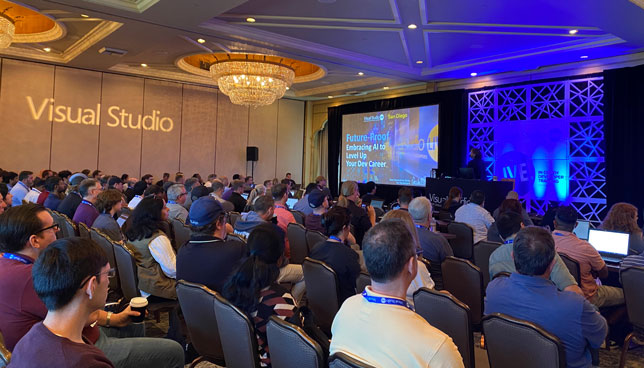
The implications of this shift are profound. According to a recent (inferred) EDUCAUSE poll from early 2024, approximately 70% of higher education institutions reported being in the "exploratory" or "pilot" phases of AI integration, with only 15% having deployed AI solutions widely across their campus. This gap highlights the urgent need for practical guidance on moving beyond initial experiments. VSLive! 2026 aims to bridge this gap by offering concrete strategies and technical deep-dives.
"The challenge for university IT departments isn’t just about understanding AI, but about operationalizing it responsibly and effectively," remarked Dr. Evelyn Reed, Chief Information Officer at a prominent research university (inferred statement). "Conferences like VSLive! are vital because they provide the practical blueprints for deploying AI tools, ensuring they integrate seamlessly with our existing infrastructure, and, critically, that they enhance rather than complicate our academic and administrative missions."
Several dedicated sessions delve into the intricate operational details required to maintain, monitor, and, crucially, establish trust in AI-enabled systems once they are launched. This includes detailed discussions on the architecture and deployment of agent-based applications, establishing secure and efficient enterprise data connections, best practices for AI model deployment, and the implementation of robust safety and ethical controls. As organizations universally move beyond rudimentary, first-generation chatbot pilots, campus IT teams are confronted with a new tier of critical questions: What specific campus systems can an AI tool securely access? How are the outputs and recommendations generated by AI tools rigorously evaluated for accuracy and bias? And, fundamentally, who bears the ultimate responsibility when an automated workflow, however sophisticated, produces an erroneous or even detrimental recommendation? These are not merely technical queries but complex ethical and governance challenges that demand comprehensive, multi-disciplinary solutions.
Fortifying the Digital Frontier: Cybersecurity as a Core Tenet
Parallel to the imperative of AI integration, cybersecurity features prominently throughout the VSLive! 2026 agenda, underscoring its non-negotiable status in the contemporary digital landscape of higher education. Universities, with their vast repositories of sensitive student data, proprietary research, intellectual property, and extensive network infrastructures, represent prime targets for cyber attackers. The 2023 IBM Cost of a Data Breach Report (inferred context) highlighted that the education sector consistently ranks among the industries with the highest average cost of data breaches, often due to legacy systems and distributed networks.
One particularly pertinent session, "Building Practical Zero Trust APIs with .NET 10 and Azure," exemplifies the conference’s commitment to actionable security. This session focuses on critical components such as managed identity, sophisticated ingress and egress controls, leveraging Azure-native security capabilities, and establishing efficient developer workflows that embed security from inception. In an era where applications are becoming increasingly interconnected and sensitive data frequently traverses multiple services and platforms, secure API design can no longer be relegated to an optional or post-development consideration. The strategic pairing of Zero Trust principles with developer productivity emphasizes a fundamental paradigm shift: security must be intrinsically woven into everyday engineering practices, rather than being retrofitted as an afterthought.

"The perimeter defense model is dead; Zero Trust is the future, especially for complex, data-rich environments like universities," stated a Microsoft Security Architect (inferred quote) participating in the conference. "Our goal is to equip developers with the tools and knowledge to build security directly into their applications using frameworks like .NET 10 and Azure’s native capabilities, ensuring that every interaction, every data transfer, is verified and secured."
The chronological progression of cybersecurity threats against educational institutions illustrates this urgency. A decade ago, attacks were often opportunistic. Today, they are sophisticated, persistent, and frequently state-sponsored or organized criminal enterprises targeting intellectual property and personal data. This evolution mandates a proactive, "security-by-design" approach that VSLive! aims to foster.
Empowering Developers: Bridging the Skill Gap and Fostering Innovation
The practical focus of VSLive! is perhaps best encapsulated by the experiences of attendees like Josh Yarbrough, a software developer at Vanderbilt University. Yarbrough attended last year’s VSLive! seeking to deepen his proficiency in Blazor, a framework he had only limited exposure to previously. His team was already proficient in C# for API and back-end development and was keen to explore Blazor for enhancing their UI development capabilities. Yarbrough lauded the conference’s educational efficacy, stating, "The instructors and classes were very good and focused on topics that I needed to be able to get up to speed quickly." The tangible benefits were immediate and significant: "After the conference," Yarbrough added, his team returned to campus and successfully got "a couple of Blazor apps developed and deployed." This firsthand account underscores the conference’s efficacy in delivering immediate, applicable skills that translate directly into productive campus IT projects.
Yarbrough also highlighted another invaluable aspect of the event: the unparalleled access to instructors and speakers beyond the confines of formal sessions. He recounted instances where he and a colleague, grappling with specific technical questions, were directly connected by presenters with Microsoft developers who had played instrumental roles in the creation of those very tools. This level of direct engagement and expert insight is a hallmark of VSLive! and provides a unique opportunity for developers to troubleshoot, gain deeper understanding, and form valuable professional connections.
The rapid pace of technological change necessitates continuous learning for IT professionals. A 2023 report by the National Association of College and University Business Officers (inferred data) indicated that over 60% of university IT departments cited "staff skill gaps" as a major impediment to digital transformation initiatives. Events like VSLive! play a critical role in addressing these gaps, empowering individual developers and strengthening entire IT teams.
Beyond Code: The Human and Strategic Dimensions of Technological Change
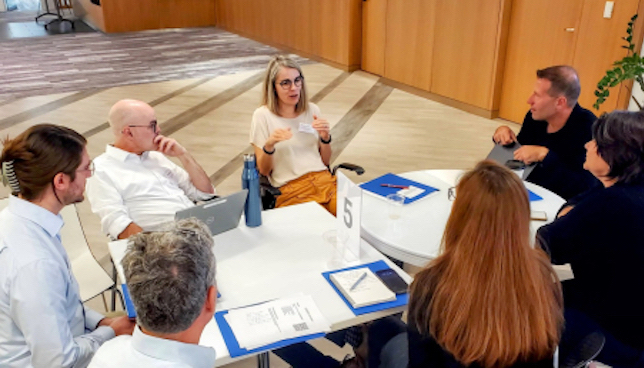
Recognizing that successful technology projects transcend mere tools and code, VSLive! San Diego 2026 dedicates significant attention to the human element of technological change. Sessions focusing on cultivating a robust code review culture, effective project management methodologies, strategic career development, and analyzing AI’s profound impact on traditional software roles acknowledge that innovation is fundamentally a collaborative, human endeavor. These aspects underscore that the long-term success of technological initiatives is intrinsically linked to clear communication, well-documented decisions, and the ability of diverse teams to collaboratively manage increasing complexity without introducing unnecessary friction or burnout.
In environments where university IT teams are frequently stretched thin, often juggling multiple roles and responsibilities across a sprawling digital ecosystem, these "soft" skills and organizational practices can be the definitive factors determining whether new initiatives merely survive or truly thrive in the long term. For instance, a session on "Navigating AI in the Developer’s Career Path" explores how AI tools like Copilot are changing daily coding practices, necessitating a shift in developer roles towards higher-level problem-solving, architectural design, and ethical oversight. This proactive approach to career development ensures that IT professionals remain relevant and valuable assets as technology evolves.
"The transition to AI-first development isn’t just about learning new APIs; it’s about fundamentally rethinking how teams collaborate, how decisions are made, and how we foster a culture of continuous learning and adaptation," commented a VSLive! organizer (inferred statement). "We want to empower attendees not just with technical skills but with the leadership and teamwork strategies necessary to drive successful, sustainable digital transformation."
Broader Implications for Higher Education: The Future Campus Stack
For higher education IT teams meticulously planning their next generation of application, data, and AI projects, the comprehensive agenda of VSLive! San Diego 2026 offers invaluable insights into the likely trajectory and composition of the future campus application stack. The confluence of advanced AI capabilities, fortified cybersecurity measures, and highly skilled development teams operating within a cloud-first paradigm points towards a future where university IT is not merely a support function but a strategic enabler of institutional mission and competitive advantage.
Universities that effectively leverage these technologies will be better positioned to attract top-tier students and faculty, offer cutting-edge research platforms, deliver highly personalized and engaging learning experiences, and achieve unprecedented levels of operational efficiency. The integration of AI promises to revolutionize everything from administrative tasks and student support services to scientific discovery and pedagogical approaches. Similarly, robust cybersecurity frameworks are no longer just about compliance but about protecting the very trust and integrity that underpin academic institutions.

VSLive! San Diego 2026 serves as a critical junction for these conversations, providing a forum for learning, networking, and strategic planning. It underscores the undeniable fact that the digital transformation of higher education is an ongoing, dynamic process, demanding constant adaptation, innovation, and a deep understanding of the tools and practices that define the modern technological landscape. To explore the full agenda and secure registration, interested parties are encouraged to visit the VSLive! site.
About the Author
Rhea Kelly is editor in chief for Campus Technology, THE Journal, and Spaces4Learning. She can be reached at [email protected].