



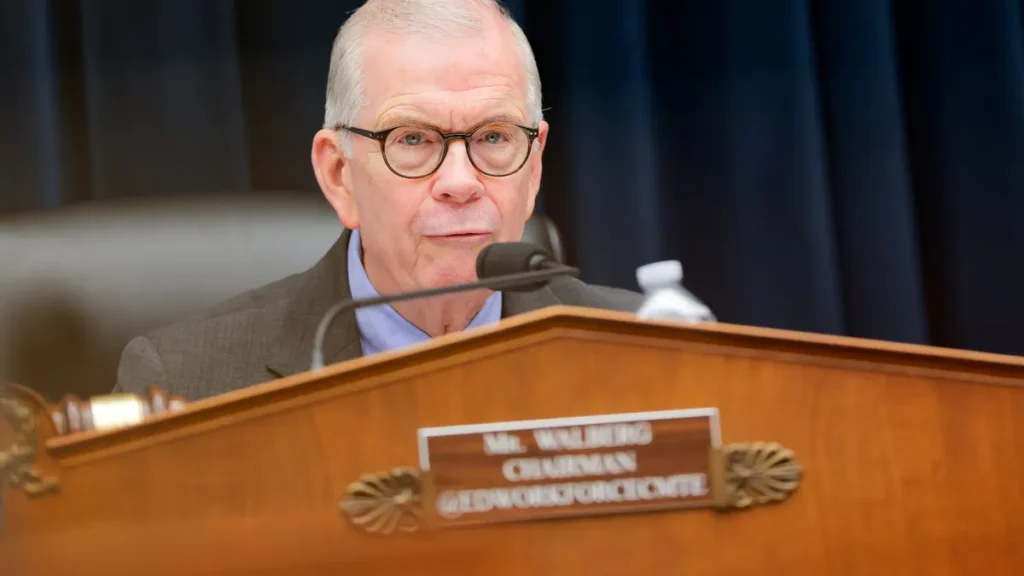
Washington D.C. – July 10, 2026 – A significant legislative push by Republican members of the House of Representatives aims to fundamentally reshape the U.S. Department of Education, with proponents arguing the measures will streamline operations and improve efficiency, while critics warn of potential disruptions and a weakening of federal oversight in education. The package, introduced by House Education and Workforce Committee Chair Tim Walberg (R-Mich.) on July 9, 2026, comprises ten distinct bills designed to codify existing interagency agreements and transfer certain statutory authorities from the Department of Education to other federal agencies.
The stated goal of these proposals, according to supporters, is to "right-size" the federal bureaucracy and ensure that educational policy and services are delivered more effectively. Representative Walberg articulated this vision in a released statement, asserting, "The legislative package reflects a simple principle: education policy should be focused on helping students succeed — not preserving a federal bureaucracy for its own sake. Rather than allowing unnecessary layers of Washington bureaucracy stand between families and the services they rely on, the bills would transfer key statutory authorities to agencies better equipped to carry them out while maintaining continuity for students and stakeholders." This initiative appears to be a significant step in a broader conservative effort to reduce the footprint and influence of the federal government in education, aligning with sentiments that have been voiced by various Republican administrations and lawmakers over the years.
A Strategic Realignment of Federal Education Responsibilities
The ten bills introduced by Representative Walberg do not explicitly call for the outright closure of the Department of Education, a move that has been proposed in the past but faced significant political hurdles, including the requirement of a 60-vote supermajority in the Senate. Instead, these new proposals focus on a more nuanced approach: codifying and formalizing the transfer of specific functions and responsibilities. This strategy could potentially achieve some of the same goals of downsizing and decentralization without triggering the intense opposition that a complete departmental shutdown would likely incite.
The impetus for these legislative actions appears to stem from a series of administrative decisions and internal reviews within the federal government. Notably, the U.S. Education Department itself underwent a substantial reduction in its workforce. Between January 20, 2025, and March 31, 2025, the department’s staff decreased from 3,902 employees to 1,579, representing a 40% reduction in its overall workforce. This downsizing, as detailed in a June report from the department’s Office of Inspector General (OIG), also led to the elimination of several suboffices across 15 of the department’s 17 main offices. The OIG report raised concerns that some of these eliminated offices "appear to have been performing statutory functions or oversight and monitoring functions," prompting questions about the continuity of essential government duties. While the department maintained its compliance with statutory responsibilities, the OIG noted a lack of "corroborating evidence" for the continued performance of certain functions post-reduction.
U.S. Education Secretary Linda McMahon publicly supported the legislative announcement, calling it a "historic step to reduce federal education bureaucracy" in a July 9 post on X. This endorsement from the head of the department suggests a potential internal alignment with the Republican-led efforts, at least in principle, to streamline federal education operations. However, the scope and impact of these transfers remain a point of contention.
Opposition and Concerns Over Bureaucratic Efficiency
Critics of the proposed legislation, including Democratic lawmakers and union representatives, have voiced strong opposition, arguing that the measures could lead to increased inefficiencies and a breakdown in accountability. Representative Bobby Scott (D-Va.), ranking member of the House Education and Workforce Committee, characterized the bills as an attempt to "dismantle" the Department of Education and "offload critical offices to agencies that are ill-equipped to carry out core duties." This perspective suggests that the proposed transfers could place responsibilities in the hands of agencies that lack the specific expertise, infrastructure, or statutory mandate to effectively manage them, potentially creating new bureaucratic hurdles rather than eliminating them.
The American Federation of Government Employees Local 252, which represents current, terminated, and retired employees of the Education Department, echoed these concerns. Rachel Gittleman, president of the union, stated on June 10 that the Republican legislative package would "create many more layers of red tape" and warned of detrimental consequences. "States, grantees and taxpayers are already paying the price for education programs being unlawfully transferred to other federal agencies: funding delays, confusion and chaos for both employees and the public, wasted taxpayer dollars, and no accountability or oversight," Gittleman said. "This new legislation will not make the system more efficient — it will break it."

These criticisms highlight a fundamental disagreement over the definition of efficiency and the role of federal oversight in education. While proponents believe that consolidating certain functions into agencies with potentially broader mandates will lead to cost savings and quicker service delivery, opponents fear that this diffusion of responsibility will lead to a loss of focus, expertise, and ultimately, accountability for critical educational programs and student outcomes.
Historical Context and Potential Implications
The current legislative proposals are not isolated incidents but rather part of a longer-standing debate about the size and scope of the federal government’s role in education. Since its establishment in 1979, the Department of Education has been a target for those advocating for a more localized or privatized approach to education. Previous attempts to close or significantly curtail the department’s operations, though unsuccessful, underscore the persistent ideological divisions on this issue.
The Trump administration, for example, had previously explored significant reductions and reorganizations within the Department of Education. The recent substantial staff cuts are seen by many as a precursor to the current legislative efforts, signaling a deliberate strategy to reduce the department’s operational capacity and influence. The OIG’s report on the staff reductions, highlighting potential impacts on statutory functions, provides a factual basis for some of the concerns raised by critics.
The implications of the ten bills, if passed, could be far-reaching. The codification of interagency agreements could cement certain functional transfers, making them more difficult to reverse in the future. This could lead to a permanent shift in how federal education initiatives are managed and overseen. For stakeholders in the education sector – including students, parents, educators, and institutions – this could mean navigating new administrative structures, potentially experiencing changes in program delivery, and facing altered lines of communication and accountability.

The lack of companion legislation in the Senate at this stage suggests that any significant movement on these proposals would likely require substantial bipartisan negotiation or a shift in the Senate’s legislative priorities. However, the unified front presented by House Republicans indicates a strong commitment to advancing this agenda within their chamber. The coming months will likely see intense debate and scrutiny as these bills move through the legislative process, with the future structure and function of federal involvement in education hanging in the balance. The ultimate success of these proposals will depend not only on political maneuvering but also on the ability of proponents to convincingly demonstrate that these changes will indeed lead to a more effective and efficient system for American students.