



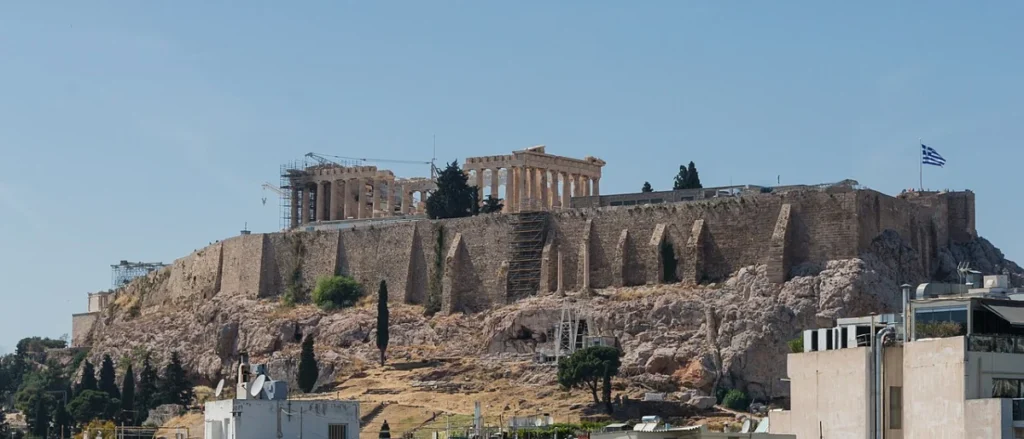
The Greek language, a cornerstone of Western civilization for nearly three millennia, continues to exert a profound influence on global philosophy, governance, and daily communication. From the foundational texts of Socrates, Plato, and Aristotle to the rhythmic folk proverbs still exchanged in the squares of modern Athens, the linguistic heritage of Greece serves as a bridge between the intellectual rigor of antiquity and the pragmatic wisdom of the contemporary era. This enduring legacy is not merely a matter of historical record but a living tradition that shapes how millions of people perceive knowledge, change, and human relationships.
The Foundations of Hellenic Intellectualism
The development of Greek thought can be traced back to the early inscriptions at the Temple of Apollo in Delphi, where the phrase Gnothi seauton (Know thyself) was famously carved. While often attributed to Socrates, historical data suggests the maxim predated the philosopher, serving as a religious and ethical directive for those seeking the Oracle’s guidance. Socrates, however, integrated this command into his dialectic method, transforming it from a static instruction into a dynamic pursuit of self-awareness.
This pursuit of knowledge was further codified by Aristotle, whose 4th-century BCE treatise Metaphysics begins with the assertion: Pantes anthropoi tou eidenai oregontai fysei (All human beings by nature desire to know). This statement laid the groundwork for the empirical sciences, suggesting that curiosity is an innate human trait rather than an acquired skill. In modern linguistic analysis, this quote is often cited as the starting point for Western epistemology, emphasizing the transition from mythological explanations to rational inquiry.
The practical application of these philosophies is evident in Aristotle’s Nicomachean Ethics, where he observes, Oikodomountes oikodomoi ginontai (People become builders by building). This observation remains a fundamental principle in educational psychology and language acquisition theories today, highlighting the necessity of praxis—the process by which a theory, lesson, or skill is enacted, embodied, or realized.
Chronological Evolution of the Greek Language
The history of the Greek language is characterized by a remarkable degree of continuity, despite significant orthographic and phonetic shifts. Scholars categorize the development of the language into several distinct periods:
- Archaic and Classical Greek (8th–4th Century BCE): The era of Homer, Sophocles, and the great philosophers. This period utilized the polytonic system, featuring a complex arrangement of accents (acute, grave, and circumflex) and breathing marks that indicated pitch and aspiration.
- Koine Greek (3rd Century BCE–4th Century CE): The "common" language of the Hellenistic and Roman worlds, which facilitated the spread of Christianity and early scientific thought.
- Medieval (Byzantine) Greek (5th–15th Century CE): The official language of the Eastern Roman Empire, bridging the gap between antiquity and the modern era.
- Modern Greek (15th Century–Present): The language spoken today, which saw a major reform in 1982. The Greek government officially adopted the monotonic system, replacing the complex polytonic accents with a single mark to denote stress.
This transition from polytonic to monotonic spelling is a critical point of study for linguists. While ancient quotes are still printed with traditional accents to preserve scholarly accuracy, modern proverbs utilize the simplified system, reflecting the language’s adaptation to the needs of contemporary speakers.
The Philosophy of Change and Resilience
The concept of "Panta Rhei" (everything flows) is perhaps the most enduring contribution of the Pre-Socratic philosopher Heraclitus. His genuine fragment, Potamoisi toisin autoisin emvainousin etera kai etera ydata epirrei (On those who step into the same rivers, ever-different waters flow), offers a sophisticated view of identity and change. Contrary to the popular paraphrase that "one cannot step into the same river twice," Heraclitus argued that the river’s identity is actually defined by its constant flux.
This theme of navigating change is echoed in the modern Greek proverb, Kathe empodio yia kalo (Every obstacle is for the good). This phrase, ubiquitous in modern Greek culture, represents a form of popular Stoicism. It suggests that setbacks are not merely disruptions but necessary components of a larger, positive trajectory. The alignment between ancient Heraclitean flux and modern folk optimism demonstrates a cultural resilience that has survived centuries of foreign occupation and economic fluctuation.
Data and Linguistic Influence
The impact of the Greek language extends far beyond the borders of the Hellenic Republic. Linguistic data indicates that approximately 30% of the English vocabulary is derived from Greek, particularly in the fields of medicine, law, and the sciences. Furthermore, an estimated 13 million people worldwide speak Greek as their native tongue, with significant diaspora populations in the United States, Australia, and Canada.
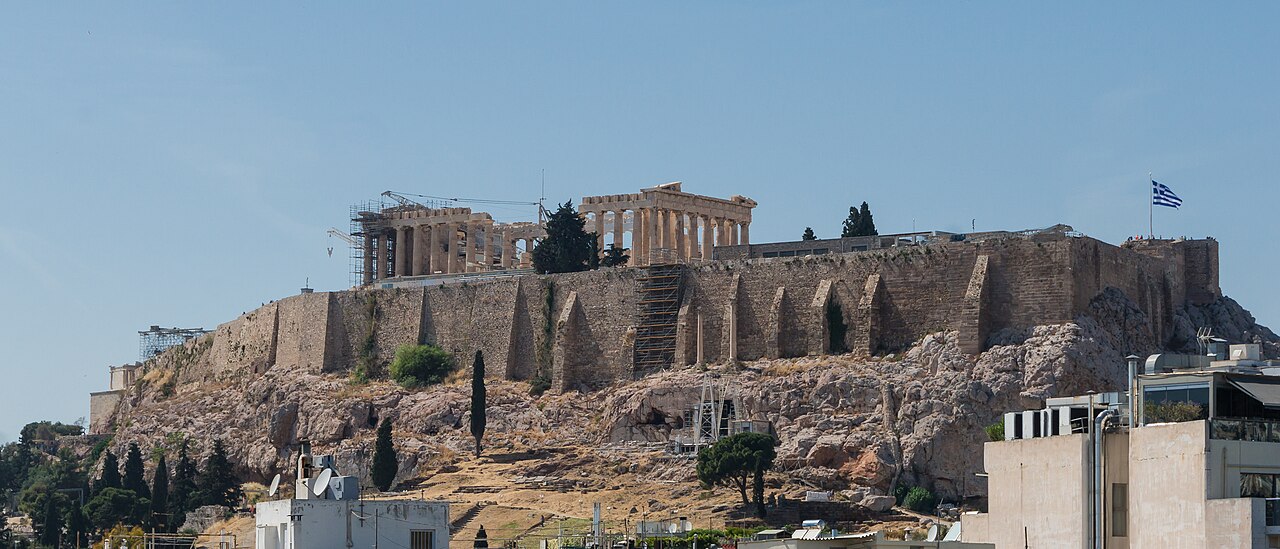
The global relevance of Greek wisdom is also reflected in the digital sphere. Analytics from educational platforms indicate a sustained interest in "Stoic" and "Epicurean" philosophies, with search queries related to Greek quotes increasing by over 20% in the last decade. This trend suggests a growing public desire for timeless ethical frameworks in an increasingly complex digital age.
Folk Wisdom and the Modern Vernacular
While the words of Plato and Aristotle are studied in academic settings, it is the parimies (proverbs) that dictate the rhythm of daily life in Greece. These sayings often utilize vivid imagery from nature and the domestic sphere to convey moral lessons.
For instance, the proverb Ama kais apo chilo, fisas kai to yiaourti (Once you’re burned by porridge, you blow on yoghurt too) serves as a colorful equivalent to the English "once bitten, twice shy." Similarly, the rhyme-driven Ta pathimata mathimata (Sufferings are lessons) reinforces the Aristotelian idea that wisdom is gained through experience, albeit often through hardship.
In the realm of social relations, the proverb Agapa ton yitona sou, alla mi gkremizeis kai ton frachti (Love your neighbour, but don’t knock down the fence) provides a pragmatic approach to community living. It balances the Mediterranean value of hospitality (philoxenia) with the necessity of personal boundaries, a sentiment that resonates with modern sociological theories on social cohesion.
Addressing Misattribution in the Digital Age
A significant challenge for modern classicists is the proliferation of misattributed quotes on social media. Digital misinformation often strips historical context from phrases or assigns modern sentiments to ancient figures. A notable example is the phrase "I know that I know nothing," frequently attributed to Socrates. In Plato’s Apology, the actual line is more nuanced: Ha mi oida oude oiomai eidenai (What I do not know, I do not think I know either).
Experts from the Academy of Athens and various international philological associations have emphasized the importance of returning to primary sources. They argue that misattributions dilute the intellectual rigor of the Socratic method, which was based on the specific recognition of ignorance rather than a general claim of knowing "nothing."
Broader Impact and Global Implications
The continued study and use of Greek quotes and proverbs have significant implications for global education and diplomacy. The Greek Ministry of Culture has frequently highlighted the "ecumenical" nature of the Greek language, asserting that it provides a universal vocabulary for human rights and democratic values.
In the 21st century, the application of Greek thought is visible in:
- Cognitive Behavioral Therapy (CBT): Many modern psychological practices are rooted in the Stoic belief that it is not events that disturb people, but their judgments about those events.
- Political Discourse: Terms such as "democracy," "ethics," and "polemic" continue to frame political debates, reminding participants of the Athenian origins of civic engagement.
- Scientific Methodology: The Aristotelian emphasis on observation and classification remains the bedrock of the scientific method.
The synthesis of ancient philosophy and modern folk wisdom provides a unique cultural continuity. As the proverb Agali agali ginetai i agourida meli (Little by little, the unripe grape turns to honey) suggests, the preservation and maturation of a language and its wisdom is a slow, organic process. By maintaining a connection to both the high philosophy of the past and the practical proverbs of the present, the Greek language continues to offer a robust framework for understanding the human condition.
As global interest in classical studies remains steady, the "school of Greece," as Pericles once called Athens, continues to educate the world. Whether through the rigorous study of polytonic texts or the casual exchange of rhyming proverbs, the wisdom of the Greek language remains an essential tool for navigating the complexities of life, fostering a legacy that is as relevant today as it was in the halls of the Lyceum.