


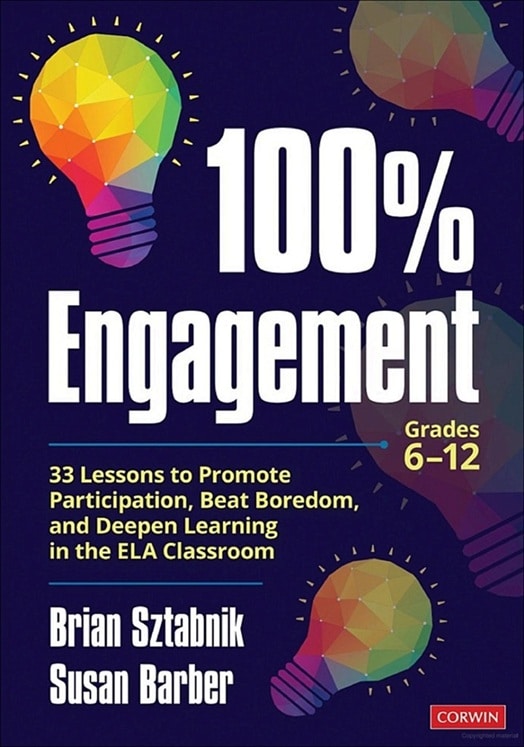
The perennial challenge of student engagement in English Language Arts (ELA) classrooms, where traditional methods can often lead to disinterest and passive learning, is being addressed head-on by veteran high school English teachers Brian Sztabnik and Susan Barber. Their newly published work, "100% Engagement: 33 Lessons to Promote Participation, Beat Boredom, and Deepen Learning in the ELA Classroom," offers educators a robust collection of innovative, low-tech strategies designed to transform text interaction into an active, dynamic, and profoundly enriching experience. These methods aim to move students beyond rote comprehension, fostering critical thinking and a genuine connection with literary and informational texts.
The landscape of modern education continually grapples with the imperative to maintain student focus and enthusiasm, particularly in subjects heavily reliant on textual analysis. ELA, a cornerstone of intellectual development, often struggles with perceptions of being "dry" or "boring," leading to a significant disconnect for many students. This disengagement can manifest as reduced participation, superficial understanding, and a general reluctance to delve into complex literary works or analytical tasks. Research consistently indicates that passive learning environments, characterized by extensive lecturing or solitary reading without interactive components, often yield lower retention rates and shallower comprehension compared to pedagogies that prioritize active student involvement. According to various educational reports, a substantial percentage of high school students report feeling uninspired by traditional literature lessons, highlighting a critical need for fresh, dynamic instructional approaches.

Sztabnik and Barber, both seasoned educators with a decade-long commitment to fostering professional dialogue, have been at the forefront of this pedagogical evolution. Their journey began online, where they cultivated a vibrant community for ELA teachers through social media chats and their influential blog, "Much Ado About Teaching." This digital platform became a crucible for collaborative problem-solving, revealing a widespread struggle among their peers to devise lessons that genuinely captivate students and deepen their interaction with texts. Over years of shared experiences and collective inquiry, they identified a clear demand for practical, actionable strategies that could breathe new life into ELA instruction. This sustained engagement with the teaching community ultimately culminated in the curation and refinement of the techniques now presented in their seminal book, published earlier this year.
"100% Engagement" is more than just a collection of activities; it represents a philosophy rooted in the belief that active participation is the bedrock of profound learning. The book distills years of classroom experience and collaborative wisdom into readily implementable lessons. During a recent interview, the authors highlighted three particularly effective strategies that exemplify their approach: "Cutting Up Poems," "Inferential Timeline," and "Text Rendering." These methods, characterized by their low technological requirements and high engagement potential, encourage students to physically and intellectually interact with course material, moving them out of their seats and into a collaborative, analytical mindset.
Deconstructing Poetry with "Cutting Up Poems"
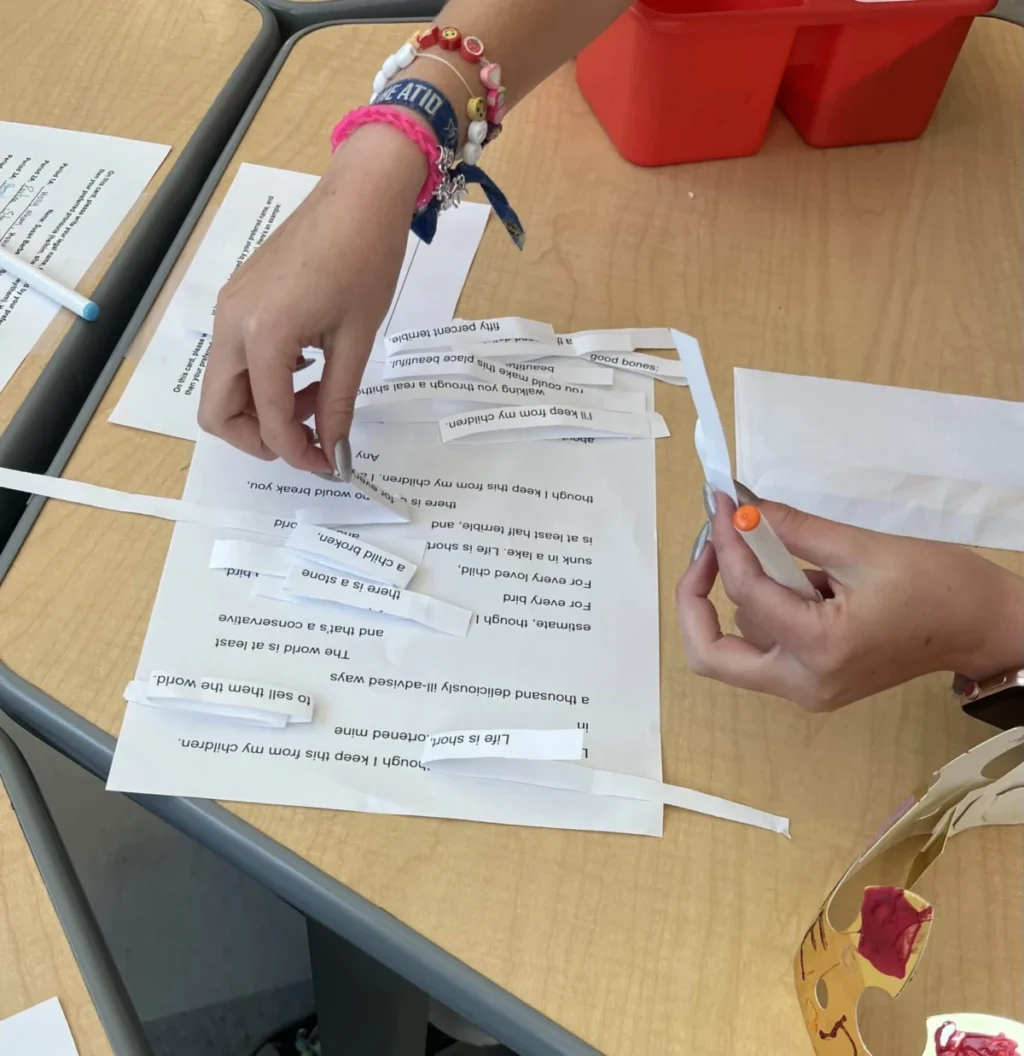
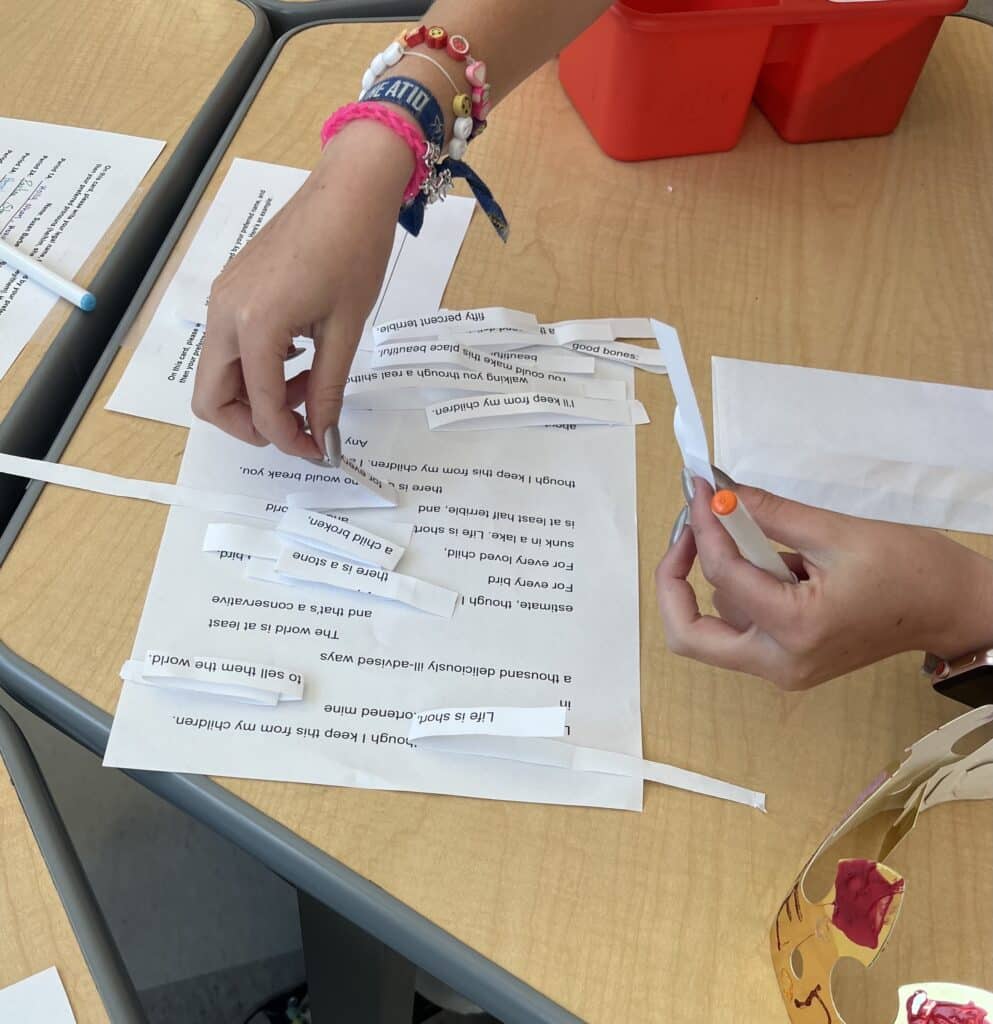
One of the standout strategies, "Cutting Up Poems," transforms the often intimidating task of poetry analysis into an interactive puzzle. In this lesson, a poem is meticulously dissected into individual words, phrases, or lines, printed on separate paper strips. Students are then tasked with reconstructing the poem, piece by piece. This seemingly simple act forces an intensely close reading, as students must consider not just the meaning of individual words, but also their grammatical function, punctuation cues, and thematic coherence within the broader structure of the poem.
As Susan Barber eloquently explains, "If I would have passed out this poem and said, ‘I want you to do a close reading,’ their eyes would be glazed over." However, by engaging in the physical act of reconstruction, students become active textual detectives. They must ponder, "Does this make sense if it goes here? Well, this is a capital letter, so it may not go in the middle of those sentences, or this is a comma here, that may not fit right there." This iterative process of hypothesis, placement, and revision compels analytical thinking from the outset. Once students have reconstructed their version, they proceed to annotate it, articulating their reasoning before comparing their interpretation to the original. This comparison phase is critical, fostering metacognition and revealing the poet’s deliberate choices, thereby deepening understanding of poetic craft. Barber aptly refers to this as a "teacher trick," recognizing its potent ability to make rigorous analysis feel like an engaging challenge rather than a chore.
Navigating Narratives with the "Inferential Timeline"
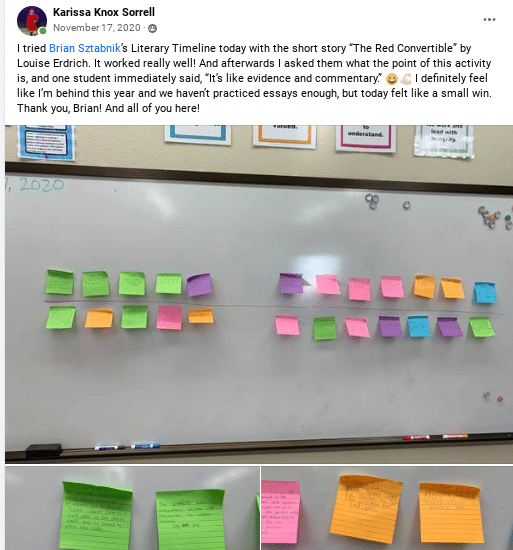
For prose texts, particularly novels or lengthy articles, the "Inferential Timeline" provides a powerful framework for plot summary and higher-order inference. This lesson assigns each student a segment of a text – typically a few pages – and an index card or post-it note. On their card, students are instructed to identify the single most important event or development within their assigned pages, summarizing it concisely and supporting it with a relevant quote. These cards then form the top tier of a collaborative timeline displayed prominently in the classroom.
Brian Sztabnik elaborates on the cognitive demands of this first tier: "What I’m really asking is to summarize the plot and boil it down to one or two sentences. So this is all about decision-making and cutting out the extraneous details and just focusing on what’s really important. And often it’s either character development or increasing conflict or maybe a symbol finally emerges." This initial phase hones summarization skills and the ability to discern main ideas from supporting details.
The second tier of the timeline elevates the activity to an inferential plane. Students then select a classmate’s card from the top row and, on a new card placed directly beneath it, explain why that particular event is significant to the larger narrative or thematic development. This encourages "collaborative mentally," as Sztabnik describes it. "They have to look at their classmate’s card, determine what happened, and make an inference about why that event was so important in the grand scheme of those chapters. So here’s where we’re getting to the higher level thinking – we can understand the plot; now we need to draw conclusions." The lesson culminates in a "gallery walk," where students move along the completed timeline, taking notes on their peers’ inferences, thus consolidating their understanding and appreciating diverse interpretations of the text’s critical moments.
Distilling Meaning through "Text Rendering"
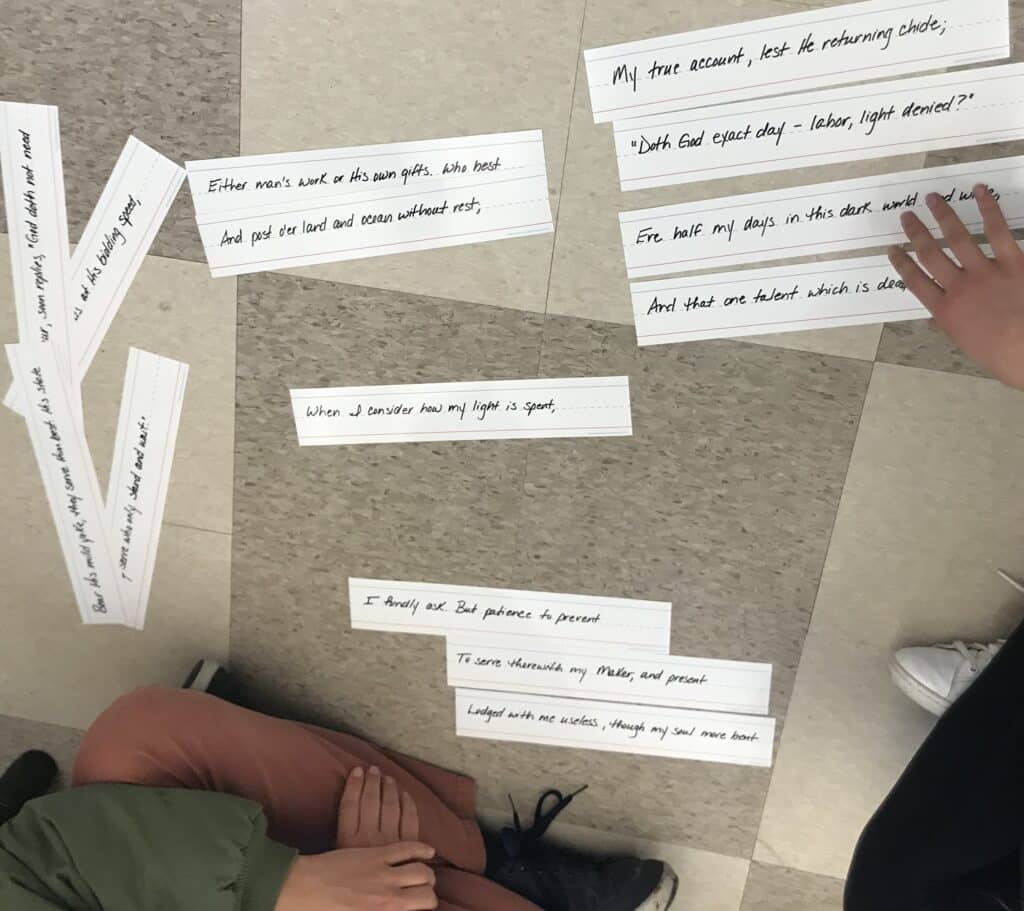
The third highlighted strategy, "Text Rendering," addresses a common academic hurdle: students’ tendency to rely on broad, generalized interpretations without grounding them in specific textual evidence. This activity guides students through a process of textual distillation, moving from expansive ideas to precise details. Beginning with a given passage, students first identify the most important sentence or line. From within that chosen sentence, they then select the most crucial phrase or clause. Finally, from that phrase, they pinpoint the single most important word.
This hierarchical selection process compels meticulous attention to detail and forces students to articulate the core essence of a passage. After making and defending their choices to the class, small groups collaborate further to synthesize their individual findings and draw broader conclusions about the passage’s meaning and significance. Barber recounts her motivation for developing this lesson: "I have trouble every year getting students to narrow their focus when they’re making meaning from the text. They talk in these really big, general ideas, and I would be like, ‘Where did this come from?’ And they’re like, ‘You know, it’s just there.’ It has to come from someplace specific in the text. I had to find some activity to get them to take the big ideas to the small." Text Rendering effectively bridges this gap, training students to root their interpretations firmly in textual evidence.
Broader Implications and the Future of ELA Instruction
The strategies presented in "100% Engagement" resonate deeply with contemporary pedagogical trends advocating for active, student-centered learning. By shifting the classroom dynamic from passive reception to active construction of knowledge, Sztabnik and Barber offer a tangible pathway to address challenges in reading comprehension, analytical reasoning, and critical thinking. Their low-tech approach also ensures accessibility, proving that impactful engagement does not require expensive digital tools but rather thoughtful instructional design and creative use of basic materials.
The implications of these strategies extend beyond immediate classroom engagement. They cultivate essential 21st-century skills such as collaboration, communication, critical analysis, and problem-solving. By encouraging students to physically manipulate text, defend their interpretations, and build upon their peers’ insights, these lessons prepare them for academic rigor and real-world challenges that demand nuanced understanding and articulate expression. The emphasis on drawing conclusions and making inferences directly supports higher-level cognitive processes, moving students beyond superficial recall to genuine intellectual inquiry. This collection of strategies serves as a valuable resource for professional development, empowering ELA teachers to reinvigorate their curriculum and foster a more vibrant learning environment.
Recognizing the power of collective wisdom, Sztabnik and Barber have also established a dedicated Facebook group, "100% Engagement," providing a collaborative space for teachers to share experiences, adaptations, and further insights on these practices. This online community, alongside their long-standing blog, "Much Ado About Teaching," underscores their commitment to ongoing professional dialogue and support for educators striving to achieve maximal student engagement. The interview on "Cult of Pedagogy" further amplifies their message, reaching a broad audience of educators seeking innovative solutions to universal teaching challenges.
In an educational landscape constantly seeking effective methods to captivate and educate, "100% Engagement" offers a timely and practical solution. Brian Sztabnik and Susan Barber’s work stands as a testament to the power of thoughtful pedagogy, demonstrating that with creative, student-centered strategies, English Language Arts classrooms can indeed achieve 100% engagement, transforming potentially "boring" texts into dynamic arenas for profound learning and intellectual growth.