

The global demand for German language proficiency has reached a critical juncture as the Federal Republic of Germany continues to solidify its position as Europe’s primary economic engine and a central hub for international trade, technology, and academic research. In response to this demand, linguistic experts and pedagogical institutions are shifting their focus from traditional, grammar-heavy curricula toward functional fluency models. These models prioritize the acquisition of high-frequency phrases and "lexical chunks" that allow learners to navigate real-world environments immediately. This approach, often referred to as "communicative competence," emphasizes the practical application of language over the rote memorization of complex declension tables and syntax rules that often discourage early-stage learners.
The Economic and Social Context of German Language Acquisition
With approximately 130 million speakers worldwide, German is the most widely spoken native language in the European Union. It serves as an official language in Germany, Austria, Switzerland, Liechtenstein, Belgium, and Luxembourg. According to data from the Goethe-Institut, approximately 15.4 million people are currently engaged in German as a Foreign Language (GFL) courses globally. The motivation for this pursuit is increasingly economic; German companies account for a significant portion of global exports, and proficiency in the language is often a prerequisite for high-level employment within the DACH region (Germany, Austria, and Switzerland).
However, the German language possesses a reputation for structural complexity, particularly regarding its four cases (nominative, accusative, dative, and genitive) and its three grammatical genders. To mitigate the "barrier to entry" caused by these features, modern instructional frameworks have identified a core set of 101 essential phrases. These phrases are designed to provide immediate utility in sectors such as tourism, hospitality, and professional networking, allowing the speaker to establish rapport and navigate basic logistical challenges without deep grammatical knowledge.
The Chronology of Language Methodology: From Grammar to Function
The evolution of German instruction has seen a significant shift over the last century. In the early 20th century, the "Grammar-Translation Method" dominated, focusing on the ability to read literature and translate complex texts. By the mid-20th century, the "Audiolingual Method" introduced repetitive drills. However, the contemporary "Communicative Approach" posits that language is a tool for social action.
This modern timeline suggests that the fastest route to integration for expatriates and business travelers is the mastery of "survival German." This involves a chronological progression from basic greetings to complex social negotiations. Experts suggest that the first 24 to 48 hours of immersion are the most critical, during which a learner must be able to deploy "politeness markers" and "navigational queries" to build confidence.
Analytical Breakdown of the Functional German Framework
To understand the efficacy of phrase-based learning, it is necessary to categorize the linguistic tools required for standard social and professional interactions. The following sections outline the essential components of the 101-phrase framework used by successful language learners.
The Sociolinguistic Distinction of Address: Sie vs. Du
One of the most significant hurdles for English speakers is the distinction between the formal "Sie" and the informal "du." In German society, this is not merely a grammatical choice but a reflection of social hierarchy and professional boundaries.
- Sie (Formal): Used with strangers, superiors, and in most professional contexts (e.g., Wie geht es Ihnen?).
- Du (Informal): Reserved for friends, family, and peers with whom a mutual agreement of informality has been reached (e.g., Wie geht’s?).
Data suggests that misusing the informal "du" in a professional setting can be perceived as presumptuous or disrespectful. Consequently, the standard recommendation for foreign nationals is to default to "Sie" until invited to "duzen" (use the informal form). This transition is often signaled by the phrase Wir können uns duzen (We can use "du" with each other), a pivotal moment in German relationship building.
Essential Greetings and Ice-Breakers
The first point of contact in any interaction requires a set of standardized greetings. While Guten Tag (Good day) remains the standard for professional settings, Hallo has become increasingly acceptable in casual environments. For those initiating a conversation, the phrase Ich lerne Deutsch (I am learning German) serves as a critical "strategic softener." Linguistic analysis shows that native speakers are significantly more likely to adjust their speaking rate and vocabulary complexity when a learner proactively identifies their status.
Key openers include:
- Sprechen Sie Englisch? (Do you speak English?)
- Entschuldigung, darf ich Sie etwas fragen? (Excuse me, may I ask you something?)
- Freut mich, Sie kennenzulernen. (Pleased to meet you.)
The Utility of Multi-Functional Vocabulary: The Case of "Bitte"
In the study of linguistic efficiency, the word Bitte stands out as a "triple-threat" term. It functions as "please," "you’re welcome," and "here you go." In a high-pressure environment, such as a busy restaurant or a retail transaction, the versatile application of Bitte allows the speaker to maintain politeness without the need for varied vocabulary. This type of high-utility word is central to the "minimum viable language" theory.

Navigational and Emergency Communication
For the traveler or the newly arrived resident, the ability to solicit information regarding logistics is paramount. The "workhorse" question words—Wo (where), Was (what), Wann (when), Warum (why), Wer (who), and Wie (how)—form the foundation of this capability.
When navigating German infrastructure, such as the Bahnhof (train station) or Haltestelle (bus/tram stop), specific phrases are required to avoid logistical failure. The phrase Können Sie das wiederholen? (Can you repeat that?) is cited by educators as the most important tool for maintaining a conversation when comprehension falters.
Furthermore, emergency preparedness requires a specific subset of the 101 phrases. Terms such as Hilfe! (Help!), Ich brauche einen Arzt (I need a doctor), and Rufen Sie die Polizei (Call the police) are categorized as "critical survival lexemes." Notably, the German Apotheke (pharmacy) plays a more central role in the healthcare system than its counterparts in many other countries, often serving as the first point of contact for minor medical ailments.
Regionality and Dialectal Variations: A Fact-Based Overview
While Hochdeutsch (Standard German) is the universal medium of instruction and official communication, regional variations persist and can impact the efficacy of a learner’s phrases. Data from linguistic surveys in Germany indicates strong regional identification through greetings:
- Northern Germany: Moin is used as a universal greeting at any time of day.
- Southern Germany and Austria: Grüß Gott (God greet you) and Servus are standard, reflecting a more traditional cultural heritage.
- Switzerland: Grüezi is the standard formal greeting.
Acknowledging these variations is not merely an academic exercise; it is a tactical advantage for those looking to integrate into local communities or conduct business in specific federal states like Bavaria or Saxony.
Cultural Nuances in Hospitality and Commerce
The German approach to dining and shopping involves specific cultural protocols. For instance, the phrase Prost! (Cheers!) is accompanied by the strict social requirement of eye contact. Failure to maintain eye contact is culturally stigmatized. Additionally, the phrase Nehmen Sie Karte? (Do you take card?) has become essential, as Germany remains a more cash-heavy society compared to its Nordic or Anglo-American neighbors, despite a shift toward digital payments following the 2020 global pandemic.
In retail settings, recognizing signage is as vital as speaking. Terms such as Eingang (Entrance), Ausgang (Exit), Drücken (Push), and Ziehen (Pull) are fundamental to navigating public spaces. The term Besetzt (Occupied), frequently seen on restroom doors, is another high-frequency visual cue that prevents social awkwardness.
Analysis of Implications: The "Speak from Day One" Philosophy
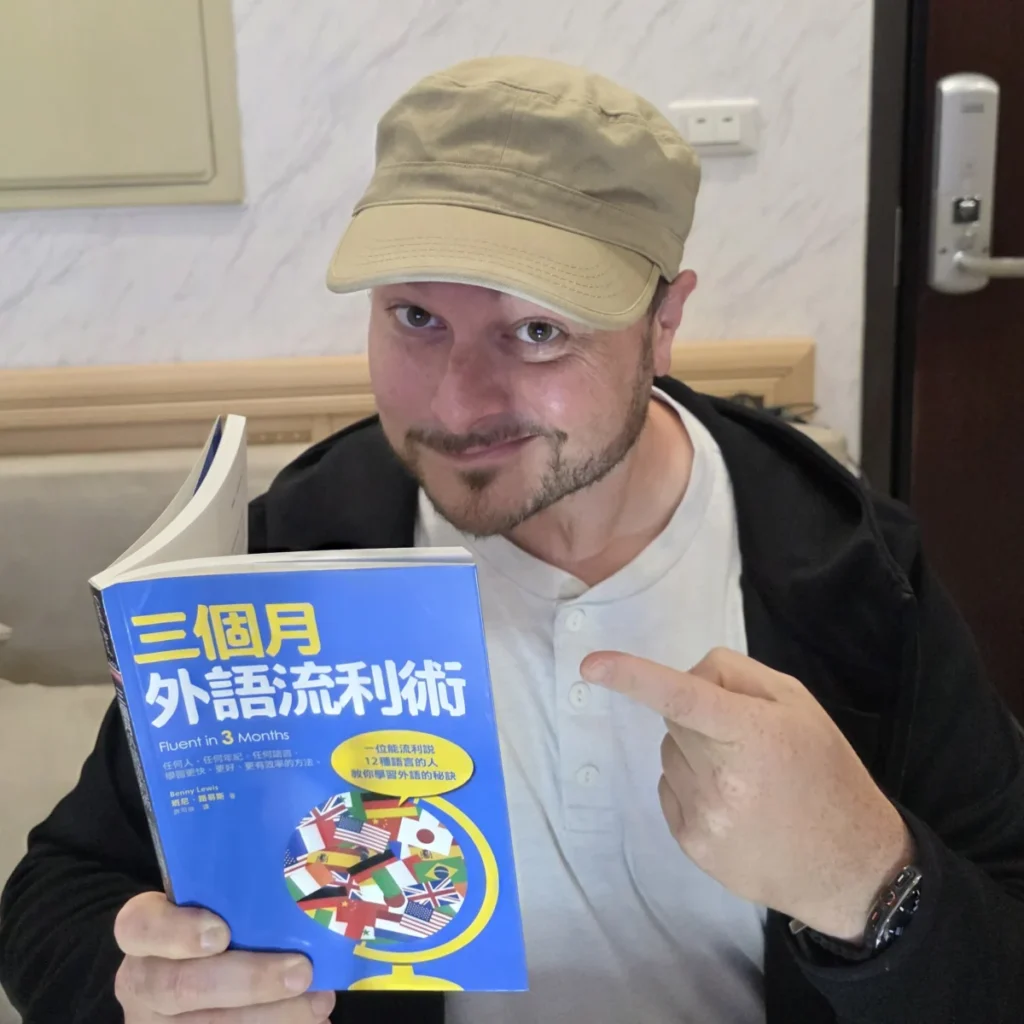
The shift toward phrase-based learning, popularized by polyglots like Benny Lewis, founder of Fluent in 3 Months, has broader implications for international diplomacy and global labor mobility. By lowering the psychological barrier to speaking, these 101 phrases facilitate faster cultural immersion.
Psychological studies on language anxiety suggest that the "grammar-first" approach often leads to a "silent period" where learners are too afraid to speak for fear of making a mistake. In contrast, the "phrase-first" approach encourages immediate output. The phrase Du schaffst das (You can do it) encapsulates the motivational component of this methodology.
Conclusion and Future Outlook
As the European labor market continues to evolve, the ability to communicate in German—even at a basic, functional level—remains a significant asset. The 101 phrases discussed herein represent more than just a list of words; they constitute a strategic toolkit for navigating one of the world’s most influential cultures.
Looking forward, the integration of AI and real-time translation devices may change how we interact, but the social value of a human being attempting to speak a local language remains unparalleled. The consensus among linguistic experts is clear: the fastest way to master German is not through a textbook, but through the bold, early, and frequent use of high-impact phrases in real-world conversations. For the modern global citizen, functional fluency in German is no longer an optional luxury but a strategic necessity.