



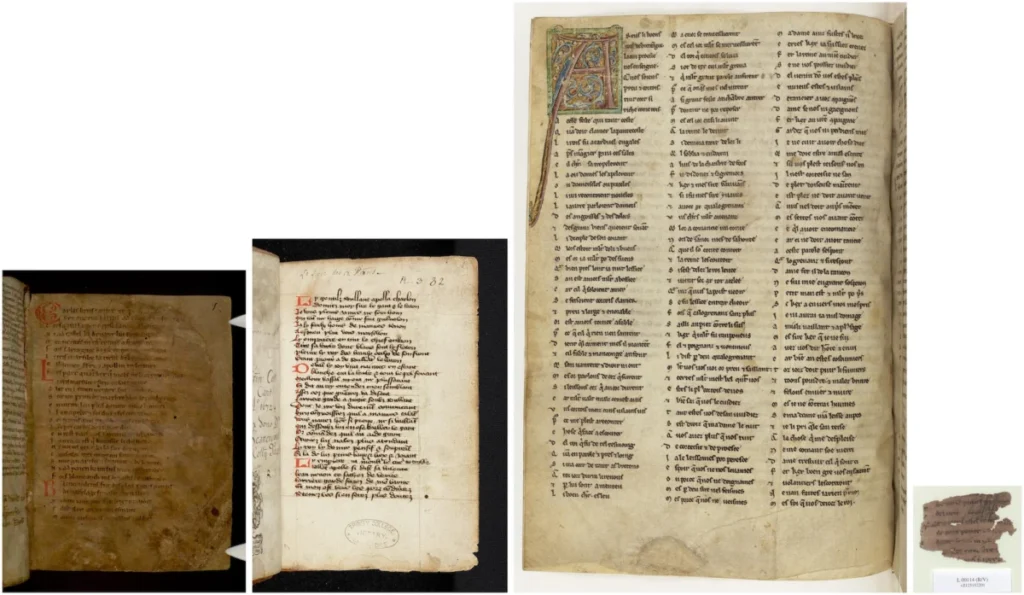
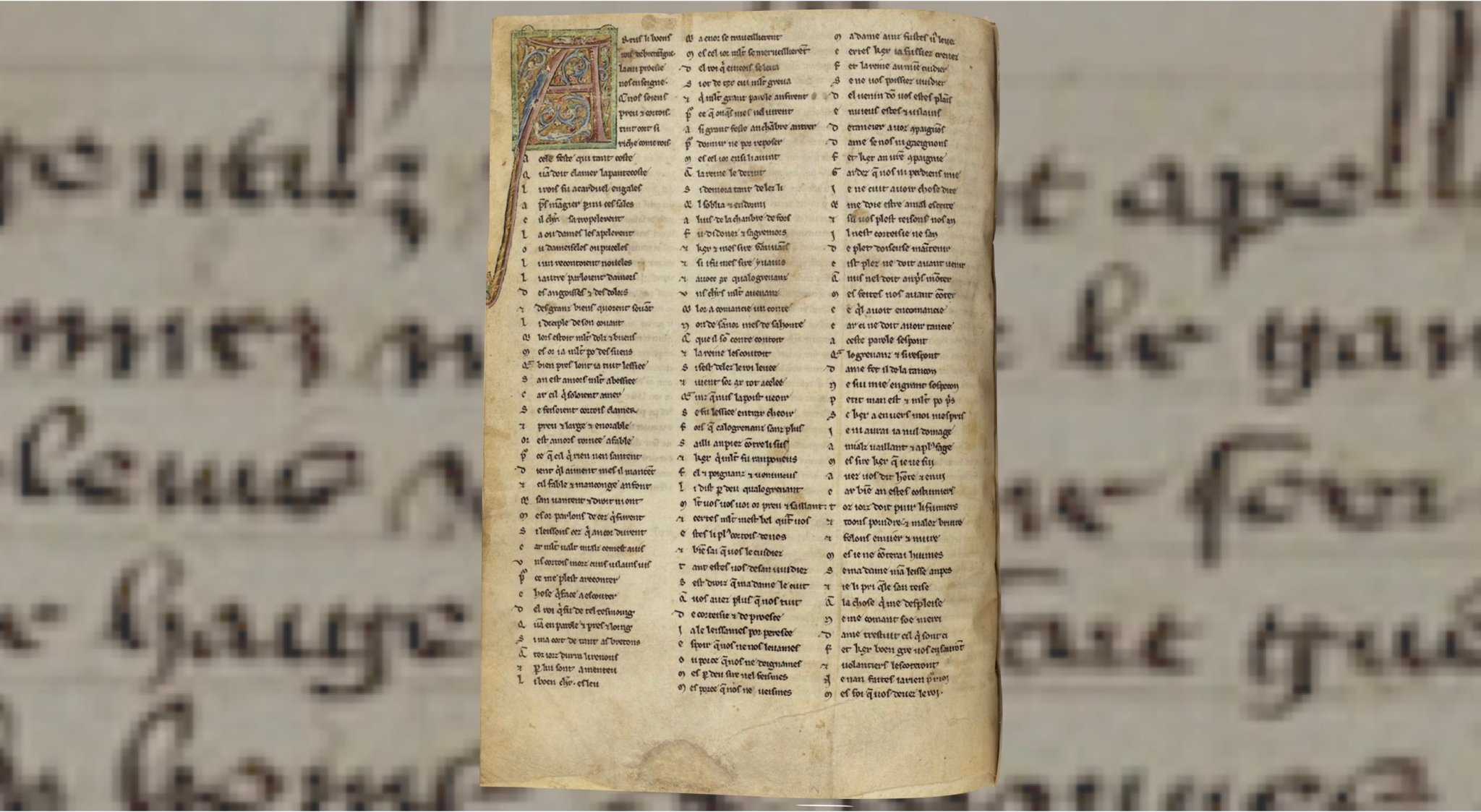
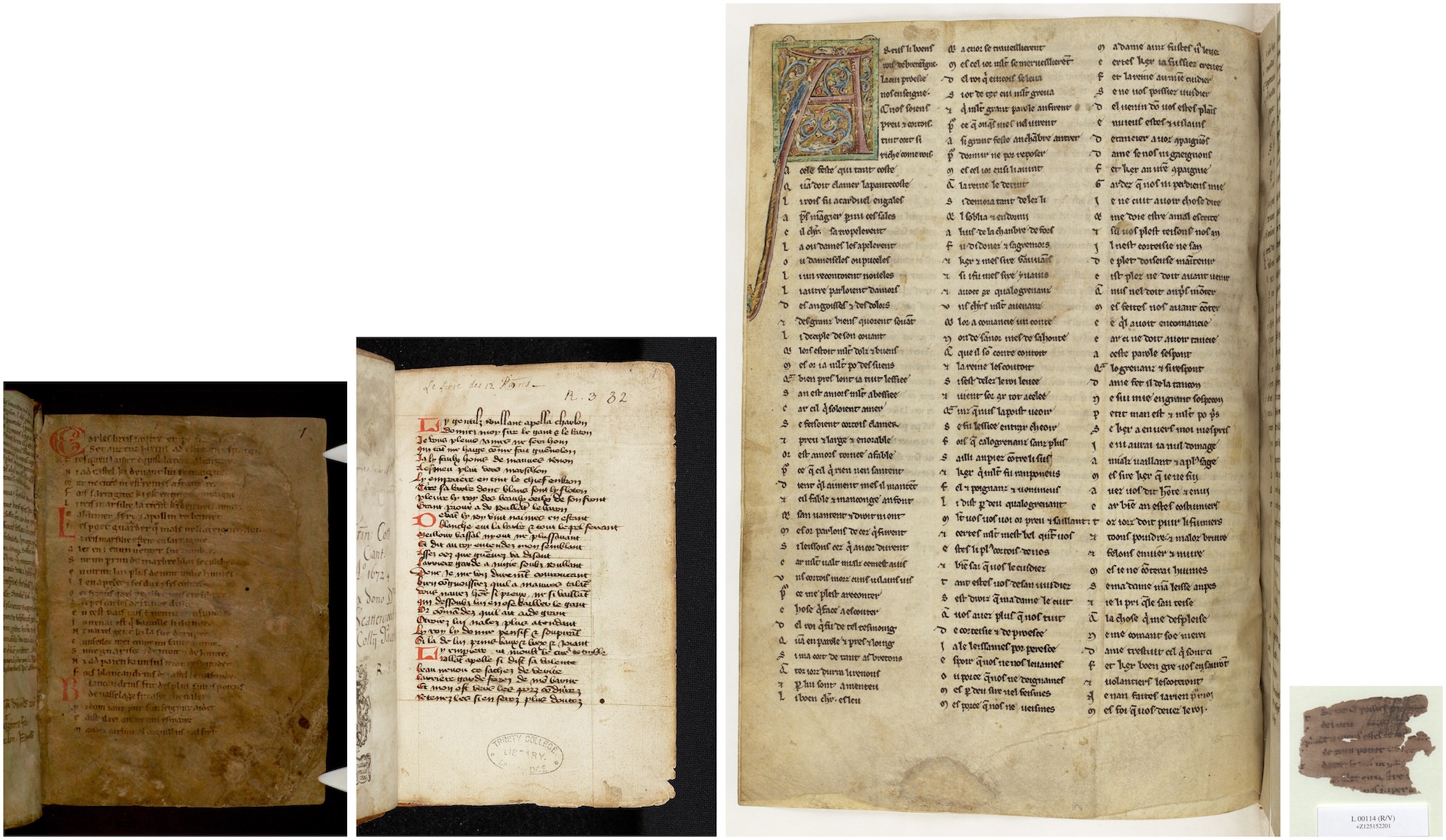
The survival of human history is often a matter of chance, dictated by the durability of parchment, the whims of collectors, and the ravages of time. A groundbreaking study published in PNAS Nexus has now quantified the scale of this historical disappearance, revealing that the vast majority of medieval chivalric literature has vanished. By applying mathematical models traditionally used in evolutionary biology to the study of ancient texts, a multidisciplinary team of researchers has determined that up to 60 percent of medieval chivalric narratives and more than 95 percent of their physical manuscript copies have been lost to history. This revelation provides a transformative perspective on the "dark data" of the Middle Ages, suggesting that the surviving body of Arthurian legends and knightly adventures represents only a tiny fraction of a once-vast literary ecosystem.
The research was led by Jean-Baptiste Camps, a computational philologist at the École Nationale des Chartes, and Julien Randon-Furling, a mathematician at the Centre Borelli within the École Normale Supérieure Paris-Saclay. Their work bridges the gap between the humanities and the hard sciences, utilizing the principles of phylogenetics—the study of evolutionary relationships among biological entities—to reconstruct the "family trees" of medieval texts. Before the 1450s and the advent of the Gutenberg printing press, every book was a handcrafted artifact. Because scribes occasionally made errors or intentional modifications during the transcription process, these "mutations" were passed down to subsequent copies, creating a genealogical trail that mirrors the transmission of genetic information across generations.
The Biological Parallel: Manuscripts as Evolving Organisms
The conceptual foundation of the study rests on the observation that manuscript transmission behaves remarkably like biological evolution. When a scribe copied a text by hand, the resulting document was rarely an exact facsimile. Minor changes in spelling, syntax, or even the omission of entire stanzas functioned as genetic mutations. If a "mutated" manuscript was later used as a source for further copies, that specific variation became fixed within that branch of the text’s lineage.
Julien Randon-Furling noted that while the similarity between the genealogy of species and the genealogy of manuscripts was first observed in the 19th century, it was not until the work of polymath Michael P. Weitzman in the 1970s and 80s that rigorous mathematical frameworks were applied to the field. The current study advances this lineage by employing sophisticated computer simulations to model the spread and eventual loss of chivalric narratives beginning in the 12th century.
Chivalric literature, a genre that flourished between 1100 and 1500, serves as the primary data set for this research. These stories, often centered on the exploits of knights, the code of honor, and courtly love, were the "bestsellers" of their day. However, the researchers found that the popularity of a text was no guarantee of its survival. In many cases, the original version of a chivalric story—the "Ur-text"—has disappeared entirely, leaving behind only distant, mutated cousins.
A Chronology of Literary Attrition
To understand how so much material was lost, it is necessary to examine the timeline of manuscript production and the external pressures that acted upon these "literary populations."
- 1100–1200: The emergence of chivalric romance in France and its rapid spread across Europe. This period saw the creation of foundational texts like the Chanson de Roland and the works of Chrétien de Troyes.
- 1200–1400: A period of intensive manual copying. Manuscripts were expensive, often made of vellum (calfskin), and held in monastic libraries or private aristocratic collections.
- 1347–1351: The Black Death ravages Europe. The plague not only decimated the population of scribes but also led to the abandonment of many monastic centers where manuscripts were stored.
- 1450s: The invention of the printing press. While this revolutionized the preservation of new texts, it often led to the neglect of older, handwritten manuscripts, which were seen as obsolete or difficult to read.
- 1500–1800: Waves of religious conflict, such as the Reformation and the French Revolution, resulted in the widespread destruction of libraries and the repurposing of parchment for mundane uses like bookbinding or even making glue.
The researchers accounted for these historical shocks in their models. By simulating the "birth" (copying) and "death" (destruction) of manuscripts over centuries, they were able to estimate the total size of the original literary population. The results suggest that the "extinction rate" for medieval manuscripts was nearly total, with less than 5 percent of the physical objects surviving to the present day.
Quantifying the "Island Effect" and Cultural Survival
One of the most significant findings of the study is the variation in survival rates across different geographical "ecosystems." Jean-Baptiste Camps and his colleagues observed what they call an "insular" vs. "continental" setting. For instance, medieval Icelandic literature, including the famous Sagas, shows a much higher rate of survival compared to the chivalric literature of mainland France or Germany.
In Iceland, the relative isolation and the specific cultural value placed on vernacular storytelling acted as a protective barrier. Conversely, on the European continent, higher levels of urban conflict, more frequent changes in linguistic fashion, and the centralization of libraries made texts more vulnerable to "mass extinction events." The team’s model indicates that if a text failed to produce a significant number of copies within its first few decades of existence, its probability of long-term survival dropped to near zero. Random accidents, such as a single library fire, could effectively erase an entire branch of literary history if the "population" of copies was too small.
Official Responses and Scholarly Analysis
The implications of the study have resonated deeply within the academic community. Ulysse Godreau, a co-author and postdoctoral researcher at the École Nationale des Chartes, emphasized that while historians have long suspected the scale of the loss, the ability to quantify it provides a new level of rigor to the field. "Philologists and historians have known for quite a long time that the amount of loss was impressive," Godreau explained. The goal was to use dynamical quantity studies to confirm these suspicions and provide a clearer picture of the "missing" past.
The study has been praised for its objective, data-driven approach to a field often dominated by qualitative analysis. By treating texts as data points in a stochastic process, the researchers have moved beyond speculating about what was lost and have begun to measure the shape of the void itself.
Independent scholars in the field of medieval studies have noted that this research challenges the "canon" of Western literature. If 60 percent of narratives are gone, it stands to reason that some of the most influential or artistically significant works of the Middle Ages are among the missing. This suggests that our current understanding of medieval culture is heavily biased toward the "survivors"—texts that may have been preserved by sheer luck rather than by their contemporary popularity or merit.
Broader Impact and the Future of Computational Philology
The success of the chivalric literature study has opened the door for wider applications of this methodology. The research team is already looking backward in time to the Classical era. "One of the driving questions for us was, how much of the past do we have in our hands?" said Randon-Furling. The team plans to investigate the genealogy of ancient Greek plays and the writings of the early Church Fathers, where the loss is suspected to be even more severe.
Furthermore, the researchers intend to explore "cultural transfers" between regions. By analyzing how texts moved from France to Iceland or Spain, they hope to map the medieval world as a series of interconnected biological niches. This approach could reveal how certain ideas became "invasive species," dominating the literary landscape, while others remained "endemic" to specific regions and eventually faded away.
The study also serves as a cautionary tale for the digital age. Just as parchment was replaced by paper and eventually by digital files, each transition in medium carries the risk of a "bottleneck" where information is lost. The researchers’ work suggests that the preservation of culture is not a passive outcome of time but a dynamic struggle against the forces of entropy.
In conclusion, the application of evolutionary mathematics to medieval manuscripts has provided more than just a statistic of loss; it has provided a tool for intellectual humility. By recognizing that 95 percent of the physical evidence of medieval chivalry has turned to dust, modern society can better appreciate the fragility of human knowledge and the profound importance of the fragments that remain. The "ghost library" of the Middle Ages may never be read, but through the lens of mathematics, its presence is finally being felt.