

Arizona State University (ASU) has launched an innovative course, "The Agentic Self," co-conceived by hip-hop artist and entrepreneur will.i.am and ASU, pushing the boundaries of how individuals interact with and shape the burgeoning field of artificial intelligence. The course, which debuted in 2025, aims to empower students to leverage AI not just for efficiency, but as a tool for personal and societal betterment, fostering a new generation of human-led AI development.
The Genesis of "The Agentic Self"
The concept for "The Agentic Self" emerged from a collaboration between will.i.am, known for his pioneering work in technology and music, and ASU leadership. This partnership envisioned a learning environment that moved beyond traditional academic structures, seeking to create a dynamic space for ideation and creation. will.i.am’s existing "FYI campus" in Hollywood, a hub for creative and technological innovation, served as the initial inspiration, reimagined as a place where "instead of chocolate bars, it manifests music, products and now… people empowered to build in an AI world to make a better real world."
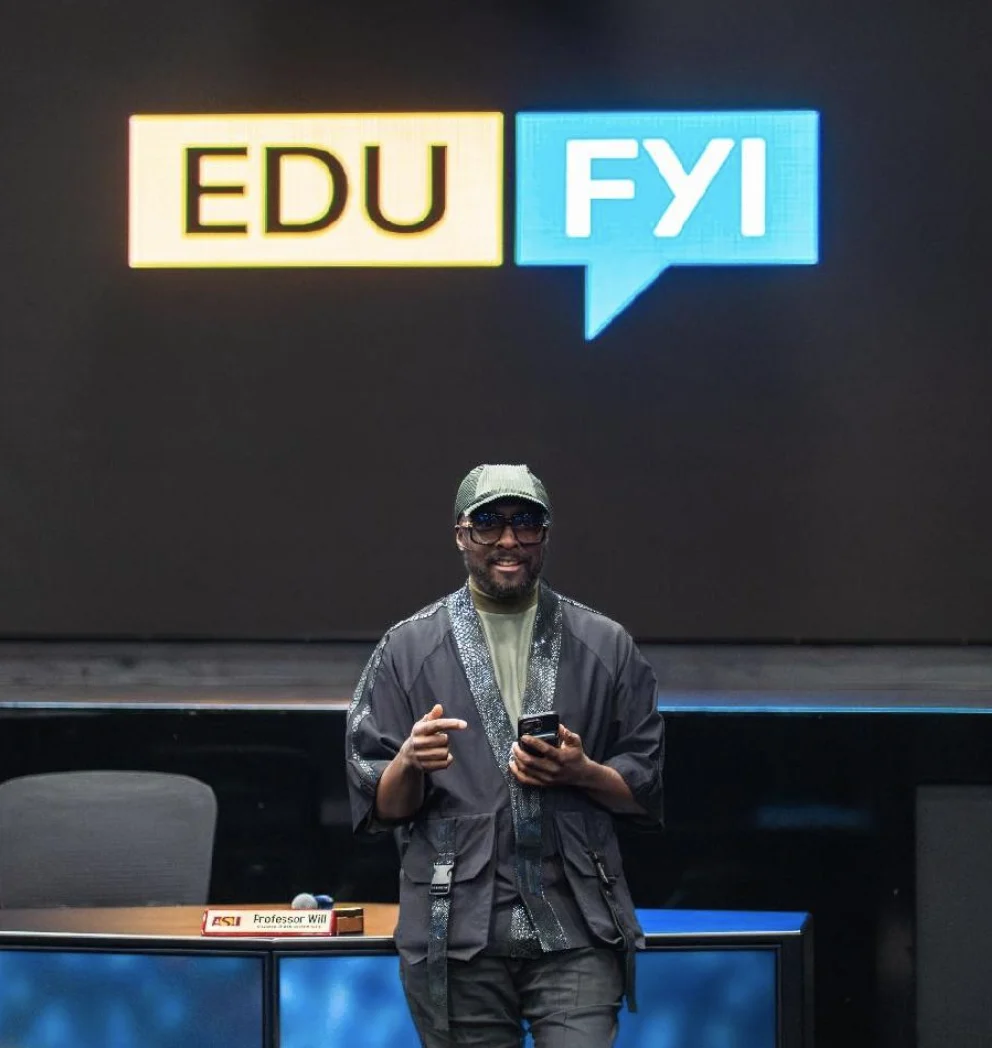
Professor William "will.i.am" Adams, affectionately known as "Professor Will" by his students, was instrumental in transforming a section of the FYI campus into a dedicated learning and collaboration space. The room’s design, featuring a U-shaped layout reminiscent of the United Nations, with individual chairs and microphones for each participant, was meticulously planned to facilitate inclusive and dynamic discussions, particularly when incorporating virtual guests. This deliberate architectural choice underscores the course’s commitment to ensuring every voice can be heard and contribute to the collective intelligence being fostered.
A Paradigm Shift in AI Engagement
The core of "The Agentic Self" course lies in its exploration of what it means to cultivate an "agentic self" in an AI-saturated world. will.i.am defines this concept as "you claiming your data and now putting it to work for you by creating an agent that reflects your beliefs, your concerns, your passions, your interests." This shifts the paradigm from passive consumption of AI-generated content to active, intentional creation and agency. Participants are encouraged to view their personal data not as something to be guarded, but as a foundational element for building personalized AI agents that act in alignment with their values and goals.
This approach fundamentally alters the perception of AI from an external, potentially inscrutable force to a malleable tool that can be personally shaped and directed. The course emphasizes that true innovation in AI will stem from individuals who can harness its power while retaining their human-led perspective, ensuring that technological advancements serve humanistic ends.
The Power of Environmental Evolution for Ideas
A key pedagogical insight emerging from "The Agentic Self" course is the profound impact of the environment on the development and potential of an idea. The author, a participant in the inaugural cohort, illustrates this through their personal journey with a conversational skill-building concept.
The Seed of an Idea: Practicing Difficult Conversations
The initial spark for this concept arose approximately two years prior to the course’s inception, a period when the dominant discourse around large language models like ChatGPT focused primarily on enhancing efficiency and productivity. As a professional in learning innovation, the author recognized a different, more transformative potential: the ability of AI to revolutionize how individuals learn, practice, and prepare for challenging conversations. This insight led to the development of a prototype conversational skill builder designed to simulate real-world scenarios, provide immediate personalized feedback, and facilitate reflective learning for lasting improvement.
The initial exploration of this idea took place within ChatGPT. This phase was crucial for validating the core interaction and assessing its utility without the complexities of large-scale deployment. It represented the critical first step in moving from a conceptual notion to a tangible application.
Iterative Development Across AI Platforms
The evolution of this conversational skill builder exemplifies the principle that an idea’s true potential is often unlocked through its exposure to diverse environments and platforms.
- ChatGPT: Served as the initial sandbox, allowing for rapid prototyping and testing of the fundamental conversational mechanics. This phase confirmed the viability of the core concept.
- Copilot Studio (Providence St. Joseph Health): In the role of manager of learning innovation for a large healthcare system, the author utilized Copilot Studio to address the challenge of authoring and deploying such an idea at an enterprise scale. This involved navigating organizational complexities, governance structures, and strategic alignment requirements, revealing the practical hurdles of large-scale implementation.
- Acolyte: As a strategic innovation consultant for a nascent AI startup, the author explored the idea’s potential on Acolyte’s platform. This environment facilitated the creation of multimodal experiences, including avatars, significantly enriching the learning experience and demonstrating the power of more sophisticated interfaces.
- FYI Campus (ASU): The most transformative stage occurred within the FYI environment at ASU. Here, the idea evolved beyond a mere skill builder into a more personalized, guided, and action-based learning experience. This platform, characterized by its user-friendly interface and robust capabilities, confirmed a burgeoning principle: the "sweet spot" for AI in learning and performance support lies in an adaptive, scaffolded approach that guides without stifling, offering both structure and freedom. This represented a significant leap from a skill builder to the concept of "AI-guided mastery."
This journey underscored that the same initial concept could manifest and develop differently depending on the platform, tools, and context it encountered. Each environment acted as a crucible, refining and expanding the idea’s possibilities, ultimately revealing its potential for AI-guided mastery through collaborative, personalized, and action-oriented learning.
will.i.am’s Vision: The FYI Campus as an Innovation Hub
The FYI campus, as envisioned by will.i.am, is more than just a physical space; it’s a metaphor for a new approach to innovation. It’s a "magical hip-hop version of Willy Wonka’s factory," where the currency is creativity and the output is human empowerment. The transformation of a section of this campus into the U-shaped learning room signifies a deliberate effort to create an environment conducive to the "agentic self." This space is designed to foster deep engagement, encourage critical thinking, and facilitate the collaborative development of AI solutions that are both innovative and ethically grounded.

will.i.am’s philosophy emphasizes that true progress in AI requires a human-first approach. In a quote shared from an NBCLA interview, he articulated: "Agentic self is you claiming your data and now putting it to work for you by creating an agent that reflects your beliefs, your concerns, your passions, your interests." This sentiment resonates throughout "The Agentic Self" course, highlighting the imperative for individuals to actively participate in shaping their AI-driven futures.
Broader Implications for Leadership and Workforce Readiness
The insights gleaned from "The Agentic Self" course have significant implications for leaders across all sectors. The author’s experience underscores the critical importance of "best fit" – matching an idea with the right environment, platform, and community. When an idea encounters the optimal conditions, adoption becomes smoother, usage more impactful, and integration into workflows more seamless. Conversely, a mismatch can lead to even promising ideas faltering.
This principle extends directly to organizational strategy. Leaders must recognize that investing in AI tools alone is insufficient. The true challenge lies in fostering workforce readiness, which is not merely a technological hurdle but a deeply human one.
The Workforce Readiness Gap in AI Adoption
Recent studies indicate a common pattern in AI adoption within organizations. While many have successfully licensed AI tools and established governance frameworks, a significant gap persists. A small cadre of early adopters spearheads AI initiatives, while the broader workforce often remains hesitant, uncertain about how AI integrates into their roles or how to employ it responsibly.
This disparity highlights a critical need for learning leaders to shift their focus from simply providing access to cultivating environments that promote exploration and experimentation. As the author notes, readiness is cultivated not through compliance, but through permission to test ideas, move them across contexts, and build through genuine curiosity.
Designing for Exploration and Psychological Safety
Organizations aiming for genuine AI readiness must actively design learning cultures that nurture the "agentic self." This involves creating spaces where employees feel empowered to explore, learn from failures, and discover what works best for them and their roles. Crucially, this requires establishing psychological safety and providing structural support to enable this exploration.
Brad Bigelow, founder of Acolyte AI, who has extensive experience assisting learning leaders with these challenges, offers a pertinent observation: "What I observe most often is organizations that have invested heavily in AI access while underinvesting in the structures that help people use it with confidence and purpose. The gap is rarely technical… it is typically cultural or architectural. Leaders who close that gap are not simply rolling out tools; they are deliberately designing environments where people feel supported to explore, guided to apply, and given room to build real capability over time. The distinction between being equipped and being ready is what defines which organizations will lead and which will follow."
The author’s own experience at Providence St. Joseph Health, where a version of their conversational skill-building idea is now being deployed at scale after navigating rigorous governance processes, serves as a testament to the journey from concept to enterprise reality. This successful implementation, driven by an understanding of environmental fit and human-centric design, is a narrative that promises further insights into large-scale AI integration.
Personal Transformation and the Future of AI
The impact of "The Agentic Self" course extends beyond professional development; it has profoundly altered the author’s approach to their work and their engagement with the AI landscape. The experience has fostered a more focused intention in their building process, an ongoing exploration of new tools and environments, and a commitment to collaborating with individuals who prioritize ethical AI development and the expansion of human agency.
The course has reinforced the significance of community and the "company you keep." The author emphasizes that the rooms entered, the communities joined, and the people encountered all shape one’s perspective and professional trajectory. The collaborative environment at the FYI campus, guided by Professor Will’s strong moral and ethical compass, has solidified the author’s commitment to human-first AI work.
An Invitation to Explore and Innovate
The overarching message from "The Agentic Self" experience is an invitation to individuals and organizations alike: to identify the "sparks" of ideas they hold and to actively seek out environments that will allow them to flourish. In a rapidly evolving world, the willingness to explore is not a mere indulgence but a fundamental necessity for remaining human-led and for ensuring that learning becomes the driving force behind all progress.
The course has reshaped perspectives on agency, service, and the ability to maintain coherence in action. The author concludes by posing a vital question to readers: "What spark have you been carrying, and what environment might help it become something more?" The answer to this question, and the subsequent actions taken, will determine whether individuals and organizations will lead or follow in the transformative era of artificial intelligence.
Brad Bigelow of Acolyte AI contributed to the section on leadership implications, drawing on his expertise in helping organizations bridge the gap between AI access and workforce readiness. His prior collaboration with the author on "From AI Access to Workforce Readiness" published by Chief Learning Officer in March 2026, further solidifies this critical dialogue.