
New research from the IMT School for Advanced Studies Lucca offers compelling insights into why some dreams manifest as vivid, lifelike narratives while others dissolve into confusing or elusive fragments. The study, published in Communications Psychology, posits that the intricate tapestry of our dreams is woven from a complex interplay of individual personality traits and shared societal experiences, fundamentally influencing the sensory and emotional landscape we inhabit during sleep. This groundbreaking work leverages advanced artificial intelligence, specifically natural language processing, to decipher patterns in dream reports that have long eluded traditional scientific methods, marking a significant leap in our understanding of the sleeping brain.
The study’s methodology was as comprehensive as its findings were profound. Over two weeks, 287 participants, aged between 18 and 70, meticulously documented more than 3,700 reports detailing both their nightly dreams and their waking experiences. This extensive data collection was complemented by an exhaustive profiling of each participant, encompassing detailed sleep habits, cognitive skills, established personality traits, and in-depth psychological profiles. The sheer volume and diversity of this dataset provided an unprecedented opportunity to move beyond anecdotal evidence and subjective interpretations, offering a robust foundation for a data-driven exploration of the dream world.
The Historical Enigma of Dreams and the Dawn of Computational Analysis
For centuries, dreams have captivated humanity, serving as a wellspring of myth, spiritual interpretation, and psychological inquiry. From ancient civilizations viewing dreams as divine messages to Sigmund Freud’s seminal work on dream interpretation as the "royal road to the unconscious," the subjective nature of dreaming has consistently posed a formidable challenge to scientific investigation. Modern neuroscience has, for decades, sought to understand the neural mechanisms underlying dreams, often focusing on REM sleep and its associated brain activity. However, objectively analyzing the content and meaning of dreams across a large population remained largely intractable due to the inherent subjectivity of self-reporting and the immense effort required for manual qualitative analysis.
The IMT School’s research marks a pivotal moment by employing advanced natural language processing (NLP) tools, a branch of artificial intelligence. NLP algorithms are designed to understand, interpret, and generate human language, making them uniquely suited to dissect the nuances of dream descriptions. By systematically analyzing the meaning and structural components of thousands of dream reports, researchers were able to transcend the limitations of manual qualitative analysis, revealing hidden patterns and intricate connections that were previously obscured by the sheer volume and complexity of the data. This computational approach has ushered in a new era for dream research, transforming it from a largely qualitative discipline into one capable of robust, large-scale quantitative analysis.
AI Reveals the Hidden Architecture of the Dreamscape
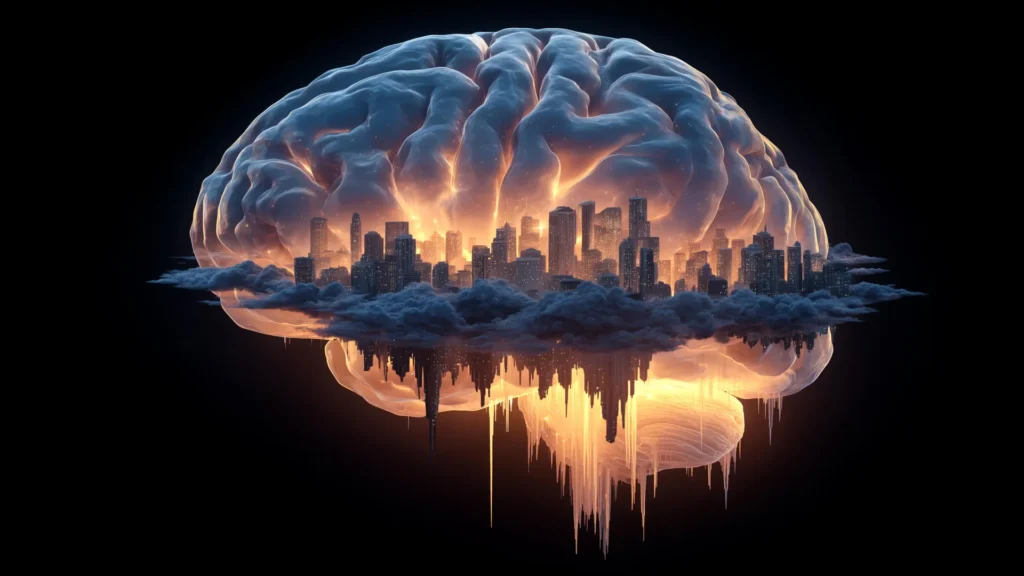
The application of NLP tools unveiled a startling revelation: dreams are far from random or chaotic mental events. Instead, they exhibit a sophisticated, discernible structure, reflecting a dynamic interplay between deeply personal characteristics and broader external influences. This systematic analysis demonstrated that dreams are not merely passive replays of waking life but active, creative reconstructions. The brain, it appears, does not simply mirror daily experiences; it profoundly reshapes them.
Familiar settings, such as workplaces, hospitals, or schools, are rarely reproduced with photographic fidelity. Instead, they are reimagined into vivid, often immersive scenes that frequently combine disparate elements and shift perspectives in unexpected, sometimes surreal ways. For instance, a participant might dream of their office, but it could be located at the bottom of the ocean, or their childhood school might feature their current colleagues. This process suggests that the dreaming brain is an active architect of reality, blending memories, current concerns, and even anticipated events to construct novel scenarios. This finding challenges simpler theories that posit dreams primarily serve memory consolidation or mere neural housekeeping, instead pointing towards a more active, constructive role for the sleeping mind in integrating and processing information.
Personality and Cognitive Styles: Architects of Individual Dream Worlds
The study underscored that dream experiences are far from uniform; they are deeply individualized, shaped by specific personality traits and cognitive styles. For instance, participants who exhibited a greater tendency towards "mind-wandering" during their waking hours often reported dreams that were fragmented, constantly shifting, and less coherent. Mind-wandering, a common cognitive phenomenon characterized by spontaneous shifts in attention away from the current task, appears to translate into a similarly fluid and less anchored dream narrative. This suggests a continuity between waking cognitive habits and the structure of our nocturnal mental experiences.
Conversely, individuals who placed a greater intrinsic value on their dreams – those who actively sought meaning in them and believed in their significance – tended to experience richer, more immersive, and often more coherent dream environments. This finding hints at a fascinating feedback loop: a predisposition to engage with one’s dreams might actually cultivate a more elaborate and memorable dream life. Furthermore, while not explicitly detailed in the provided excerpt, the collection of "cognitive skills" and "psychological profiles" likely allowed researchers to explore correlations with other traits, such as creativity, anxiety levels, or emotional regulation, further delineating how individual psychological landscapes are reflected in the content and style of dreams. The study implies that our subjective disposition towards our inner world significantly influences how that world manifests during sleep.
The Unforeseen Influence of Global Events: Dreams in the Shadow of COVID-19
Perhaps one of the most compelling aspects of the research was its ability to illustrate how large-scale societal events can profoundly impact the collective dreamscape. The study incorporated data collected during the initial phases of the COVID-19 lockdown, gathered by researchers at Sapienza University of Rome, which was subsequently analyzed and compared with the IMT team’s findings. This comparative analysis provided a unique window into the psychological repercussions of a global crisis as reflected in our nocturnal experiences.
The data revealed a striking pattern: dreams reported during the COVID-19 lockdown were significantly more emotionally intense and frequently revolved around themes of restriction, limitation, and confinement. This observation aligns powerfully with the collective experience of lockdowns, which imposed unprecedented constraints on personal freedom, social interaction, and daily routines. People dreamed of being trapped, unable to move freely, or experiencing heightened anxiety and fear, directly mirroring the anxieties of the pandemic era. This phenomenon was widely reported anecdotally during the pandemic, with many individuals noting an increase in vivid and disturbing dreams, often termed "pandemic dreams." The IMT study provided robust empirical validation for these widespread subjective experiences.
Crucially, the research also tracked the evolution of these dream patterns over time. As the initial shock and disruption of the lockdown gradually gave way to adaptation and adjustment – as individuals found new routines, coping mechanisms, and a degree of psychological resilience – the intensity and prevalence of these pandemic-specific dream themes began to fade. This chronological insight suggests a profound connection between dream content and the process of psychological adaptation to major life changes, whether personal or societal. Dreams, in this context, appear to serve not just as a mirror of our immediate anxieties but also as a dynamic indicator of our ongoing psychological processing and adjustment to significant stressors. This finding opens new avenues for understanding collective trauma and resilience through the lens of dream analysis.
Dreams as a Dynamic Mental Process: A Lead Author’s Perspective
"Our findings show that dreams are not just a reflection of past experiences, but a dynamic process shaped by who we are and what we live through," explains Valentina Elce, researcher at the IMT School and lead author of the paper. Her statement encapsulates the core revelation of the study: the sleeping mind is an active, evolving entity, constantly integrating personal history, current concerns, and external stimuli into a fluid, meaningful narrative. "By combining large-scale data with computational methods, we were able to uncover patterns in dream content that were previously difficult to detect," Elce adds, highlighting the transformative power of AI in moving dream research beyond its traditional confines. This perspective positions dreams not as mere epiphenomena but as integral components of our cognitive and emotional lives, offering a unique window into our inner world.
AI Opens New Doors for the Future of Dream Research
The study’s profound implications extend far beyond a deeper understanding of dreams themselves. It powerfully demonstrates how artificial intelligence can revolutionize the study of highly subjective human experiences. The NLP models employed by the IMT team proved capable of capturing the meaning and structure of dream reports with a level of accuracy comparable to that of human evaluators. This technical achievement is not merely a convenience; it represents a paradigm shift.
Historically, qualitative analysis of dream content required extensive training, significant time investment, and was inherently prone to inter-rater variability and potential researcher bias. AI, by contrast, offers the promise of consistent, scalable, and objective analysis across vast datasets. This capability could make it significantly easier to study complex topics such as consciousness, memory consolidation, and mental health on an unprecedented scale. For instance, researchers could analyze thousands or even millions of dream reports to identify subtle linguistic patterns indicative of early-stage psychological distress, trauma processing, or even the efficacy of therapeutic interventions.
The ability to analyze dream content at scale could accelerate our understanding of how the brain integrates daily experiences into memory, how it processes emotions during sleep, and how various psychological conditions manifest in dream narratives. This computational approach could pave the way for novel diagnostic tools in mental health, offering non-invasive insights into a patient’s subconscious state. Moreover, by correlating dream patterns with physiological data (like sleep stages, heart rate, or brain activity), future research could build comprehensive models of the dreaming brain, further bridging the gap between subjective experience and objective neuroscientific measurement.
Methodological Rigor and Collaborative Endeavor
The robustness of this research is underscored by its rigorous methodology and the collaborative spirit that brought it to fruition. The study was generously supported by a grant from the BIAL Foundation (#091/2020), an organization known for fostering research in psychophysiology, and by the TweakDreams ERC Starting Grant (#948891), a prestigious European research funding instrument. This financial backing enabled the ambitious scale of data collection and the deployment of advanced computational resources.
The work was a collaborative effort, primarily carried out at the IMT School for Advanced Studies Lucca, a leading research institution known for its interdisciplinary approach. Crucially, the team collaborated with researchers from Sapienza University of Rome, who provided invaluable data on dream experiences during the COVID-19 lockdown, and the University of Camerino, further strengthening the study’s inter-institutional and multi-disciplinary foundation. This collaborative framework ensured a breadth of expertise and resources, allowing the study to tackle a complex subject with comprehensive scientific rigor.
In conclusion, the IMT School’s research represents a landmark achievement in dream science. By skillfully combining large-scale empirical data with cutting-edge artificial intelligence, it has not only demystified the intricate structures of our dreams but also illuminated the profound ways in which our individual personalities and collective societal experiences shape our nocturnal worlds. This study offers a powerful testament to the transformative potential of AI in understanding the most enigmatic aspects of human consciousness, promising a future where the secrets of the sleeping mind are increasingly within our grasp, with far-reaching implications for psychology, neuroscience, and mental health.